How To Eat Cistanche?
Nov 13, 2024
Cistanche is the fleshy stem with scale leaves of Cistanche deserticola or Cistanche tubulosa, a plant of the Orobanchaceae family. It is harvested in spring when the seedlings just emerge from the soil or before the ground freezes in autumn. Cut into thick slices and used raw or steamed with wine. Cistanche is sour, sweet, salty and warm, and has the effects of tonifying kidney yang, benefiting essence and blood, and moistening the intestines and relieving constipation. Cistanche is the most frequently used medicine in prescriptions for tonifying kidney and strengthening yang and increasing strength in all dynasties. It ranks second in frequency of appearance in anti-aging and longevity prescriptions, second only to ginseng, so it has the reputation of "desert ginseng".

Cistanche mainly contains betaine, ergosterol, carotene and various trace elements.

HIGH QUALITY HERB CISTANCHE
CLICK FOR MORE DETAILS
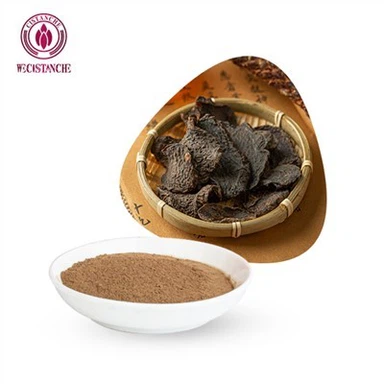
The picture shows the medicinal slices of Cistanche, which are brown on the surface and densely covered with fleshy scales.
Modern research suggests that Cistanche has the effects of activating the adrenal glands, releasing corticosteroids, anti-aging, and improving immunity.
Application of Cistanche
❀ Kidney Yang deficiency syndrome:
Clinical manifestations include impotence and infertility, uterine coldness and infertility, soreness of waist and knees, weakness of muscles and bones, etc.

❀ Dry intestines and constipation:
Clinically, it is mostly suitable for constipation of the elderly with deficiency of essence and blood. Daily usage and dosage of Cistanche deserticola❀ Cistanche deserticola stewed with sheep kidney: 1 pair of sheep kidneys, 30g of Cistanche deserticola. Cut open and clean the sheep kidneys, wash the Cistanche deserticola, and slice them. Put the sheep kidneys and Cistanche deserticola in a casserole, add water, boil them with high heat first, and then simmer them with low heat for 20-30 minutes, until the sheep kidneys are cooked. Remove the Cistanche deserticola slices and add appropriate amounts of pepper and salt. It has the effects of nourishing the kidney and yang, benefiting essence and moistening the intestines. It is suitable for people with kidney deficiency, impotence, frequent urination at night, and constipation due to deficiency of essence.
❀Cassia Cistanche Honey Tea:
Stir-fry Cassia Seed and Cistanche Deserticola 10g each, and appropriate amount of honey. Put Cassia Seed and Cistanche Deserticola into a tea cup, brew with boiling water, add appropriate amount of honey, and drink frequently instead of tea. It has the effect of moistening the intestines and laxatives, and is suitable for habitual constipation and senile constipation.
❀Achyranthes Bidentata Angelica Honey Paste:
Achyranthes Bidentata 50g, Cistanche Deserticola 500g, Angelica 50g, and appropriate amount of honey. Soak Achyranthes Bidentata, Cistanche Deserticola, and Angelica in appropriate amount of water, then heat and decoct. Take the decoction once every 20 minutes, add water and decoct again, take 3 times in total, combine the decoction, and then simmer on low heat until it is concentrated into a thick paste, add 1 times the honey, stop the fire when it boils, and bottle it for later use after it cools down. It has the effect of nourishing blood and moistening the intestines, and is suitable for senile constipation, postpartum constipation, etc.

Cistanche and Cuscuta australis can nourish the kidney and strengthen yang. Cistanche deserticola and antler glue can nourish the kidney and blood. Cistanche deserticola and Morinda officinalis can nourish the kidney and strengthen bones. People who should not eat Cistanche deserticola can help yang and lubricate the intestines, so it is not suitable for people with yin deficiency, hyperactivity of fire and loose stools. In addition, it is not suitable for people with constipation caused by gastrointestinal heat.