Interviewing in Virtual Environments: Towards Understanding The Impact Of Rapport‑building Behaviours And Retrieval Context On Eyewitness Memory Part 2
Oct 10, 2023
In light of the extant empirical literature concerning interviewee experience and memory performance, we formulated several hypotheses. First, being interviewed in a VE will improve mock witness memory versus an in-person face-to-face interview (H1 ). Further, irrespective of interview context some rapport-building will improve mock witness memory performance (H2 ) since previous research has highlighted the importance of rapport for improved cognition.
There is a close relationship between memory performance and retention. With the improvement of memory ability, we can more accurately remember some information that needs to be remembered, including but not limited to knowledge in the classroom, skills at work, and interpersonal relationships in social situations. Therefore, having good memory ability can help us complete various tasks better and improve the quality of work and life.
Memory performance is a way to express memory in our daily lives. Excellent memory performance is often regarded as a symbol of intelligence and ability and can bring many benefits in life and work. For example, if we perform well at work, we may get more opportunities and promoted positions; if we perform well in social situations, we may win the trust and respect of more people.
So how to improve memory? First of all, you can improve your memory ability by learning more, thinking more, practicing constantly, and challenging yourself. Memory training can be carried out in various ways, such as reading aloud, dictation, recitation, association, etc. In addition, maintaining good living habits is also the key to improving memory, such as adequate sleep, healthy eating, moderate exercise, etc.
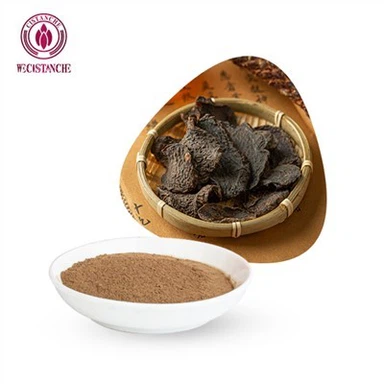
In summary, there is an inseparable relationship between memory performance and memory. By continuously improving our memory skills and performing excellent memory performance, we can better complete various tasks in life and work, bringing more achievements and happiness. It can be seen that we need to improve our medical knowledge. Cistanche deserticola can significantly improve memory because Cistanche deserticola is a traditional Chinese medicinal material with many unique effects, one of which is to improve memory. The efficacy of minced meat comes from the various active ingredients it contains, including acid, polysaccharides, flavonoids, etc. These ingredients can promote brain health in various ways.

Click know 10 ways to improve memory
Finally, irrespective of the interview environment rapport-building will have a positive impact on self-reported interview experience (H3 ) because the literature generally reports improved social benefits when rapport is present. We do not hypothesize regarding the impact of rapport as a function of the interview environment since relevant literature is sparse and does not support a meaningful hypothesis in this regard. Rather, we investigated rapport across environments by considering interaction effects guided by the following research question—is rapport important and impactful in a virtual environment as the literature suggests it is during face-to-face interactions?
Method
Participants
An a priori power analysis using G*Power 3.1 (Faul et al., 2007) indicated that a sample size of 100 mock witnesses would be more than adequate to detect large effects (assuming power = .80 and a = .05). Forty-four males and 56 females from the general population participated with a mean age of 25.8 years (SD = 7.5), ranging from 18 to 50 years. There were no significant differences in mean age across conditions (rapport & environment), F = 1.46, p = .23. Participants were recruited through word of mouth, social media, and advertisements placed in the locality of the University.
Design
A mock witness 2 (environment: face-to-face, virtual) × 2 (rapport: the present, absent) design was employed using five interviewers, as typically occurs in real-life cases where there are several witnesses. The mean number of interviews conducted by each interviewer was 20 (ranging from 11 to 32). Participants individually watched a stimulus video and were then randomly allocated to one of the experimental interview conditions.
Forty-eight hours later, participants were interviewed according to condition. The dependent variable was a memory for the video, measured by the number of correct, incorrect, and confabulated information items recalled, and percentage accuracy (correct details as a function of overall details recalled). Immediately after the interview, feedback was collected to understand the interviewee's experience. Ethical approval was obtained from the University of Westminster research ethics review committee.
Materials
Crime stimulus video A pre-recorded video lasting 1 minute 40 seconds of a mock fight in a public bar was viewed individually by participants via a laptop computer (see https://youtu.be/4PumXJX1iZo). The video depicts a man buying drinks for a female friend while another female character walks over to chat about a coursework assignment. The second female character leaves and the male and female then walk to the other side of the bar where they sit down at a table. Their conversation is interrupted by two men, first talking and then shouting. One of the men pushes the other before punching him to the ground and repeatedly punching him. The male friend goes over and states he is unconscious. A woman who is sitting behind them calls an ambulance.

Interview protocols Irrespective of the condition, all interviews comprised two retrieval attempts in the same order. First, participants were asked to provide a free recall account of everything they could remember. This initial account was uninterrupted by the interviewer who made bullet point notes regarding the topics recalled and the order in which they were recalled for use during the questioning phase that followed. In the questioning phase, each of the topics recalled in the preceding free-recall phase was probed in turn using one Tell, Explain, and Describe question per topic.
Probing questions commencing with Tell, Explain, and Describe are often referred to as TED questions and are recommended as part of several evidence-based interview protocols. TED questions are open, probing, information-gathering questions that prompt the interviewee to elaborate in detail on topics that have been previously mentioned in the initial free-recall prompt (see Kontogianni et al., 2020; Oxburgh et al., 2010). Accordingly, the number of TED questions asked during the questioning phase was predicated on participants’ free recall (see Dandoet al., 2020; Fisher & Geiselman, 1992; Vrij et al., 2014).
The free recall commenced with a pre-interview explanation phase and finished with a closure phase. Participants in the rapport condition experienced an additional rapport phase, with all rapport-building behaviors then continuing throughout the interview. Participants in the no-rapport conditions did not experience the rapport-building phase, and the rapport behaviors were all absent throughout the entire interview.
Interview protocols are outlined in Table 1 (detailed protocols are available from the first author). The questioning phase commenced with a reminder of the four ground rules. Five experienced researchers conducted all the interviews, following the condition-appropriate protocols, verbatim (but see Procedure and Fig. 1 also).
Post-interview questionnaire All participants completed an anonymous post-interview questionnaire within 15 minutes of being interviewed. The questionnaire was hosted remotely on Qualtrics.
The questionnaire comprised a total of ten questions, however, participants answered questions according to condition (see below). Nine questions used a Likert-type scale ranging from 1 to 5 (e.g., 1 = very easy to 5 =very hard; 0% confident to 100% confident, etc.), allowing participants to select one of the 5 response options. One question was dichotomous yes/no (full questionnaire available from first author). All participants were asked the following five Likert scale questions: (i) How easy/difficult did you find it to remember the video, (ii) how confident are you that what you remembered was correct, (iii) how confident are you that you did not make any errors, (iv) how comfortable did you feel during the interview, (v) how easy/difficult was it to say when you did not remember, and (vi) how friendly/ unfriendly did you feel the interviewer was towards you during the interview.
Participants in the VE condition were asked the following three Likert questions relating to the VE and VR headset:(i) How easy/difficult did you find it to use the VR headset, (ii) how comfortable was the VR headset, (iii) overall, how easy or difficult was it to be interviewed in a VE, and (iv) 3 Likert scale questions and one final dichotomous yes/no question (have you used a VR headset before- yes/no).
Equipment In the VE condition, the interviewer and participant were in different rooms within the same building and communicated using an Oculus Rift S virtual reality (VR) headset. The Oculus Rift creates a sense of complete immersion in a three-dimensional world (here, a bespoke interview environment) via 2,560 × 1,440 high-resolution OLED panels, one for each eye, which globally refresh at a rate of 90 Hz. An onboard Inertia Measurement Unit (IMU) positional camera allows transitional and rotational movement to be tracked with 6 DoF.
The headset tracks the movements of both head and body, then translates them into VR with realistic precision. Verbal communication was via 3D positional audio built directly into the headset, which was digitally recorded for transcription and coding. A bespoke, virtual interview environment was developed for this research using Unreal Engine 4.
The VE interview environment was purposely sparse and neutral, comprising a sofa, a table, and chairs—one chair for the avatar interviewer, and the other for the avatar participant (see Figs. 1 and 2). Limited choice was offered to participants regarding the appearance of their avatars, likewise the interviewers. They could appear as male or female. Participants and all interviewers chose to match their avatar to their gender appearance.

Procedure
Participants were recruited to take part in a mock eyewitness research study investigating the use of virtual environments for investigating long-term memory performance. The study was advertised via social media, locally around the University, and via word of mouth. Interested participants were able to contact the researchers, at which point they were provided with an information sheet and consent form, which outlined some inclusion criteria, including being over 18 years of age, and not ever having been interviewed as a witness or victim of crime.
Once participants had met the inclusion criteria and then consented to participate, they accessed a one-time-only link which allowed them to view the stimulus video. They were interviewed about the video 48 hours later. In the UK and elsewhere, other than for the most serious crimes, witnesses are not usually interviewed immediately (see Hoogesteyn et al., 2020; Hope et al., 2011). Rather, for more common “volume” crime events such as depicted in the stimulus video used here, delays in interviewing can often range from several hours to several days.
Hence, as is common practice in research of this nature, we too introduced a delay to enhance the ecological validity. Before the interview, participants were randomly assigned to one of the interview conditions (face-to-face rapport, face-to-face no rapport, VE rapport, VE no rapport) and interviewed accordingly. Participants completed the post-interview feedback questionnaire within 15 minutes. Participants took part voluntarily and received no payment or other compensation for their time.
The interviewers were all experienced researchers in the domain of experimental investigative interviewing. Since rapport is not a singular concept, but rather comprises a cluster of behaviors that are variously understood and applied according to context, prior experience, and training, before conducting interviews for this research all underwent bespoke (designed for this research by the first author) training towards reducing the variability of application.
Training adopted a collaborative pedagogical approach and comprised (i) a 4-hour long classroom-based introduction to the rapport behaviors that were the subject of this research, including how and when they should be used during interviews; (ii) 2 × 4-hour long instruction and practice sessions using the VE and VR headsets; (iii) reading of theoretical and applied training materials produced for this research; (iii) practice interviews (eight in total, four in each environment) face-to-face and using the VR, which were digitally recorded to allow feedback and evaluation on each interview before moving to the next; and (iv) instruction on reflective research practice and critical self-evaluation of performance.
Once researchers had attended the training sessions and completed the required competencies (consistent and correct application of the rapport behaviors as required by the protocols in at least two of the four practice interviews per environment), they were able to commence research interviews. In total, training for this research took between 3 and 4 days to complete.
Interview coding
Interviews were digitally audio and video recorded, transcribed verbatim, and coded for correct, erroneous (information relevant to the witnessed episode but described with error, e.g., describing a person’s brown jacket, but stating that it was black instead of brown), or confabulated (reporting information that was not present in the film) information recalled. The position in the interview where the information was recalled was coded (i.e., whether recalled in the free-recall or questioning phase). Items recalled were only scored once (i.e., repetitions were not scored irrespective of the interview phase).
Five interviews from each condition (20 in total) were randomly selected for recoding by an independent coder blind to the aims and hypotheses of the research but familiar with the method of scoring. Two-way mixed effects intraclass correlation coefficient (ICC) analysis testing for absolute agreement between coders for the overall amount of correct, erroneous, and confabulated recall was conducted. Mean estimations with 95% CI reveal very good interrater reliability for correct information, ICC = .993 (95% CI [0.982, 0.994]), errors, ICC = .954 (95% CI [0.888, 0.982]) and confabulations, ICC = .865 (95% CI [0.658, 0.946]).
The same sample of 20 interviews was coded by a further two independent coders blind to the aims and hypotheses of the research for adherence to the interview protocol as a function of condition: that is, no rapport-building behaviors in the rapport-absent (control) conditions and presence of rapport-building behaviors in the rapport-present conditions (see Table 1). A scoring sheet was used where each of the behaviors was coded, ranging from 1 to 3 for each according to condition (e.g., 3 = fully implemented the open-ended self-disclosure behavior, 2 = partially implemented the behavior of the open-ended question, 1 = did not implement) as a function of phase (e.g., see Nahouli et al., 2021).
The rapport phase occurred only in the rapport-building condition, while the free-recall and questioning phases were common to all conditions. In the rapport phase, six rapport behaviors were coded (see Table 1), and in the free-recall and questioning phases, four rapport behaviors were coded. To score 1, the behavior in question had to be absent. To score 2, the behavior had to be present at least once but no more than twice. To score 3, the behavior had to be present at least three times. Thus, each phase was awarded scores ranging from 6 to 18 for the rapport phase (in the rapport condition, only), and ranging from 4 to 12 for each of the free-recall and questioning phases.
Two-way mixed-effects ICC analysis testing for absolute agreement between coders for the six rapport-building behaviors expected to be present/absent in the rapport phase revealed good interrater reliability for each of the behaviors; open questions, ICC = .899 (95% CI [.593, .975]), offering non-personal information, ICC = .862 (95% CI [.443, .966]), making eye contact, ICC = .862 (95% CI [.443, .966]), nodding, ICC = .865 (95% CI [.498, .964]), referring to the interviewee by name, ICC = 1.00 (95% CI [1.00, 1.00]) and thanking the interviewee, ICC = .757 (95% CI [.096, .935]).

Good interrater reliability was also found for the four rapport-building behaviors expected to be present/absent in the free-recall phase: eye contact, ICC = .938 (95% CI [.843, .975]), nodding, ICC = .883 (95% CI [.705, .954]), referring to the interviewee by name, ICC = 1.00 (95% CI [1.00, 1.00]), and thanking the interviewee, ICC = 1.00 (95% CI [1.00, 1.00]); and questioning phase: making eye contact, ICC = .883 (95% CI [.705, .954]), nodding, ICC = .979 (95% CI [.948, .992]), referring to the interviewee by name, ICC = 1.00 (95% CI [1.00, 1.00]), and thanking the interviewee, ICC = 1.00 (95% CI [1.00, 1.00]).
For more information:1950477648nn@gmail.com