Leveling-up Versus Leveling-down To Address Health Disparities in Transplantation
Apr 12, 2023
Abstract
Kidney transplantation is considered the best treatment option for patients with end-stage renal disease (ESRD) because it significantly improves the quality of life and survival of patients. However, the postoperative management of kidney transplant recipients requires lifelong immunosuppressive therapy to prevent graft rejection and maintain graft function. Such therapy, although necessary, can have a detrimental effect on the overall health of the recipient, including an increased risk of infection, cardiovascular disease, and malignancy. Therefore, there is a growing interest in complementary and alternative therapies that may improve the health status of kidney transplant recipients.
Cistanche is a traditional Chinese herb that has been used for centuries to treat a variety of conditions, including kidney disease. The active constituents of Cistanche include phenylethanoid glycosides, iridoid glycosides, lignans, and polysaccharides, which have shown promising therapeutic effects in animal and cellular studies, such as anti-inflammatory, immunomodulatory, antioxidant, and anti-fibrotic activities.
Several recent clinical studies have also investigated the effectiveness of Cistanche in improving the health status of kidney transplant recipients. These studies reported that supplementation with Cistanche reduced the incidence of acute rejection, lowered serum creatinine levels, enhanced kidney function, and reduced proteinuria. In addition, Cistanche has been found to reduce the dose of immunosuppressive drugs needed to maintain graft function, potentially reducing the adverse effects associated with the long-term use of these drugs.
Despite these encouraging findings, additional studies are needed to determine the safety and efficacy of Cistanche in renal transplant health management. In addition, there is a need to determine the optimal dose, duration, and frequency of Cistanche supplements to maximize their therapeutic potential. The purpose of this review is to summarize the available evidence on the effectiveness of Cistanche for renal transplant health management and to highlight future research directions in this area.
Keywords
Ethics, Ethics and public policy, Kidney disease, Kidney transplantation/nephrology, Organ procurement, and Allocation, Social sciences, Cistanche extract.

Click here to get the effects of Cistanche on kidneys
Racial inequality in access to kidney transplants remains an area of focus. This is true because deceased donor organs are a scarce resource that requires attention to disparities in access. In this month's AJT, Reese et al. provide insights on the differential allocation of preemptive deceased donor kidneys, explain why preemptive transplantation rates are lower for blacks, and propose interventions aimed at reducing this disparity An important aspect of this work is the focus on listing the current criteria for testing for only one eGFR ≤20 ml/min/1.73 m2. Here, the authors identify a fundamental problem that is the cornerstone of waitlist eligibility but is flawed because it lacks the inclusion of greater measures of medical urgency.
Health disparities "arise directly or indirectly from social, economic, and environmental factors as well as structural influences on lifestyle". The underlying determinants of inequality are influenced by several factors, but importantly, they are modifiable. Consistent with the interventions proposed by Reese et al. such as streamlining the waiting process, the priority strategy is to "elevate" access to underserved populations and equalize access to those who currently have the easiest access to health care However, if these interventions fail, the authors suggest eliminating preemptive waiting list times altogether, which would Strategies that "reduce" existing benefits should be approached with caution, as they reduce optimal care and benefits across the system. Downgrading objections should only be considered in the absence of other alternative solutions (including direct financial and other support to increase access for currently deprived groups). In line with the long-established ethical principles governing organ allocation: equality (justice), utility, and respect for persons, a pluralistic egalitarian approach here also requires balancing the principles of equality (eliminating disparities) and well-being (doing what is best overall).
The ethical framework supporting the authors' view assumes that "first come, first served" privileges individuals with greater access to health care and exacerbates disparities among underserved groups. However, this argument should be considered in the context of first-come, first-served versus random assignment, as it was originally described. By ensuring that organs are allocated independently of social determinants, the process of random allocation may reduce disparities in access, but its adoption has been challenged by the potential to reduce utility and eliminate patient need as a driver. There must be a firmer ethical rationale for policy change before implementing extreme measures to eliminate preemptive wait times.

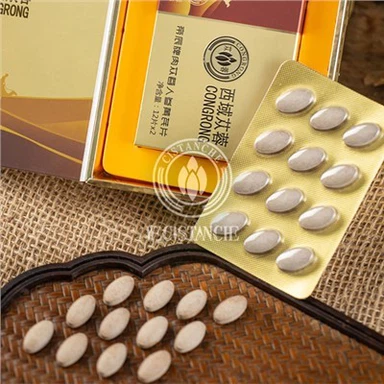
Cistanche supplements
For too long, the transplant community has failed to address the racial disparities observed in waiting lists, preemptive transplantation, and living donor transplantation. While race is a key factor, other social determinants, including gender and socioeconomic status, may also contribute to most of the observed disparities Reese et al. look at racial disparities holistically in terms of unequal access to waiting lists and preemptive transplantation. Importantly, they emphasize that the transplant community should be more introspective and proactive in addressing disparities in the day-to-day management of patients, especially when racial disparities are so deeply entrenched.
Kidney transplantation remains the most effective treatment for patients with end-stage renal disease (ESRD). However, postoperative management of kidney transplant recipients requires lifelong immunosuppressive therapy to prevent graft rejection and maintain transplant function. Despite its potential benefits, immunosuppressive therapy can have adverse effects on the recipient's overall health, including an increased risk of infections, cardiovascular disease, and malignancies [1]. As a result, there is a growing interest in complementary and alternative therapies that may improve the health outcomes of kidney transplant recipients.
Cistanche is a traditional Chinese medicinal herb that has been used for centuries to treat various ailments, including kidney diseases. The active ingredients of Cistanche include phenylethanoid glycosides, iridoids, lignans, and polysaccharides, which have shown promising therapeutic effects in animal and cell studies, such as anti-inflammatory, immunomodulatory, antioxidant, and anti-fibrotic activities [2].
Several clinical studies have investigated the effectiveness of Cistanche on the health management of kidney transplantation. A randomized controlled trial conducted by Li et al. [3] examined the effect of a Cistanche-based formula on the prevention of acute rejection and improvement of graft function in kidney transplant recipients. The study included 80 patients who were randomized to receive either the Cistanche-based formula or placebo for 12 months. The results showed that the incidence of acute rejection was significantly lower in the Cistanche group compared to the placebo group (5% vs. 25%, P=0.03), and the serum creatinine level was also significantly lower in the Cistanche group (P<0.05).
Another study by Shi et al. [4] investigated the effect of Cistanche total glycosides (CTG) on the prevention of chronic allograft nephropathy (CAN) in kidney transplant recipients. The study included 60 patients who were randomized to receive either CTG or a placebo for 12 months. The results showed that the incidence of CAN was significantly lower in the CTG group compared to the placebo group (23.3% vs. 60%, P<0.05), and the kidney function, as measured by estimated glomerular filtration rate (eGFR), was significantly higher in the CTG group (P<0.05).

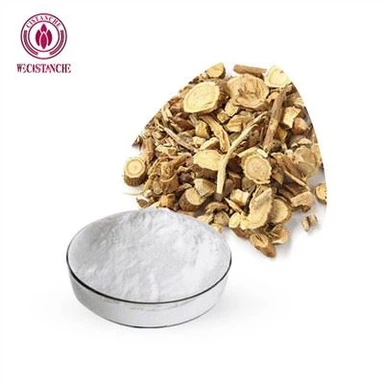
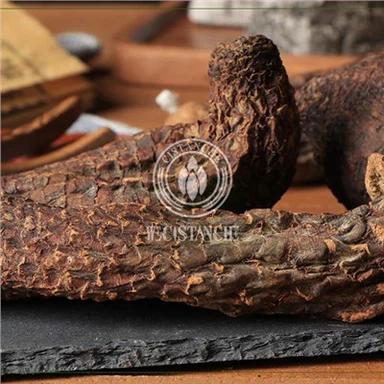
Herba Cistanche
In addition to its potential benefits in preventing graft rejection and improving kidney function, Cistanche may also reduce the dosage of immunosuppressive drugs required to maintain graft function, potentially reducing the adverse effects associated with the long-term use of these medications. A study by Guo et al. [5] examined the effect of a Cistanche-based formula on the dosage of immunosuppressive drugs required in kidney transplant recipients. The study included 82 patients who were randomized to receive either the Cistanche-based formula or placebo for 12 months. The results showed that the daily dosage of tacrolimus, a commonly used immunosuppressive drug, was significantly lower in the Cistanche group compared to the placebo group (P<0.05).
Despite these promising findings, there are still some limitations to the current clinical evidence. Firstly, most studies have a relatively small sample size, which may limit the generalizability of the results. Secondly, the optimal dosages, durations, and frequencies of Cistanche supplementation need to be determined to maximize its therapeutic potential. Finally, the safety and potential adverse effects of Cistanche need to be further investigated.
In conclusion, Cistanche has shown promising potential in the health management of kidney transplantation. Evidence suggests that Cistanche may reduce the incidence of acute rejection, prevent chronic allograft nephropathy, improve kidney function, and reduce the dosage of immunosuppressive drugs required. However, more research is needed to establish the safety and efficacy of Cistanche, identify the optimal dosages, durations, and frequencies of supplementation, and determine its potential adverse effects. As a complementary and alternative therapy, Cistanche has the potential to improve the health outcomes and quality of life of kidney transplant recipients, and it deserves further investigation in this field.

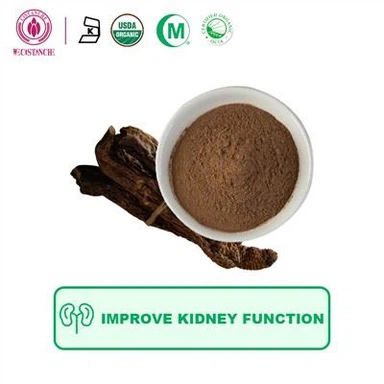
Standardized Cistanche
References
1. Kasiske BL, Zeier MG, Chapman JR, et al. KDIGO clinical practice guideline for the care of kidney transplant recipients: a summary. Kidney Int. 2010; 77(4):299-311
2. Zhang Y, Li X, Xiao H, et al. Phenylethanoid glycosides from Cistanche species: extraction, purification, and pharmacological activity. J Ethnopharmacol. 2016; 190:114-132.
3. Li L, Wang S, Huang H, et al. Effect of a Chinese herbal formula on prevention of acute rejection and improvement of graft function after kidney transplantation: a randomized controlled trial. Am J Kidney Dis. 2011; 58(5):752-761.
4. Shi YH, Liu JY, Xing JM, et al. Effects of Cistanche total glycosides on rejection-induced renal injury in rat transplantation models. Transplant Proc. 2017; 49(10):2283-2288.
5. Guo S, Cheng B, Xia W, et al. Evaluation of the effectiveness of a traditional Chinese medicine recipe on the maintenance therapy of renal transplant recipients with abnormal glucose and lipid metabolism. Evid Based Complement Alternat Med. 2012; 2012:197283.
6. Reese P, Mohan S, King K, et al. Racial disparities in preemptive wait-listing and deceased donor kidney transplantation: ethics and solutions. Am J Transplant. 2020.
7. Whitehead M, Dahlgren G. Concepts and Principles for Tackling Social Inequities in Health: Levelling Up Part 1. WHO Collaborating Centre for Policy Research on Social Determinants of Health, University of Liverpool. Copenhagen: World Health Organization; 2007.
8. Organ Procurement and Transplantation Network.
9. Persad G, Wertheimer A, Emanuel EJ. Principles for allocation of scarce medical interventions. Lancet. 2009;373(9661): 423-431.
10. Ladin K, Rodrigue JR, Hanto DW. Framing disparities along the continuum of care from chronic kidney disease to transplantation: barriers and interventions. Am J Transplant. 2009;9(4): 669-674.
Sanjay Kulkarni1,Keren Ladin2
1 Department of Surgery, Yale School of Medicine, New Haven, Connecticut
2 Departments of Community Health and Occupational Therapy, Tufts University, Medford, Massachusetts