Macrophage Activation By Low Molecular Weight Saccharides From Cistanche Deserticola
Mar 09, 2022
Contact: Audrey Hu Whatsapp/hp: 0086 13880143964 Email: audrey.hu@wecistanche.com
[Abstract]
To investigate the immune activation effect and mechanism of low molecular weight saccharides from Cistanche deserticola (LMSC) on mouse peritoneal macrophages, RAW264. 7 cells. The RAW264. 7 cells were divided into the normal control group, LPS positive control group, and LMSC treatment groups. The RAW264. 7 cells were treated with various concentrations of LMSC from 3. 91 to 62. 5 g·L - 1. The neutral red assay was employed to detect the phagocytic activity of macrophages. NO release was detected by using NO kit, and macrophage activation associated protein expression levels (TNF-α, IL-6, IKKβ, p-IKKβ, IκBα, p-IκBα, NF-κB, and p-NF-κB) were detected by Western blot. Results showed that LMSC had an activation effect on macrophages; it can significantly increase the release of NO in RAW264. 7 cells and promote the expression of cytokines TNF-α and IL-6. Moreover, LMSC significantly increased the phosphorylation of IKKβ, IκBα, And NF-κB p65. Furthermore, mannitol's one of the main constituents in LMSC significantly enhanced the phagocytic activity of macrophages. These results showed that LMSC could activate macrophages by up-regulating the NF-κB signaling pathway, and mannitol may be one of the main active components in LMSC.
[Keywords] Low molecular weight saccharides; Cistanche deserticola; immune activation; macrophage; inflammatory factor; NF-κB
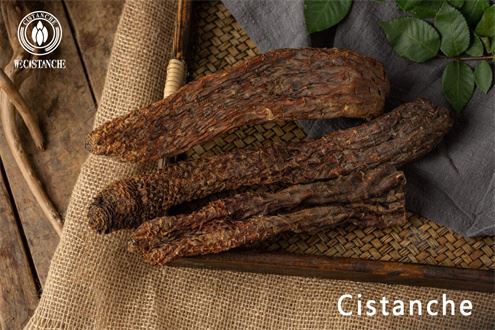
Cistanche deserticola Y. C. Ma is a plant belonging to the genus Cistanche deserticola Y. C. Ma. Its fleshy stem can be used as medicine. It has the functions of nourishing kidney yang, nourishing essence and blood, and moisturizing the intestines. It is known as "desert ginseng". The chemical components of Cistanche include phenylethanoid glycosides, iridoid glycosides, sugars, lignans, and many other types. Modern pharmacological studies have found that Cistanche has many biological activities such as neuroprotection, anti-tumor, immune regulation, anti-inflammatory, and antioxidant [1]. Studies have shown that the decoction of Cistanche and polysaccharides can significantly improve the phagocytic ability and secretion function of macrophages [2-3]. However, there is no report on the activity research of its low-molecular-weight carbohydrates. Therefore, this study used the in vitro culture system of RAW264. 7 mouse peritoneal macrophages to explore the immunomodulatory activity and related mechanisms of Cistanche low-molecular-weight carbohydrates. This research can provide more experimental evidence for a comprehensive understanding of Cistanche's immunomodulatory effect in the future, so as to further guide its clinical application.
Cistanche deserticola have many effects, click here to know more
1. Materials
RAW264. 7 cells were purchased from the Cell Center of the Chinese Academy of Medical Sciences; fetal bovine serum (FBS) was purchased from PAN Biotech, Germany; antibiotics and DMEM medium were purchased from Zhongke Machen Technology Co., Ltd. Lipopolysaccharide from Escherichia coli O55:B5 (LPS) were purchased from Sigma Company, USA. A Nitric oxide (NO) kit was purchased from Nanjing Jiancheng Institute of Bioengineering. ECL chemiluminescence kit was purchased from Thermo Fisher, USA; antibody was purchased from Cell Signaling Technology, USA; Cistanche cistanche total glycosides, cistanche low-molecular-weight sugars, and cistanche polysaccharides were self-made by our research group. The mass fraction of cistanche total glycosides was 78.76%. The mass fraction of low-molecular-weight sugars of Cistanche deserticola is 58. 00% and the mass fraction of Cistanche deserticola polysaccharides is 65. 24%. Tanon-5200Multi gel imaging split system was purchased from Shanghai Tianneng Technology Co., Ltd.; Sunrise-Basic microplate reader was purchased from TECAN company.
2. Method
2. 1 Neutral red method to measure the phagocytic activity of macrophages
Take the mouse peritoneal macrophages in the logarithmic growth phase, after trypsinization, count the cells, adjust the number of cells to 5 × 10⁴ cells/mL, and inoculate them in a 96-well cell culture plate, 100 μL/well, at 37 ℃ Cultured under 5% CO2 conditions, after the cells adhere to the wall, discard the culture supernatant, add DMEM medium (10% FBS + 1% P /S), LPS (1 mg·L - 1) and Cistanche cistanche respectively Total glycosides, Cistanche total polysaccharides, and Cistanche cistanche low-molecular-weight sugars (3.91 ~ 62.5 g·L -1, respectively, filtered with a filter membrane before administration) were cultured. After culturing for 48 hours, add 100 μL of 0.075% neutral red physiological saline solution to each well, continue culturing for 4 hours, aspirate the supernatant, wash 3 times with PBS, add cell lysate (glacial acetic acid-ethanol 1:1) 100 μL, place it at 4 ℃ for 2 h, and measure the absorbance (A540 nm) after the cells are lysed.
2. 2 Detection of NO release amount in cell supernatant
Inoculate RAW264. 7 cells in a 48-well plate (1 × 10⁵ cells/mL, 500 μL/well), aspirate the cell culture medium after overnight incubation, add DMEM medium (10% FBS + 1% P /S), 500 μL each of LPS (1 mg·L -1) and Cistanche cistanche total glycosides, total polysaccharides, and low-molecular-weight sugars (3.91 ~ 62.5 g·L -1, respectively). After 24 hours of induction culture, the supernatant was collected. Determine the concentration of NO in the cell supernatant of each group with the NO kit, follow the instructions, and finally detect the absorbance (A570 nm) with a microplate reader
2. 3. Western blot
Inoculate RAW264. 7 cells in a 6-well plate, aspirate the cell culture medium after overnight incubation, add DMEM medium (10% FBS + 1% P /S), LPS (1 mg·L - 1), and Cistanche total Polysaccharides and low-molecular-weight sugars (3.91 ~ 62.5 g·L -1) were each 2 mL, and the supernatant was discarded after 24 hours of induction culture. The cells were washed twice with PBS and discarded. After trypsinization, the cells are pipetted down. Centrifuge, remove the supernatant, add 100 μL NP40 Lysis Buffer, and lyse on ice for 40 min. After centrifugation, the supernatant was taken, and the protein concentration was determined by the BCA method, and the protein concentration of each histone was adjusted evenly. Take the same amount of protein samples and separate them on 12% SDS-PAGE under constant pressure. Then use the Bio-Rad transfer electrophoresis tank to transfer the membrane with a constant current of 350 mA for 1 hour, and transfer the protein to the PVDF membrane (pretreatment of the PVDF membrane: soak in methanol and equilibrate with the transfer buffer). After blocking with 5% skimmed milk (configured with TBST containing 0.1% Tween-20) for 1 h at room temperature, the membrane was washed 3 times with TBST, and the membrane was incubated in the protein primary antibody diluent at 4°C overnight. The membrane was washed 3 times with TBST every other day, and the corresponding diluent was added to incubate for 1 h. The membrane was washed 3 times with TBST, and the strips were developed with an ECL chemiluminescence developer.
2. 4 data analysis
The data are expressed as x ± s, and the significance of the difference is tested using GraphPad Prism 6 statistical software for one-way analysis of variance. Take P<0.01 as a very significant difference, and P<0.05 as a significant difference.
3. Results
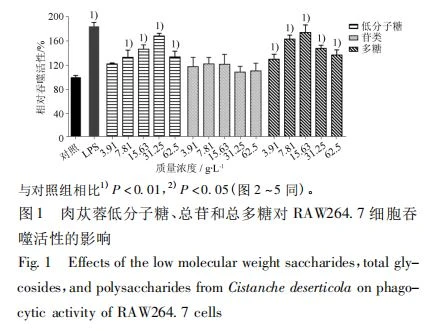
3. 1. Effects of Cistanche cistanche low-molecular-weight sugars, total glycosides, and total polysaccharides on the phagocytic activity of RAW264. 7 cells
The research on the chemical components of Cistanche shows that Cistanche mainly contains phenylethanoid glycosides, iridoid glycosides, and carbohydrates. In this experiment, the total glycosides of cistanche (including phenethyl alcohol glycosides and iridoid glycosides), low-molecular sugars, and sugars are selected. The three active sites of total polysaccharides were investigated for their effects on the activation of RAW264. 7 cells. Both Cistanche cistanche polysaccharide and cistanche low-molecular-weight sugar can significantly increase the phagocytic activity of RAW264. 7 cells, but the phagocytic activity of the total glycoside administration group does not change significantly. In addition, the positive control drug LPS also significantly improved the phagocytic activity of RAW264. 7 cells, as shown in Figure 1. The above results suggest that the low-molecular-weight sugars and polysaccharides of Cistanche may have the effect of activating RAW264. 7 cells.
3. 2. The effect of Cistanche total glycosides, low molecular sugars, and total polysaccharides on the content of nitric oxide (NO) in cell supernatant
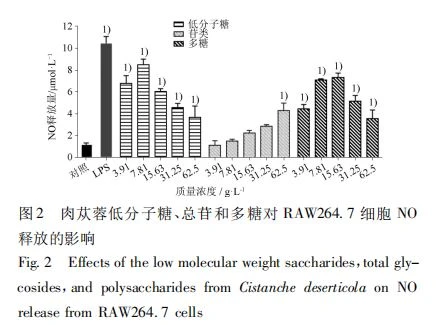
In order to further investigate the activation effect of the three active sites of Cistanche on RAW264. 7 cells, the content of NO in the cell supernatants stimulated by different drugs was determined. The results showed that the release of NO in the LPS group was significantly higher than that in the blank control group (P <0.01); the release of NO in the 5 doses of low molecular sugar and polysaccharides in the Cistanche cistanche group was significantly higher than that in the control group (P <0.01) ), and was dose-dependent; the total glycosides of Cistanche had no significant effect. The above results indicate that both the polysaccharides and low-molecular-weight sugars of Cistanche can promote the release of NO from RAW264. 7 cells. Among them, the effect of low-molecular-weight sugars of Cistanche is particularly significant, as shown in Figure 2.
3. 3. The effect of Cistanche cistanche low-molecular-weight sugar on the expression of TNF-α and IL-6 protein in RAW264. 7 cells
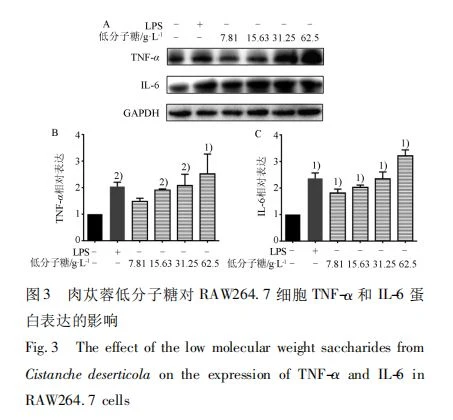
TNF-α is an important inflammatory mediator that appears in the activation process of RAW264. 7 cells, which can promote the synthesis and release of other cytokines (such as IL-6). The results showed that the expression of TNF-α and IL-6 was significantly increased after the low-molecular-weight sugar of Cistanche cistanche was stimulated, suggesting that the low-molecular-weight sugar of Cistanche may promote the expression of TNF-α and IL-6 in RAW264. 7 cells, thereby activating cellular immunity Phagocytosis, see Figure 3.
3. 4. The regulatory effect of Cistanche cistanche low-molecular-weight sugar on IKKβ /IκBα/NF-κB signaling pathway
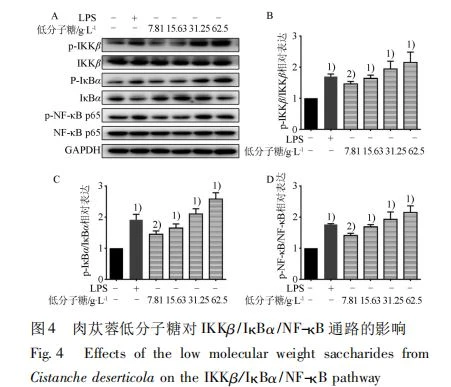
In order to explore the potential mechanism of Cistanche cistanche low-molecular-weight sugars in activating RAW264. 7 cells, the authors investigated its regulatory effects on the IKKβ/IκBα/NF-κB classical signaling pathway. Cistanche cistanche low-molecular-weight sugar can significantly increase the phosphorylation of NF-κB and the phosphorylation of its upstream key signal proteins IKKβ and IκBα, and reduce the expression of total IκBα protein, indicating that it has an activating effect on the IKKβ/IκBα/NF-κB signaling pathway. The positive control drug LPS also has a similar regulatory effect. In summary, the low-molecular-weight sugars of Cistanche may activate the IKKβ/IκBα/NF-κB signaling pathway, thereby causing the synthesis and release of cytokines such as TNF-α and IL-6, and finally causing the immune activation of RAW264. 7 cells, see Figure 4.
3. 5. Screening of active ingredients with macrophage activating effect in Cistanche low-molecular-weight sugars
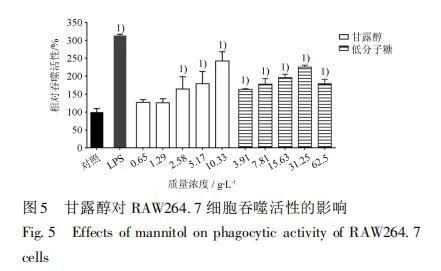
Our laboratory has analyzed the low-molecular sugars contained in Cistanche in the early stage and found that it mainly contains mannitol (16.53%), sucrose (8.34%), fructose (25.38%), and glucose (7. 75%), and other ingredients. So the author used the neutral red method to screen the activation effect of the above components on macrophages. Mannitol can significantly increase the phagocytic activity of macrophages in a dose-dependent manner, while the effects of other components are not significant. This suggests that mannitol may be one of the key active components in the low-molecular-weight sugars of Cistanche cistanche to activate macrophages, as shown in Figure 5.
4. Discussion
Cistanche cistanche, a parasitic plant of the Lydanaceae family, has been reported to have immunomodulatory effects, so it should contain immunomodulatory substances. In this experiment, the author screened the phagocytic activity of mouse peritoneal macrophages on different purified parts of Cistanche and found that the low-molecular-weight sugars and polysaccharides of Cistanche have the effect of macrophage activation, but the total glycosides of Cistanche are not obvious. At the same time, the author found that low-molecular-weight sugars can activate macrophages at lower concentrations, so the authors chose Cistanche low-molecular-weight sugars as the focus of subsequent research.

By examining the effect of low molecular weight cistanche sugar on the expression of cytokines TNF-α and IL-6, the authors found that low molecular weight cistanche sugar significantly increased the expression of TNF-α and IL-6, which further proved that low molecular weight cistanche sugar has an effect on mice. Peritoneal macrophages have an activating effect. So the author further explored its potential mechanism of action. Have research
It is shown that bacterial lipopolysaccharide (LPS) can induce activation of mouse macrophages and mouse glial cells through signal pathways such as JAK2/STAT3, NF-κB, p38/ERK, and MAPK [4-8]. The NF-κB pathway is recognized as a classic pathway, so the signal proteins on this pathway were tested in this experiment. The results showed that the low-molecular-weight sugars of Cistanche can significantly increase the phosphorylation of NF-κB and the phosphorylation of the key upstream signaling proteins IKKβ and IκBα, suggesting that the low-molecular-weight sugars of Cistanche may activate mouse peritoneal giants through the IKKβ/IκBα/NF-κB signaling pathway. Phage cells release inflammatory cytokines and then play a role in activating cellular immunity.
In the early stage of the laboratory, the chemical composition of the low-molecular-weight sugar extract of Cistanche deserticola was systematically analyzed. It is found that low-molecular-weight sugars mainly contain monomers such as mannitol, sucrose, fructose, and glucose. Further research found that mannitol can significantly improve the phagocytic activity of macrophages. Therefore, it is speculated that mannitol may be a key component of low-molecular-weight sugars that activates a cellular immune function.
In summary, this study used the macrophage in the Vitro culture system and found that the low-molecular-weight sugars of Cistanche have a significant activating effect on macrophages, and may activate mouse peritoneal macrophages through the NF-κB signaling pathway, and then play a role. Mannitol in low-molecular-weight sugars may play an important role in activating the phagocytic activity of macrophages.
References
[1] Tu Pengfei, Guo Yuhai. Cultivation techniques of desert Cistanche and its host Tamarix [M]. Beijing: Science Press, 2015:31.
[2] Gao Xiaoxia, Chen Jun, Peng Yanli. A research overview of the pharmacological effects of Cistanche deserticola polysaccharide [J]. Food and Drugs, 2015, 17(2):136.
[3] Wang Xiangyan, Qi Yun, Cai Ruslan, et al. Macrophage activation of Cistanche Polysaccharide [J]. Chinese Pharmacological Bulletin, 2009, 25(6):787.
[4] Liu Zhongyuan, Li Yanping. The biological activity and mechanism of bacterial lipopolysaccharide [J]. medical Science Review, 2010, 16(2):166.
[5] Fu Zhihui, Xu Ling, Huang Jiao, et al. LPS through the p38 /MAPK pathway and NF-κB Activation induces the expression of HIF-1α in RAW264. 7 cells [J]. Chongqing Medical University Journal, 2016, 41(10): 1033.
[6] Hao Yutong, Chen Chunhai, Yang Xuesen, et al. JAK2/STAT3 signaling pathway is involved in lipo poly Sugar-induced activation of microglia[J]. Journal of the Third Military Medical University, 2009, 31(12):1119.
[7] Song Xiaomin, Liao Lixi, Dong Xin, et al. Mulbascum glycosides inhibit lipopolysaccharide-induced inflammation of BV-2 microglia and its mechanism [J]. Chinese Journal of Traditional Chinese Medicine, 2016, 41(13): 2506.