Deficiency-Qi Stagnation TCM Theory: Herbal Therapy & Cistanche Extract To Improve Mild Cognitive Impairment & Support Brain Health
Jun 29, 2026
Abstract
Mild Cognitive Impairment (MCI) is an intermediate condition between normal aging and mild dementia, characterized mainly by impairment of memory and/or other cognitive domains while basic activities of daily living remain largely preserved. Approximately 75%–80% of individuals with MCI may progress to Alzheimer's disease (AD). In Traditional Chinese Medicine (TCM), the pathogenesis of MCI can be summarized as "root deficiency with branch excess," aligning closely with Academician Wang Yongyan's "Deficiency-Qi Stagnation" (虚气留滞, Xu Qi Liu Zhi) theory. Based on this theoretical framework, MCI is interpreted as a dynamic process in which deficiency (xu)-manifesting as kidney essence insufficiency, heart–spleen deficiency, and qi–blood deficiency-serves as the root; while stagnation/retention (liu zhi)-manifesting as phlegm turbidity and blood stasis-serves as the branch. Deficiency and retention mutually reinforce one another, jointly influencing the onset, progression, and prognosis of MCI.

Treatment is guided by the principle of "tonifying deficiency and unblocking stagnation" (补虚通滞, Bu Xu Tong Zhi), and the course of MCI can be divided into early, middle, and late phases. In the early phase, therapy emphasizes tonifying the kidney, strengthening the spleen, and nourishing the heart. In the middle phase, deficiency leads to excess, with phlegm and blood stasis obstructing the network vessels; treatment should focus on invigorating blood, resolving stasis, and transforming phlegm. In the late phase, deficiency and stagnation are deeply intertwined; treatment should integrate both root and branch approaches, combining reinforcement with elimination. This "tonify-and-unblock" strategy aims to harmonize systemic qi and blood to support healthy aging and provide a clinically meaningful reference for preventing and managing MCI.
Keywords (SEO-oriented): Mild Cognitive Impairment (MCI); Deficiency-Qi Stagnation (Xu Qi Liu Zhi); Tonify Deficiency and Unblock Stagnation; Herb Extract for Memory Support; Herb Extract for Cognitive Health; Herb Extract for Brain Fog; Herb Extract for Healthy Aging; Herb Extract for Anti-Aging; Phlegm Turbidity; Blood Stasis; Cistanche extract; herbal cognitive support

1. Introduction
Mild Cognitive Impairment (MCI) refers to a transitional clinical state in which memory and/or other cognitive functions are impaired, while daily living abilities are largely maintained, and diagnostic criteria for dementia are not met. It lies between normal aging and mild dementia. With rapid population aging, Alzheimer's disease (AD) has become one of the most common conditions among older adults and a major cause of cognitive decline. In China, both the prevalence and mortality of AD have been reported to exceed global averages, underscoring an urgent public health challenge. MCI is considered a prodromal stage of AD, and approximately 75%–80% of MCI cases may progress to AD.
Because cognitive domains in MCI are often relatively preserved compared with dementia, MCI represents an optimal window for intervention aimed at delaying progression. At present, no medication has been formally approved worldwide specifically to treat or reverse MCI. Drugs used for cognitive improvement, such as cholinesterase inhibitors, still require further validation regarding long-term efficacy and safety. Therefore, exploring safe and effective strategies to slow MCI progression remains a key research direction.
This paper applies the TCM framework of "Deficiency-Qi Stagnation" (虚气留滞) to interpret the core pathogenesis of MCI and proposes a staged treatment strategy. In addition, to support Western readership and industry relevance, we incorporate an evidence-informed "herbal regulation" perspective aligned with healthy aging motivations-namely maintaining memory resilience, supporting circulation and metabolic balance, and mitigating age-related decline-with an appropriate mention of Cistanche (Cistanche deserticola) extract as a popular ingredient in anti-aging and cognitive-support products.
2. Theoretical Background: What Is the "Deficiency-Qi Stagnation" (Xu Qi Liu Zhi) Theory?
The "Deficiency-Qi Stagnation" theory was first recorded in the Song dynasty text Ren Zhai Zhi Zhi Fang, describing a pathological state in which deficiency leads to excess. In this framework:
Deficiency-Qi (虚气, Xu Qi) refers to the decline of visceral "yuan qi" (vital qi), with weakened propulsion and transformation functions, resulting in impaired qi movement and disordered circulation.
Retention/Stagnation (留滞, Liu Zhi) develops on this basis: intangible stagnation gradually becomes tangible pathological products, such as phlegm accumulation and blood stasis, which further obstruct the body's functional networks.
Academician Wang Yongyan systematized and expanded this classical concept through clinical experience and classical scholarship, proposing it as a key mechanism in the onset and progression of TCM "brain disorders." In this view, MCI can be conceptualized as a dynamic sequence: deficiency precedes, retention follows, and both become mutually causal-"deficiency generates stagnation, and prolonged stagnation aggravates deficiency."

3. Pathogenesis of MCI Based on "Deficiency-Qi Stagnation"
TCM considers aging-related decline of vital qi as an internal foundation. As "upright qi" weakens, the body's driving and transforming functions decline; fluids may condense into phlegm, and blood circulation may slow into stasis. When phlegm and stasis lodge internally-particularly affecting brain networks-cognitive function becomes impaired.
Thus, the MCI pathogenesis can be summarized as Xu Qi (root deficiency) and Liu Zhi (branch excess):
Root: kidney essence insufficiency, heart–spleen deficiency, qi–blood deficiency
Branch: phlegm accumulation, blood stasis
Following Wang Yongyan's evolution model, MCI may be broadly staged into:
"Deficiency emerging; retention not yet formed"
"Deficiency worsens; retention has formed"
Modern TCM syndrome research similarly supports a trend from single deficiency patterns to combined deficiency–excess patterns, in which phlegm and stasis increasingly appear as the condition progresses.
Herbal Therapy Cistanche Supplement


Supportive Service Of Wecistanche-For more details about cooperation
Email:wallence.suen@wecistanche.com
4. Stage 1: Deficiency Emerging, Retention Not Yet Formed (Early MCI)
This stage corresponds to early MCI-often single-domain amnestic MCI or early multi-domain forms-characterized by mild memory decline or subtle cognitive fluctuation without broad domain impairment. Here, the key issue is functional dysregulation due to declining vital qi, resembling early biomedical stages where cognitive changes appear before obvious neurodegenerative structural changes.
4.1 Kidney Essence Deficiency: "Marrow Sea" Not Fully Nourished
Classic TCM texts describe the brain as the "residence of original spirit" and "sea of marrow." The kidney "governs bones and generates marrow," and kidney essence ascends to nourish the brain. When kidney essence declines due to aging or chronic illness, the "sea of marrow" becomes underfilled, resulting in reduced clarity of thinking and impaired memory.
4.2 Heart–Spleen Deficiency and Qi–Blood Deficiency
The heart governs blood and houses the spirit; the spleen is the source of qi and blood transformation and supports clear yang ascending. When heart and spleen are both deficient, qi and blood generation is insufficient, and the brain loses nourishment, presenting as forgetfulness, slow response, reduced attention, and mental fatigue-symptoms consistent with MCI.
5. Stage 2: Deficiency Worsens, Retention Has Formed (Middle-Stage MCI)
As deficiency deepens, circulation and fluid distribution become increasingly impaired. This stage corresponds to more sustained and worsening symptoms, with clear impairment across multiple cognitive domains. Here, phlegm turbidity and blood stasis are prominent, marking a shift from functional disturbance toward structural/network-level damage.
5.1 Phlegm Turbidity Obstructing the Clear Orifices
Phlegm in TCM is a pathological product of impaired fluid metabolism. The spleen and kidney are central: "phlegm is transformed by the spleen; its root is in the kidney." When the spleen fails to transform and transport, dampness accumulates into phlegm, which can "veil the clear orifices," disrupting cognition.
5.2 Blood Stasis Blocking Brain Networks
Healthy circulation requires free flow. When blood stagnates and obstructs vessels supplying the brain, nourishment fails and cognitive function declines. Wang Qingren's "blood stasis causing dementia" thinking emphasizes that when qi and blood become congealed, the brain's connection to visceral qi is disrupted. Importantly, deficiency and stasis often co-exist: when qi is weak, propulsion declines and stasis forms more easily; stasis, in turn, further worsens deficiency.
6. Deficiency and Retention Are Mutually Causal: A Vicious Cycle
When deficiency persists, phlegm and stasis accumulate and lodge in brain networks, potentially accelerating neuronal injury and leading to sharper cognitive decline. Retention can also lodge in kidney, heart, and spleen systems-reducing warming, propulsion, and transformation functions-thereby deepening deficiency. Some scholars further extend this model into a chain: "deficiency → stagnation → toxin formation → brain network damage," which may correspond clinically to rapid deterioration and higher risk of progression toward dementia.
7. Treatment Strategy: "Tonify Deficiency and Unblock Stagnation" (Bu Xu Tong Zhi)
Given that MCI progresses dynamically, treatment should follow the core principle of supporting the root while clearing the branch, staged by disease evolution.
7.1 Early Phase: Strongly Tonify Deficiency - Tonify Kidney, Strengthen Spleen, Nourish Heart
At this stage, the goal is to restore visceral function and replenish the "material basis" of cognition.
Representative strategies and formulas discussed in the source text include:
Dihuang Yinzi: tonifies kidney yin and yang, replenishes essence and marrow; reported in clinical contexts (e.g., post-stroke MCI) to improve cerebral perfusion parameters and cognitive outcomes.
Liuwei Dihuang Wan: nourishes kidney yin and supports spleen function; mechanistic studies discuss pathways involving amyloid-β, oxidative stress regulation, and cholinergic function.
Buzhong Yiqi Decoction: strengthens spleen qi; reported mechanistically to improve mitochondrial oxidative stress via the SIRT3/MnSOD/OGG1 pathway.
Guipi Decoction: supports heart–spleen and has been reported to reduce homocysteine (Hcy) levels and improve symptoms in heart–spleen deficiency pattern MCI.
Adjunctive modalities such as moxibustion and acupuncture targeting points like Baihui (GV20), Guanyuan (CV4), Zusanli (ST36), and Xuanzhong (GB39) are also reported for cognitive improvement in MCI.

7.2 Middle Phase: Skillfully Resolve Retention - Invigorate Blood, Transform Phlegm, Open the Orifices
At this stage, branch pathogens (phlegm and stasis) directly obstruct cognition. Treatment emphasizes:
Blood-invigorating and stasis-resolving herbs such as Chuanxiong, Yujin, Danshen, etc., with reported roles in modulating oxidative stress, neuroinflammation, and neuroplasticity.
Common "core herb pairs" in MCI prescriptions include Acorus tatarinowii (Shichangpu) + Polygala tenuifolia (Yuanzhi) combined with Chuanxiong, reflecting a classic "phlegm-resolving + circulation-promoting" logic.
Clinical observation studies suggest formulas like "Huayu Tongluo Decoction" may enhance cognitive and daily living functions in small-vessel disease–related MCI, potentially through improving microcirculation and inhibiting platelet aggregation.
7.3 Late Phase: Combine Tonification and Unblocking - Treat Both Root and Branch, Reinforce and Eliminate Together
In late-stage patterns (approaching AD thresholds), deficiency and retention become tightly bound. Treatment may integrate:
Strong tonification (qi, essence, marrow)
Phlegm/stasis resolution and, in some interpretations, detoxification to protect brain networks
The source text mentions approaches such as "Dihuang Yizhi Formula" and combination strategies like Guipi Decoction + Xuefu Zhuyu Decoction for mixed deficiency-stasis patterns, including post-stroke MCI contexts. "Buyang Huanwu Decoction" plus acupuncture is also discussed as potentially improving cognition and lowering Hcy and inflammatory markers.

8. Healthy Aging Motivation and Western-Friendly Interpretation (Herbal Regulation Approach)
For many adults in the US and Europe, the motivation to address MCI-adjacent concerns is not purely "treatment," but healthy aging optimization-maintaining memory confidence, reducing "brain fog," preserving executive function, and supporting long-term independence. Translating the "Bu Xu Tong Zhi" approach into a wellness-oriented model (without replacing medical care) can be expressed as:
Support foundational vitality (root): sleep, nutrition, stress resilience, and metabolic efficiency-paralleling "tonifying qi, blood, and essence."
Promote circulation and clearance (branch): vascular health and microcirculation, inflammatory balance, oxidative stress defense-paralleling "unblocking stasis and resolving phlegm."
Stage-based thinking: early support focuses on replenishment; mid-stage focuses on clearing obstruction; late-stage combines both.
8.1 Cistanche ExtractFits
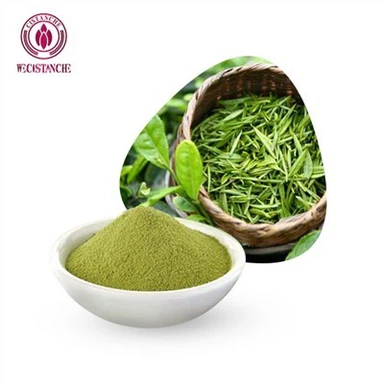
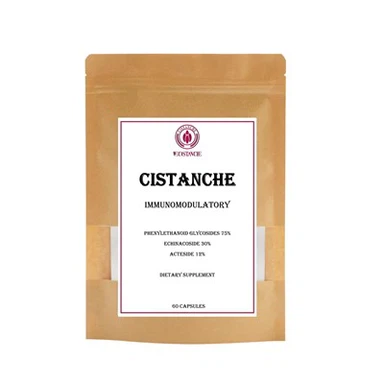
Cistanche (Rou Cong Rong, Cistanche deserticola) is traditionally categorized as a kidney-tonifying herb in TCM and is widely marketed in modern supplement categories associated with anti-aging and memory support. It can be presented as an herb aligned with "tonifying deficiency," particularly within kidney-based vitality support narratives (often used in aging-related weakness patterns).

9. Conclusion
Using the "Deficiency-Qi Stagnation" (Xu Qi Liu Zhi) theory, MCI can be understood as a root-deficiency/branch-excess condition: deficiency in heart, spleen, kidney, and qi–blood forms the root, while phlegm and blood stasis constitute the branch. Deficiency and retention reinforce each other and drive disease progression. A staged strategy guided by "tonify deficiency and unblock stagnation" can provide a coherent framework for clinical thinking and for wellness-oriented healthy aging education. Early intervention emphasizes replenishing kidney essence and supporting heart–spleen qi and blood; the middle phase emphasizes resolving phlegm and blood stasis to restore clarity; late-stage patterns require integrated reinforcement and elimination. This approach aims to harmonize systemic qi–blood dynamics and may offer a practical reference for prevention and management strategies during the MCI window.
References
Song WX, Wu WW, Zhao YY, et al. Evidence from a meta-analysis and systematic review reveals the global prevalence of mild cognitive impairment. Front Aging Neurosci. 2023;15:1227112.
Lü Ying, Zhang Ning, Zhang Pu, et al. Research progress on acupuncture treatment for Alzheimer's disease based on the theory of "kidney-brain correlation." Journal of Liaoning University of Traditional Chinese Medicine. 2025;27(8):160-165.
Zhao Tianci, Guo Shaobo, Zhao Biqing, et al. Research progress on the epidemiology of mild cognitive impairment. Traditional Chinese Medicine Research. 2025;38(2):92-96.
Hu ZJ, Wu LY, Jia JP, et al. Advances in longitudinal studies of amnestic mild cognitive impairment and Alzheimer's disease based on multi-modal MRI techniques. Neuroscience Bulletin. 2014;30(2):198-206.
Ma Qiannan, Bi Qi. Lifestyle interventions and pharmacological treatments for dementia. Chinese Journal of Geriatrics. 2017;36(4):358-360.
Diaz-Galvan P, Lorenzon G, Mohanty R, et al. Differential response to donepezil in MRI subtypes of mild cognitive impairment. Alzheimers Res Ther. 2023;15(1):117.
Jin Yizhu, Lu Yuan. Summary of clinical experience in analyzing postherpetic neuralgia of the Qi-deficiency and blood-stasis type based on the theory of "stasis due to deficiency" (Xu Qi Liu Zhi). Journal of Practical Traditional Chinese Internal Medicine. 2024;38(7):7-9.
Jin Yujing, Huang Shijing, Wang Yongyan. Textual research and elaboration on the pathogenesis theory of "stasis due to deficiency" (Xu Qi Liu Zhi). China Journal of Traditional Chinese Medicine and Pharmacy. 2024;39(12):6310-6318.
Zhang Hu, Diwu Yongchang, Yang Qian, et al. TCM syndrome elements and MMSE/MoCA scores in middle-aged and elderly patients with mild cognitive impairment. Study on the correlation of scale scores. *China Journal of Traditional Chinese Medicine and Pharmacy*. 2024;39(4):2021-2026.
Writing Group of the Chinese Guidelines for the Diagnosis and Treatment of Dementia and Cognitive Impairment; Professional Committee on Cognitive Impairment Diseases, Neurology Branch of the Chinese Medical Doctor Association. 2018 Chinese Guidelines for the Diagnosis and Treatment of Dementia and Cognitive Impairment (Part V): Diagnosis and treatment of mild cognitive impairment. *National Medical Journal of China*. 2018;98(17):1294-1301.
Zhou Huirui, Ma Jin. Treatment of Alzheimer's disease based on the theory of "replenishing the source of fire to dispel yin-coldness." *Journal of Practical Traditional Chinese Internal Medicine*. 2025;39(12):105-108.
Wang Huan, Sun Linjuan, Hu Xiaohua, et al. Discussion on the treatment of Alzheimer's disease using the method of replenishing Qi and nourishing blood based on Qi-blood theory. *Journal of Changchun University of Chinese Medicine*. 2025;41(11):1201-1205.
Chu Yiyu, Li Feng, Yang Shuhan, et al. Discussion on TCM diagnosis and treatment of amnesia based on the pathogenesis transformation of "Zang-Fu organs, meridians, and brain-marrow." *Shaanxi Journal of Traditional Chinese Medicine*. 2025;46(11):1520-1525.
Yang Meiju, Xie Lei, Su Kai. Discussion on the pathogenesis and treatment of Alzheimer's disease based on the theory of "stagnation of deficient Qi." *Acta Chinese Medicine*. 2026;41(5):960-963.
Duan Yu, Xu Mengqi, Cao Yuju. Discussion on the pathogenesis and syndrome differentiation/treatment of postmenopausal osteoporosis based on the theory of "stagnation of deficient Qi." *China Medical Herald*. 2025;22(15):150-153.
Fan Yipin, Li Jianpeng, Zhang Yingying, et al. Wang Yongyan's experience in treating vascular cognitive impairment based on the concepts of "stagnation of deficient Qi" and "toxin-induced damage to brain collaterals." *Journal of Traditional Chinese Medicine*. 2025;66(23):2411-2415.
Zhu Mingyue, Lu Yan, Liu Yuanbiao. Research progress on the mechanisms and clinical application of Dihuang Yinzi in treating vascular cognitive impairment. *Journal of Sichuan Traditional Chinese Medicine*. 2025;43(5):193-198.
Xiang Xianwen, Zhu Jiaying, Wang Jieling. Effect of "Shengqing Yisui Kaiqiao" (clearing-ascending, marrow-tonifying, and orifice-opening) acupuncture combined with Dihuang Yinzi on homocysteine (Hcy) levels in patients with mild cognitive impairment (MCI) following ischemic stroke. *Journal of Liaoning University of Traditional Chinese Medicine*. 2025-01-13 (online).
Zuo Kun, Tong Yuliang, Sun Ting, et al. Metabolomics study on the therapeutic effects and mechanisms of Liuwei Dihuang Pills in a transgenic *Caenorhabditis elegans* model of Alzheimer's disease. *Chinese Journal of Pharmaceutical Analysis*. 2023;43(8):1360-1368.
Dong YX, Li TH, Wang SS, et al. Buzhong Yiqi Decoction ameliorates mild cognitive impairment by improving mitochondrial oxidative stress damage via the SIRT3/MnSOD/OGG1 pathway. *Journal of Ethnopharmacology*. 2024;331:118237.
Feng Taozhen, Sun Dan. Effect of modified Guipi Decoction on homocysteine levels in patients with mild cognitive impairment characterized by deficiency of both heart and spleen. *Medical Diet and Health*. 2021;19(1):31, 88.
Zhang Lulu, Liang Yunhua, Dou Ruixia, et al. Correlation between cerebral gray matter volume and homocysteine in patients with mild cognitive impairment. *Chinese Journal of Practical Nervous Diseases*. 2025;28(6):684-688.
Zhao Lihua, Yu Bihan, Nong Xiucheng, et al. Correlation of serum and urine 8-isoprostane F2α levels with cognitive function in patients with mild cognitive impairment and the effect of moxibustion intervention. *Chinese Journal of Gerontology*. 2019;39(15):3699-3703.
Zhao Lihua, Nong Xiucheng, Mai Wei, et al. Study on the correlation between TCM constitution types and homocysteine levels in mild cognitive impairment. Guangxi Journal of Traditional Chinese Medicine. 2017;40(6):1-6.
Chen Jing, Chen Zhifu, Ouyang Hui, et al. Research progress on the mechanisms of *Acorus tatarinowii* (Shichangpu), *Curcuma wenyujin* (Yujin), and their herb pair in treating cognitive impairment. Frontiers of Medicine. 2025;15(18):26-29, 33.
Fang L, Cheng H, Chen W, et al. Therapeutic effects of Tanshinone IIA and Tetramethylpyrazine nanoemulsions on cognitive impairment and neuronal damage in Alzheimer's disease rat models. J Pharm Pharmacol. 2024;76(9):1169-1177.
Yin Hengbin, Ji Wenfeng, Hou Taifu, et al. Clinical observation of Huayu Tongluo Decoction in the treatment of mild cognitive impairment caused by cerebral small vessel disease. Clinical Journal of Traditional Chinese Medicine. 2024;36(8):1554-1558.
Zhang Mengxue, Ding Minrui, Zhang Tong, et al. Analysis of medication patterns for treating mild cognitive impairment with traditional Chinese medicine based on data mining. Pharmacology and Clinics of Chinese Materia Medica. 2023;39(9):106-111.
Jia Yuejin, Ma Pei, Wu Rouyan, et al. Analysis of the "Acorus tatarinowii–Polygala tenuifolia" (Shichangpu–Yuanzhi) herb pair in the prevention and treatment of dementia. Modern Traditional Chinese Medicine Clinical Practice. 2024;31(2):83-87.
Sun Yiguo, Gu Chao, Ma Jingyi, et al. Clinical study on Dihuang Yizhi Formula for treating post-stroke cognitive impairment (no dementia) with kidney-essence deficiency syndrome. Journal of Beijing University of Traditional Chinese Medicine. 2022;45(7):663-669.
Li Wenhao, Wu Zhifan, Wang Kai, et al. Clinical efficacy of modified Guipi Decoction combined with Xuefu Zhuyu Decoction in treating mild cognitive impairment following cerebral infarction. Chinese Journal of Experimental Traditional Medical Formulae. 2022;28(2):147-153.
Wu Weiwei, Jiang Tianxin, Gao Yubao, et al. Clinical study on acupuncture combined with modified Buyang Huanwu Decoction for post-stroke cognitive impairment. Liaoning Journal of Traditional Chinese Medicine. 2025-11-24 (online).