Neuroprotective Effects Of Four Phenylethanoid Glycosides On H2O2-Induced Apoptosis On PC12 Cells Via The Nrf2/ARE Pathway
Mar 04, 2022
Contact: Audrey Hu Whatsapp/hp: 0086 13880143964 Email: audrey.hu@wecistanche.com
Maiquan Li 1, Tao Xu 1, Fei Zhou 1, Mengmeng Wang 1, Huaxin Song 1, Xing Xiao and Baiyi Lu 1,*
1. Introduction
Oxidative stress, which is an imbalance of antioxidant homeostasis, induces lipid peroxidation, injury to protein and DNA, cell aging, and cell death. This process likely contributes to several neurodegenerative disorders, such as Alzheimer's disease (AD), Parkinson's disease (PD), and ischemia/reperfusion [1]. Hydrogen peroxide (H2O2), which is one of the main reactive oxygen species (ROS), is known to cause lipid peroxidation and DNA damage [2]. Moreover, H2O2 is an endogenous source of hydroxyl free radicals that contributes to the background level of cellular oxidative stress [3,4]. Therefore, therapeutic strategies for preventing oxidative stress-induced apoptosis may have the potential in neurodegenerative diseases treatment.
Nuclear factor erythroid 2-related factor 2 (Nrf2), is a transcription factor that is strongly associated with oxidative stress. Activation of Nrf2 induces the transcription of numerous antioxidant and detoxification genes, including heme oxygenase-1 (HO-1), NAD(P)H quinone oxidoreductase 1, anti-inflammatory [13], and immunomodulatory [14] bioactivities. Osmanthusfragrans is a common ingredient in several Asian foods and has long been consumed. We previously showed that O.fragrans flower extracts enhanced spatial learning and memory, inhibited oxidative damage, and exhibited neuroprotective activities in d-galactose-induced aging in an ICR mouse model [15]. Salidroside, acteoside, and isoacteoside are the major PhGs response for the antioxidant activities of O.fragrans flowers extracts [16].
Studies on the neuroprotective effect of PhGs have obtained desirable results. Salidroside significantly reduced cell apoptosis of PC12 cells that were exposed in MPP+ [17,18]. Acteoside also alleviated MPP+-induced apoptosis and oxidative stress in PC12 cells [19] and A p25-35-induced SH-SY5Y cell injury [20]. Echinacoside was investigated on tumor necrosis factor-a (TNFa)-induced apoptosis in SH-SY5Y cells [21], MPTP-induced dopaminergic toxicity in mice [22], glutamate-injured primary cultures of rat cortical cells [23], and 6-OHDA-induced damage in PC12 cells [24]. The results indicated that PhGs exhibited a cytoprotective effect and are potential agents to treat neurodegenerative diseases. Studies have shown the antioxidant properties of PhGs underly many other bioactivities for these compounds [25]. However, few studies have investigated the molecular mechanism of PhGs against oxidative toxicity.
In our study, we selected four typical PhGs as follows: salidroside (phenylethanoid monosaccharides), acteoside (phenylethanoid disaccharides), isoacteoside (phenylethanoid disaccharides), and echinacoside (phenylethanoid trisaccharides). We employed a model of neuronal death using differentiated PC12 cells [26] to investigate the protective effect and molecular mechanism of PhGs on the H2O2-induced PC12 cell model. We demonstrated that PhGs activated the Nrf2/ARE pathway by binding to Kelch-like ECH-associated protein 1 (Keap1). This process upregulated the antioxidant enzymes and increased the resistance of PC12 cells to oxidative stress.

Treatment of neurodegenerative disorders: PhGs from cistanche
2. Results
2.1. PhGs Suppressed H2O2-Induced Cytotoxicity in PC12 Cells
Cytotoxic effects of H2O2 and PhGs (0.1,1,5, and 10 卩g/mL) on PC12 cells were tested. The results showed that H2O2 induced loss of PC12 cell viability in concentration-dependent and time-dependent manners (Figure 1A). Exposure of PC12 cells to 200 H2O2 for 2 h resulted in cell viability of 57.4%. Pretreatment of cells with PhGs at 0.1,1, 5, and 10 昭/mL had no effect on cell viability (Figure 1B) and markedly protected PC12 cells from H2O2-induced damage by improving the cell viability as 9.549-22.141%, 12.092-25.289%, 1.470-9.289%, and 3.411-11.441%, respectively (Figure 1C). However, salidroside (0.1 ^g/mL), isoacteoside (0.1, 1, 5, and 10 ^g/mL), echinacoside (0.1,1, and 5 ^g/mL) pretreatment showed no significant difference on HzOz-induced cell injury. Pretreatment of cells with PhGs also ameliorated the morphological characteristic induced by H2O2 (Figure 1D).
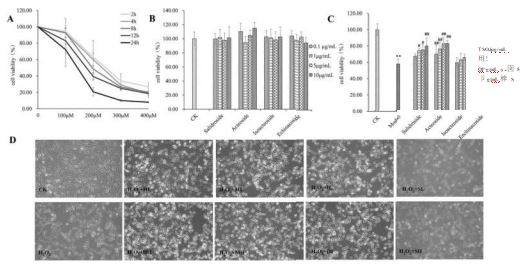
Figure 1. PhGs suppressed H2O2-induced cytotoxicity in PC12 cells. Cell viability was detected by MTT assay. Cytotoxic effect of H2O2 (A) and PhGs (B) at different concentrations on PC12 cells. (C) PhGs attenuated H2O2-induced decrease in cell viability. PC12 cells were incubated with PhGs (0.1, and 10 mg/mL) for 24 h, and then incubated with 200 pM H2O2 for another 2 h after the PhGs were removed. (D) Morphological observation. Cells after treatment were observed by a phase-contrast microscope (x100), CK: normal group, H2O2: H2O2 treated group, HL: salidroside low dosage treated group, HH: salidroside high dosage treated group, ML: acteoside low dosage treated group, MH: acteoside high dosage treated group, IL: isoacteoside low dosage treated group, IH: isoacteoside high dosage treated group, SL: echinacoside low dosage treated group, SH: echinacoside high dosage treated group. ** p < 0.01 versus untreated group; # p < 0.05, versus H2O2 treated group; ## p < 0.01, versus H2O2 treated group.
2.2. PhGs Suppressed H2O2-Induced Intracellular Accumulation of ROS, Lipid Peroxidation (MDA), and Increased Superoxide Dismutase (SOD) Activities in PC12 Cells
Exposure of PC12 cells to 200 pM H2O2 for 2 h increased ROS levels, MDA content, and decreased SOD activity (Figure 2). PhGs pretreatment attenuated ROS level, salidroside, and acteoside, and the high dosage of isoacteoside and echinacoside pretreatment significantly attenuated ROS level (p < 0.01). Salidroside pretreatment showed no effect on MDA content, but acteoside pretreatment significantly attenuated MDA content (p < 0.05). Isoacteoside and echinacoside pretreatment significantly attenuated MDA content to a greater

Figure 2. PhGs blocked ROS and MDA accumulation and increased the activities of SOD in PC12 cells. PC12 cells were incubated with PhGs (0.1, and 10 四g/mL) for 24 h, and then incubated with 200 |^M H2O2 for another 2 h after the PhGs were removed. (A) PhGs blocked ROS and MDA accumulation. (B) PhGs blocked MDA accumulation. (C) PhGs increased the activities of SOD. CK: normal group, Model: H2O2 treated group, Salidroside: salidroside treated group, Acteoside: acteoside treated group, Isoacteoside: isoacteoside treated group, Echinacoside: echinacoside treated group. ** p < 0.01 versus untreated group; # p < 0.05, versus H2O2 treated group, ## p < 0.01, versus H2O2 treated group.
2.3.PhGs Reversed H2O2-Induced Apoptosis in PC12 Cells
H2O2 treatment (200 |1M) for 2 h significantly increased apoptosis in PC12 cells, with a total apoptotic rate up to 16.02% (Figure 3). However, pretreatment with PhGs (0.1 and 10 卩g/mL) for 24 h decreased the apoptosis rate in a concentration-dependent manner (p < 0.01). Salidroside, acteoside, isoacteoside, and echinacoside markedly decreased the percentage of cell apoptosis by 4.750-6.627%, 4.413-5.800%, 6.593-10.047%, and 1.530-7.510%, respectively.
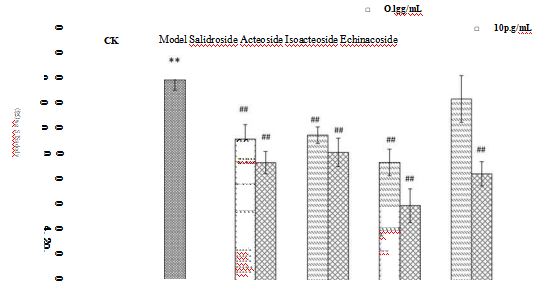
Figure 3. PhGs reversed H2O2-induced apoptosis in PC12 cells. PC12 cells were incubated with PhGs (0.1, and 10 卩g/mL) for 24 h, and then incubated with 200 pM H2O2 for another 2 h after the PhGs were removed. Then, apoptosis was measured by flow cytometry using a PI/FITC fluorescent probe. CK: normal group, Model: H2O2 treated group, Salidroside: salidroside treated group, Acteoside: acteoside treated group, Isoacteoside: isoacteoside treated group, Echinacoside: echinacoside treated group. ** p < 0.01 versus untreated group; ## p < 0.01, versus H2O2 treated group.
2.4. PhGs Reversed H2O2-Induced Downregulation of Protein Expression of HO-1, NQO1, GCLC, and GCLM
HO-1, NQO1, and glutamate-cysteine ligase (GCL) are important cellular antioxidant enzymes, and HO-1, NQO1, and catalytic or modify subunits of GCL (GCLC or GCLM) are Nrf2-regulated downstream genes [27]. Protein expression of HO-1, NQO1, GCLC, and GCLM was observed after treatment. An obvious difference was found between the protein expression of HO-1 and NQO1 with or without H2O2 (Figure 6A-C) (p < 0.01). PhGs (0.1 and 10 p^g/mL) reversed the H2O2-induced downregulation of protein expression of HO-1 (except salidroside at 0.1 pg/mL), NQO1 (except acteoside at 0.1 pg/mL) (p < 0.01). H2O2 also downregulated GCLC and GCLM protein expression (p < 0.05) (Figure 6A,D,E). PhGs (0.1 and 10 pg/mL) reversed H2O2-induced downregulation of protein expression of GCLC (except echinacoside at 0.1 pg/mL) (p < 0.01) and GCLM (except salidroside at 0.1 pg/mL) (p < 0.01). Then, the chemical inhibitors for HO-1 were used to further evaluate the roles of the antioxidant enzymes in regulating the protection of PhGs against H2O2-induced cytotoxicity. PhGs (0.1 and 10 pg/mL) prevented H2O2-induced cytotoxicity, but such protective effect was reversed by HO-1 inhibitor ZnPP (p < 0.01) at 20 pM (Figure 6F, p < 0.01).
2.5. Keap1 Expression and Molecular Docking Analysis
Under physiological conditions, Keap1 acts as a repressor protein of Nrf2 by binding to the Neh2 domain of Nrf2 and targeting Nrf2 to a Cul3-based E3 ubiquitin ligase for ubiquitination and subsequent degradation by the 26S proteasome [28]. Binding capacity to Keap1 of PhGs was evaluated by molecular docking analysis to investigate the mechanism under their antioxidant effect.

Antioxidant effect: Cistanche PhGs
3. Discussion
We investigated the neuroprotection of PhGs on H2O2 induced-cytotoxicity in PC12 cells. The results show that PhGs pretreatment significantly suppressed HzOz-induced cytotoxicity, attenuated the intracellular ROS level, improved the level of intracellular antioxidant enzymes, and ultimately reversed H2O2-induced cytotoxicity in PC12 cells. Moreover, PhGs increased the transcriptional activation of Nrf2, reversed the HzOz-induced downregulation of the protein expression of HO-1, NQO1, GCLC, and GCLM. In addition, PhGs showed potential interaction with the Nrf2 binding site in the Keap1 protein.
In the H2O2-induced PC12 cell injury, lipid peroxidation, which refers to oxidative degradation of lipid, increased the permeability of membranes, leading to cell damage [29]. MDA formation is widely used as the index of lipid peroxidation [30]. H2O2 enhanced ROS production and exhausted antioxidant defense enzymes, such as SOD, catalase, and GPx. This process leads to oxidative stress [31], which plays a key role in the causation and progression of the majority of neurodegenerative disorders. Consistent with previous studies, we observed an increased level of ROS, reduced intracellular antioxidant enzymes, and enhanced apoptosis of PC12 cells after H2O2 treatment. PhGs pretreatment significantly attenuated HzOz-induced increase in intracellular ROS, improved intracellular antioxidant enzymes, and ultimately reversed HzOz-induced cytotoxicity in PC12 cells.
Kuang et al. [32] reported that echinacoside showed a significant neuroprotective effect on H2O2-induced cytotoxicity in PC12 cells through the mitochondrial apoptotic pathway. In this study, we found that echinacoside, salidroside, acteoside, and isoacteoside showed neuroprotective effects by enhancing the antioxidant activity of PC12 cells because they increased the transcriptional activation of Nrf2 and upregulated the downstream protein expression of HO-1, NQO1, GCLC, and GCLM. Numerous studies have clearly demonstrated that activation of Nrf2 target genes, in particular HO-1, in astrocytes and neurons strongly protect against inflammation, oxidative damage, and cell death. The HO-1 system has been reported to be very active in the central nervous system, and its modulation apparently plays a crucial role in the pathogenesis of neurodegenerative disorders [33]. Recent studies also clarified the role of Nrf2 in the progression and risk of PD [9] and Keap1 as an efficient target for the reactivation of Nrf2 in AD [34]. The results support new evidence for Nrf2 as a therapeutic target in neurodegenerative diseases.
Molecular docking analysis showed that PhGs could bind to Keap1, with the following binding capacities: echinacoside > isoacteoside > acteoside > salidroside. Consistent with these results, PhGs pretreatment led to the Nrf2 nuclear translocation, with the following Nrf2 expression in the nucleus: echinacoside > isoacteoside * acteoside > salidroside. We assumed that the number of glycosides affected the possible binding mode of PhGs and Keap1, and the binding mode further caused the release of Nrf2 from Keap1. This process resulted in the activation of Nrf2 and the downstream genes and ultimately protects PC12 cells from H2 O2 -induced oxidative stress.

Neuroprotective effects of cistanche PhGs
4. Materials and Methods
4.1. Chemical Compounds and Reagents
Salidroside (CAS No. 10338-51-9), acteoside (CAS No. 61276-17-3), isoacteoside (CAS No. 61303-13-7), and echinacoside (CAS No. 82854-37-3) were purchased from YYuanye Biotechnology Company (Shanghai, China). The PhGs was dissolved in PBS to produce a 10 mg/mL stock solution, which was stored at -20 °C. H2O2 was purchased from Aladdin® (Shanghai, China). RPMI-1640 medium and fetal bovine serum were purchased from Hyclone (Logan, UT, USA), and 0.5% trypsin EDTA, penicillin, and streptomycin were purchased from Keyi (Hangzhou, China). MDA, SOD diagnostic kits, MTT, and DCFH-DA were purchased from Beyotime Institute of Biotechnology (Nanjing, Jiangsu, China). Annexin V-FITC/PI double staining Kit was purchased from Solarbio Life Sciences (Beijing, China). Antibodies to Nrf2, Histone H3, Keap1, HO-1, NQO1, GCLC, GCLM, and p-actin, anti-mouse-horseradish peroxide (HRP) IgG, and anti-rabbit-HRP-IgG were purchased from Abcam (London, UK). Inhibitors of HO-1 and ZnPP were purchased from Sigma Chemical Co. (St. Louis, MO, USA). RNAiso Plus, PrimeScript™RT reagent Kit with gDNA Eraser, and SYBR® Premix Ex Taq™ II were bought from Takara (Shiga, Japan). Lipofectamine® RNAiMAX Transfection Reagent was purchased from Thermo Fisher Scientific (Waltham, UK). The Nrf2 siRNA sequences were as follows: forward, CCGAAUUACAGUGUCUUAA; and reverse, UUAAGACACUGUAAUUCGG. Meanwhile, control siRNA sequences were as follows: forward, UUCUCCGAACGUGUCACGU; and reverse, ACGUGACACGUUCGGAGAA.
4.2. Cell Culture
Mouse adrenal pheochromocytoma line (PC12 cells) was obtained from the Institute of Biochemistry and Cell Biology, SIBS, (CAS, Shanghai, China). The cells were maintained in RPMI-1640 (Hyclone) containing 10% fetal bovine serum (Hyclone), 100 U/mL penicillin, and 0.1 mg/mL streptomycin at 37 °C with 5% CO2. The medium was changed every other day.
4.3. Cell ViabilityAssay
PC12 cells were seeded in 96-well plates at 2 x 10⁴ cells/well. After attachment, cells were preincubated with or without inhibitor for 20 min, incubated with or without PhGs for 24 h, and then incubated with H2O2 for another 2 h after the PhGs were removed. After incubation, the cells were treated with 5 mg/mL MTT for 4 h at37 °C, and the media were carefully removed. The formazan crystals that had formed by surviving cells were dissolved in 150 rL of DMSO to generate a blue color [35], and the absorbance was measured at 570 nm on a plate reader. Controls utilized the same concentration of medium with DMSO alone. Cell viability was normalized as the percentage of control.
The concentrations of PhGs (0.1,1,5, and 10 Rg/mL) were chosen depending on the cytotoxicity analysis of PhGs and the reported cytoprotective effect of echinacoside [32]. According to the report, there was no cytotoxicity effect shown below 10 Rg/mL, and echinacoside was reported to show cytoprotective effect in the HzOz-injured cell model.
4.4. Apoptosis Assay
Apoptosis was detected with an Annexin V-FITC/PI double staining Kit (Solarbio). PC12 cells were seeded in 6-well plates at 2 x 10⁵ cells/well. After attachment, cells were treated with PhGs (0.1 and 10 Rg/mL) for 24 h and incubated with H2O2 for another 2 h after the PhGs were removed. After incubation, the cells were washed in cold PBS, centrifuged twice at 1500 rpm for 10 min, and resuspended in 500 rL of binding buffer. FITC-labeled Annexin V (5 rL) and propidium iodide.
Abbreviations
GCLC glutamate-cysteine ligase-catalytic subunit
GCLM glutamate-cysteine ligase-catalytic modifier subunit
H2O2 hydrogen peroxide
HO-1 heme oxygenase 1
Keap1 Kelch ECH association protein 1
NQO1 NAD(P)H quinone oxidoreductase 1
Nrf2 nuclear factor erythroid 2-related factor 2
PhGs salidroside, acteoside, isoacteoside, and echinacoside
ROS reactive oxygen species
ZnPP zinc protoporphyrin

Cistanche deserticola extract: PHG of cistanche
References
1. Sun, A.Y.; Chen, Y.M. Oxidative stress and neurodegenerative disorders. J. Biomed. Sci. 1998, 5, 401-414. [CrossRef] [PubMed]
2. Maheshwari, A.; Micro, M.M.; Aggarwal, A.; Sharma, R.K.; Nandan, D. Pathways involved in testicular germ cell apoptosis induced by H2O2 in vitro. FEBS J. 2009,276, 870-881. [CrossRef] [PubMed]
3. Halliwell, B. Reactive oxygen species and the central nervous system. J. Neurochem. 1992, 59,1609-1623. [CrossRef] [PubMed]
4. Richardson, J.S.; Subbarao, K.V.; Ang, L.C. On the possible role of iron-induced free radical peroxidation in neural degeneration in Alzheimer's disease. Ann. N. Y. Acad. Sci. 1992, 648, 326-327. [CrossRef] [PubMed]
5. Zhang, D.D. Mechanistic studies of the Nrf2-Keap1 signaling pathway. Drug Metab. Rev. 2006, 38, 769-789. [CrossRef] [PubMed]
6. Itoh, K.; Tong, K.I.; Yamamoto, M. Molecular mechanism activating Nrf2-Keap1 pathway in the regulation of adaptive response to electrophiles. Free Radic. Biol. Med. 2004, 36,1208-1213. [CrossRef] [PubMed]
7. Kong, A.N.; Owuor, E.; Yu, R.; Hebbar, V.; Chen, C.; Hu, R.; Mandlekar, S. Induction of xenobiotic enzymes by the map kinase pathway and the antioxidant or electrophile response element (ARE/EpRE). Drug Metab. Rev. 2001, 33, 255-271. [CrossRef] [PubMed]
8. Buendia, I.; Michalska, P.; Navarro, E.; Gameiro, I.; Egea, J.; Leon, R. Nrf2-ARE pathway: An emerging target against oxidative stress and neuroinflammation in neurodegenerative diseases. Pharmacol. Ther. 2016, 157, 84-104. [CrossRef] [PubMed]
9. Skibinski, G.; Hwang, V; Ando, D.M.; Daub, A.; Lee, A.K.; Ravisankar, A.; Modan, S.; Finucane, M.M.; Shabby, B.A.; Finkbeiner, S. Nrf2 mitigates LRRK2- and a-synuclein-induced neurodegeneration by modulating proteostasis. Proc. Natl. Acad. Sci. USA 2016, 114, 1165-1170. [CrossRef] [PubMed]
10. Jimenez, C.; Riguera, R. Phenylethanoid glycosides in plants: Structure and biological activity. Nat. Prod. Rep. 1994, 11, 591-606. [CrossRef] [PubMed]
11. Georgiev, M.; Alipieva, K.; Orhan, I.; Abrashev, R.; Denev, P.; Angelova, M. Antioxidant and cholinesterases inhibitory activities of Verbascum xanthophoeniceum Griseb. and its phenylethanoid glycosides. Food Chem. 2011, 128, 100-105. [CrossRef] [PubMed]
12. Li, N.; Wang, J.; Ma, J.; Gu, Z.; Jiang, C.; Yu, L.; Fu, X. Neuroprotective Effects of Cistanches Herba Therapy on Patients with Moderate Alzheimer/s Disease. Evid.-Based Complement. Altern. Med. 2015, 2015,103985. [CrossRef] [PubMed]
13. Liu, Y.L.; He, W.J.; Mo, L.; Shi, M.F.; Zhu, Y.Y.; Pan, S.; Li, X.R.; Xu, Q.M.; Yang, S.L. Antimicrobial, anti-inflammatory activities and toxicology of phenylethanoid glycosides from Monochasma savatieri Franch. ex Maxim. J. Ethnopharmacol. 2013,149, 431-437. [CrossRef] [PubMed]
14. Dong, Q.; Yao, J.; Fang, J.N.; Ding, K. Structural characterization and immunological activity of two cold-water extractable polysaccharides from Cistanche deserticola Y. C. Ma. Carbohydr. Res. 2007, 342,1343-1349. [CrossRef] [PubMed]
15. Xiong, L.; Mao, S.; Lu, B.; Yang, J.; Zhou, F.; Hu, Y.; Jiang, Y.; Shen, C.; Zhao, Y. Osmanthusfragrans Flower Extract and Acteoside Protect Against d-Galactose-Induced Aging in an ICR Mouse Model. J. Med. Food 2016, 19, 54-61. [CrossRef] [PubMed]
16. Jiang, Y.; Mao, S.; Huang, W.; Lu, B.; Cai, Z.; Zhou, F.; Li, M.; Lou, T.; Zhao, Y. Phenylethanoid Glycoside Profiles and Antioxidant Activities of Osmanthusfragrans Lour. Flowers by UPLC/PDA/MS and Simulated Digestion Model. J. Agric. Food Chem. 2016, 64, 2459-2466. [CrossRef] [PubMed]
17. Li, X.; Ye, X.; Li, X.; Sun, X.; Liang, Q.; Tao, L.; Kang, X.; Chen, J. Salidroside protects against MPP+-induced apoptosis in PC12 cells by inhibiting the NO pathway. Brain Res. 2011,1382, 9-18. [CrossRef] [PubMed]
18. Zhang, L.; Ding, W.; Sun, H.; Zhou, Q.; Huang, J.; Li, X.; Xie, Y.; Chen, J. Salidroside protects PC12 cells from MPP+-induced apoptosis via activation of the PI3K/Akt pathway. Food Chem. Toxicol. 2012, 50, 2591-2597. [CrossRef] [PubMed]
19. Sheng, G.Q.; Zhang, J.R.; Pu, X.P.; Ma, J.; Li, C.L. Protective effect of verbascoside on 1-methyl-4- phenylpyridinium ion-induced neurotoxicity in PC12 cells. Eur. J. Pharmacol. 2002, 451,119-124. [CrossRef]
20. Wang, H.; Xu, Y.; Yan, J.; Zhao, X.; Sun, X.; Zhang, Y.; Guo, J.; Zhu, C. Acteoside protects human neuroblastoma SH-SY5Y cells against beta-amyloid-induced cell injury. Brain Res. 2009, 1283, 139-147. [CrossRef] [PubMed]
21. Min, D.; Jin, Y.Z.; Yong, J.; Zheng, B.L.; Yao, H.W. Echinacoside rescues the SHSY5Y neuronal cells from TNFa-induced apoptosis. Chin. Pharmacol. Bull. 2005, 505,11-18.
22. Zhao, Q.; Gao, J.P; Li, W.W.; Cai, D.F. Neurotrophic and neurorescue effects of Echinacoside in the subacute MPTP mouse model of Parkinson's disease. Brain Res. 2010,1346, 224-236. [CrossRef] [PubMed]
23. Koo, K.A.; Sung, S.H.; Park, J.H.; Kim, S.H.; Lee, K.Y.; Kim, Y.C. In vitro neuroprotective activities of phenylethanoid glycosides from Callicarpa dichotoma. Planta Med. 2005, 71, 778-780. [CrossRef] [PubMed]
24. Liu, Y.G.; Li, X.; Xiong, C.; Yu, B.; Pu, X.; Ye, X.S. Synthetic phenylethanoid glycoside derivatives as potential neuroprotective agents. Eur. J. Med. Chem. 2015, 95, 313-323. [CrossRef] [PubMed]
25. Fu, G.; Pang, H.; Wong, Y.H. Naturally occurring phenylethanoid glycosides: Potential leads for new therapeutics. Curr. Med. Chem. 2008, 15, 2592-2613. [CrossRef] [PubMed]
26. Greene, L.A.; Tischler, A.S. Establishment of a noradrenergic clonal line of rat adrenal pheochromocytoma cells which respond to nerve growth factor. Proc. Natl. Acad. Sci. USA 1976, 73, 2424-2428. [CrossRef] [PubMed]
27. Liang, Q.N.; Sheng, Y.C.; Jiang, P.; Ji, L.L.; Xia, Y.Y.; Min, Y.; Wang, Z.T. The difference of glutathione antioxidant system in newly weaned and young mice liver and its involvement in isoline-induced hepatotoxicity. Arch. Toxicol. 2011, 85, 1267-1279. [CrossRef] [PubMed]
28. Kobayashi, A.; Kang, M.; Okawa, H.; Ohtsuji, M.; Zenke, Y; Chiba, T.; Igarashi, K.; Yamamoto, M. Oxidative Stress Sensor Keap1 Functions as an Adaptor for Cul3-Based E3 Ligase To Regulate Proteasomal Degradation of Nrf2. Mol. Cell. Biol. 2004,24, 7130-7139. [CrossRef] [PubMed]
29. Cornelius, C.; Crupi, R.; Calabrese, V; Graziano, A.; Milone, P.; Pennisi, G.; Radak, Z.; Calabrese, E.J.; Cuzzocrea, S. Traumatic brain injury: Oxidative stress and neuroprotection. Antioxid. Redox Signal. 2013, 19, 836-853. [CrossRef] [PubMed]
30. Hou, Z.; Luo, W.; Sun, X.; Hao, S.; Zhang, Y.; Xu, F.; Wang, Z.; Liu, B. Hydrogen-rich saline protects against oxidative damage and cognitive deficits after mild traumatic brain injury. Brain Res. Bull. 2012, 88, 560-565. [CrossRef] [PubMed]
31. Ansari, M.A.; Roberts, K.N.; Scheff, S.W. A time course of contusion-induced oxidative stress and synaptic proteins in cortex in a rat model of TBI. J. Neurotrauma 2008, 25, 513-526. [CrossRef] [PubMed]
32. Kuang, R.; Sun, Y.; Yuan, W.; Lei, L.; Zheng, X. Protective effects of echinacoside, one of the phenylethanoid glycosides, on H2O2-induced cytotoxicity in PC12 cells. Planta Med. 2009, 75, 1499-1504. [CrossRef] [PubMed]
33. Scapagnini, G.; Vasto, S.; Abraham, N.G.; Caruso, C.; Zella, D.; Fabio, G. Modulation of Nrf2/ARE pathway by food polyphenols: A nutritional neuroprotective strategy for cognitive and neurodegenerative disorders. Mol. Neurobiol. 2011, 44, 192-201. [CrossRef] [PubMed]
34. Kerr, F.; Sofolaadesakin, O.; Ivanov, D.K.; Gatliff, J.; Gomez, P.B.; Bertrand, H.C.; Martinez, P.; Callard, R.; Snoeren, I.; Cochem, H.M. Direct Keap1-Nrf2 disruption as a potential therapeutic target for Alzheimer/s disease. PLoS Genet. 2017, 13, e1006593. [CrossRef] [PubMed]
35. Hansen, M.B.; Nielsen, S.E.; Berg, K. Re-examination and further development of a precise and rapid dye method for measuring cell growth/cell kill. J. Immunol. Methods 1989, 119, 203-210. [CrossRef]
36. Press, C. Virtual Screening in Drug Discovery; Crc Press: Boca Raton, FL, USA, 2005.
37. Muegge, I.; Martin, Y.C.; Hajduk, P.J.; Fesik, S.W. Evaluation of PMF scoring in docking weak ligands to the FK506 binding protein. J. Med. Chem. 1999, 42, 2498—2503. [CrossRef] [PubMed]
38. Kuntz, I.D.; Blaney, J.M.; Oatley, S.J.; Langridge, R.; Ferrin, T.E. A geometric approach to macromolecule-ligand interactions. J. Mol. Biol. 1982,161, 269-288. [CrossRef]
39. MD, E.; Murray, C.W.; Auton, T.R.; Paolini, G.V.; Mee, R.P. Empirical scoring functions: I. The development of a fast empirical scoring function to estimate the binding affinity of ligands in receptor complexes. J. Comput.-Aided Mol. Des. 1997,11,425-445.
© 2018 by the authors. Licensee MDPI, Basel, Switzerland. This article is an open-access article distributed under the terms and conditions of the Creative Commons Attribution (CC BY) license (http:ZZcreativecommons.org/licenses/byZ4.0Z).