Not Only Kidney Tonifying Medicine: Cistanche Tubulosa And Prevention And Treatment Of Cognitive Dysfunction From A Modern Pharmacological Perspective
Jun 05, 2026
Cistanche tubulosa is a traditional and precious medicinal herb in China, known as the "desert ginseng". Traditional Chinese medicine theory attributes its core functions to tonifying kidney yang, nourishing essence and blood, moistening intestines, and promoting bowel movements. It has long been used to relieve physical weakness, waist and knee soreness caused by kidney yang deficiency and insufficient essence and blood. In public perception, Cistanche tubulosa has always been a classic kidney tonifying product. But with the continuous deepening of modern pharmacological research, the academic community has found that the medicinal value of Cistanche tubulosa goes far beyond nourishing the kidneys. Its potential in the field of central nervous system protection is particularly prominent, and it has a clear preventive and therapeutic effect on various cognitive impairments. This article is based on modern pharmacological research results, systematically analyzing the core active ingredients, cognitive protective mechanisms, applicable cognitive impairment types, and research application value of Cistanche tubulosa, fully unlocking its new medicinal value.

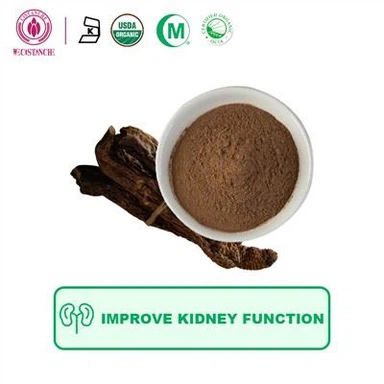
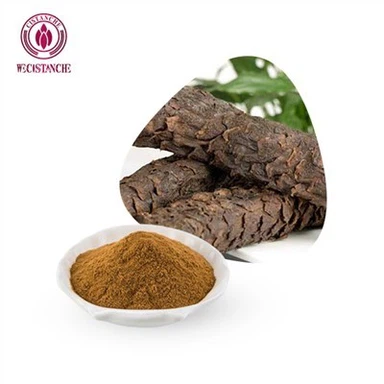
Cistanche tubulosa
Core active ingredients of Cistanche tubulosa for preventing and treating cognitive impairment
Modern medicinal chemistry research has confirmed that Cistanche tubulosa is rich in various bioactive substances, among which the components that play a key regulatory and protective role in cognitive function are clear and precise, which is the material basis for its prevention and treatment of cognitive dysfunction. The core active ingredients are mainly divided into three categories:
The first type is phenylethanoid glycosides, which are also the most core and extensively studied neuroprotective active ingredients in Cistanche tubulosa, mainly including verbascoside, pinecone glycoside, etc. This type of ingredient has strong biological activity and stability, and can penetrate the blood-brain barrier to act on central nervous system tissues. It is a core substance for improving neuronal damage and regulating neural signaling pathways, and is also a key effective ingredient in the anti-cognitive decline of Cistanche tubulosa. Related molecular docking experiments have confirmed that this type of component can form high-affinity binding with the core targets of Alzheimer's disease (AD), accurately intervening in the progression of the disease.

Phenylethanol glycoside is the main active component of Cistanche tubulosa
The second type is polysaccharides from Cistanche tubulosa, which, as water-soluble active ingredients, have the core advantages of regulating metabolic disorders, inhibiting neuroinflammation, and antioxidant damage in the body. At the same time, they can indirectly improve the brain's neural microenvironment and alleviate cognitive decline by regulating the homeostasis of intestinal microbiota, playing a significant role in the prevention and treatment of age-related cognitive impairment.
The third type is alkaloids and trace active steroids, which can assist in regulating neuronal apoptosis, improving brain blood circulation, enhancing brain tissue energy metabolism levels, and synergistically protecting the nervous system from multiple dimensions. They complement phenylethanolic glycosides and polysaccharides to construct the neuroprotective system of Cistanche tubulosa jointly.
Modern Pharmacological Analysis: Multiple Core Mechanisms of Cistanche tubulosa in Preventing and Treating Cognitive Impairment
The pathogenesis of cognitive dysfunction is complex, with core triggers including neuronal damage and apoptosis, oxidative stress damage, chronic neuroinflammation, loss of neurotrophic factors, disruption of gut microbiota, and abnormalities in key signaling pathways. Modern pharmacology in vitro and in vivo experiments, network pharmacology, and multi-omics studies have confirmed that Cistanche tubulosa can delay, improve, and even reverse cognitive impairment at the root through synergistic intervention of multiple targets, pathways, and mechanisms. The specific mechanism of action is as follows:
(1) Inhibit neuroinflammation and oxidative stress, block chronic nerve damage
Chronic neuroinflammation and excessive oxidative stress are the core causes of cognitive decline. Long-term accumulation of free radicals and infiltration of inflammatory factors can continue to damage hippocampal neurons, leading to a gradual decline in memory and learning abilities. Cistanche tubulosa can exert anti-inflammatory and antioxidant effects through multiple pathways: on the one hand, it activates the body's antioxidant system, clears excess free radicals in the brain, reduces lipid peroxidation damage, and alleviates neuronal oxidative apoptosis; On the other hand, it can regulate key signaling pathways such as NF - κ B and PPAR - γ, significantly downregulate the expression of pro-inflammatory factors such as IL-1 β, IL-6, TNF - α, inhibit excessive activation of microglia, prevent inflammation from continuously invading neural tissue, stabilize the brain neural microenvironment, and block the process of cognitive impairment from the source.

Desert living cistanche-Antioxidant
(2) Activate neuroprotective signaling pathways and repair neuronal damage
Neuronal damage, apoptosis, and synaptic dysfunction in the hippocampus are the direct pathological causes of memory loss and cognitive decline. Multiple animal experiments have confirmed that Cistanche tubulosa can specifically activate the cAMP/PKA/CREB neuroprotective signaling pathway, significantly increasing the expression levels of core proteins such as cAMP, PKA, and P-CREB in the pathway, thereby promoting the synthesis and secretion of downstream brain-derived neurotrophic factor (BDNF). BDNF is a key factor in maintaining neuronal survival, promoting synaptic repair and regeneration, effectively repairing damaged hippocampal neurons, enhancing synaptic transmission function, significantly improving learning and memory abilities in model animals, and reversing cognitive impairment. Meanwhile, Cistanche tubulosa can inhibit abnormal apoptosis of nerve cells, reduce neuronal loss, and maintain the integrity of the brain tissue neural structure.

Cistanche prevents Alzheimer's disease
Click here to view Cistanche Improving Memory Preventing Alzheimer's Disease products
【Ask for more】 Email:cindy.xue@wecistanche.com / WhatsApp: 0086 18599088692 / Wechat: 18599088692
(3) Regulating gut-brain axis homeostasis, indirectly improving central cognitive function
In recent years, the theory of "gut-brain axis" has provided a new direction for the prevention and treatment of cognitive impairment. Disruption of gut microbiota and metabolic abnormalities can affect central nervous system function through the circulatory system. The latest multi-omics experimental research shows that the total glycosides of Cistanche tubulosa can effectively reshape the structure of intestinal microbiota, enrich beneficial bacteria such as Akkermansia, regulate fatty acid metabolism in the body, and increase the content of neuroprotective short-chain fatty acid β - hydroxybutyric acid. By regulating the gut microbiota fatty acid metabolism axis, the negative impact of peripheral metabolic disorders on the brain is reduced, abnormal deposition of Aβ in the brain is lowered, neurotoxic damage is alleviated, and cognitive abnormalities such as spatial memory impairment are significantly improved. This provides a new mechanism for the prevention and treatment of cognitive impairment with traditional Chinese medicine.
(4) Inhibition of A β deposition and abnormal phosphorylation of tau protein, delaying neurodegenerative changes
The typical pathological features of neurodegenerative cognitive disorders, such as Alzheimer's disease, are abnormal deposition of beta amyloid protein (Aβ) in the brain, leading to senile plaques, excessive phosphorylation of tau protein, and formation of neurofibrillary tangles, ultimately resulting in irreversible damage to neurological function. Network pharmacology analysis shows that various active ingredients of Cistanche tubulosa can target core pathological targets such as APP and MAPK1, inhibit abnormal aggregation and deposition of Aβ, reduce abnormal phosphorylation of tau protein, alleviate neurotoxic damage, delay the progression of neurodegenerative diseases, and achieve effective intervention in Alzheimer's disease.
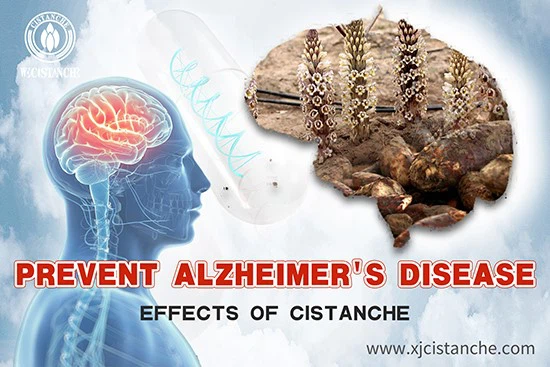
Dragon Herbs Cistanche prevents Alzheimer's disease
The main types of cognitive impairment that can be prevented and treated by Cistanche tubulosa
Based on the multiple pharmacological mechanisms mentioned above, combined with existing animal experiments and preclinical research results, Cistanche tubulosa has clear preventive and therapeutic effects on cognitive dysfunction caused by various triggers, and has a wide range of applications:
One is age-related cognitive decline. In response to the problems of memory loss, lack of concentration, and delayed cognitive response caused by natural aging, Cistanche tubulosa can delay the aging process of the brain, protect the cognitive function of the elderly population, and reduce the risk of age-related cognitive impairment through its antioxidant, anti-inflammatory, and neurometabolic effects.
The second is Alzheimer's disease (AD). As the most common neurodegenerative cognitive disorder, Cistanche tubulosa can effectively alleviate cognitive deficits and improve learning and memory functions in AD model animals by targeting and regulating core pathological targets, repairing neurons, and improving neural signal transduction. It is a potential natural medicine for AD prevention and treatment.
The third is vascular dementia (VaD). For vascular cognitive impairment caused by cerebral blood circulation disorders and cerebral ischemia and hypoxia, Cistanche tubulosa can improve cerebral microcirculation, alleviate ischemia-reperfusion nerve damage, inhibit inflammatory reactions, and significantly enhance the cognitive and learning abilities of VaD model animals.

Cistanche prevents Alzheimer's disease
The fourth is cognitive impairment induced by drugs and the environment. In response to secondary cognitive decline caused by external factors such as anesthetics, toxins, and stress, Cistanche tubulosa can exert neuroprotective effects by protecting hippocampal neurons, inhibiting neuronal apoptosis, and reversing transient or persistent cognitive impairment.
Traditional Chinese medicine's understanding of Cistanche tubulosa is limited to tonifying the kidneys and nourishing essence, while modern pharmacological research has completely expanded its medicinal boundaries, confirming that Cistanche tubulosa is a natural Chinese medicinal herb with dual effects of tonifying the kidneys, strengthening the foundation, and protecting the nerves. Through its multi-target and multidimensional effects of anti-inflammatory and antioxidant effects, activation of neuroprotective pathways, regulation of the gut-brain axis, and inhibition of neurodegenerative pathological changes, Cistanche tubulosa has shown great potential for the prevention and treatment of various cognitive impairments. Compared with chemically synthesized drugs, Cistanche tubulosa has mild medicinal properties and low toxic side effects, possessing unique advantages of drug food homology.
At present, research on the cognitive protection of Cistanche tubulosa is still mainly based on basic experiments, animal model studies, and network pharmacology predictions. Accurate clinical dosing, long-term medication safety, and the synergistic mechanism of different active ingredients still need further research. In the future, with the advancement of precision pharmacology and clinical research, Cistanche tubulosa is expected to be developed as a new functional drug and health supplement for the prevention and treatment of cognitive decline and the delay of elderly dementia. It will play an important role in the prevention and control of neurological diseases and healthy aging in the elderly, fully tapping into the modern medicinal value of this traditional Chinese medicine.