PART 2 Antioxidant And Anticoagulant Effects Of Phenylpropanoid Glycosides Isolated From Broomrapes (Orobanche Caryophyllacea, Phelipanche Arenaria, And P. Ramosa)
Mar 06, 2022
For more information please contact: Joanna.jia@wecistanche.com
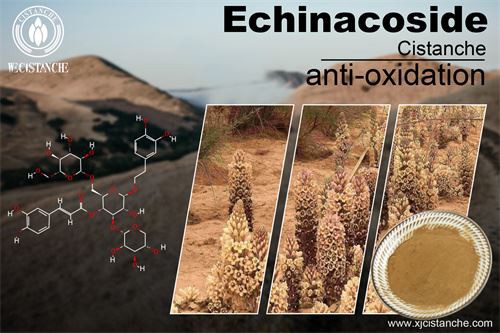
Cistanche deserticola has many effects, click here to know more
3. Results and discussion
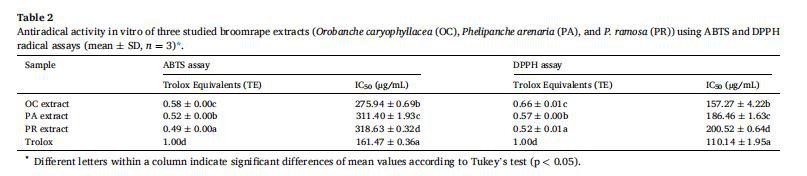
Ten previously isolated by us phenylpropanoid glycosides [8], including 2′-O-acetylacteoside, 2′-O-acetylpoliumoside, 3-O-methyl podium side, acteoside, arena inside, crenatoside, pheliposide, poliumoside, tubuloside A, and wiedemannioside D, together with three broomrape extracts (Orobanche Caryophyllaceae (OC), Phelipanche are naria (PA), and P. ramosa (PR)) were currently studied for alleviating oxidative stress and anticoagulant properties in a human plasma system. Chemical structures of the phenylpropanoids tested are presented in Fig. 1, and, as can be seen, they are all built according to a similar pattern, with the same/similar sub-units: hydroxytyrosol, monosaccharides (glucose, rhamnose, and/or xylose), and hydroxycinnamic acid. Most of the examined PPG compounds are substituted with caffeic acid, but this may be replaced with either coumaric or ferulic acid. Apart from individual PPG compounds, three broomrape extracts – OC, PA, and PR, which are mixtures of several PPGs and served previously as starting material for compound isolation, were also included in the biological study. Another reason for selecting three different species was the large difference in the phytochemical profile among them, as can be seen in Fig. 2. A more detailed comparison of the OC, PA, and PR extracts, including the quantitative data, is presented in Table 1. Acteoside was the main constituent of the O. Caryophyllaceae extract (690 mg/g), teniposide, and arena inside dominated in P. Arenaria (together 550 mg/g), while poliumoside and its acetylated derivative were the most important metabolites in P. ramosa extract (together 640 mg/g). The examined extracts also differed in the overall content of phenylpropanoids, the highest amount was found in OC (810 mg/g), a little lower in PR (795 mg/g), and lower in PA (685 mg/g). Moreover, it is worthy to note that the presence of PPGs with other than caffeoyl moieties, such as coumaroyl or feruloyl, was detected only in P. ramosa extract, where these compounds constituted about one-sixth of the total PPGs (about 120 mg/g) (Table 1). Previous studies of the antiradical activity of phenylpropanoid glycosides by Heilmann et al. [19] and Jedrejek et al. [8], including about 30 different PPGs such as acteoside, isoacteoside, and crenatoside, have revealed its strong relation to the structure of acyl moieties (phenolic acid and tyrosol). In general, the modification or substitution of catechol moiety of acyl unit resulted in a significant decrease in the scavenging activity against reactive oxygen species (ROS) and DPPH radical. In the current study, the antiradical in vitro potential of three broomrape extracts (OC, PA, and PR) was examined with ABTS and DPPH assays, and results were compared both with each other as well as with the activity of individual phenylpropanoid components measured in our previous study [8]. The results were expressed as Trolox Equivalents (TE) and IC50 values (Table 2). In general, all three extracts were good scavengers of both ABTS and DPPH radicals but also differences were observed among the samples tested (estimated TE was in the range of 0.5–0.7; 1.0 was the equivalent of Trolox). Antiradical scavenging activity of samples was in the following order: Trolox > OC > PA > PR. The extract of Orobanche Caryophyllaceae (IC50 = 155–275 µg/mL) had over 20% greater activity than Phelipanche ramosa extract (IC50 = 200–320 µg/mL). The reported highest radical scavenging activity of the OC extract can be explained by the highest PPGs content in this sample, as well as to the input of acteoside, its dominant ingredient, which according to the previous research [8,19] is one of the strongest free radical scavengers among the metabolites from this group (TEDPPH = 0.87; [4]). However, considering the mutual relationship of antiradical activity and the content of phenylpropanoids in the OC, PA, and PR extracts, no simple correlation was found between these two factors (r < 0.5), indicating a significant input of qualitative profile. This is mainly related to the
P. ramosa extract, which despite the high level of PPGs (0.8 g/g) was characterized by the lowest biological activity among the tested samples (TE ~ 0.5). The PR extract, as mentioned above, was the only sample to possess the phenylpropanoids with coumaric or ferulic acids, substances lacking a B-ring catechol moiety, which have been reported to have decreased anti-oxidative potential. Four PPG compounds having modified caffeic acid, including 3-O-methylpoliumoside, ramoside A, and wiedemannioside D, tested by us previously had the TEDPPH of around 0.3 [8]. Thus, current results are in accordance with and confirm the findings of the previous antiradical in vitro experiments on phenylpropanoids. As Chen et al. [20] described, it is associated with greater H-donating ability or stabilization of the radical by various functional groups of a mixture of compounds. Several structural elements have been identified as enhancing the direct antioxidant activity of polyphenols, especially those associated with the number and position of hydroxyl groups. It is believed that free radical scavenging activity increases with the increasing number of –OH groups. However, the position of these groups, in a molecule, has an even greater impact on the exerted activity. Relatively stable potent compounds are those possessing 3,4-dihydroxy moiety in their structures, as well as those possessing more than two hydroxyl groups [21]. The chemical structure of the antioxidant substance allows an understanding of the antioxidant reaction mechanism. Lopez-Munguía et al. [22] based on density functional theory (DFT) calculations determined that the PPGs antioxidant mechanism proceeds through a sequential proton loss single electron transfer (SPLET). However, Li et al. [23] attempt to explore the mechanisms of phenolic phenylpropanoid antioxidants, concluded, that PPGs (acteoside, forsythoside B, and poliumoside) may be involved in multiple pathways to exert the antioxidant action, enhanced the role of sugar-residues. Studies have shown that plant-derived antioxidants are effective modulators of hemostasis in cardiovascular diseases [24–26]. Various plants used in traditional medicine contain significant levels of PPGs [27,28]. In addition, PPGs are known to have a range of biological
activities, including anti-inflammatory, anti-nephritic, and anti-hepatoxic properties [29–33]. In their recent study, Jedrejek et al. [8] described the isolation of PPGs from three Polish broomrapes and assessed their antioxidant activity by the DPPH test. Based thereupon, the present study evaluates whether the ten selected PPGs isolated from these plants could reduce oxidative stress in human plasma treated with a strong biological oxidant, i.e. the hydroxyl radical donor H2O2/Fe, and modulate coagulation properties of plasma in vitro. The antioxidant properties of ten
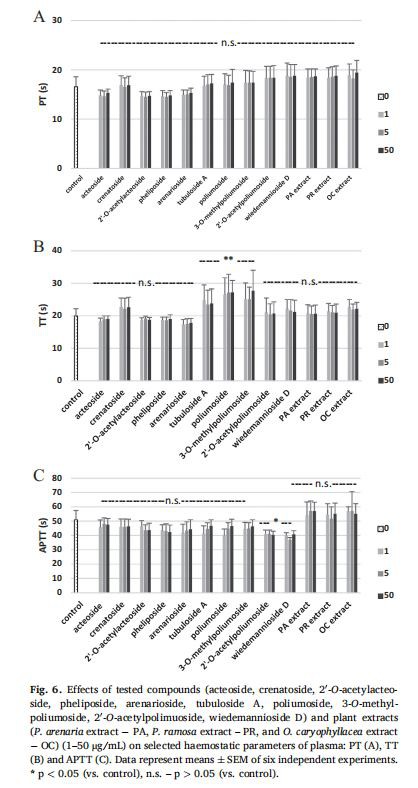
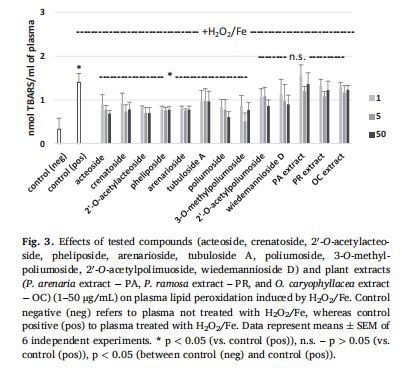
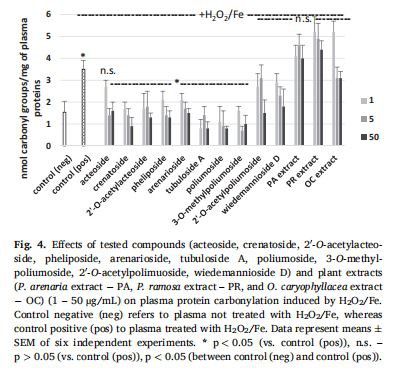
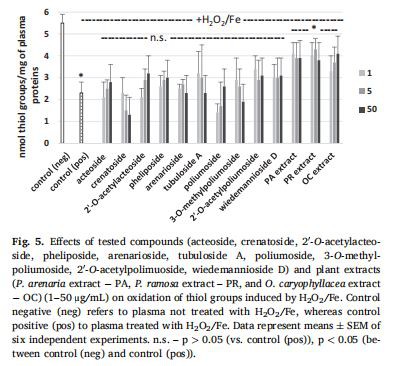
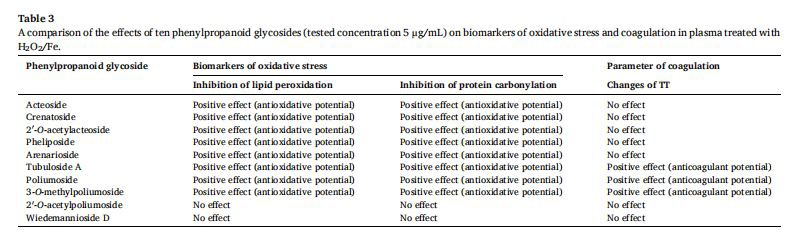
isolated PPGs were determined according to selected parameters of oxidative stress: TBARS level as a marker of lipid peroxidation, together with carbonyl group and thiol group levels, as markers of oxidative protein damage. Both plasma lipid peroxidation and protein carbonylation levels in plasma induced by H2O2/Fe were significantly reduced in the presence of eight tested compounds, viz. acteoside, crenatoside, 2′ -O-acety lacteoside, pheliposide, arena inside, tubuloside A, poliumoside and 3- O-methylpolimuoside, at all tested concentrations (1, 5 and 50 µg/ mL); however, neither effect was observed for two of the tested compounds, viz. 2′ -O-acetylpoliumoside and wiedemannioside D, or any of the tested extracts at any concentration (1, 5, and 50 µg/mL). In addition, none of the tested compounds or tested extracts were found to protect the plasma against H2O2/Fe – induced thiol group oxidation in proteins (Figs. 3–5). However, the tested extracts may be the source of compounds with various biological properties. For the first time, the results of the present study indicate that eight of the tested PPGs demonstrate antioxidant potential in human plasma in the presence of exogenous reactive oxygen species by inhibiting lipid peroxidation and protein carbonylation in plasma treated with H2O2/Fe. In addition, 2′ -O-acetylpoliumoside and wiedemannioside D did not present any such effect. In general, our findings are consistent with previous in vitro experiments on PPGs. Heilmann et al. [19] and Jedrejek et al. [8] report a correlation between the chemical structure of PPGs and their activities. Antioxidant properties of PPGs appear to be primarily related to the structure of their acyl moieties, i.e. the phenolic acid and phenylpropanoid unit, including the presence and/or modification of catechol moiety. For example, wiedemannioside D was found to lose its antioxidative potential towards plasma treated with H2O2/Fe following the replacement of its caffeoyl moiety with a feruloyl moiety. Changes in the coagulation process often result from oxidative stress; these changes can modulate the functions of the cardiovascular system and can lead to the development of cardiovascular diseases [1]. Out of the ten plant compounds and three plant extracts tested in the present study, tubuloside, poliumoside, and 3-O-methylpoliumoside and all tested extracts demonstrated to significantly prolong thrombin time at all tested concentrations, viz. 1, 5, and 50 µg/mL (Fig. 6B). However, none of these extracts, nor any of the tested compounds, changed PT or APTT (Fig. 6A and C). Table 3 compares the effects of the PPGs (5 µg/mL) on biomarkers of oxidative stress in plasma treated with H2O2/Fe and their influence on coagulation. Eight of the tested PPGs demonstrated antioxidant potential only in the treated human plasma; however, three tested PPGs were found to possess both antioxidant properties and anticoagulant potential. Interestingly, the results of the DPPH test did not coincide with those obtained in the biological model using human plasma treated with H2O2/Fe: the antioxidant potential of the tested extracts may be blocked by certain compounds present in the plasma. In conclusion, our present findings shed new light on the antioxidant potential and anticoagulant properties of PPGs. It appears that the structure of PPGs, especially the presence of acyl and catechol moieties, is mainly related to their antioxidant and anticoagulant properties. Selected PPGs may well have the potential for the treatment of cardiovascular diseases associated with oxidative stress. However, further experiments are needed to determine the concentrations of these compounds needed for in vivo models.

Conflict of interest statement
The authors declare that they have no known competing financial
interests or personal relationships that could have appeared to influence
the work reported in this paper.

References
[1] A. Daiber, S. Chlopicki, Revisiting pharmacology of oxidative stress and endothelial dysfunction in cardiovascular disease: evidence for redox-based therapies, Free Radic. Biol. Med. 157 (2020) 15–37. [2] J.-J. Sauvain, A. Setyan, P. Wild, P. Tacchini, G. Lagger, F. Storti, S. Deslarzes, M. J. Guillemin, M. Rossi, M. Riediker, Biomarkers of oxidative stress and its association with the urinary reducing capacity in bus maintenance workers, J. Occupat. Med. Toxicol. 6 (2011) 18–23. [3] P. Nowak, B. Olas, B. Wachowicz, Oxidative stress and hemostasis, Post. Biochem. 56 (2010) 239–247. [4] M. Martinez-Huelamo, J. Rodriguez-Morato, A. Boronat, R. de la Torre, Modulation of Nrf2 by olive oil and wine polyphenols and neuroprotection, Antioxidants 6 (2017) 73. [5] S. Amor, P. Chalons, V. Aires, D. Delmas, Polyphenol extracts from red wine and grapevine: potential effects on cancers, Diseases 6 (2018) 1–12. [6] Z. Li, H. Lin, L. Gu, J. Gao, C.M. Tzeng, Herba Cistanche (Rou Cong-Rong): one of the best pharmaceutical gifts of traditional Chinese medicine, Front. Pharmacol. 7 (2016) 41–49. [7] Y. Jiang, P.-F. Tu, Review: analysis of chemical constituents in Cistanche species, J. Chromatogr. 1216 (2009) 1970–1979. [8] D. Jedrejek, S. Pawelec, R. Piwowarczyk, L. Precio, A. Stochmal, Identification and occurrence of phenylethanoid and iridoid glycosides in six Polish broomrapes (Orobanche spp. and Phelipanche spp., Orobanchaceae), Phytochemistry 170 (2020), 112189. [9] B. Kontek, D. Jedrejek, W. Oleszek, B. Olas, Antiradical and antioxidant activity in vitro of hops-derived extracts rich in bitter acids and xanthohumol, Ind. Crops Prod. 161 (2021) 1–9. [10] W. Brand-Williams, M.E. Cuvelier, C. Berset, Use of a free radical method to evaluate antioxidant activity, Lebensm. Wiss. Technol. 28 (1995) 25–30. [11] J.R. Whitaker, P.E. Granum, An absolute method for protein determination based on the difference in absorbance at 235 and 280 nm, Anal. Biochem. 109 (1980) 156–159. [12] B. Wachowicz, Adenine nucleotides in thrombocytes of birds, Cell Biochem. Funct. 2 (1984) 167–170. [13] G. Bartosz, Druga twarz tlenu, Warsz. PWN 1 (2008) 7. [14] R.L. Levine, D. Garland, C.N. Oliver, A. Amici, I. Climent, A.G. Lenz, B.W. Ahu, S. Shaltier, E.R. Stadtman, Determination of carbonyl content in oxidatively modified proteins, Methods Enzym. 186 (1990) 464–478. [15] D.M. Joel, J. Gressel, L.J. (Eds.), Musselman, Parasitic Orobanchaceae: Parasitic Mechanisms and Control Strategies, Springer, Heidelberg, Germany, 2013, pp. 1–10. [16] Y. Ando, M. Steiner, Sulphydryl and disulfide groups of platelet membranes: determination of disulfide groups, Biochim. Biophys. Acta 311 (1973) 26–37. [17] Y. Ando, M. Steiner, Sulphydryl and disulfide groups of platelet membranes: determination of sulphydryl groups, Biochim. Biophys. Acta 311 (1973) 38–44. [18] J. Malinowska, J. Kołodziejczyk-Czepas, M. Moniuszko-Szajwaj, I. Kowalska, W. Oleszek, A. Stochmal, B. Olas, Phenolic fractions from Trifolium pallidum and Trifolium scabrum aerial parts in human plasma protect against changes induced by hyperhomocysteinemia, Food Chem. Toxicol. 50 (2012) 4023–4027. [19] J. Heilmann, I. Calis, H. Kirmizibekmez, W. Schuhly, S. Harput, O. Stiher, Radical scavenger activity of phenylpropanoid glycosides in FMLP stimulated polymorphonuclear leukocytes: structure-activity relationships, Planta Med. 66 (2000) 746–748. [20] H. Chen, Y. Zhou, Y. Shao, F. Chen, Free phenolic acids in Shanxi aged vinegar: changes during aging and synergistic antioxidant activities, Int. J. Food Prop. 19 (2015) 1183–1193. [21] C.A. Rice-Evans, N.J. Miller, G. Paganga, Structure-antioxidant activity relationships of flavonoids and phenolic acids, Free Radic. Biol. Med. 20 (1996) 933–956. [22] A. Lopez-Munguía, ´ Y. Hernandez-Romero, ´ J. Pedraza-Chaverri, A. Miranda Molina, I. Regla, A. Martínez, E. Castillo, Phenylpropanoid glycoside analogs: enzymatic synthesis, antioxidant activity and theoretical study of their free radical scavenger mechanism, PloS One 6 (2011) 20115. [23] X. Li, Y. Xie, K. Li, A. Wu, H. Xie, Q. Guo, P. Xue, Y. Maleshibek, W. Zhao, J. Guo, D. Chen, Antioxidation and cytoprotection of acteoside and its derivatives: comparison and mechanistic chemistry, Molecules 23 (2018) 498. [24] S.E. Kulling, H.M. Rawel, Chokeberry (Aronia melanocarpa) – a review on the characteristic components and potential health effects, Planta Med. 74 (2008) 1625–1634. [25] B.J. Mc Even, The influence of diet and nutrients on platelet function, Semin. Thromb. Hemost. 40 (2008) 214–226. [26] B. Olas, The multifunctionality of berries toward blood platelets and the role of berry phenolics in cardiovascular disorders, Platelets 5 (2016) 1–10. [27] U.B. Ismailoglu, I. Saracoglu, U.S. Harput, I. Sahin-Eredemli, Effects of phenylpropanoid and iridoid glycosides on free radical-induced impairment of endothelium-dependent relaxation in rat aortic rings, J. Ethnopharmacol. 79 (2002) 193–197. [28] Z.F. Bai, Y. Liu, X.Q. Wang, Investigation of ethnic medicinal plants Orobanche, Cistanche and Boschniakia, Zhongguo Zhong Yao Zhi 93 (2014) 4548–4552. [29] K. Hayashi, T. Nagamatsu, M. Ito, H. Yagita, Y. Suzuki, Acteoside, a component of Stachys sieboldii MIQ, may be a promising antinephritic agent (3): effect of aceteoside on the expression on intercellular adhesion molecule-1 in experimental nephritic glomeruli in rats and cultured endothelial cells, Jpn. J. Pharmacol. 70 (1996) 157–168. [30] Q. Xiong, K. Hase, Y. Tezuka, T. Tani, T. Namba, S. Kadota, Hepatoprotective activity of phenylpropanoids from Cistanche deserticola, Planta Med. 64 (1998) 120–125. [31] W.F. Chiou, L.C. Lin, C.F. Chen, Acteoside protects endothelial cells against free radical-induced oxidative stress, J. Pharm. Pharm. 56 (2004) 743–748. [32] S. Sahpaz, N. Garbacki, M. Tits, F. Bailleul, Isolation and pharmacological activity of phenylpropanoid esters from Marrubium vulgare, J. Ethnopharmacol. 79 (2002) 389–392. [33] L. Lie-Chwen, W. Yea-Hwey, H. Yu-Chang, Ch Shiou, L. Kuo-Tong, Ch Yueh-Ching, W. Wen-Yen, S. Yoh-Chiang, The inhibitory effect of phenylpropanoid glycosides and iridoid glucosides on free radical production and β2 integrin expression in human leucocytes, J. Pharm. Pharmacol. 58 (2006) 129–135.