Experimental Study Of Directional Differentiation Of Bone Mesenchymal Stem Cells (BMSCs) To Osteoblasts Guided By Serum Containing Cistanche Deserticola
Mar 06, 2022
ZENG Jian chun,FAN Yue guang*,LIU Jian ren,ZENG Yi rong,YI Chun zhi, YAN Liang. *
The First Affiliated Hospital of Guangzhou University of Traditional Chinese Medicine, Guangzhou 510405, Guangdong, China
Contact: joanna.jia@wecistanche.com / WhatsApp: 008618081934791

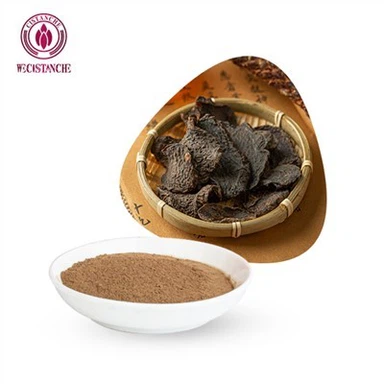
Cistanche can prevent osteoporosis and promote bone cell growth
ABSTRACT
Objective: To study directional differentiation of BMSCs guided by Desertliving Cistanche (Herba Cistanches) which invigorates the kidney. Methods: Primary BMSCs were obtained by whole bone marrow culture and subcultured to the fourth generation by trypsin digestion, and then inoculated into two six-well plates at 5×10⁶ cells per milliliter, all the plates were divided into three groups as a blank group, Dexamethasone (DXM) group and Herba Cistanches group, three wells in each group, the medium was changed at day 2. The blank group was changed with L-DMEM containing 10% FBS. The DXM group was changed with a medium containing 10 mmol / L β sodium glycerophosphate,0.1 μmol / L DXM, and 50 mg / L vitamin C. The Herba Cistanches group was changed with a medium containing 10% blood serum containing Herba Cistanches and L-DMEM. One of the six-well plates was stained by alkaline phosphatase (AKP) on the tenth day, the other one was stained by alizarin Bordeaux on the twentieth day. Results: On the tenth day DXM group and Herba Cistanches group were ALKP stained positive; from the 12th-day, white calcium nodus could be seen at the surface of the wells; which alizarin stained positive by the twentieth day.
Conclusion: The medium containing Herba Cistanches can guide BMSCs to differentiate into osteoblast, which promises a favorable prospect for the treatment of osteoporosis and bone fracture disunion.
KEYWORDS Cistanche deserticola; Bone marrow; Mesenchymal stem cells; Osteoblasts; Cell differentiation

Mesenchymal stem cells (MSCs) are a kind of pluripotent adult stem cells, mainly found in bone marrow, but also in extraosseous tissues derived from mesenchymal origin during the embryonic period, such as skin fibroblasts, adipose stem cells, skeletal muscle satellite cells, and blood vessels Endothelial cells and so on. Bone marrow MSCs (BM SCs) are components of bone marrow stroma. After being isolated and cultured in vitro, under certain inducing conditions, they have the ability to differentiate into osteoblasts, chondrocytes, nerve cells, adipocytes, cardiomyocytes, etc. The main sources of seed cells in bone tissue engineering are osteoblasts and BMSCs. Although osteoblasts have good osteogenic activity, they have limited sources, difficult to separate and obtain in large quantities, and have insufficient potential for large-scale expansion in vitro, which is difficult to meet the needs of clinical applications in bone tissue engineering. BMSCs not only have good osteoblast differentiation potential but also high growth potential. Bone activity, strong proliferation potential, and convenient source can satisfy autologous tissue engineering, and become the focus of research.
Chinese medicine believes that the kidney controls the bones and produces marrow. Modern pharmacological studies have shown that kidney-tonifying drugs have varying degrees of excitement to the pituitary-adrenal-gonadal system, and are closely related to bone metabolism. Estrogen has the effect of enhancing osteogenesis.
Chinese medicine believes that the kidney controls the bones and produces marrow. Modern pharmacological studies have shown that kidney-tonifying drugs have varying degrees of excitement to the pituitary-adrenal-gonadal system, and are closely related to bone metabolism. Estrogen can enhance bone formation, and androgen can promote protein synthesis, promote bone matrix increase, and calcium and phosphorus deposition. effect. Cistanches (Herba Cistanches) contain phenethyl alcohol total glycosides, ergot glycosides, and betaine all have androgen-like effects. This experiment intends to study the effect of the kidney-tonifying traditional Chinese medicine Cistanche-containing serum on the differentiation of BMSCs into osteoblasts.
Discussion
Cistanche medicated serum induces BMSCs. Cistanche has the effects of nourishing the middle, invigorating the liver, nourishing the kidney, strengthening yang, moisturizing the intestines, and laxative. Modern pharmacological studies have shown that kidney-tonifying drugs have varying degrees of excitement to the pituitary-adrenal-gonadal system, and are closely related to bone metabolism. Estrogen can enhance bone formation, and androgen can promote protein synthesis, promote bone matrix increase, and calcium and phosphorus deposition. Role [1]. The total phenylethanoid glycosides, ergosteroside, and betaine in Cistanche have androgen-like effects. This experiment found that the medicated serum of Cistanche can induce BMSCs to differentiate into osteoblasts. Although single Chinese medicine or compound Chinese medicine has been used to induce BMSCs to differentiate into osteoblasts, the specific molecular mechanism has not yet been reported. Proteomics research can analyze the differences in related proteomics in this process and establish functional proteomics, with a view to a new interpretation of the theory of kidney governing bone.
Cell density plays an important role in the differentiation process of BMSCs into osteoblasts. The formation of bone nodules not only requires osteoinductive agents but also depends on the density of inoculated cells. The cell density must reach a certain density and the cells can fuse. Osteoblast differentiation. In this experiment, when the 4th generation cells proliferate to more than 90% confluence, the inducer is added for culture. When the cell density is too low, the cells will proliferate slowly, and there is no tendency to aggregate and grow. In the same culture well with uneven cell density, the cell dense area has unclear cell boundaries and blurred structure, and the cells aggregate into clumps. AKP staining and alizarin red staining are positive, but there is no cell density in the area with lower cell density. The cells aggregated into clumps, and AKP staining and Alizarin Red staining were negative. Therefore, the use of microcarriers in bone tissue engineering combined with more effective in vitro culture methods, such as three-dimensional culture (RCCS), to obtain more cells has a significant impact on the success of cell transplantation.

The clinical significance of Cistanche medicated serum to induce BMSCs Bone tissue engineering has broad clinical application prospects and has become a research hotspot in modern orthopedics. BMSCs are currently the most ideal seed cells for bone tissue engineering. The central task of research on their effects is how to differentiate them into osteoblasts under the simplest possible conditions, and then transform them into mature bone cells.
At present, the commonly used inducers for directed differentiation of BMSCs are composed of dexamethasone, vitamin C, and sodium β-glycerophosphate. In vitro culture, dexamethasone has an inhibitory effect on cell proliferation [2], as seen in this experiment, clinically, dexamethasone has adverse reactions such as infection, osteonecrosis, and osteoporosis, which will limit the transplantation of BMSCs. After the application as an inducer in the body. Cistanche has the effects of invigorating the kidney and strengthening the bones and muscles. This experiment found that Cistanche has the effect of promoting the proliferation of BMSCs and inducing the differentiation of BMSCs into osteogenic. In the long-term clinical application, no adverse reaction of Cistanche has been seen, and its use as an inducer in vivo has broad clinical application prospects.
In short, most of the current research on BMSCs as seed cells for bone tissue engineering is still in the experimental stage. How to obtain enough BMSCs in a relatively short period of time and use simple methods to induce them to differentiate into osteogenic is the focus of current research. Although the mechanism of Cistanche cistanche, which has the function of invigorating the kidney and strengthening bones and muscles, in inducing the osteogenic differentiation of BMSCs remains to be further studied, its use as a differentiation inducer of BMSCs for the treatment of delayed union, nonunion, and osteonecrosis of fractures with MSCs transplantation has a bright future.

Cistanche can prevent osteoporosis and promote bone cell growth