Part One | Study On Neuroendocrine-immune Function Of Phenylethanoid Glycosides Of Desertliving Cistanche Herb in Perimenopausal Rat Model
Mar 08, 2022
Part One How does the effective ingredient Phenylethanoid Glycosides of Cistanche improve immunity?
For more information:Ali.ma@wecistanche.com
Shuo Tiana, Ming-san Miaoa,b,*, Xiu-min Li c,d,*, Ming Bai a, Yan-Yi Wua, Zhen-Zhen Wei
a. Department of Pharmacology, Henan University of Chinese Medicine, Zhengzhou, 450008, China b. International Center for TCM immune-pharmacology, Henan University of Chinese Medicine, Zhengzhou, 450008, China. c. Pediatric Allergy and Immunology, The Icahn School of Medicine at Mount Sinai, New York, NY 10029 d. Department of Microbiology and Immunology, New York Medical College, Valhalla, NY 10595. * corresponding authors

Abstract:
Ethnopharmacological relevance Desert living Cistanche herb was first recorded in “Shen Nong’Herbal Classic” and listed as the top grade herbal medicine in it. Phenylethanoid glycosides are indicative components for the identification and content determination of Desertliving Cistanche herb in Chinese pharmacopeia, which is also one of the main active components. In this research, we explored the mechanism of phenylethanoid glycosides of Desertliving Cistanche herb to the perimenopausal model rats.
Aim: The purpose of this study is to research the effects of phenylethanoid glycosides of Desertliving Cistanche herb (PGC) on the neuroendocrine-immune function of perimenopausal syndrome by perimenopausal model rats.
Materials and methods
Wistar female rats were selected. The left ovaries for all rats except in the blank control group(BC) were removed, and the right ovaries were removed in 80%. The vaginal smear showed irregular estrous cycle changes for the perimenopausal model rats. And the perimenopausal model rats were gavaged Gengnian'an, Phenylethanoid Glycosides of Desertliving Cistanche herb high, medium, a low suspension which is 450mg/(kg day), 133.33mg/(kg day), 66.67mg/(kg day), 33.33mg/(kg day); the group of BC and model group (MC) was given distilled water in the same volume as the drugs group for 30 consecutive days. Horizontal-vertical exercise scores were measured at 29 days of dosing. After the last administration, the blood was taken from the abdominal aorta, and levels of E2, LH, FSH, GnRH, BGP in serum, and the levels β-EP in plasma were measured respective. Organ indexes of the thymus, spleen, and uterus were calculated. The content of estrogen receptors (ER) in the hypothalamic, pituitary, and uterus tissues and the content of androgen receptor (AR) in the hypothalamic homogenate were measured. The pathological changes of the thymus, spleen, uterus, ovary were observed by HE staining.
Results
Compared with MC, PGC increase the activity, the organ index (thymus, spleen, uterus), E2, T, BGP level in serum, β-EP level in plasma, AR level in the hypothalamus, ER level in the hypothalamus, pituitary, uterus in perimenopausal model rats. And it also reduced FSH, LH, GnRH levels in serum, and improved uterine and ovarian lesions in perimenopausal model rats.
Conclusion
Each dose of PCG could counteract the disorder of sex hormone in perimenopausal model rats, correct the imbalance of ER and AR levels, enhance and restore the effect of the uterus and the nerve cells of the hypothalamic, and improve immune function.

Click to Cistanche product and cistanche side effects
Abbreviation
PGC, phenylethanoid glycosides of Desertliving Cistanche herb; GC, Gengnian'an group; PGC-HD, Phenylethanoid Glycosides of Desertliving Cistanche herb high dose group; PGC- MD, Phenylethanoid Glycosides of Desertliving Cistanche herb medium-dose group; PGC-LD, Phenylethanoid Glycosides of Desertliving Cistanche herb low dose group; HPO axis, Hypothalamus-pituitary-ovarian axis; E2, Estradiol; T, Testosterone; FSH, Follicle-stimulating hormone; LH, Luteinizing hormone; GnRH, Gonadotropin-releasing hormone; β-EP, Beta-endorphin; ER, Estrogen Receptor; AR, Androgen Receptor; HRT, Hormone Replacement Therapy; BGP, bone gamma-carboxyglutamic-acid-containing proteins.
Keyword: phenylethanoid glycosides of Desertliving Cistanche herb; perimenopausal model rats; neuroendocrine-immune function
For more information please contact:ali.ma@wecistanche.com
1. Introduction
With the aging of the population, the incidence of perimenopausal syndrome is on the rise. Some studies have found that the age of onset of the perimenopausal syndrome has been falling internationally and has decreased from 65 to 35 years old. Modern medicine believes that perimenopausal syndrome refers to symptoms caused by the decline of ovarian function(Miao et al., 2017). Estrogen level is low, which causes abnormal functions such as endocrine, nervous, and immune functions. The main clinical manifestations are hot flashes, sweating, palpitations, insomnia, irritability, irregular menstruation, osteoporosis, and the incidence of cardiovascular disease(Lobo et al., 2014; Alvarado-García, et al., 2015), which seriously affect the lives of perimenopausal women. Hormone replacement therapy (HRT) is the main method for the treatment of this syndrome, but long-term therapy of estrogen replacement can cause adverse effects such as coprophagia, distending pain in the breast, carcinoma of endometrium, mammary cancer, and increased incidence of cardiovascular and cerebrovascular diseases, and it is susceptible to recurrence(Perrone et al., 2013). These symptoms limit their clinical application, so people are paying more and more attention to the problems of this special stage of menopause.

The characteristics of syndromes such as “viscera”, “old blood clotting”, “lily disease”, “depression syndrome”, and “non-disobedience” recorded in traditional Chinese medicine are similar to those of modern medical menopausal syndrome. They belong to the category of various symptoms before and after menopause. “Suwen: Shanggu Tianzhen Lun,” said: “The Ren channel is weak when people was 49, and the Thoroughfare Vessel is to reduce, the sex-stimulating essence is exhausted, and other phenomena, therefore, a woman loses the function of a fetus.” And the sex-stimulating essence is transformed by kidney essence, so Traditional Chinese medicine (TCM) believes that the main pathogen of the disease is a renal deficiency (Peng, 2014). Studies have also shown that the decline of ovarian function is the cause of kidney-asthenia syndrome in TCM terminology. The reduction of levels of E2, LH, FSH, is an expression of renal asthenia(Liu et al., 2010), and the study had found that most of the replenishing kidney yang drugs have a better treatment effect on perimenopausal syndrome(Zhang and Miao, 2011; Cao et al., 2016; Wang et al., 2016; Tian et al., 2017;), so we must firmly grasp the role of "kidney deficiency" in TCM terminology as the main pathogenesis in the clinical treatment, and emphasizing the main goal of replenishing kidney. Studies have shown that by replenishing kidney Chinese medicine can regulate the dysfunction of the HPO axis, delay ovarian aging, regulate the nervous-endocrine-immune system, improve immunity and prevent osteoporosis(Shi, et al., 2007), among other effects.

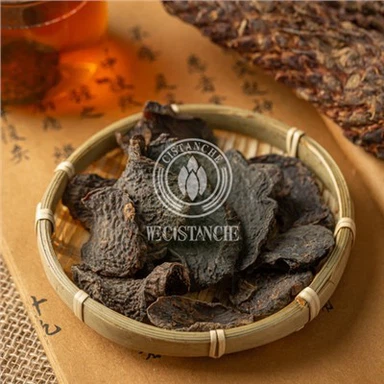
Desert living Cistanche herb is a dry, scaly fleshy stem of Cistanche deserticoLa Y.C.Ma or Cistanche tubulosa (Schenk) Wight, it is a perennial parasitic medicinal plant. It has the effect of replenishing the kidney, replenishing essence and blood, loosening the bowel to relieve constipation, and other effects. Desert living Cistanche herb is commonly used in traditional Chinese medicine for invigorating the kidney and strengthening yang, which is called "desert ginseng." Modern research has shown that it has anti-aging effects, enhances the bodyˈs immunity, enhances learning and memory ability, anti-inflammatory, and anti-fatigue effects, among others(Li, et al., 2010). The chemical composition of the Desertliving Cistanche herb is complex, and the content of phenylethanoid glycosides is the highest in the original medicinal materials. It is also one of the main active components of the Desertliving Cistanche herb to exert an androgen-like effect and immunomodulatory properties(Zhao and Pan, 2013). And PGC could improve the sexual hormone(E2, T, FSH, LH)disorder in perimenopausal mice, and it has a good therapeutic effect on perimenopausal mice, see the related study(Tian et al.,2017)
At present, the research on perimenopausal syndrome focuses on the endocrine system, nervous system, immune function, etc., but the disorder of endocrine-immune regulation is the main cause of perimenopausal syndrome(Wang et al., 1999; Zhang and Wang, 2001). This study examined the effect of PGC on the perimenopausal model rats from the perspective of endocrine-immune function.
2. Materials and Methods
2.1 Experimental Animals
Wistar female rats (210~230g) were purchased from Shandong Lukang Pharmaceutical Co., Ltd., Animal permit number: 0017216, the lab certificate No. SYXK (Henan) 2010-001. All rats were maintained with free access to food and water in plastic cages at 22±2℃, relative humidity of 50%-60%. And animals were housed for one week prior to the experiments.
2.2 Materials and reagents
MANUSCRIPT Sodium Carboxymethyl Cellulose, Tianjin Hengxing Chemical Reagent Manufacturing Co., Ltd., Batch No.: 20120418; Benzylpenicillin potassium for Injection, Huabei China Pharmaceutical Co., Ltd., Specification: 4 million units, Production Batch No.: c1206807; Formaldehyde Solution (Analytical Pure), Yantai Shuangshuang Chemical Co., Ltd., Production Batch No.: 20130902; chloral hydrate, Tianjin Guangfu Fine Chemical Research Institute, batch number 20120827; rat E2, T, FSH, LH, GnRH, AR, ER, BGP, β-EP ELISA detection reagent Box, R&D, lot number: 20140101A.
2.3 Experimental drugs
The specific preparation method and the content detection of PGC have been published. See the literature and the content is 66.47%(Tian et al., 2017). Gengnian Capsule, ingredients: Rehmannia, Rehmannia glutinosa, Alisma, Ophiopogon japonicas, Scrophulariaceae, Cortex Moutan, Poria, Mother of Pearl, Curculigo, Schisandra, Magnet, Shouwu Vine, Uncaria, Floating Wheat, Polygonum multiflorum. Indications: nourishing yin and yang, getting rid of the trouble and calming the mind, and used for menopause with hot flashes sweating, vertigo tinnitus, irritability, and insomnia. Specifications: 0.3g per capsule. Usage and dosage: Oral, 3 capsules at a time, 3 times a day. Production enterprise: Shanxi Tianxing Pharmaceutical Co., Ltd. Production batch number: 121104. Approval number: National Medicine Zhunzi Z14021848.
2.4 Experimental instrument
Opening activity test chamber, Chengdu Taimeng Software Co., Ltd., model OFT-100; motorized microscope, Japan OLYMPUS company, model: BX61; microplate reader, American BIO-RAD company, model: 680; X3R high-speed refrigerated centrifuge, USA Mercury Technology Co., Ltd.
2.5 Preparation and grouping of animal models
Taken eighty rats weighing 210-230 g, and 12 rats were randomly selected as the BC group, and the remaining rats were used for perimenopausal animal models. The preparation method of perimenopausal model rats, reference literature method(Miao et al., 2015), completely removed the left ovary, 80% of the right side ovary was removed. Carefully reared after the operation, and for prevention of infection to injection of penicillin 20U/kg (0.1 ml) by intramuscular to, for 3 consecutive days, once a day. After 5 days of surgery, the vaginal smears examination of the rats was performed one by one, once a day, and consecutive for 5 days. Rats with estrus reactions were discarded. Sixty ovariectomized rats were randomly and equally divided into 5 groups for experimental use. They were model group (MC), Gengnian'an group (GC), Phenylethanoid Glycosides of Desertliving Cistanche herb high (PGC-HD), medium (PGC- MD), low dose group (PGC-LD).
2.6 Drug configuration method
(1) The doses of PGC-HD, PGC-MD, PGC-LD are 133.33mg/kg, 66.67mg/kg, and 33.33mg/kg (administration volume 1ml/100g) respectively. Configuration method: Weigh PGC 1333.3mg, 666.7mg, 333.3mg, first dissolved with a small amount of distilled water, and then added distilled water to 100ml, and mixed well, that is the required PGC-HD, PGC-MD, PGC-LD suspension. (2) The dose of GC is 450mg/kg, and the volume of administration is the same as above, which is equivalent to 10 times the clinical dosage. Configuration method: Take 15 capsules of Gengnian Capsule, dissolve it first with a small amount of distilled water, and then set it to 100 ml, and mix it. This is the desired GC suspension.
2.7 Method of administration
Each group of animals was given the corresponding drug on the 10th day after the operation. GC group was administered with 450mg/kg of Gengnian Capsule Suspension, and PGC-HD, PGC-MD, PGC-LD were respectively administered with PGC-HD, PGC-MD, PGC-LD suspension which is 133.33mg/kg, 66.67mg/kg, 33.33mg/kg. The BC and MC group were respectively administered with the same volume of distilled water, once a day for 30 days.
2.8 Open-Field test
The rats in each group were tested for horizontal-vertical exercise scores at 29 days of administration. The experimental device is a cubic open box with a height of 40 cm and a length of 80cm and a width of 80 cm. The peripheral wall and the bottom surface are black, and the bottom surface is composed of 25 blocks of equal area, which are divided by white lines. During the experiment, the rats were placed in the square of the open box, and the horizontal activity scores of the rats passing through the bottom surface within 5 minutes (the squares in which all four claws entered) were observed, and the vertical activity score of the number of hind legs was erected (two forepaws were vacated or climbing the wall). The feces must be completely removed after each experiment and measured once after 2 hours of administration. This experiment was conducted in a quiet room.
2.9 Determination of the level of E2, T, LH, FSH, GnRH, BGP in serum and levels of β-EP in plasma
Rats in each group after the last administration of 2 hours (fasting for 12 hours), abdominal anesthesia, the blood was taken from the abdominal aorta, the serum and plasma were separated (4℃, 3500 rpm, 10min), stored in a refrigerator at -80 ℃. Using enzyme-linked immunosorbent assay measured the level of E2, T, LH, FSH, GnRH, BGP in serum, and the level of β-EP in plasma. The specific method of operation was performed according to instructions.
2.10 Determination of ER and AR in the hypothalamus, pituitary, and uterine tissue homogenates
After taking blood from the abdominal aorta, the rats were sacrificed. The hypothalamus, pituitary, and uterus were taken from the body. The hypothalamus, pituitary, and 1/2 uterus were homogenized. The homogenization method was as follows: The tissue block was rinsed in ice-cold 0.9% sodium chloride, the blood was removed, and use the filter paper was to dry tissue, the tissue was weighed, and cut into glass homogenate tubes, and homogenized by adding pre-cooled 0.9% sodium chloride (The ratio of tissue and 0.9% sodium chloride is 1:9). The left hand-held homogenization tube is inserted into the vessel containing the ice-water mixture. The right hand is inserted into the casing vertically and rotated up and down several times (6~8 minutes), fully grind, homogenize the tissue, centrifuge (4 ℃, 3500 rpm, 10 min), and store at -80 ° C in the refrigerator. ER content in homogenates of hypothalamus, pituitary, and uterine tissues, and AR content in homogenates of hypothalamus were determined by enzyme-linked immunosorbent assay (ELISA) according to instructions.
2.11 Calculation of the organ index
Rats in each group after the last administration of 2 hours (fasting for 12 hours), the rats were sacrificed, and the thymus, spleen, uterus, and remaining 20% of the ovarian tissue were removed, the wet weights were weighed, and the organ index of thymus, spleen, uterus was calculated. The formula is as follows:
: Organ Index = Wet Organ Weight (mg)/ Rat Body Mass (g)
2.12 Observation of the morphological of uterus, ovary, thymus, spleen, and thickness measurement of thymic cortex and spleen nodules
The thymus, spleen, uterus, and ovary were fixed in 10% formaldehyde solution, embedded in paraffin, sectioned, HE stained, and histomorphological changes were observed under a light microscope. Using the micrometer, the thickness of the thymus cortex was measured at the thickest and narrowest points of each rat in each experimental group. The average is the thickness of the thymus cortex. The baseline of the micrometer was placed on the spleen nodules to the center. Determination of Splenic Thickness on both sides with Central Artery as the Center, and the average is the thickness of the spleen.
2.13 Statistical analysis
Data analysis uses the SPSS21.0 medical statistical package to perform statistical processing of data, and the metrological data are expressed as mean ± —standard deviation(x±s), the comparison between the groups uses a single factor variance analysis. The LSD method was used for the variance test homogeneity, the Games-Howell method was used for the variance test uneven, and the Ridit test was used for the grade data.

3. Experimental results
3.1 Effects of behavior on perimenopausal model rats
From Fig. 1(A, B). It can be seen that compared with BC, the horizontal and vertical movement scores of the MC group rats were significantly reduced (P<0.01), which reflected the curiosity of the rats about the unfamiliar environment. Compared with MC, each group could increase the horizontal exercise score of rats significantly(P<0.01), and the PGC-HD, PGC-MD, PGC-LD significantly increased the vertical movement score of rats (P<0.05). The PGC-LD group had the tendency to increase the vertical motion integral of rats.

3.2 Effect of related organ index on perimenopausal model rats
From Fig. 2(A, B, C), we could see that compared with BG, the organ index of thymus, spleen, and uterus in MC group rats were decreased significantly(P<0.01), which indicates that the thymus, spleen, and uterus appeared to shrink in perimenopausal model rats caused by incomplete removal of the ovary. Compared with MC, the organ index of the thymus and spleen of the perimenopausal model rats were increased significantly in each drug group (P<0.01). The PGC-HD, PGC-MD, and GC groups increased the uterine index of the perimenopause model rats significantly(P<0.01). PGC-MD increased the uterus index of perimenopausal model rats significantly(P<0.05).
3.3 Effect of biochemical indicators in perimenopausal model rats
As shown in Fig. 3. (A, B, C, D), compared with the BC group, the levels of E2 and T in serum in the MC group were significantly decreased (P<0.01), and the levels of LH and FSH were significantly increased (P<0.01), which indicating that incomplete removal of the ovary into perimenopausal model rats leads to the sex hormone disorder, the perimenopausal model rats was successfully replicated. Compared with the MC group, each drug group could significantly increase levels of E2, T in serum and reduce levels of FSH(P<0.01); PGC-MD, GC group could significantly reduce the elevated of LH levels (P<0.01), PGC-HD could significantly reduce the level of LH (P<0.05); PGC-LD could reduce the level of LH. From Fig. 3 (E, F), compared with the BC group, the level of GnRH of the MC group in serum was significantly increased, and the level of β-EP in plasma was significantly decreased (P<0.01), it is indicated that incomplete ovarian ablation leads to a sex hormone disorder in the perimenopausal model rats, and the related hormones secreted by the hypothalamus were also disordered due to negative feedback regulation. Compared with the MC group, the level of GnRH in each drug group was significantly reduced (P<0.01); The level of β-EP was significantly increased in PGC-HD, PGC-MD, GC group(P<0.01), the level of β-EP in plasma were significantly elevated in PGC-LD(P<0.05).

3.4 Effect of BGP levels in serum in perimenopausal model rats
It can be seen from Fig. 4 that the level of BGP in serum in the MC group was significantly lower than the BC group (P<0.01), indicating that the level of BGP in perimenopausal model rats with incomplete ovaries was reduced. Compared with the MC group, the BGP levels in the PGC-HD, PGC-MD, PGC-LD, GC group was increased significantly (P<0.01).

3.5 Effect of ER, AR in perimenopausal model rats
It can be seen from Fig. 5 that compared with the BC group, the ER and AR levels in the perimenopausal model rats were significantly decreased (P<0.01), it indicated that the hormone receptors in the body-related tissues of the perimenopausal model rats caused by incomplete ovariectomy were reduced, which reduced the biological effects of estrogen and androgen. As shown in Fig. 5 (A, B, C), compared with the MC group, each drug group could significantly increase the level of ER in the hypothalamus, pituitary, and uterus(P<0.01); From Fig. 5(D), the levels of AR in the hypothalamic in the PGC-HD, PGC-MD, GC group were significantly increased (P<0.01).
3.6 Effect of pathological morphology of uterus in perimenopausal model rats
According to the changes in the endometrium, glands, and muscle layers of the rats in each group, semi-quantitative criteria were used to classify the histopathology into four levels of “-, +, ++, +++”. From Ridit's test, it can be seen from Fig. 6 and Tab.1 that compared with BC, the uterus of MC showed significant pathological changes (P<0.01). Compared with MC, each drug group could significantly improve the pathological tissue lesions of the uterus(P <0.01).

3.7 Effect of pathological morphology on ovarian tissue in perimenopausal model rats
Based on the changes of ovarian follicles, corpus luteum, granulosa cells, and blood vessels at different levels in the experimental groups, and the semi-quantitative criteria were adopted to classify the pathological tissue morphology into four levels: “-, +, ++, +++”. Based on the Ridit test, it can be seen from Fig. 7 and Tab.2 that compared with the BC group, the ovary of the MC group showed significant pathological lesions (P<0.01). Compared with the MC group, each drug group could significantly improve the pathological changes of ovarian tissue(P<0.01).

3.8 Effect of thymus tissue morphology in perimenopausal model rats
It can be seen from Fig. 8 that the thickness of the thymus cortex in the MC group was significantly decreased compared with the BC group (P<0.01), which indicating that the thymus atrophy was observed in the perimenopausal model rats. Compared with the MC group, all groups could significantly increase the thymus cortical thickness(P<0.01).


3.9 Effects of spleen tissue morphology on perimenopausal model rats
It can be seen from Fig. 9 that compared with BC, the spleen nodule volume of the MC group was reduced significantly(P<0.01), which indicates that the spleen atrophy was observed in the perimenopausal model rats. Compared with MC, the level of splenic nodules volume was significantly increased in PGC-HD, PGC-MD, GC group(P<0.01).