Pharmacological Effects Of Cistanche Extracts And Compounds On The Urinary System: A Review
May 22, 2025
Abstract: Plantain Seed is the dried mature seed of the plantain plantain (Planagoa asiatica L.) or (Plantago depressa Willd.). It has the effects of clearing heat, diuresis, relieving diarrhea, improving eyesight, and removing phlegm. Modern research has shown that Plantain Seed has rich pharmacological activities such as diuresis, uric acid lowering, blood lipid lowering, blood pressure lowering, blood glucose lowering, anti-inflammatory and antibacterial, antioxidant, anti-tumor, cough relieving and asthma relieving. In this paper, the pharmacological effects and material basis of psyllium reported in the past 10 years are arranged and summarized, which provides a scientific reference for the further development and utilization of psyllium.
Keywords: plantain seed; pharmacological action; polysaccharid
Abstract:
Cistanche, a traditional Chinese medicinal herb, has been widely used as a natural remedy for urinary tract disorders, kidney disease, and fluid metabolism disturbances. This review systematically summarizes the pharmacological actions of Cistanche extracts and their active compounds, particularly focusing on their diuretic, renal protective, anti-inflammatory, and antioxidant properties. The aim is to provide scientific support for the clinical applications and resource development of Cistanche in nephrology and urology.


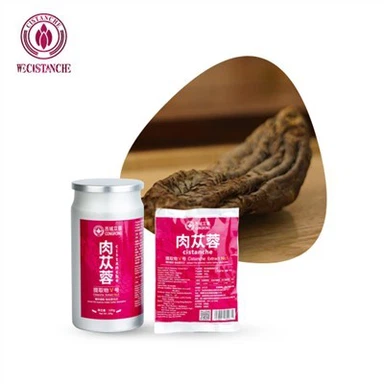
A new cistanche formula supplement with 75% glycoside and 30% echinacoside
Supportive Service Of Wecistanche-The largest cistanche exporter in the China:
Email:wallence.suen@wecistanche.com
Whatsapp/Tel:+86 15292862950
1. Effects on the Urinary System
1.1 Diuretic Effects of Cistanche
Cistanche is a well-known traditional herb with diuretic and water-regulating effects. Its properties are characterized as sweet and warm, promoting fluid metabolism, clearing bladder heat, and alleviating symptoms of dysuria and edema. Modern studies have shown that the diuretic effect of raw and processed Cistanche is associated with the regulation of sodium-chloride transport and aquaporin (AQP) expression in the kidney.
For instance, salt-processed Cistanche significantly increased urinary Na⁺ excretion compared to raw Cistanche in water-loaded rats [8]. Further research [9] revealed that the diuretic effect followed this potency order: salt-processed > stir-fried > raw. However, high doses of raw Cistanche were associated with mild diarrhea and altered blood urea nitrogen (BUN), indicating possible glomerular effects.
Cistanche administration increased urine output 7 hours post-treatment, reduced body weight, elevated plasma vasopressin, and decreased serum Na⁺ and Cl⁻ levels. It also downregulated renal AQP1 and AQP2 expression, indicating a mechanism involving water channels and ion transporters [10–11].
1.2 Kidney-Protective Effects of Cistanche
Cistanche has demonstrated renoprotective effects through multiple pathways, including diuresis, antioxidation, anti-inflammation, and regulation of lipid metabolism. In nephropathy models (e.g., adriamycin-induced renal edema), Cistanche treatment significantly reduced proteinuria, kidney index, BUN, creatinine, triglycerides (TG), cholesterol (CHOL), and increased albumin (ALB) levels [12].
Active components such as polysaccharides and fatty oil fractions of Cistanche have been shown to:
Improve glomerular filtration function
Reduce renal inflammation
Decrease TNF-α, IL-1β, TGF-β1, and NF-κB p65 expression in renal tissues
Enhance SOD activity and reduce MDA content, improving oxidative stress response [13]
Cistanche polysaccharides (800 mg/kg) also modulated the gut microbiota structure in membranous nephropathy rats by reducing harmful Firmicutes and increasing beneficial Bacteroidetes, thus alleviating renal damage via gut–kidney axis regulation [14–15].
Salt-processed Cistanche showed superior efficacy over raw in reducing proteinuria and regulating lipid and electrolyte balance, with stronger immune modulation [16].
Additionally, Cistanche extract was found to regulate apoptotic factors such as Bcl-2, Bax, and Caspase-3 at both mRNA and protein levels, inhibiting renal cell apoptosis and protecting renal function in nephropathy models [17].
In gouty nephropathy models, salt-processed Cistanche polysaccharides significantly decreased urinary protein, BUN, creatinine, and uric acid levels, delaying kidney fibrosis progression [18].

1.3 Mechanistic Insights from Network Pharmacology
Network pharmacology studies identified over 60 shared targets between Cistanche compounds and lupus nephritis (LN), including the PI3K and MAPK signaling pathways. Major active compounds such as quercetin, echinacoside, and hypoacetin demonstrated strong binding to targets like AKT1, IL-1β, and TP53, suggesting roles in inflammation, apoptosis, and immune modulation [19].
Quercetin, in particular, showed potential in regulating mesangial cell proliferation and suppressing pro-inflammatory cytokines via the PI3K/AKT and MAPK pathways.
Further analysis related to diabetic nephropathy (DN) identified 9 active ingredients and 216 potential targets, with Caspase-3 being a key effector in apoptosis inhibition. Cistanche acts through:
AGE-RAGE signaling
Lipid metabolism
MAPK and TNF pathways
IL-17 and p53 signaling
These findings highlight the multifaceted renal protective mechanisms of Cistanche, making it a promising natural therapy for diabetic nephropathy, lupus nephritis, and chronic kidney disease (CKD) [20].

1. Effects on the Urinary System
1.1 Diuretic Effects of Cistanche
Cistanche is a well-known traditional herb with diuretic and water-regulating effects. Its properties are characterized as sweet and warm, promoting fluid metabolism, clearing bladder heat, and alleviating symptoms of dysuria and edema. Modern studies have shown that the diuretic effect of raw and processed Cistanche is associated with the regulation of sodium-chloride transport and aquaporin (AQP) expression in the kidney.
For instance, salt-processed Cistanche significantly increased urinary Na⁺ excretion compared to raw Cistanche in water-loaded rats [8]. Further research [9] revealed that the diuretic effect followed this potency order: salt-processed > stir-fried > raw. However, high doses of raw Cistanche were associated with mild diarrhea and altered blood urea nitrogen (BUN), indicating possible glomerular effects.
Cistanche administration increased urine output 7 hours post-treatment, reduced body weight, elevated plasma vasopressin, and decreased serum Na⁺ and Cl⁻ levels. It also downregulated renal AQP1 and AQP2 expression, indicating a mechanism involving water channels and ion transporters [10–11].
1.2 Kidney-Protective Effects of Cistanche
Cistanche has demonstrated renoprotective effects through multiple pathways, including diuresis, antioxidation, anti-inflammation, and regulation of lipid metabolism. In nephropathy models (e.g., adriamycin-induced renal edema), Cistanche treatment significantly reduced proteinuria, kidney index, BUN, creatinine, triglycerides (TG), cholesterol (CHOL), and increased albumin (ALB) levels [12].
Active components such as polysaccharides and fatty oil fractions of Cistanche have been shown to:
Improve glomerular filtration function
Reduce renal inflammation
Decrease TNF-α, IL-1β, TGF-β1, and NF-κB p65 expression in renal tissues
Enhance SOD activity and reduce MDA content, improving oxidative stress response [13]
Cistanche polysaccharides (800 mg/kg) also modulated the gut microbiota structure in membranous nephropathy rats by reducing harmful Firmicutes and increasing beneficial Bacteroidetes, thus alleviating renal damage via gut–kidney axis regulation [14–15].
Salt-processed Cistanche showed superior efficacy over raw in reducing proteinuria and regulating lipid and electrolyte balance, with stronger immune modulation [16].
Additionally, Cistanche extract was found to regulate apoptotic factors such as Bcl-2, Bax, and Caspase-3 at both mRNA and protein levels, inhibiting renal cell apoptosis and protecting renal function in nephropathy models [17].
In gouty nephropathy models, salt-processed Cistanche polysaccharides significantly decreased urinary protein, BUN, creatinine, and uric acid levels, delaying kidney fibrosis progression [18].
1.3 Mechanistic Insights from Network Pharmacology
Network pharmacology studies identified over 60 shared targets between Cistanche compounds and lupus nephritis (LN), including the PI3K and MAPK signaling pathways. Major active compounds such as quercetin, echinacoside, and hypoacetin demonstrated strong binding to targets like AKT1, IL-1β, and TP53, suggesting roles in inflammation, apoptosis, and immune modulation [19].
Quercetin, in particular, showed potential in regulating mesangial cell proliferation and suppressing pro-inflammatory cytokines via the PI3K/AKT and MAPK pathways.
Further analysis related to diabetic nephropathy (DN) identified 9 active ingredients and 216 potential targets, with Caspase-3 being a key effector in apoptosis inhibition. Cistanche acts through:
AGE-RAGE signaling
Lipid metabolism
MAPK and TNF pathways
IL-17 and p53 signaling
These findings highlight the multifaceted renal protective mechanisms of Cistanche, making it a promising natural therapy for diabetic nephropathy, lupus nephritis, and chronic kidney disease (CKD) [20].