Phenylethanoid Glycosides (PhGs) In Orobanche And What This Means For High-Actives Cistanche Tubulosa Extract
Jul 06, 2026
When people search for cistanche for disease, what they are often looking for is a clear answer to a complex question: Which compounds matter, how much is enough, and what do they actually do in the body?
One of the most studied compound families behind Cistanche's reputation is phenylethanoid glycosides (PhGs)-a group of plant actives that includes well-known markers such as echinacoside and acteoside (verbascoside).
This article translates and interprets the research excerpt you provided (Chapter 3), and then connects it to practical formulation thinking-especially for brands developing high-active Cistanche products for Western consumers.

3.3 Determination of PhG Content in Orobanche (Developmental Changes & Plant-Part Distribution)
As shown in Figure 3.11, for the whole plant of Orobanche as well as its flowers and stems, the total yield of phenylethanoid glycosides (PhGs) showed a trend of increasing first and then decreasing as development progressed. A brief upward trend appeared at the F4 stage.
For the tuber (bulb) of Orobanche, the total PhG yield also increased first and then decreased with developmental progression. In the whole plant and different plant parts, the total yield of five PhGs all reached their maximum at the F2 stage.
Among the five PhGs, acteoside (verbascoside) had the highest yield in Orobanche, followed by isoacteoside, then echinacoside. The yields of tubuloside A (<0.4 mg/g) and cistanoside A (<1.0 mg/g) were relatively low in Orobanche.
F1 stage
In the whole plant at F1, the yield of acteoside was the highest at 53.68 mg/g, significantly higher than in the tuber. For echinacoside, cistanoside A, and acteoside, the total yield in the whole plant was higher than in the tuber. Isoacteoside showed the highest yield in the tuber at 3.58 mg/g. Overall, tubuloside A and cistanoside A were at low levels in Orobanche, and their differences were not significant.
F2 stage
At F2, the stem had the highest total PhG yield at 64.04 mg/g. The yields of acteoside, isoacteoside, and tubuloside A were all highest in the stem at 57.21 mg/g, 3.7 mg/g, and 0.38 mg/g, respectively, and were significantly higher than those in flowers and tubers. At F2, acteoside and tubuloside A reached their highest values over the entire developmental cycle.
Echinacoside was highest in the tuber at 2.77 mg/g, while cistanoside A was highest in the flower at 0.56 mg/g.
F3 stage
At F3, the tuber had the highest total PhG yield at 59.33 mg/g, showing only a small difference compared with F2. The stem ranked second, and compared with F2 its total yield decreased by 17 mg/g. Acteoside and isoacteoside were both highest in the tuber. Cistanoside A in flowers reached 0.66 mg/g, an increase of 0.1 mg/g compared with F2. The difference in echinacoside between stem (2.35 mg/g) and tuber (2.41 mg/g) was small. Tubuloside A remained below 0.4 mg/g in all plant parts, with no significant differences among parts (P>0.05).
F4 stage
At F4, the tuber still had the highest total PhG yield at 53.62 mg/g, which decreased by 5.71 mg/g compared with F3. Meanwhile, the total yields in stem and flower increased by 2.33 mg/g and 10.93 mg/g compared with F3. Isoacteoside again peaked in the tuber (5.27 mg/g). Echinacoside (2.94 mg/g) and cistanoside A (0.56 mg/g) were highest in flowers. Tubuloside A remained low (<0.4 mg/g). Acteoside was highest in flowers at 44.05 mg/g, with small differences compared with stem (42.95 mg/g) and tuber (42.58 mg/g) (P<0.05).
F5 stage
At F5, the total PhG yield was highest in the tuber and flower, decreasing by 33.93 mg/g and 31.52 mg/g respectively compared with F4. Isoacteoside was highest in the tuber (4.91 mg/g). Although it decreased by 3.31 mg/g compared with F4, it was still significantly higher than in other organs (P<0.05). Tubuloside A stayed at trace levels (<0.15 mg/g), with slight enrichment in flowers (0.14 mg/g). Acteoside, echinacoside, and cistanoside A were all highest in flowers at 14.55 mg/g, 2.22 mg/g, and 0.82 mg/g, respectively.
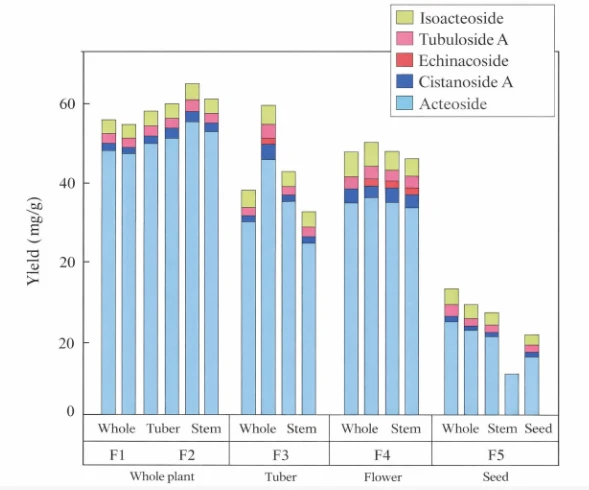
Fig. 13. Extraction rate of five kinds of PhGs in different developmental stages and plant parts of O. coerulescens.
3.4 Comparison of PhG Content: Orobanche vs. Cistanche vs. Plantago Seeds
Based on the HPLC method established in this study and the optimized extraction process, the yields of five PhGs were determined in Cistanche and Plantago seeds (as shown in Figure 3.12).
The results indicated that the relative total yield of the five PhGs in Orobanche could reach 2× that of Cistanche and 3× that of Plantago seeds.
In Orobanche, acteoside was the most abundant, reaching 3.8× the level in Plantago seeds and 3.4× the level in Cistanche.
In Orobanche, isoacteoside was 2× the level in Plantago seeds and 2.8× the level in Cistanche.
In Plantago seeds, acteoside was the highest at about 15 mg/g, while the other four PhGs were relatively low, all below 2 mg/g.
In Cistanche, acteoside remained dominant at approximately 15.85 mg/g, followed by echinacoside at approximately 12.1 mg/g, which was 10.5× that in Orobanche and Plantago seeds.
In Cistanche, cistanoside A was 2.9× that in Orobanche and 5× that in Plantago seeds, while tubuloside A and isoacteoside were relatively low.
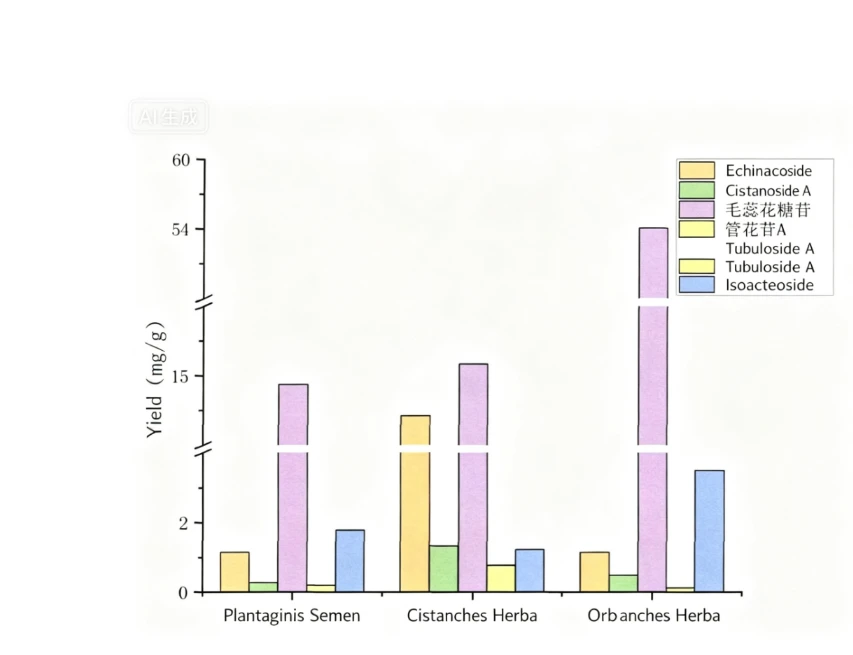
Fig. 14. Extraction rate of five kinds of PhGs in O. coerulescens, C. deserticola, and S. plantaginis.
3.5 In Vitro Anti-Tumor Cell Bioactivity of Orobanche PhGs (A549 & HepG2)
3.5.1 Effects on cell morphology (A549 and HepG2)
Crude PhG extracts from Orobanche prepared by ultrasound-assisted ethanol extraction (UAE-E) were formulated at different concentrations to observe effects on lung cancer cells (A549) and liver cancer cells (HepG2). Microscopic observations (Figure 3.13) showed:
In the blank control group, A549 cells were normal, adherent, epithelial-like, mostly polygonal with some oval/ovoid shapes, approximately 15–30 μm in size. With increasing PhG crude extract concentration, no obvious morphological changes were observed.
In the blank control group, HepG2 cells were adherent, epithelial-like, mostly polygonal or rectangular with some oval/irregular shapes, approximately 10–30 μm. Cells tended to connect tightly, proliferate and expand, forming island-like clusters. No obvious morphological changes were observed.
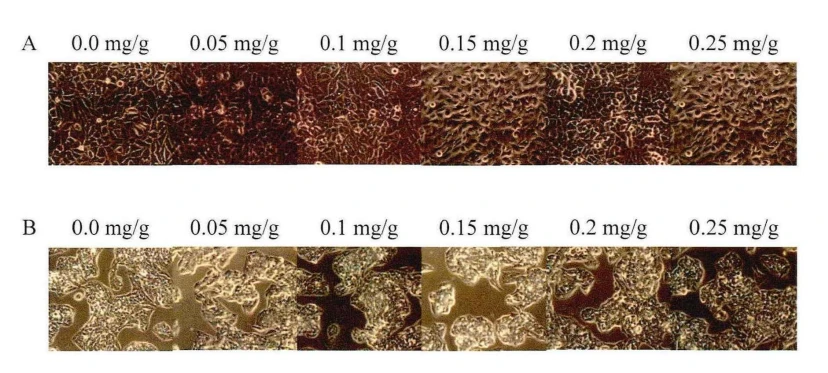
Fig. 3.13. Effect of UAE-E on the morphology of A549 cells and HepG2 cells (magnification: 200×).
3.5.2 Effects on proliferation (CCK-8)
CCK-8 is widely used to evaluate cell proliferation and viability. OD values directly reflect metabolic activity and cell number; higher OD suggests stronger metabolic activity and more cells. Using the CCK-8 assay (Figure 3.14), as the concentration of Orobanche PhG crude extract increased, OD changes in A549 and HepG2 were not significant compared with the NC group, suggesting no significant effect on proliferation under these conditions.
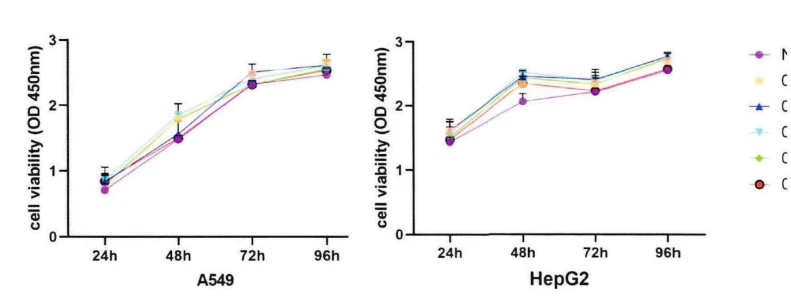
Fig. 3.14. Effect of UAE-E on the proliferation of A549 cells and HepG2 cells determined by CCK-8.
3.5.2.2 Caspase-3 detection
Caspase-3 is a key executioner protease in apoptosis pathways. With increasing concentrations of Orobanche PhG crude extract, compared with the NC group, changes related to A549 and HepG2 were not significant (Figure 3.15).
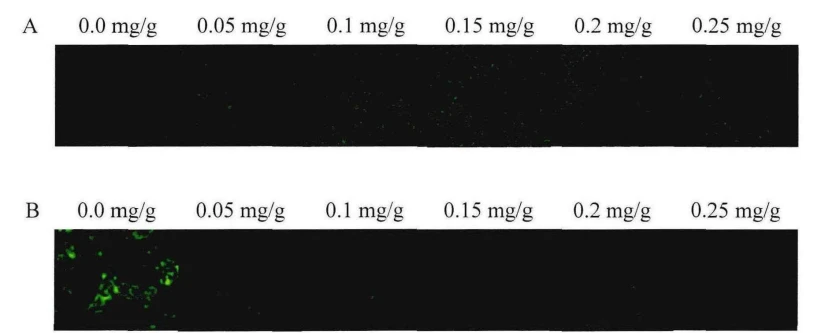
Fig. 3.15. Effect of O. coerulescens PhGs on the proliferation of A549 cells and HepG2 cells visualized by cellular immunofluorescent staining.
3.5.3 Effects on cell cycle
The cell cycle includes G1, S, G2, and M phases. Flow cytometry with PI staining can quantify DNA content to determine cell-cycle distribution. As the concentration of Orobanche PhG crude extract increased, compared with NC, A549 and HepG2 cell-cycle changes were not significant (Figure 3.16).
3.5.4 Effects on apoptosis (Annexin V/PI)
Apoptosis is programmed cell death that helps maintain internal stability by removing unnecessary or abnormal cells. Annexin V/PI staining distinguishes live, early apoptotic, late apoptotic, and necrotic cells. As the concentration of Orobanche PhG crude extract increased, apoptosis changes in A549 and HepG2 were not明显 compared with NC (Figure 3.17).
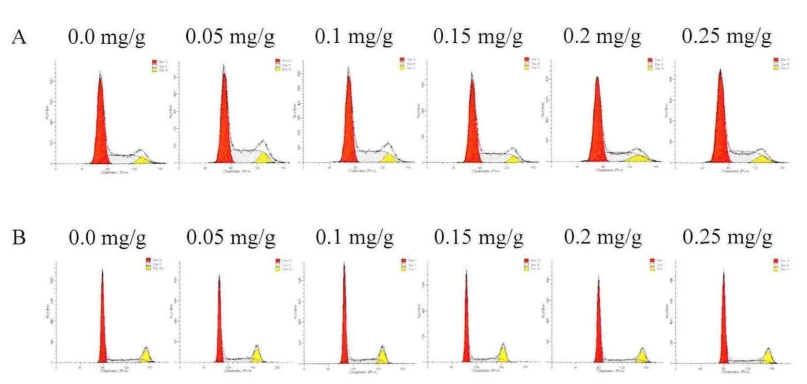
Fig. 3.16. Effect of O. coerulescens PhGs on the cell cycle observed by flow cytometry.
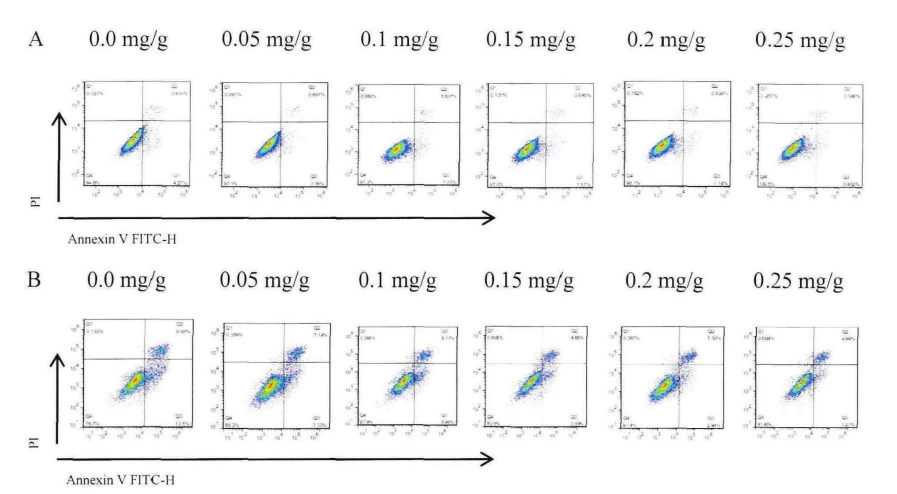
Fig. 3.17. O. coerulescens PhGs-induced apoptosis in A549 cells and HepG2 cells.
What Western Consumers Should Take Away: "PhGs" Are Real-But Dose & Standardization Decide the Outcome
This excerpt is valuable because it makes one thing very clear:
PhGs are measurable, they vary dramatically by plant species, plant part, and growth stage, and not all PhGs behave the same.
That's exactly why "cistanche for diseases" content often confuses consumers: the label may say Cistanche, but without standardized active markers and a high-active extract, the product experience can vary widely.
Wecistanche's Cistanche Extract Process

Why Cistanche tubulosa is a smart choice for high-active formulations
Many "Cistanche" products in the market are not optimized for high-actives. For brands building serious supplements, the source species and extraction quality matter.
We are a manufacturer specializing in Cistanche tubulosa (管花肉苁蓉) extract, recognized in the industry as a preferred species for developing higher-marker Cistanche extracts (particularly for PhGs such as echinacoside and acteoside, depending on your spec).
If your goal is to develop a product that reads clearly to consumers and performs consistently, the formulation strategy is typically:
Pick the right species (Cistanche tubulosa)
a type Of Cistanche supplement Sexual Performance Improvement supplement PhGs75% Ech 30% Act 12%

Product example (capsules) Listing
Use a standardized extract with clear marker content (PhGs / echinacoside / acteoside)
Build a Western-friendly delivery format (capsules, tablets, sachets)
Add supportive ingredients (see formula examples below)
Make compliant structure/function claims (not disease claims)
Factory & capability overview (for brand due diligence):
Practical Cistanche Formula Ideas
Below are example Cistanche-based formulas you can adapt depending on positioning. (These are formulation concepts, not medical advice.)
Formula A: Daily Vitality & Healthy Aging (Core PhGs)
Cistanche tubulosa extract (standardized to high PhGs markers)
Vitamin D3 (or K2+D3)
Zinc (moderate dose)
Consumer message: consistent daily vitality, resilience, healthy aging support.
Formula B: Energy, Performance & Adaptation
Cistanche tubulosa extract (high active markers)
Rhodiola rosea extract
Panax ginseng extract (or eleuthero)
Consumer message: adaptogenic support for energy and performance (non-stimulant positioning possible).
Formula C: Gut-to-Immune Support (Modern Western angle)
Cistanche tubulosa extract
Prebiotic fiber (inulin/FOS)
Probiotic blend (selected strains)
Consumer message: digestive comfort + immune support + daily wellness.
The Real Effectiveness Story: Why High-Active Extracts Matter
The in-vitro section of the excerpt shows that, under the tested conditions, Orobanche crude PhGs did not significantly change A549 or HepG2 proliferation, apoptosis, or cell cycle.
For an honest marketing story, this is actually helpful: it teaches the right lesson-
"Natural actives are not magic. They are functional compounds whose outcomes depend on extraction quality, standardization, dosing, and the right human-use context."

Click to chat with us and get high spec of cistanche extract
That's why high-marker Cistanche tubulosa extract is attractive for product development: it allows you to design a product that is repeatable and spec-driven, rather than relying on vague "herb powder" claims.
About Our Cistanche tubulosa Extract Factory
We are a dedicated Cistanche extract manufacturer focusing on Cistanche tubulosa with the goal of providing:
Higher-active extract options (clear marker specification)

Quality control suitable for global brands
Flexible supply formats for finished products and bulk ingredients