Whitening cosmetics have a large market scale and broad development prospects while whitening products of traditional Chinese medicine have always been a research hotspot. In this study, the whitening active extract of Platycodon grandiflorum (PGE) was isolated and purified for the first time, and the whitening activity mechanism and chemical composition of PGE were elucidated. A total of 45 components were identified via high-performance liquid chromatography-mass spectrometry (HPLC-MS) analysis, including arbutin, syringin, chlorogenic acid, glycoside E, platycodin D3, baicalin, platycodin D, luteolin. The scavenging rates of PGE toward DPPH and ABTS free radicals were 98.03% and 84.30%, respectively. The inhibition rate of PGE toward tyrosinase was up to 97.71%. The PGE had signifificant anti-inflammatory effects on RAW264.7 macrophages stimulated by lipopolysaccharide (LPS) and had signifificant inhibition effects on tyrosinase and melanin generation of B16F10 cells stimulated by a-MSH. The results showed that the PGE achieved a synergistic whitening effect by inhibiting the activation of oxygen free radicals on tyrosinase, antioxidation, anti-inflammatory effect, enzyme activity, and melanin generation. As a whitening agent extracted from natural plants, PGE has excellent potential in researching and developing plant whitening cosmetics, which lays a foundation for further developing and utilizing Platycodon grandiflorum resources and provides a theoretical basis for the development of green and organic whitening cosmetics.
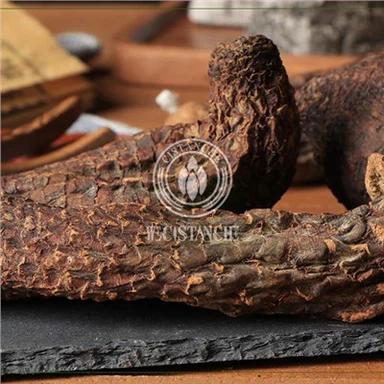
According to relevant studies,cistanche is a common herb that is known as "the miracle herb that prolongs life". Its main component is cistanoside, which has various effects such as antioxidant, anti-inflammatory, and immune function promotion. The mechanism between cistanche and skin whitening lies in the antioxidant effect of cistanche glycosides. Melanin in human skin is produced by the oxidation of tyrosine catalyzed by tyrosinase, and the oxidation reaction requires the participation of oxygen, so the oxygen-free radicals in the body become an important factor affecting melanin production. Cistanche contains cistanoside, which is an antioxidant and can reduce the generation of free radicals in the body, thus inhibiting melanin production.

For more info:
david.deng@wecistanche.com WhatApp:86 13632399501
1. Introduction
In the global beauty industry, there are numerous kinds of whitening functional cosmetics, and the market share is expected to expand further. To meet the increasing demand for skin whitening agents in whitening cosmetic formulations and achieve the skin whitening effect, the cosmetic industry has introduced several chemical additives, including hydroquinone, cysteine, glutathione, vitamin A, and glucocorticoid. These compounds have good whitening effects; however, some of them have toxic side effects; for example, “rhododendron” causes white spots in the user's skin,1 “Hydroquinone” has cytotoxic and mutagenic properties,2 “Glucocorticoid” can cause hormone-dependent dermatitis.3 At present, the addition of these ingredients (rhododendron, hydroquinone, glucocorticoid) to cosmetics is not allowed. The effect of the product is not the only standard that the consumer considers when buying cosmetics. In recent years, there has been a continuous burst of cosmetic product safety problems in the pursuit of health. Researchers have found that whitening active substances extracted from natural herbs are less toxic and have far fewer side effects. An increasing number of consumers value product safety. Furthermore, green, environmentally friendly, and organic products have become more popular, as reflected by the promotion of many direct-selling brands. Therefore, the research and discovery of safe and healthy whitening skin-care ingredients have become a trend in modern development. Applying Chinese herbal extracts from natural plants as raw materials in cosmetics has gradually become a research hotspot in the development of whitening and skin-care products.4
Platycodon grandiflorum, a traditional Chinese medicinal material, has been used in China for over 2000 years. The earliest record can be traced back to the “Shennong herbal classic”.5 The traditional pharmacological action of Platycodon grandiose is to reduce cough and expectorate. Platycodon grandiflorum contains saponins, avenues, phenolic acids, sterols, and polysaccharides.6–8 The complexity and diversity of chemical constituents determine the diversity of their biological activities.9 Modern pharmacological research has shown that Platycodon grandiflorum has anti-inflammatory, bacteriostatic, anti-tumor, anti-oxidation, immune-regulation, and other pharmacological effects.10,11 In Korea and northern China, Platycodon grandiflorum is widely used as a raw material in food and cosmetics. Cosmetics made from Platycodon grandiflorumas the raw material, such as whitening essence, whitening milk, and whitening shower gel, are favored by consumers in Korea, Japan, and other Asia countries.12 The extract of Platycodon grandiflorum is also listed in the international cosmetic raw material catalog.13 However, the whitening active ingredients and action mechanism of Platycodon grandiflorum are still unclear, and few preliminary studies have been conducted on its whitening activity. Gong X. J. et al. compared the tyrosinase inhibitory activities of various Chinese herbs and found that Platycodon grandiflorum had the strongest inhibitory effect.14 On this basis, Xu B. J. et al. evaluated the whitening effect of the effective constituent of Platycodon grandiflorum via a tyrosinase inhibition experiment and found that the effective constituent of Platycodon grandiflorum was probably the total saponin content.15 In this study, to further clarify the active whitening substances and whitening mechanism of Platycodon grandiflorum, we used the whitening active extract of Platycodon grandiflorum obtained through the pharmacodynamic tracking method as the research object. By studying the activity and components, we clarify the composition of the whitening active substances of Platycodon grandiflorum and explore the whitening mechanism of the whitening active substances of Platycodon grandiflorum. The study will provide a theoretical basis for the better utilization of Platycodon grandiflorum as a raw material for whitening cosmetics.

Skin whitening effects involve the reduction of melanin production in the skin. Melanin is the main pigment to control the colors of skin and hair. It is a high-molecular compound widely distributed in animals and plants. When excessive melanin is produced, melanin will accumulate in the skin, forming spots and freckles, which can lead to severe skin cancer.16 Therefore, to prevent excessive skin pigmentation, it is necessary to inhibit melanin production. Melanocytes are located in the epidermal basal layer and are controlled by tyrosinase. Reactive oxygen species activate tyrosinase activity, and tyrosinase catalyzes 3,4-dihydroxyphenylalanine (DOPA) to produce DOPA quinone and then catalyzes DOPA quinone to produce melanin through autooxidation and enzyme reaction. Therefore, the inhibition of tyrosinase and melanocyte proliferation can significantly inhibit melanin production.17 Moreover, good antioxidative and anti-inflammatory effects can reduce the damage caused by oxidation and inflammation of the skin, delay skin aging, and keep skin elastic and smooth and thus exert a synergistic whitening effect.18,19
Therefore, to find a natural active extract from Platycodon grandiflorum with whitening, antioxidative, and anti-inflammatory properties, this study mainly focused on the effects of Platycodon grandiflorum extract (PGE) on tyrosinase inhibition, intracellular tyrosinase inhibition, and the inhibitory activity of cell melanin generation. The study aimed to analyze the inhibitory effect of PGE on tyrosinase activity and melanin generation and comprehensively evaluate the whitening and skin-care effect of PGE and its antioxidant and anti-inflammatory effects. The chemical composition of PGE was identified and analyzed via high-performance liquid chromatography (HPLC) and liquid chromatography (LC)/mass spectrometry (MS), and the specific whitening active material of the PGE was clarified. It is vital to develop new Platycodon grandiflorum products and promote the development of the Platycodon grandiflorum industry.
2. Materials and methods
2.1. Materials
Formic acid, methanol, 2,2-diphenyl-1-picrylhydrazyl (DPPH), 2,20-casino-bis (3-ethylbenzothiazoline-6-sulfonic acid) (ABTS), acetylacetone, NaOH, K2S2O8, and Ehrlich reagent were obtained from Beijing Chemical Plant. Platycodin D, arbutin, platycodin D3, glycoside E, syringin, chlorogenic acid, baicalin, and luteolin reference products were obtained from the China Institute of Pharmaceutical Biological Products Identification. The chromatographically pure acetonitrile and methanol were obtained from J.T. Baker Co., USA. Tyrosinase, L-tyrosine, sodium hyaluronate, and hyaluronate were obtained from Beijing Solebo Technology Co., Ltd. The original 264.7 cells and B16F10 cells were purchased from the Cell Resource Center of the Shanghai Institute of Biological Sciences, China, and stored in the laboratory of a medical college affiliated with the Changchun University of Chinese Medicine. Dulbecco's Modified Eagle's Medium (DMEM), fetal bovine serum, and antibiotics (penicillin and streptomycin) were obtained from Gibco USA. Triton X-100, a-MSH, ELISA kit (NO, IL-6, TNF-a), and cell counting kit-8 (CCK-8) kit were obtained from Changchun Baijin Biotechnology Co., Ltd. Pure water was obtained from Wahaha Food Co. Ltd.

2.2. Preparation of Platycodon grandiflorum whitening active extract
Platycodon grandiflorum was supplied by Hebei Renxin Pharmaceutical Co. Ltd. Platycodon grandiflorum was crushed intone powder, heated, and reused with 95% ethanol solution three times, 1 h for each time. Then, the product was filtered, and the filtrate was recovered and merged with the filtrate obtained from three extractions. The filtrate was dried and mixed with distilled water for resolution, and n-butanol (1: 1 volume) saturated with water was extracted five times. The n-butanol layer was combined, the n-butanol solution was removed, and the PGE was obtained. The extraction rate of PGE from Platycodon grandiflorum was 8.9%.
2.3. Cell culture
B16F10 mouse melanoma cells and RAW264.7 cells were cultured in DMEM supplemented with 10% fetal bovine serum, 100 U mL―1 penicillin, and 100 g mL―1 streptomycin in humidified air of 5% CO2 at 37° C. When the cells were grown to the fusion state, they were digested by trypsin and the cells were passed every two days. All experiments were performed three times and repeated three times to ensure repeatability.
2.4. Cell viability assay
To evaluate the safety of PGE, the effects of PGE on B16F10 and RAW264.7 cells were determined through the CCK-8 method according to the manufacturer's instructions.20 First, B16F10 cells and RAW264.7 cells were cultured in 96-well plates at concentrations of 5 × 10³ cells per well and 1 × 10⒋ cells per well for 24 h and then treated with PGE or DMEM at different concentrations for 72 h. After treatment, 10 mL CCK-8 reagent was added to each well, and the cell was further cultured for 2 h. The absorbance at 450 nm was measured using a microplate reader.
2.5. Antioxidant activity
The antioxidant activity of PGE was determined via DPPH and ABTS free-radical scavenging tests, and ascorbic acid was used as the positive control.21,22 The results were expressed as the percentage inhibition rate.
Furthermore, PGE solution, ascorbic acid, and platycodin D with different concentrations (0.2, 0.4, 0.6, 0.8, 1.0, and 1.2 mg mL―1) were added to a clog test tube. Then, 2 mL DPPH solution was added into each test tube; the tubes were vortexed, the mixture was mixed and allowed to react in a dark chamber for 30 min, and the absorbance A1 at 520 nm was determined. Then, 2 mL methanol was used as the control group instead of the DPPH solution to determine the absorbance value A2. The absorbance value A0 was determined by replacing the sample solution with 2 mL methanol as the blank control group. Adjusted the absorbance value to 0 with methanol. The DPPH radical scavenging rate was calculated according to the following formula:

To prepare ABTS+$ mother liquor, 35.2 mg ABTS and 6.139 mg potassium persulfate were mixed to a constant volume of 10 mL. The liquor was diluted with methanol after 12–16 h of reaction at room temperature until the absorption value of the solution at 734 nm was about 7.0 × 0.2. Then, 30 mL PGE solution, ascorbic acid, and platycodin D with different concentrations (0.2, 0.4, 0.6, 0.8, 1.0, 1.2 mg mL―1) were mixed with 220 mL ABTS+c solution in a 96-well enzyme-labeled plate, and the absorbance at 734 nm was measured after reaction in the dark for 6 min.

where A0 is the absorbance of the blank sample, and AS is the absorbance of the sample to be measured.
2.6. Lipopolysaccharide-induced anti-inflammatory activity of RAW264.7 macrophages
RAW264.7 macrophages in 1 mL medium were seeded into a 24-well plate, with 1×10⁴ cells per well, and cultured overnight so that the cells adhered to the wall. The cells were cultured for 24 h after exposure to lipopolysaccharide (LPS) and PGE extracts at different concentrations (10, 50, 100 mg mL―1). The concentrations of NO, IL-6, and TNF-a in the cell supernatant were determined using an ELISA kit, as directed by the manufacturer.23
2.7. Tyrosinase activity
Using a method reported in the literature, with phosphate buffer (25 mmol, pH = 6.8) as a solvent, L-tyrosine substrate solution (0.5 mg mL―1), a tyrosine enzyme solution (50 U mL―1), and other solutions in 96-well plates of a 240 mL total reaction system, along with 120 mL substrate solution, 40 mL phosphate buffer, 40 mL sample solution, and blender. Then, 40 mL of tyrosine enzyme solution was added to the above system. The response of constant temperature of a 37° C water bath for 20 min was noted, and the absorbance was measured at 475 nm.24

where A is the absorbance of the sample solution replaced by the equivalent buffer solution, B is the absorbance of the sample solution, tyrosinase solution is replaced by the equivalent buffer solution, C is the absorbance of the sample solution, and D is the absorbance of the equivalent buffer solution instead of the tyrosinase solution (Table 1).
2.8. Inhibitory activity of melanin formation
B16F10 melanoma cells in 1 mL medium were seeded into a 24-well culture plate, with 1×10⁴ cells per well, and cultured overnight for the cells to adhere to the wall. The cells were cultured with a-melanocyte-stimulating hormone (100 nM a-MSH) for 48 h and cultured with different PGE and arbutin concentrations (100, 150, 200 mg mL―1) for 24, 48, and 72 h.
After the administration time, the cells were washed twice with PBS (pH = 7.2) and mixed with PBS 200 mL containing 1% Triton X-100. The cells were lysed by freezing and thawing. After the system was centrifuged at 12 000 rpm for 30 min, the supernatant was removed, and 1 M NaOH containing 10% dimethyl sulfoxide (300 mL) was added into the cell granules; then reacted at 80°C for 2 h to lyse melanin in the cells.25 The absorbance at 450 nm was determined.


2.9. Cell tyrosinase activity
B16F10 melanoma cells in 1 mL medium were seeded into a 24-well culture plate, with 1 × 10⁴ cells per well, and cultured overnight for the cells to adhere to the wall. The cells were cultured with a-melanocyte-stimulating hormone (100 nM a-MSH) for 48 h and cultured with different concentrations (100, 150, 200 mg mL―1) of PGE and arbutin for 24, 48, and 72h. After the administration time, the cells were washed twice with PBS (pH =7.2) and mixed with PBS 200 mL containing 1% Triton X-100. The cells were lysed by freezing and thawing. After centrifugation at 12 000 rpm for 30 min, the supernatant was deposited into a 96-well plate, 100 mL per well, and mixed with 100 mL 0.1% L-DOPA solution. After incubation at 37°C for 2 h, the absorbance at 475 nm was immediately determined.26

2.10. Chemical composition analysis
2.10.1. HPLC analysis. The PGE sample solution was analyzed using a Shimadzu LC-2010AHT HPLC system with an ELSD6000 evaporative light scattering detector (Alltech CHROM).27 The chromatographic separation was performed on a Sepax Bio-C18 column (4.6×250 mm, 5 mm, from Sepax Technologies, Delaware, USA). The mobile phase system was composed of mobile phase A (acetonitrile) and mobile phase B (0.1% formic acid water). The solvent gradient is presented in Table 2. The chromatographic conditions were as follows: the flow rate was 0.8 mL min―1, the initial evaporative light scattering detection (ELSD) temperature was 105×C, the gas flow rate was 2.8 L min―1, and the injection quantity was 20 L. Twenty batches of PGE were prepared.

2.10.2. Analysis of PGE chemical composition via HPLC combined with mass spectrometry. The Q-Orbitrap high-resolution LC/MS technology was used in combination with the Q Exactive high-resolution mass spectrometer on the Ultimate 3000 RS chromatography system to analyze and identify the chemical composition of the PGE sample solution via MS.28 The MS conditions are as follows: ion source: electrospray ionization source; scan mode: positive and negative ions scanning switch; detection method: full mass/dd-MS2; resolution: 70 000 (full mass), 17 500 (dd-MS2); scanning range: 150.0–2000.0 m/z; electrospray voltage: 3.8 kV (positive); capillary temperature: 300 ° C; collision gas: high-purity argon (purity $ 99.999%); sheath gas: nitrogen (purity $ 99.999%, 40 arb); auxiliary gas: nitrogen (purity $ 99.999%, 350 °C); data acquisition time: 30.0 min. Chromatographic conditions: chromatic graphic column: RP-C18 (150× 2.1 mm, 1.8 mm, Welch); Flow rate: 0.30 mL min― 1; aqueous phase: 0.1% formic acid aqueous solution; organic phase: 0.1% formic acid acetonitrile; needle washing liquid: methanol; column temperature: 35° C; injection volume: 5.00 mL. The solvent gradient is shown in Table 3.


2.11. Data statistics
All experiments were conducted at least three times. The data were reported as mean value ± standard deviation. Statistical analyses were conducted using SPSS 21.0 and Origin 9.0. For multiple comparisons, data were subjected to one-way ANOVA (Turkey's post hoc) and paired t-test to determine statistical significance. p < 0.05 was considered statistically significant differences between the groups.
3. Results
3.1. The effects of PGE on the viability of B16F10 cells and 264.7 cells
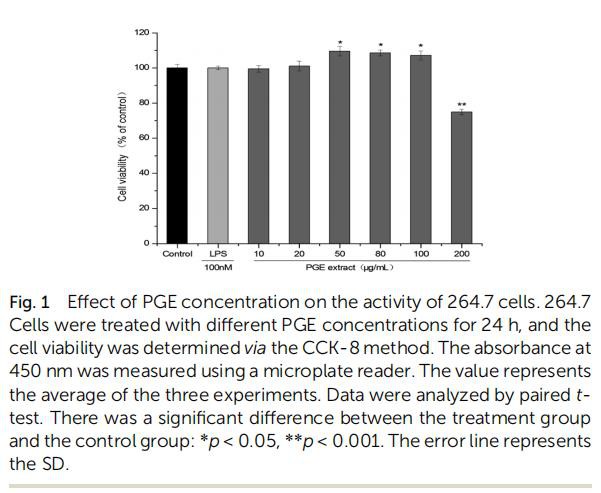
The effects of PGE on B16F10 melanoma cells and RAW264.7 macrophages were detected via the CCK-8 method. The cells were treated with different PGE concentrations for 24 h and then detected using the CCK-8 method. The results are expressed as a percentage of the survival relative to the control group. Under PGE concentrations of 10–100 mg mL―1 (cell viability: 99.42 ±1.951–107.17 ±2.601%), the PGE exhibited no cytotoxicity on the 264.7 cells (Fig. 1). However, a significant decrease in cell activity occurred at the PGE concentration of 200 mg mL―1 (cell viability: 74.91 ±1.574%). Therefore, a dosage range of 10–100 mg mL―1 (The extraction rate of PGE in Platycodon Grandiflorum was 8.9%. A concentration of 10–100 mg mL―1 of PGE is equivalent to 0.11–1.12 mg mL―1 of Platycodon Grandiflorum. Adding 1 mL of drug-containing medium per well is equivalent to adding 0.11–0.12 mg of Platycodon Grandiflorum.) should be selected. Here, 10 mg mL―1, 50 mg mL―1, and 100 mg mL―1 (concentration of plant medicinal materials: 0.11 mg mL―1, 0.56 mg mL―1, 1.12 mg mL―1, respectively) were selected as low, medium, and high concentrations.
The activity of B16F10 cells was slightly different from that of 264.7 cells. When the PGE concentration was 10–200 mg mL―1 (cell viability: 99.03 ±1.965%–91.48 ±1.382%), the activity of B16F10 cells was not significantly different from that of the control group. However, when the concentration was 250 mg mL―1 (cell viability: 85.69 ±2.284%), the activity of B16F10 cells began to decline, and the cell activity under PGE concentration of 1000 mg mL―1 (cell viability: 70.75 Therefore, a dosage range of 10–200 m3.337%) was the lowest. g mL―1 (The extraction rate of PGE in Platycodon Grandiflorum was 8.9%. A concentration of 100–200 mg mL―1 of PGE is equivalent to 1.12–2.24 mg mL―1 of Platycodon Grandiflorum. Adding 1 mL of drug-containing medium per well is equivalent to adding 1.12– 2.24 mg of Platycodon Grandiflorum.) should be selected. Here, 100 mg mL―1, 150 mg mL―1, and 200 mg mL―1 (concentration of plant medicinal materials: 1.12 mg mL―1, 1.68 mg mL―1 2.24 mg mL―1, respectively) were selected as low, medium, and high concentrations, respectively (Fig. 2).

3.2. Antioxidant capacity of PGE
DPPH and ABTS free-radical scavenging tests were used to measure the antioxidant activity of PGE. The scavenging activities of PGE toward DPPH and ABTS radicals were determined under different PGE concentrations (0.5, 1.0, 1.5, 2.0, 2.5 mg mL― 1). Platycodin D and ascorbic acid were used as the positive control. As shown in Fig. 3, the scavenging activity of PGE toward DPPH and ABTS free radicals increased in a dose-dependent manner, similar to the results of the positive control group. When the PGE concentration was 6.25 mg mL― 1, the scavenging activity toward the DPPH radical was 98.03 ±0.60%, almost the same as the scavenging activity of ascorbic acid. Moreover, PGE also showed strong scavenging activity toward ABTS radical (84.30 ±0.53%), which was higher than that of the platycodin D control group.
3.3. PGE reduction effect on LPS-stimulated inflammatory response of RAW264.7 macrophages
According to the results of the effect of PGE on the RAW264.7 macrophage activity in Section 3.1, PGE concentrations of 10, 50, and 100 mg mL―1 were selected as low, medium, and high doses, respectively, to test the effect of PGE on LPS-stimulated RAW264.7 macrophage inflammation. As shown in Fig. 4, the PGE dose-dependently reduced the NO production in LPS-stimulated RAW264.7 macrophages and dose-dependently reduced the levels of IL-6 and TNF-a inflammatory factors.

3.4. Effffects of PGE on mushroom tyrosinase activity, melanin content in B16F10 melanocytes, and intracellular tyrosinase activity
As shown in Fig. 5, the tyrosinase inhibitory activity of PGE increased significantly with the increase in the extract concentration. The higher the PGE concentration, the stronger the inhibitory activity of tyrosinase. The tyrosinase inhibitory activities of PGE at 0.5, 1.0, 1.5, 2.0, 2.5, and 3.0 mg mL―1 were 60.29%, 79.32%, 85.14%, 95.23%, 96.43%, and 97.71%, respectively. However, when the PGE concentration was 2.5–3.0 mg mL― 1, the tyrosinase inhibitory activity did not significantly increase; thus, it was not necessary to conduct experiments with higher concentrations. Under the same conditions, the inhibition rate of 3.0 mg mL‵1 PGE (concentration of plant medicinal materials: 33.71 mg mL―1) was similar to that of arbutin (3 mg mL―1, 96.97 ±1.849%) and higher than that of platycodin D (3 mg mL―1, 81.67 ±2.331%).


According to the effect of PGE on the activity of B16F10 melanocytes in Section 3.1, PGE concentrations of 100, 150, and 200 mg mL―1 PGE were selected as low, medium, and high doses to test the effect of PGE on the melanin content and tyrosinase activity of B16F10 melanocytes stimulated by a-MSH. As shown in Fig. 6, the tyrosinase activity of B16F10 cells stimulated by 100 nM a-MSH (control group) was significantly higher than that of non-stimulated cells. With the increase in the PGE concentration, the inhibitory activities of tyrosinase and melanin production on B16F10 cells significantly increased in a dose-dependent manner. With the increase in the administration time, the inhibitory activity of PGE on B16F10 cells tyrosinase and melanin production increased gradually.
For more info: david.deng@wecistanche.com WhatApp:86 13632399501