Progress in Diagnosis And Treatment Of Primary Chronic ConstipationⅠ
Dec 12, 2023
Chronic constipation is one of the most common functional gastrointestinal diseases. Its incidence rate has increased year by year, seriously endangering human health, and the incidence trend is younger. Primary chronic constipation includes normal transit constipation, rectal emptying disorder, and slow transit constipation, and there is obvious overlap between subtypes, which makes clinical diagnosis and treatment difficult. As the understanding of primary chronic constipation continues to deepen, new diagnostic and treatment strategies have been applied clinically. This article summarizes the current definition, classification, epidemiological characteristics, pathophysiological mechanisms, and diagnosis and treatment progress of primary chronic constipation that is not related to opioid abuse. It aims to improve the understanding of chronic constipation and provide effective clinical treatment of constipation. diagnosis and treatment ideas.

Chronic constipation is a gastrointestinal dysfunction disease. With the aging of the population and lifestyle changes, the incidence rate is increasing, and it has become one of the most common diseases that affect people's quality of life. Chronic constipation not only has a significant impact on patients' work and lives but also causes mental and psychological diseases, placing a burden on families and society. Therefore, the diagnosis and treatment of chronic constipation are crucial to a healthy life, but the current understanding of chronic constipation is generally lacking. This article reviews the progress related to primary chronic constipation.
I. Overview
1. Definition and classification: Chronic constipation is a common gastrointestinal disease, that refers to functional constipation, that is, non-organic defecation frequency reduction or difficulty in defecation. Rome IV points out that chronic constipation is mainly characterized by decreased frequency of defecation, difficulty in defecation, or a feeling of incomplete defecation, which may be accompanied by symptoms such as abdominal pain and bloating, but does not meet the diagnostic criteria for irritable bowel syndrome, and the symptoms must have been present for at least 6 months. And have symptoms in the past 3 months. According to different causes, chronic constipation can be divided into primary constipation and secondary constipation, among which primary constipation is more common. Primary constipation includes three types: normal-transit constipation (NTC), slow-transit constipation (STC), and rectal emptying disorder (also known as delayed exit disorder and defecation disorder).
2. Incidence and risk factors: The global prevalence of chronic constipation is between 12% and 19% [1]. Compared with Asia, constipation is more common in North America and Europe. This may be related to diet, culture, environment, etc. related. Factors leading to constipation include age, gender, social status, economic strength, level of physical activity, drugs, and mental status [2]. Research shows that stress may also be one of the important factors leading to constipation [1]. The incidence of constipation in women is higher than that in men and is positively correlated with age. The incidence of constipation in people over 60 years old is as high as 33%. Pregnant women are more likely to suffer from constipation due to the significant increase in sex hormones, reduced intestinal motility, and changes in mechanical pressure that delay intestinal emptying.
3. Harm: Chronic constipation can lead to the development of chronic diseases (such as diabetes, and rheumatism), and is accompanied by potentially serious complications, such as fecal impaction, incontinence, hemorrhoids, anal fissures, bleeding, and even colon perforation. [ 3]. Compared with normal people, the health status and quality of life of patients with constipation are seriously impaired, and they are more likely to suffer from psychological diseases such as anxiety, stress, and depression.

2. Regulation of intestinal flora
There are approximately 1013~1014 species of microorganisms in the human digestive system. These microorganisms are distributed in different locations in the intestine, affecting intestinal physiological functions and participating in life activities that are crucial to the host [4]. Intestinal flora can participate in host metabolism, such as cholesterol and bile acid metabolism, hormone metabolism, etc., and produce a series of metabolites, some of which (such as indole derivatives, secondary bile acids, short-chain fatty acids) maintain The balance of water and electrolytes in the intestine, the normal structure of intestinal flora, and even anti-inflammation, intestinal function, immune regulation, etc. play a decisive role. For example, short-chain fatty acids have a direct regulatory effect on gastrointestinal motility in patients with constipation [5].
Intestinal disorders can occur under conditions of imbalance of intestinal flora, inducing or exacerbating chronic diseases. Recent advances in shotgun sequencing technology reduced sequencing costs, and advances in bioinformatics methods have enabled a more comprehensive understanding of the intestinal microbiota and its functional potential. Principal coordinate analysis of 16S rDNA sequencing technology data showed that the composition of gastrointestinal flora in patients with constipation was significantly different from that in normal individuals. The species diversity of the microbiota in patient samples was lower than that in healthy subjects, which was also accompanied by a significant decrease in the concentration of Bifidobacteria and Lactobacilli and an increase in the abundance of Desulfovibrioceae. In addition, the levels of butyric acid-producing bacteria (such as Faecalibacterium faecalis) are significantly reduced in patients with constipation [5]. However, there is currently a large amount of conflicting data on the changes in intestinal flora in patients with constipation, and there is no consensus on the relationship between intestinal flora and primary chronic constipation.
3. Pathophysiology of primary chronic constipation
Primary chronic constipation is usually related to intestinal motility disorders or dysfunction of the coordinated contraction of the pelvic floor muscles during defecation. According to the 72-h marker excretion rate in the colon transit experiment, intestinal motility disorders can be divided into two categories: NTC and STC.
1. NTC: In the colon transit experiment, the 72-hour marker excretion rate of NTC was >80% [6]. Although NTC is the most prevalent subtype of primary chronic constipation, its pathophysiology remains unclear. Colonic dysmotility occurs not only in STC but also in NTC. Therefore, the relationship between colonic motility and colonic transit remains unclear. Like other functional gastrointestinal diseases, the cause of NTC may also be affected by diet, lifestyle, behavioral, and psychological factors.

2. Rectal emptying disorder: usually due to anatomical factors (such as rectocele, anal stenosis, rectal prolapse) or anorectal dysfunction. Defecation dyssynergia is the most common type of rectal emptying disorder. Most patients are unable to coordinate the abdominal, rectal, anal, and pelvic floor muscles when trying to defecate. This incoordination manifests itself as abnormal anal contraction, insufficient anal relaxation, or impaired rectal or abdominal propulsion. Defecation synergy disorder is an acquired defecation behavior disorder. In 2/3 of adult patients, it is caused by incorrect toileting habits, painful defecation, back injury, or brain-gut axis dysfunction [7]. In patients with defecation dyssynergia, afferent anorectal-evoked neuronal potentials are impaired and improved after biofeedback therapy, suggesting that impairment of the brain-gut axis may be a key mechanism.
3. STC: STC may be due to underlying myopathy (colonic smooth muscle dysfunction) or neuropathy resulting in delayed fecal transit. As the disease progresses, more severe symptoms are likely to occur, especially in female patients. Several physiological and histochemical findings have been proposed to explain the phenomenon of slow colonic transit, such as decreased cholinergic effects, increased adrenergic effects, diminished gastrointestinal reflexes, dyssynergia of rectosigmoid activity, myenteric plexus ganglia, and interstitium of Cajal Intestinal ganglion degeneration of cells, and abnormalities in intestinal neurotransmitters, such as substance P, pancreatic polypeptide, peptide YY, neuropeptide Y, cholecystokinin, vasoactive intestinal peptide, nitric oxide, and ovarian and adrenal steroid hormones. Studies have shown that delayed emptying and prolonged transit time in patients with STC occur in the ascending colon and transverse colon (usually in the proximal colon) [8]. Pathological examination of the resected colon of patients with severe STC showed a significant decrease in colonic intrinsic nerves and Cajal interstitial cells [9]. Although most STC cases are idiopathic, pelvic plexus injury caused after hysterectomy or delivery can also be a predisposing factor for STC [10].
Natural Herbal Medicine For Relieving Constipation-Cistanche
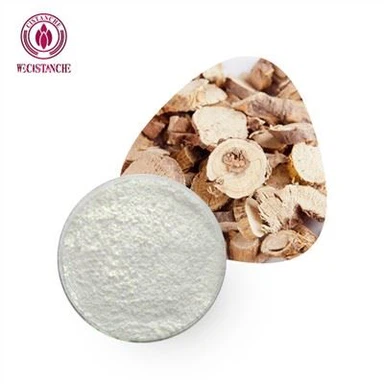
Cistanche is a genus of parasitic plants that belongs to the family Orobanchaceae. These plants are known for their medicinal properties and have been used in Traditional Chinese Medicine (TCM) for centuries. Cistanche species are predominantly found in arid and desert regions of China, Mongolia, and other parts of Central Asia. Cistanche plants are characterized by their fleshy, yellowish stems and are highly valued for their potential health benefits. In TCM, Cistanche is believed to have tonic properties and is commonly used to nourish the kidney, enhance vitality, and support sexual function. It is also used to address issues related to aging, fatigue, and overall well-being. While Cistanche has a long history of use in traditional medicine, scientific research on its efficacy and safety is ongoing and limited. However, it is known to contain various bioactive compounds such as phenylethanoid glycosides, iridoids, lignans, and polysaccharides, which may contribute to its medicinal effects.
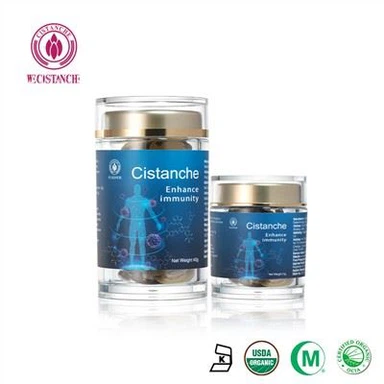
Wecistanche's cistanche powder, cistanche tablets, cistanche capsules, and other products are developed using desert cistanche as raw materials, all of which have a good effect on relieving constipation. The specific mechanism is as follows: Cistanche is believed to have potential benefits for relieving constipation based on its traditional use and certain compounds it contains. While scientific research specifically on Cistanche's effect on constipation is limited, it is thought to have multiple mechanisms that may contribute to its potential to relieve constipation. Laxative Effect: Cistanche has long been used in Traditional Chinese Medicine as a remedy for constipation. It is believed to have a mild laxative effect, which can help promote bowel movements and induce constipation. This effect may be attributed to various compounds found in Cistanche, such as phenylethanoid glycosides and polysaccharides. Moistening the Intestines: Based on traditional use, Cistanche is considered to have moisturizing properties, specifically targeting the Intestines. Promoting hydration and lubrication of the Intestines may help soften tools and facilitate easier passage, thereby relieving constipation. Anti-inflammatory Effect: Constipation can sometimes be associated with inflammation in the digestive tract. Cistanche contains certain compounds, including phenylethanoid glycosides and lignans, that are believed to have anti-inflammatory properties. By reducing inflammation in the intestines, it may help improve bowel movement regularity and relieve constipation.