Red Willow Grafted With Cistanche: The Secret To Wealth in The Desert
Feb 08, 2025
Encountering the 'Desert Gold'
In the vast and boundless desert, there is a mysterious and precious plant hidden - Cistanche deserticola. It is like a treasure in the desert, known as the "desert ginseng" and occupies a pivotal position in the field of traditional medicine.
Cistanche deserticola, a parasitic plant that parasitizes the roots of desert trees, spends most of its time underground, silently accumulating strength. Its plants are thick and robust, with fleshy stems that can reach a diameter of 5-10 centimeters and gradually become thinner upwards. Its medicinal history has a long and rich history. As early as ancient times, it was regarded as a nourishing treasure and became a tribute to the court. According to the "Shennong Bencao Jing", Cistanche deserticola is "sweet in taste, slightly warm, and non-toxic. It can treat five types of fatigue and seven types of injuries, nourish the middle, remove cold, heat, and pain from the stem, nourish the five organs, strengthen yin, nourish essence and qi, have many children, and take it for a long time to lighten the body". Modern scientific research has also found that Cistanche deserticola is rich in various ethanolic glycosides, lignans, and more than ten amino acids. Among them, phenylethanoid total glycosides are the main active ingredient, which has the effects of improving sexual function, antioxidation, anti-aging, etc. It has significant therapeutic effects on male impotence, premature ejaculation, low sexual function, and female infertility caused by insufficient kidney yang, as well as symptoms such as lower back pain and lower limb weakness caused by insufficient kidney yang in the general population. It can also effectively improve constipation problems caused by insufficient kidney yang and deficiency of essence and blood in the elderly.
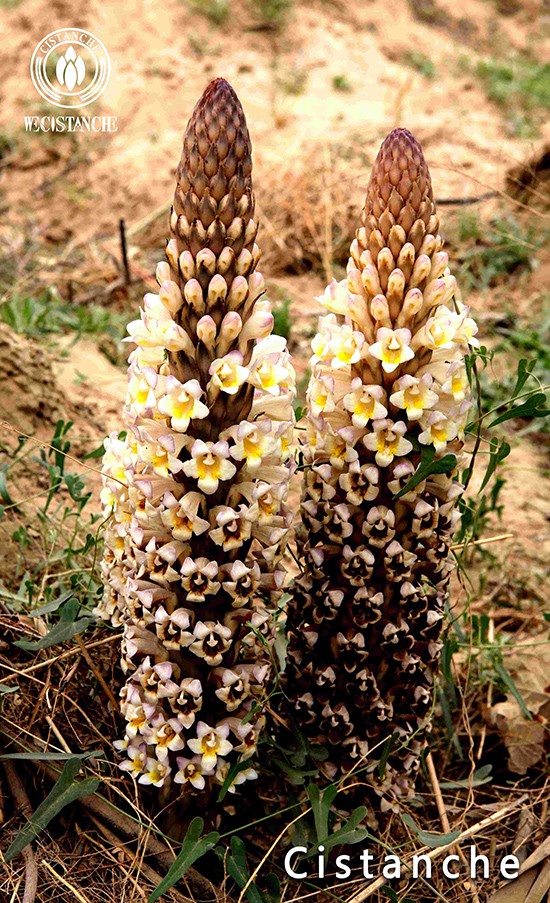
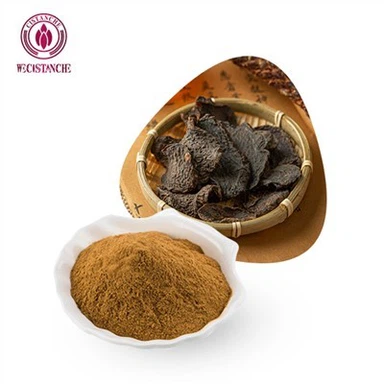
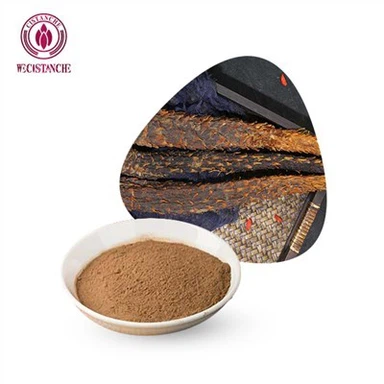
chinese herb cistanche
However, with the continuous growth of market demand, wild Cistanche deserticola has been overexploited and its quantity has sharply decreased. It has now been listed in the national second-class protected plant list. In this context, artificial cultivation of Cistanche deserticola has become an inevitable choice to meet market demand and protect wild resources. The innovative model of grafting red willows with Cistanche deserticola has brought new vitality and hope to desert areas, opening up a unique path to prosperity.
The wonderful fate between Red Willow and Cistanche deserticola
In the vast desert ecosystem, Red Willow is undoubtedly the "Desert Warrior". It has slender and silky leaves that not only reduce water evaporation but also better adapt to the arid climate of the desert. The root system of the red willow is extremely developed, like a huge and tough net, deeply penetrating more than ten meters underground, even deeper, searching for precious water sources, firmly fixing the sandy soil under its feet, effectively resisting the erosion of wind and sand. It can grow in harsh environments such as saline-alkali land, dry river ditch sand, and desert beaches, and is resistant to drought, salt alkali, wind erosion, and sand burial. It is an important guardian of desert ecosystems.
Cistanche deserticola, as a parasitic plant, cannot grow without its host. And red willow is one of the ideal hosts for Cistanche deserticola. The seeds of Cistanche deserticola are extremely small, but their quantity is considerable. Each Cistanche deserticola plant can produce tens of thousands of seeds. These seeds will 'meet' with the root system of the red willow under suitable conditions. When the seeds of Cistanche deserticola perceive the special signal released by the root system of Salix matsudana, they will quickly germinate and grow a special suction device that tightly adheres to the roots of Salix matsudana, penetrating deep into the root tissue of Salix matsudana to extract the water and nutrients needed for growth. Thus, under the protection of the red willow, Cistanche deserticola began its unique growth process.
The symbiotic relationship between red willows and Cistanche deserticola can be regarded as a clever design of nature. Red willows, with their strong adaptability, grow tenaciously in the desert, providing the foundation for the survival of Cistanche deserticola; The parasitism of Cistanche deserticola does not cause fatal damage to the red willow but rather forms an ecological balance to a certain extent. This unique symbiotic relationship not only maintains the stability of desert ecosystems but also creates possibilities for humans to utilize them.

Host of Cistanche deserticola - Red Willow
The first step to getting rich: mastering grafting techniques
(1) Site selection and preparation
The key first step in grafting red willows with Cistanche deserticola is selecting the appropriate location. The ideal planting site should be in a desert or sandy environment, where the soil has good air permeability and is conducive to the growth of the root systems of Cistanche deserticola and Salix matsudana. The soil is preferably sandy soil, with high sand content and strong drainage, which can prevent root rot caused by water accumulation. At the same time, the planting area requires sufficient light, and desert areas have long sunshine hours and high light intensity, providing good conditions for the photosynthesis of Salix and Cistanche.
In terms of water sources, although both Salix and Cistanche have a certain degree of drought tolerance, adequate water supply is essential during the early and critical growth stages. You can choose sandy areas close to rivers, lakes, or underground water sources for convenient irrigation.
The selection of seeds is crucial in the preparation work. Choose seeds of Cistanche deserticola that are plump and free from pests and diseases. These seeds have strong vitality and a high germination rate. At the same time, prepare the tools needed for grafting, such as shovel, hoe, scissors, etc., to ensure that the tools are sharp and clean, so as to avoid damage to plants during the operation.

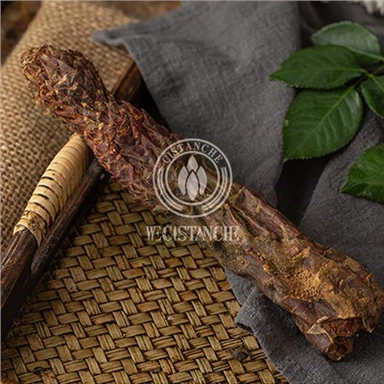
Chinese herb cistanche
(2) Key points of grafting operation
When grafting, first dig a trench around the roots of the red willow, with a depth generally controlled at 30-50 centimeters. This depth can ensure that the seeds of Cistanche deserticola are in full contact with the roots of the red willow, and can also avoid the seeds being buried too deep, which may cause hypoxia and prevent germination. Place the seeds of Cistanche deserticola evenly near the root system of Salix matsudana, taking care not to keep the distance between the seeds and the root system too far, usually around 5-10 centimeters, so that the seeds can quickly establish contact with the root system of Salix matsudana after germination. After placing the seeds, gently cover them with fine sand to a thickness of about 5-8 centimeters. The soil cover should be uniform and not too thick or too thin, as excessive thickness can affect seed germination, while insufficient thickness cannot provide sufficient protection and nutrients for the seeds.
(3) Subsequent management skills
The management work after grafting is directly related to the growth and yield of Cistanche deserticola. Watering should follow the principle of "small amount multiple times", especially during dry seasons, to ensure that the soil has a certain degree of moisture, but does not accumulate water. In the early stage of growth of Cistanche deserticola, some organic fertilizers such as decomposed sheep manure, cow manure, etc. can be applied appropriately to provide sufficient nutrients for the plant. As Cistanche deserticola grows, it is recommended to supplement compound fertilizers such as nitrogen, phosphorus, and potassium according to its growth stage.
Disease and pest control is also a key focus of management. Common pests and diseases of Cistanche deserticola include powdery mildew, root rot, and aphids. For powdery mildew, it can be prevented by strengthening ventilation and controlling planting density. Once discovered, fungicides such as powdery mildew can be used for prevention and control; Root rot is often caused by high soil moisture, and it is necessary to drain the water promptly and irrigate the roots with fungicides such as carbendazim; Aphid can be controlled by spray with imidacloprid and other insecticides. Regularly inspect planting sites, promptly identify and address pest and disease issues, and ensure the healthy growth of Cistanche deserticola.
Economic benefits revealed
(1) Cost analysis
The cost of grafting red willow onto Cistanche deserticola mainly includes the following aspects. In terms of land leasing, there are differences in rent for deserts or sandy areas in different regions. Generally speaking, the annual rent per acre of land is around 500-1000 yuan. If in some desert areas with relatively abundant land resources and an underdeveloped economy, the rent may be as low as 300-500 yuan; In sandy areas close to cities or with convenient transportation, the rent may reach 1000-1500 yuan.
In terms of seed cost, high-quality Cistanche deserticola seeds are relatively expensive, with a seed cost of approximately 300-500 yuan per acre of land. With the continuous advancement of seed cultivation technology, the germination rate and quality of seeds are gradually improving, although prices may fluctuate, overall they remain within a certain range.

Effects of Cistanche-Improve kidney function
Click here to view Cistanche for Kidney disease products
【Ask for more】 Email:cindy.xue@wecistanche.com / Whats App: 0086 18599088692 / Wechat: 18599088692
Labor cost is an important expense in the planting process. Every step from site selection, grafting, and daily management to harvesting requires manual operation. In the early stages of planting, the labor costs for grafting and planting are relatively high, requiring approximately 500-800 yuan per mu of land; In the daily management stage, such as watering, fertilizing, pest control, etc., the annual labor cost per mu of land is about 300-500 yuan; During the harvest season, due to the technical and experiential requirements for harvesting Cistanche deserticola, labor costs are relatively high, costing around 800-1000 yuan per mu of land.
The maintenance cost includes irrigation water, fertilizers, pesticides, etc. The cost of irrigation water varies depending on the local water resources and irrigation methods. Generally, the water fee per mu of land is between 200-500 yuan per year; Fertilizers are mainly organic fertilizers and compound fertilizers, with an annual fertilizer cost of approximately 300-500 yuan per mu of land; The cost of pesticides is relatively low, around 100-200 yuan per mu of land per year. Overall, the total cost of planting red willow grafted with Cistanche deserticola per acre of land is approximately 2500-4000 yuan per year.
(2) Profit estimation
The yield of Cistanche deserticola is influenced by various factors such as planting techniques, climatic conditions, and soil quality. Under normal circumstances, with careful management, the yield of Cistanche deserticola per acre can reach 400-600 kilograms. In some areas with advanced planting technology and superior natural conditions, the yield can even reach over 800 kilograms.
In terms of market prices, the price of Cistanche deserticola varies due to factors such as quality, origin, and market supply and demand. At present, the purchase price of Cistanche deserticola in the market is generally around 30-50 yuan per kilogram. High-quality Cistanche deserticola, such as those from Xinjiang, Inner Mongolia, and other regions, may have a higher price, reaching 80-100 yuan per kilogram. Based on a land yield of 500 kilograms per acre and a purchase price of 40 yuan per kilogram, the income per acre is calculated as 500 × 40=20000 yuan. Deducting the annual cost of about 3000 yuan per mu of land, the net profit per mu of land can reach about 17000 yuan, and the economic benefits are very considerable.
(3) Long-term benefit outlook
One of the unique advantages of Cistanche deserticola is that it can be harvested for many years after a single grafting. Generally speaking, grafted Cistanche deserticola begins to harvest in the second to third year and can sustain stable production for 6-8 years or even longer thereafter. During this period, with the continuous proficiency of planting techniques and the accumulation of management experience, the yield may continue to increase year by year. Moreover, as people's attention to health and wellness continues to increase, the demand for traditional Chinese medicine such as Cistanche deserticola is also growing, and market prices are expected to remain stable or slightly increase. In the long run, the benefits of grafting red willows with Cistanche deserticola have high stability and growth potential, providing a sustainable path to prosperity for growers.
Success Case Sharing
In the Hotan region of Xinjiang, there is a farmer named Abdullah. His village is located on the edge of the Taklamakan Desert and has long been plagued by sandstorms, resulting in barren land and meager income from traditional agriculture. The villagers live in poverty. A few years ago, Abdullah learned about the planting project of grafting red willows with Cistanche deserticola and saw hope for poverty alleviation and prosperity.

Cistanche deserticola - a bumper harvest for farmers
Abdullah was the first to try planting red willows grafted with Cistanche deserticola on his own 5 acres of sandy land. At first, due to a lack of experience, he encountered many problems during the grafting process, such as low seed germination rate and slow growth of Cistanche deserticola. However, he did not give up and actively participated in the planting technology training organized by the local government, seeking advice from experts and constantly exploring and improving planting methods.
After careful management and care, Abdullah's Cistanche finally achieved a bountiful harvest. In the first year, the land yield per acre reached 300 kilograms. Based on the purchase price of 35 yuan per kilogram at that time, his income from 5 acres of land reached 52500 yuan. After deducting costs, the net profit exceeded 40000 yuan. Abdullah, who tasted the sweetness, expanded the planting scale to 10 acres the following year. With the increasing maturity of planting technology, the yield and quality of Cistanche deserticola are constantly improving, and its income is also increasing year by year. Nowadays, Abdullah's annual income has exceeded 100000 yuan. Not only has he successfully lifted himself out of poverty, but he has also built new houses and purchased new agricultural machinery. His life has undergone earth-shaking changes.
Under the leadership of Abdullah, more and more villagers in the village have joined the planting of red willow grafted with Cistanche deserticola. A professional cooperative has been established in the village to purchase seeds and fertilizers and sell Cistanche deserticola uniformly, forming a large-scale and industrialized business model. The cooperative has also established long-term cooperative relationships with multiple pharmaceutical companies, ensuring stable sales channels for Cistanche deserticola. By developing the industry of grafting red willows with Cistanche deserticola, this once impoverished small mountain village has now achieved a per capita annual income of over 8000 yuan and embarked on the path of becoming prosperous and striving for a moderately prosperous society.
Market prospects and challenges
In the current era of increasing awareness of health and wellness, the market demand for Cistanche deserticola, a traditional precious Chinese medicinal herb, is showing a strong growth trend. Especially in the context of the internationalization of traditional Chinese medicine, Cistanche deserticola has gradually emerged in the international market with its unique medicinal value and health benefits and has been favored by more and more consumers.
At present, the application of Cistanche deserticola in health products, pharmaceuticals, cosmetics, and other fields is becoming increasingly widespread. In the field of health products, Cistanche deserticola is often made into various tonics, such as Cistanche deserticola oral liquid, Cistanche deserticola capsules, etc., to meet people's pursuit of health and wellness; In the field of medicine, Cistanche deserticola is used in the research, development and production of a variety of traditional Chinese patent medicines and simple preparations, which has a certain auxiliary role in the treatment of some chronic diseases; In the field of cosmetics, Cistanche deserticola extract is added to skincare products due to its antioxidant and anti-aging effects, providing nourishment and protection to the skin.
With the continuous growth of market demand, the market size of Cistanche deserticola is also expanding. According to relevant data, in recent years, the market size of Cistanche deserticola in China has grown from billions of yuan to tens of billions of yuan, with a compound annual growth rate of over 20%. It has become the world's largest producer and consumer of Cistanche deserticola. It is expected that in the next few years, the global market size of Cistanche deserticola will grow at a rapid rate, especially in the Asia Pacific region, where the health needs of an aging society will provide sustained market momentum for Cistanche deserticola.
However, the cultivation and development of red willow grafted with Cistanche deserticola also face some challenges. In terms of planting technology, although certain achievements have been made so far, there are still some technical difficulties that need to be further overcome. For example, the seed germination rate of Cistanche deserticola is relatively low. How to improve the seed germination rate and shorten the growth cycle of Cistanche deserticola is still a problem that needs further research. In addition, the prevention and control of diseases and pests is also an important challenge. Diseases and pests such as powdery mildew, root rot, aphids, etc. seriously affect the yield and quality of Cistanche deserticola.
In terms of market competition, with more and more enterprises and growers entering the Cistanche deserticola industry, market competition is becoming increasingly fierce. Some companies may neglect product quality in pursuit of short-term benefits, resulting in the uneven quality of Cistanche products in the market. At the same time, there is a significant fluctuation in the price of Cistanche deserticola in some regions, which poses certain market risks for growers and enterprises.
In response to these challenges, growers and businesses can adopt a series of coping strategies. In terms of planting technology, we will increase research and development investment, cooperate with scientific research institutions, introduce advanced planting techniques and management experience, and continuously improve the yield and quality of Cistanche deserticola. Strengthen monitoring and early warning of pests and diseases, adopt green prevention and control technologies, reduce the use of chemical pesticides, and ensure the quality and safety of Cistanche deserticola. In terms of market competition, establish brand awareness, strengthen brand building, and improve product visibility and reputation. Actively expand sales channels, establish long-term and stable cooperative relationships with pharmaceutical companies, health product companies, cosmetics companies, etc., and reduce market risks.
Embark on a new journey of desert prosperity
The grafting of red willow onto Cistanche deserticola is undoubtedly a successful example of achieving ecological and economic win-win in desert areas. It has not only made important contributions to the protection of wild Cistanche resources and the improvement of the desert ecological environment but also provided a hopeful path to prosperity for local farmers and entrepreneurs.
On this road to wealth, although we may face some challenges, as long as we continue to learn advanced planting techniques, strengthen management, and actively respond to market changes, we will be able to overcome difficulties and reap rich returns. Whether it's to improve your life or to achieve your entrepreneurial dreams, grafting red willow with Cistanche deserticola is worth trying. Let's take action together, sow the seeds of hope in the desert, harvest our own wealth and success, and write a new chapter of desert prosperity together!