Research Progress On Chemical Constituents And Pharmacological Effects Of Cistanche Tubulosa
Oct 10, 2026
Abstract:
Cistanche tubulosa Y.C. Ma (Orobanchaceae), known as "Desert Ginseng," is a parasitic perennial herb traditionally used in Chinese medicine for tonifying the kidney, boosting essence and blood, and moistening the intestine to relieve constipation. This review systematically summarizes the recent advances in the phytochemistry and pharmacological properties of C. deserticola, with a focus on its major bioactive constituents-phenylethanol glycosides (PhGs), polysaccharides, iridoids, and lignans-and their corresponding therapeutic effects, including neuroprotection, anti-osteoporosis, antioxidant, anti-inflammatory, anti-fatigue, and immunomodulatory activities. The aim is to provide a theoretical foundation for the further development of C. deserticola in functional foods and pharmaceutical industries.

Main Chemical Constituents of Cistanche tubulosa
Keywords: Cistanche tubulosa; phenylethanol glycosides; echinacoside; acteoside; polysaccharides; pharmacological effects
1. Introduction
Cistanche tubulosa is mainly distributed in the arid desert regions of Xinjiang, Inner Mongolia, Gansu, Ningxia, and Qinghai in China, typically parasitizing on the roots of Haloxylon ammodendron or Atriplex canescens. As one of the "Nine Great Immortal Herbs" in traditional Chinese medicine, it has been recorded in the Shennong Bencao Jing (Divine Farmer's Materia Medica) as a superior-grade tonic herb. Modern pharmacological studies have validated its broad-spectrum biological activities, and a series of extracts and mono-compounds have been developed into health products and innovative drugs.
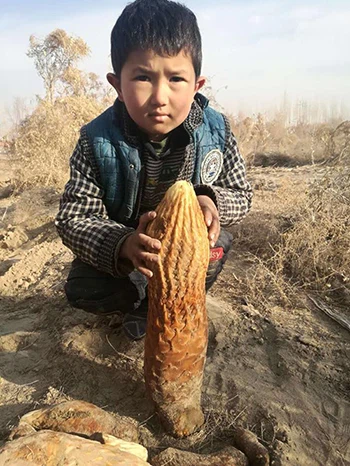
Superman herbs cistanche
2. Chemical Constituents
To date, over 130 compounds have been isolated and identified from the genus Cistanche, with the fleshy stems of C. deserticola containing a complex array of primary and secondary metabolites.
2.1 Phenylethanol Glycosides (PhGs)
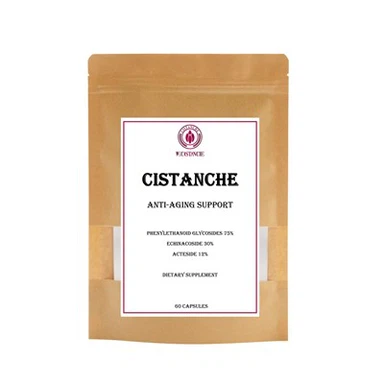
PhGs are the principal and most extensively studied bioactive constituents of C. deserticola, and also serve as the quantitative marker specified in the Chinese Pharmacopoeia. More than 99 PhG compounds have been isolated, characterized by a phenylethanol aglycone core linked via beta-glycosidic bonds to monosaccharide units (e.g., glucose, rhamnose), often with caffeoyl or feruloyl substitutions. Representative compounds include echinacoside, acteoside (verbascoside), 2'-acetylacteoside, tubuloside A and B, cistanoside A-I, and isoacteoside. Among them, echinacoside and acteoside are the most abundant and pharmacologically significant.

Phenylethanol glycoside is the main active component of Cistanche tubulosa
2.2 Polysaccharides
Cistanche tubulosa polysaccharides (CDP) are primarily concentrated in the fleshy stems. They are heterogeneous macromolecules composed of glucose, galactose, rhamnose, arabinose, and mannose in varying molar ratios. The molecular weight and monosaccharide composition directly influence their biological activities, such as immunomodulation and anti-fatigue effects.
2.3 Iridoids
Twenty-eight iridoid compounds have been isolated from C. deserticola, including leonuride, 8-epiloganic acid, and geniposide. These monoterpenoid derivatives exhibit anti-inflammatory, hepatoprotective, and antidepressant properties.
2.4 Other Constituents
Additional bioactive components include lignans (e.g., pinoresinol-4-O-beta-D-glucopyranoside), flavonoids, alkaloids, volatile oils (straight-chain C16-C28 alkanes, esters, nitrogen-containing compounds), and essential trace elements.
3. Pharmacological Effects
3.1 Neuroprotective Effects
PhGs, particularly echinacoside and acteoside, are the core neuroprotective agents in C. deserticola. They protect against cerebral ischemia-reperfusion injury, inhibit neuronal apoptosis, and improve cognitive dysfunction in animal models of Alzheimer's disease, Parkinson's disease, and vascular dementia. Mechanistically, echinacoside targets protein kinase CK2alpha, promoting mitochondrial fusion and replenishing neurotransmitter pools. PhGs also exert anti-depressive effects by increasing monoamine neurotransmitter levels (norepinephrine, dopamine, serotonin) and inhibiting the hyperactivity of the HPA axis.

Effects of Cistanche-Anti Alzheimers disease
Click here to view Cistanche Improving Memory and Preventing Alzheimer's Disease products
【Ask for more】 Email:cindy.xue@wecistanche.com / WhatsApp: 0086 18599088692 / WeChat: 18599088692
3.2 Anti-osteoporosis Effects
C. deserticola exhibits a bidirectional regulation of bone metabolism. Echinacoside, acteoside, and CDP suppress osteoclastogenesis by down-regulating the NF-kappaB and c-Fos signaling pathways and reducing RANKL expression. Concurrently, they promote osteoblast differentiation and mineralization. Furthermore, PhGs modulate gut microbiota composition, increase short-chain fatty acid levels, and balance Th17/Treg cell ratios, thereby creating a systemic anti-inflammatory environment conducive to bone repair.
3.3 Antioxidant and Anti-aging Effects
The extracts of C. deserticola employ a dual strategy of exogenous free radical scavenging plus endogenous antioxidant system activation. PhGs, polysaccharides, and oligosaccharides suppress reactive oxygen species (ROS) production and regulate the Nrf2/HO-1-dependent antioxidative pathway, reducing malondialdehyde (MDA) levels. Animal studies have shown that C. deserticola supplementation can extend the lifespan of mice by approximately 15%.
3.4 Anti-inflammatory and Immunomodulatory Effects

Cistanche-improve immunity
CDP and PhGs activate innate immune cells (dendritic cells and macrophages), which in turn initiate T cell-mediated adaptive immunity. Meanwhile, these compounds inhibit the production of pro-inflammatory mediators such as iNOS, TNF-alpha, IL-1beta, and COX-2, reducing inflammatory cell infiltration. This makes C. deserticola a promising candidate for managing inflammatory conditions like asthma and inflammatory bowel disorders.
3.5 Anti-fatigue and Laxative Effects
C. deserticola delays exercise-induced fatigue by promoting energy metabolism, increasing ATP and glycogen levels, and suppressing the accumulation of lactic acid, creatinine, and blood urea nitrogen. For laxative purposes, it constructs a triple protection barrier in the intestine: improving gut microbiota dysbiosis, reversing villus shortening, and regulating bile acid metabolism. This makes it especially suitable for elderly patients with constipation due to qi or blood deficiency.

Effects of cistanche-anti fatigue
3.6 Hepatoprotective and Renoprotective Effects
Total glycosides from C. deserticola protect against hepatic ischemia-reperfusion injury (HIRI) by activating the cAMP/EPAC2/Rap1 pathway, which inhibits MST1 and LATS1, promotes YAP nuclear translocation, induces autophagy, and suppresses hepatocyte apoptosis. For renal protection, the herb inhibits renal fibrosis, prevents tubular epithelial cell apoptosis, and attenuates local inflammatory and oxidative stress damage.
3.7 Other Pharmacological Activities
Additional documented activities include anti-hypoxic, antidepressant, anti-tumor (inhibiting K562 leukemia cell growth and reducing H22 tumor-bearing liver injury), anti-diabetic (improving glucose tolerance and insulin resistance), and reproductive regulation (elevating serum testosterone levels).
4. Conclusion and Future Perspectives
C. deserticola is a valuable medicinal and edible resource with a well-established traditional reputation and a solid modern pharmacological foundation. The innovative drug "Cistanche Total Glycosides Capsule" is already on the market for vascular dementia, and echinacoside tablets are in clinical trials. Future research should address the following challenges: (i) improving the poor oral bioavailability and rapid metabolism of PhGs through novel delivery systems; (ii) elucidating the mechanisms of non-PhG constituents (e.g., polysaccharides, iridoids) using multi-omics approaches; and (iii) establishing a systematic component-target-pathway network to guide the development of the growing Cistanche-related health industry.