Research Progress On The Main Chemical Components And Biological Activities Of Cistanche
Mar 26, 2024
Abstract: Cistanche was first published in the Shennong Materia Medica, which is a tonic medicine that has the effect of tonifying the kidneys and aphrodisiac, invigorating the blood, and moisturizing the intestines and laxatives. The main chemical components are phenylethanol glycosides, cyclic ether terpenes and their glycosides, lignans and their glycosides, polysaccharides, nucleosides, amino acids and nitrogenous compounds, monoterpenes, and organic acids, which have a variety of biological activities such as tonifying the kidney, protecting the liver, moisturizing the intestines, and inhibiting cell proliferation. This paper reviews the research progress of the main chemical components and biological activities of Cistanche to provide a reference for the research and development of new drugs.
Keywords: Cistanche; Chemical composition; Biological activity

Cistanche deserticola Y.C.Ma
Cistanche is a plant of the family Cistanche tubulosa, Cistanche deserticola Y.C.Ma or Cistanche salsa.
The dry fleshy stem with scaly leaves of Cistanche tubulosa (Schenk) Wight [1]. Cistanche tubulosa tastes sweet, salty, and warm, and returns to the kidney and large intestine meridian. It has the functions of nourishing kidney yang, replenishing essence and blood, moistening the intestines, and being laxative. It can be used for insufficient kidney yang, deficiency of essence and blood, impotence and infertility, soreness and weakness of the waist and knees, and weakness of muscles and bones. Intestinal dryness and constipation. Studies have shown that there are 4 species and 1 variety of Cistanche tubulosa plants in my country: desert Cistanche tubulosa, tube-flowered Cistanche tubulosa, halophilic Cistanche tubulosa and its variants white-flowered salt cistanche and Cistanche tubulosa, which are distributed in deserts such as Inner Mongolia, Ningxia, Gansu, Qinghai, and Xinjiang. region[2]. A large number of research literature has shown that Cistanche tubulosa and its active ingredients have anti-inflammatory [3], antioxidant [4], anti-tumor [5], anti-cerebral ischemia [6], memory improvement [7], laxative and intestinal laxative [8] ], protect liver [9], improve reproductive function [10], protect kidney damage and treat chronic kidney disease, prevent osteoporosis [11] and Alzheimer's disease [12] and other functions. This article synthesizes the active ingredients of Cistanche tubulosa and relevant literature on its functions of nourishing the kidneys, protecting the liver, laxative, and inhibiting cell proliferation, to provide a theoretical basis for further research.
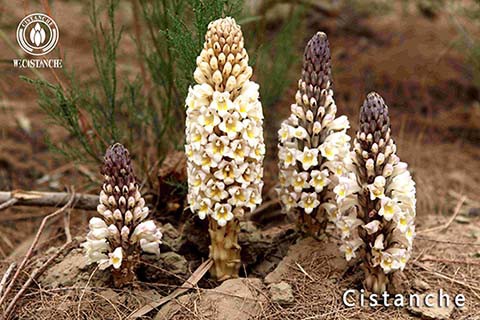
Cistanche tubulosa
1. Chemical composition
The main active ingredient of Cistanche tubulosa is phenylethanoid glycosides (Phenyl ethanol)
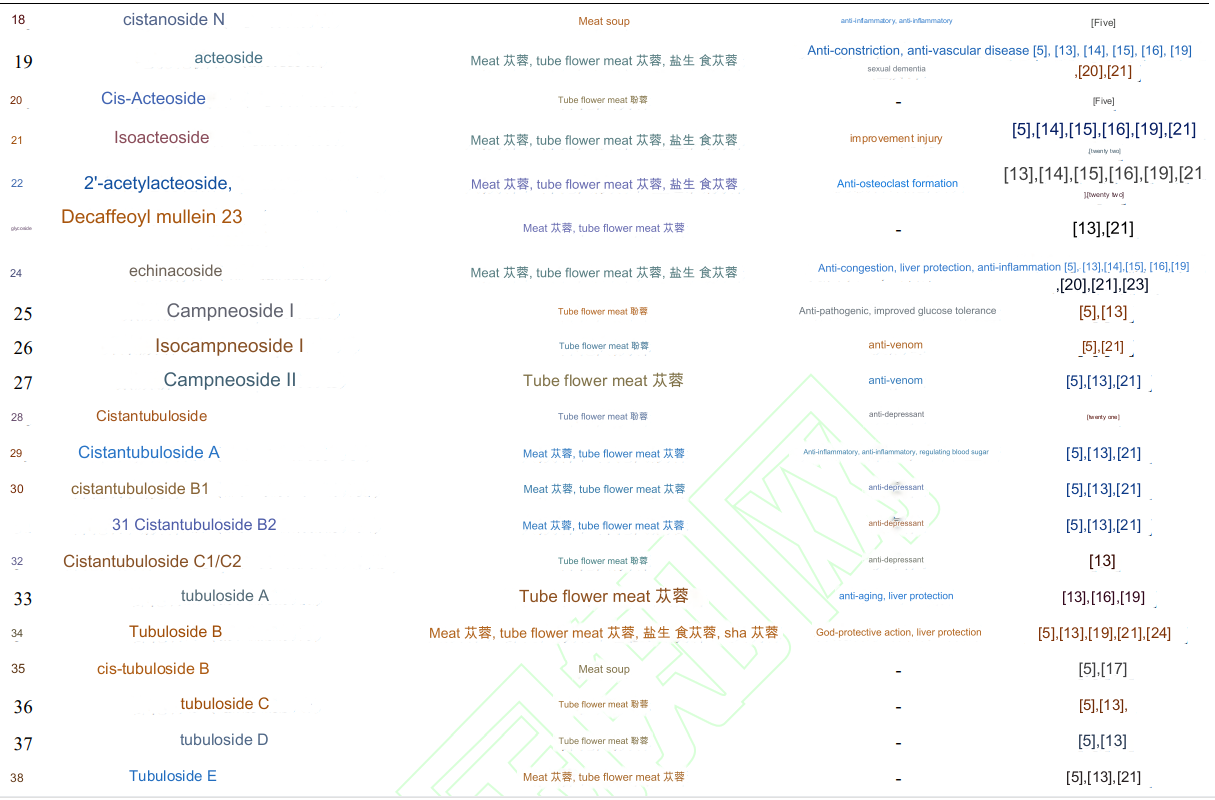
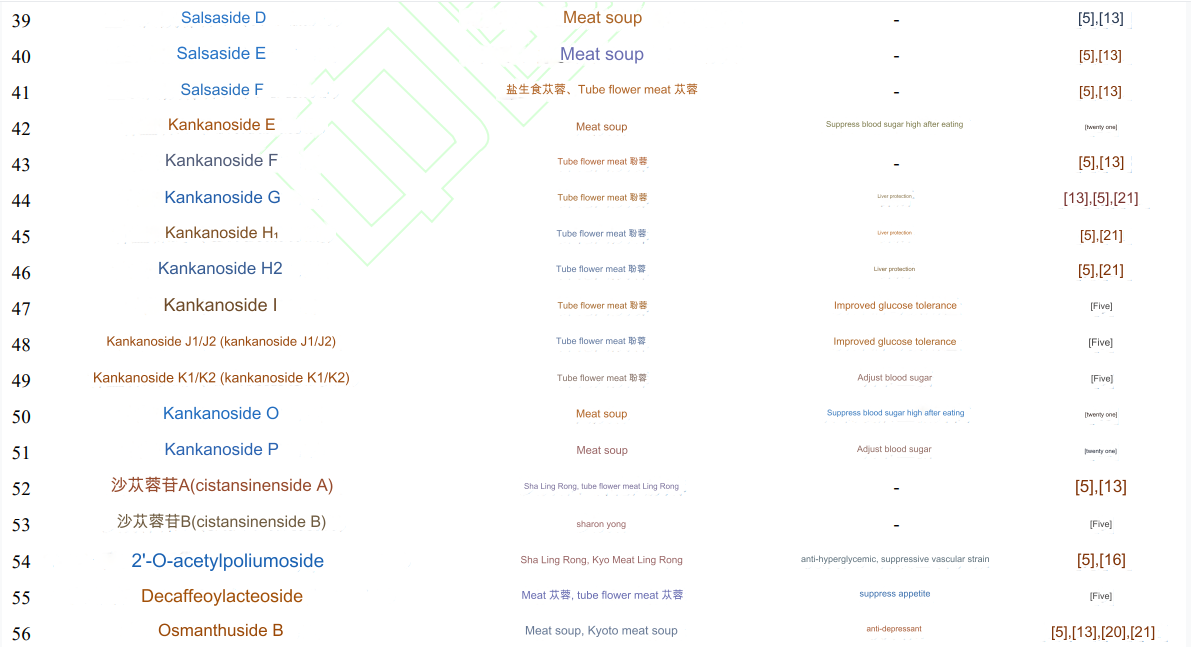
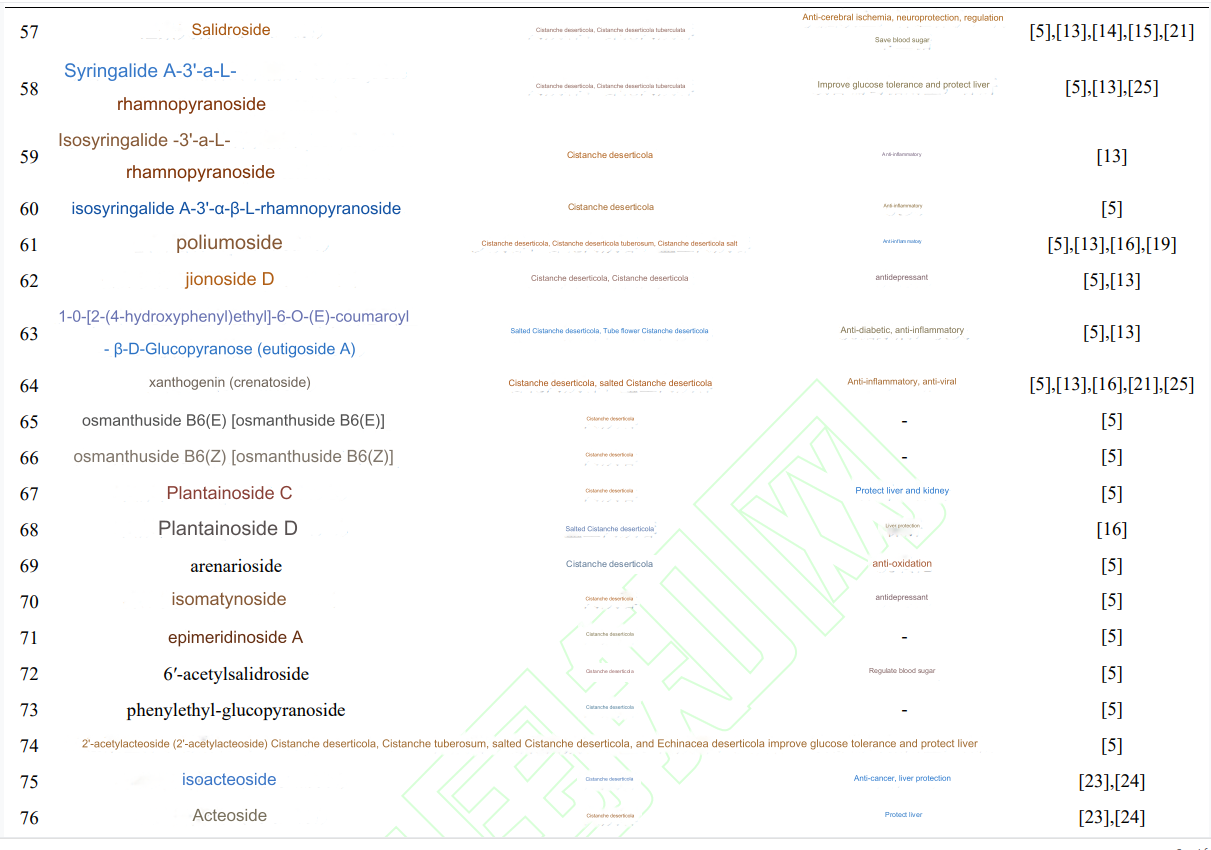
glycosides, PeGs), iridoids, lignins, polysaccharides, and other chemical components. It also contains monotetrazoids, organic acids, nucleosides, nitrogen-containing organic matter, and inorganic trace elements. Pan Yingni [13] conducted a systematic study on the chemical components of the fresh fleshy stems of C. tuberosum and separated them through solvent extraction, combined with modern chromatography separation technologies such as macroporous adsorption resin column chromatography, silica gel column chromatography, ODS column chromatography and preparative HPLC. And 53 compounds were identified. Song Qingqing et al. [5] studied using IF-TOF-MS high-resolution mass spectrometry to identify 79 chemical components in Cistanche tubulosa. Liu Wenjing et al. [14, 15] used HPLC-IF-TOF-MS technology to identify 9 phenylethanoid glycosides in Cistanche tubulosa flowers and 11 phenylethanoid glycosides in lignified stems and compared them using ~1H-NMR technology. In compounds of wild and cultivated Cistanche tubulosa, 28 compounds were identified. Cao Libo et al. [16] used the direct injection-multiple-level mass spectrometry full scan method to identify 31 compounds in Cistanche tubulosa. Nan Zedong et al. [17] isolated and identified four compounds, cis-cyantrin B, cis-cyanide K, cis-cyanide J, and cis-isocyanide C, from desert Cistanche tubulosa cultivated in Tazhong, and reported them for the first time. Its ~1H-NMR and 13C-NMR spectral data. At present, 83 phenylethanol glycoside compounds have been reported to be isolated. The specific information is shown in Table 1.
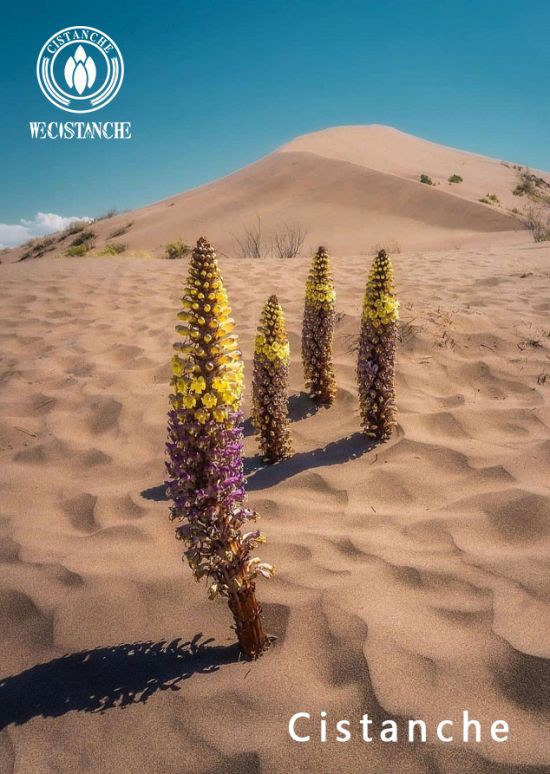
Cistanche deserticola Y.C.Ma
Twenty-eight iridoids were isolated from Cistanche tubulosa plant genus. The detailed information is shown in Table 2. 19 lignan components were isolated from the Cistanche tubulosa plant genus. The detailed information is shown in Table 3. Fourteen carbohydrate compounds were isolated from the Cistanche tubulosa plant genus. The specific information is shown in Table 4. 28 nucleosides, amino acids and nitrogen-containing compounds were isolated from the Cistanche tubulosa plant genus. The specific information is shown in Table 5. 19 monoterpenes and organic acids were isolated from the Cistanche tubulosa plant genus. The specific information is shown in Table 6.
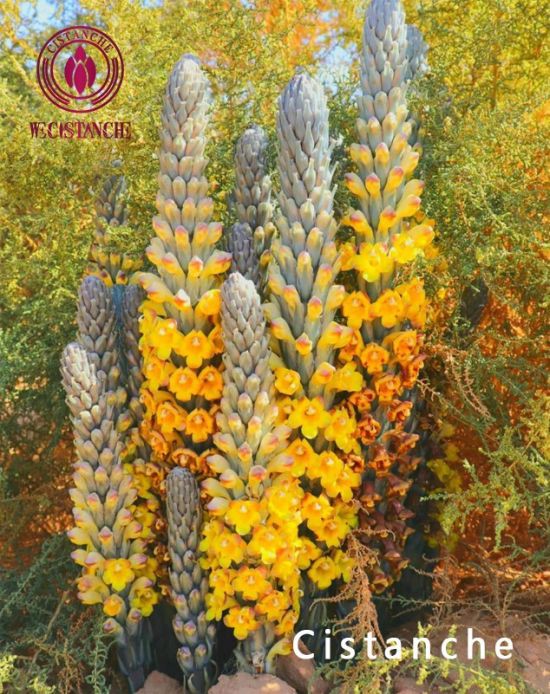
Cistanche deserticola Y.C.Ma