Research Progress On The Main Chemical Components And Biological Activities Of Cistanche Tubulosa
Mar 26, 2024

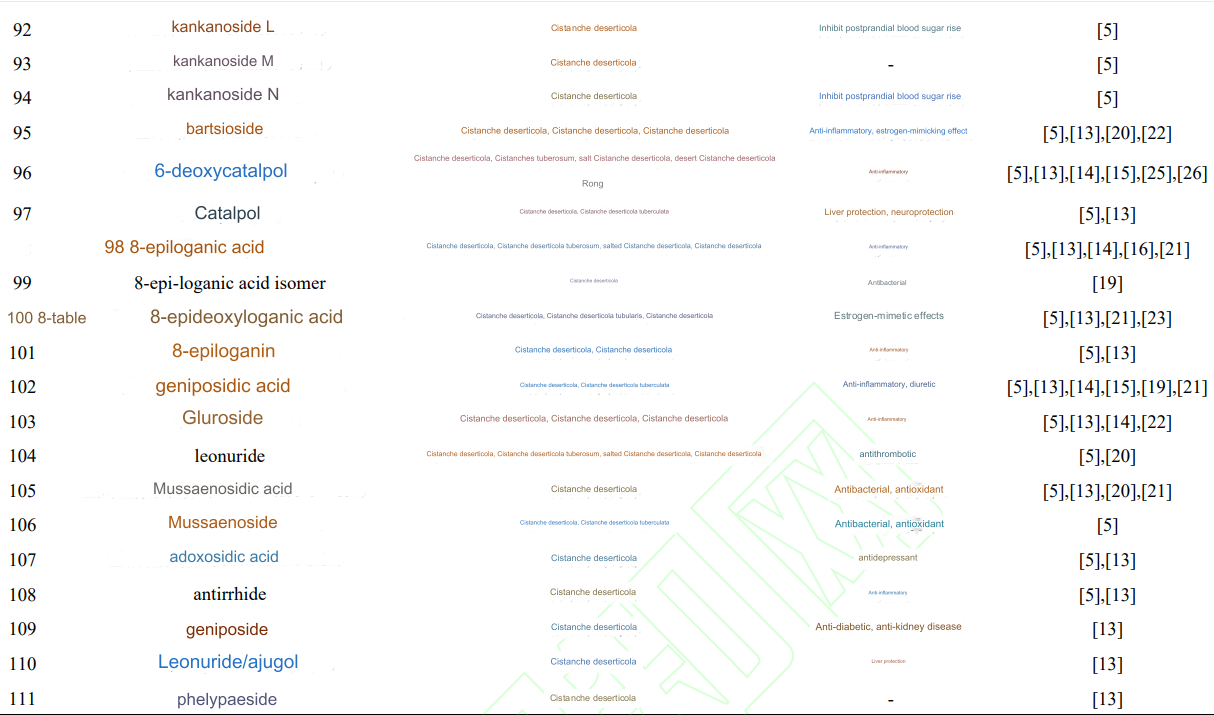
Table 3 Lignan components
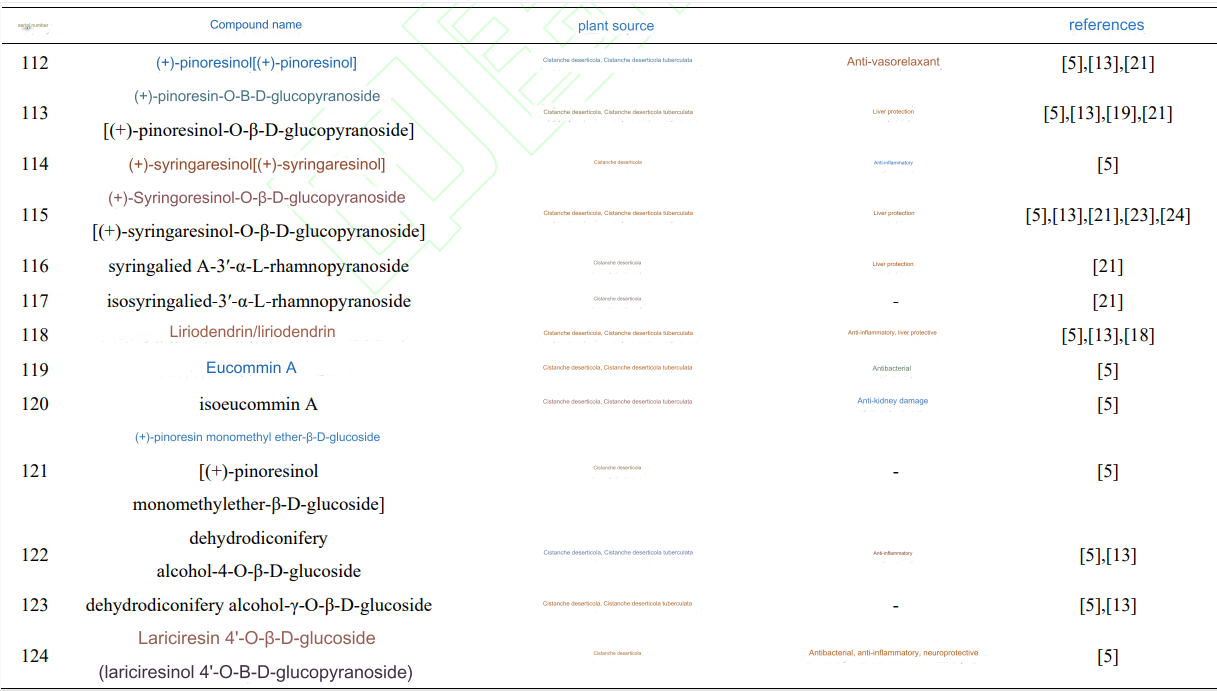
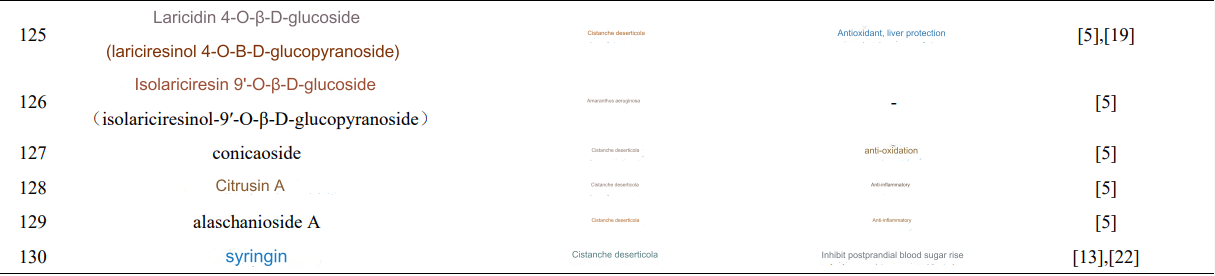
Table 4 Carbohydrate compounds

Table 5 Nucleosides, amino acids and nitrogen-containing compounds


Table 6 Monotypic and organic acid compounds


2. Drug efficacy research
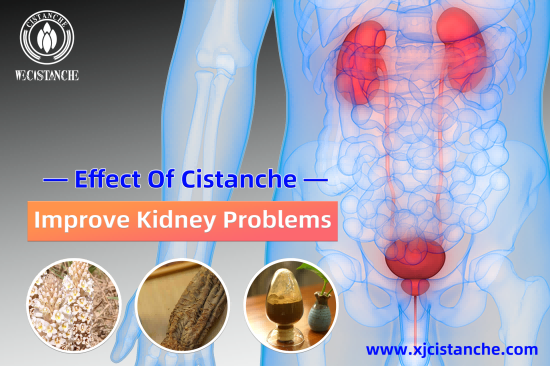
2.1 Kidney function
Gong Xia et al. [33] found that Cistanche tubulosa ethanol extract can treat kidney yang deficiency by increasing body weight, increasing testosterone levels, and reducing superoxide dismutase activity. Zhu Jun et al. [34] found that Cistanche tubulosa total glycosides reduced cell apoptosis and increased X-linked apoptosis in ischemia-reperfusion injured renal tissue by reducing renal function indicators urea nitrogen (BUN), serum creatinine (Scr) and cystatin C values. The expression of apoptosis inhibitory protein (XIAP) exerts a protective effect on ischemia-reperfusion renal injury. Dong Jiaming et al. [11] used network pharmacology and molecular docking technology to screen 3 key components of Cistanche tubulosa in treating chronic kidney disease combined with osteoporosis (quercetin, β-sitosterol, and salidroside), and 6 key targets.
They are tumor necrosis factor (TNF), AKT1, mitogen-activated protein kinase kinase 1 (MAPK1), JUN, RELA and cyclooxygenase 2 (PTGS2)), and three key signaling pathways (TNF, NF-κB and Oxytocin signaling pathway), among which β-sitosterol, quercetin, PTGS2 and TNF signaling pathways may be the main factors affecting CKD-OP. Zhang Jianfei et al. [35] found that Cistanche tubulosa extract exerted a protective effect on rabbit renal tubular epithelial cell damage caused by H2O2 in a concentration-dependent manner by reducing cell proliferation and cellular LDH release. Cistanche tubulosa [36] can increase the cAMP/cGMP value in plasma, regulate the neuroendocrine function of the hypothalamus in rats with kidney-yang deficiency, regulate serum hormone levels, improve the pathological morphology of testicles in rats with kidney-yang deficiency, and significantly improve the quality of life in rats with kidney-yang deficiency. sexual ability. Echinaceaside and Cistancheaside A in Cistanche tubulosa also have good biological activities. Cistancheaside A can reduce the degeneration and necrosis of renal tubular epithelial cells caused by acute renal function damage. After treatment, the levels of RIPK and Caspase are consistent with those in the sham operation group. , in order to develop a
It provides a basis for new drugs to treat AKI and has certain clinical application prospects [37]. Echinacea can reduce Th1 composition by regulating the peripheral blood Th2 composition ratio, serum IL-6, IL-8, BUN, Scr levels, renal tissue IL-33 protein expression, p-JAK2/JAK2, p-STAT3/STAT3 The ratio and Th1/Th2 increase, exerting a protective effect on acute kidney injury (AKI) in septic rats [38].
2.2 Hepatoprotective effect
Total glycosides of Cistanche tubulosa can reduce mouse liver coefficient, liver tissue lipid deposition, alanine aminotransferase and aspartate aminotransferase levels, activate the Nrf-2/Keap-1 signaling pathway in liver tissue, inhibit liver cell apoptosis, and improve liver pathological tissue and small intestine. Pathological tissue morphology and intestinal wall permeability can treat alcohol-induced liver injury to achieve liver protection [9]. Shuping et al. [39] found that phenylethanol glycosides acted on rats with bovine serum albumin-induced immune liver fibrosis, causing an increase in serum albumin and a decrease in serum total bilirubin and serum direct bilirubin levels. , the contents of serum hyaluronic acid, laminin, type III procollagen, and type IV collagen were significantly reduced, the expression of TGF-β1 protein was also significantly inhibited, and the levels of aspartate aminotransferase and alanine aminotransferase were reduced [40], thereby protecting the liver. Cells and their role in preventing and treating liver fibrosis.

2.3 Gastrointestinal effects
Fan Yanan et al. [41] found that tartrose significantly increased the levels of acetylcholinesterase (AchE) in serum, decreased the levels of endothelin-1 (ET-1) and nitric oxide (NO), and decreased 5-hydroxytryptamine in colon tissue by regulating the content of acetylcholinesterase (AchE) in the serum. The content of (5-HT) and substance P (SP) increased significantly, the content of vasoactive intestinal peptide (VIP) increased, and the content of aquaporin 3 (AQP3) decreased significantly to exert a laxative effect. Zhang Baishun et al. [42] found that galactitol is the main laxative active ingredient of the traditional Chinese medicine Cistanche tubulosa, and conducted a dose-effect study on the laxative effect of galactitol. 1.1% concentration has a laxative effect on normal mice. Dose and dosage The effect is proportional to the relationship. When the concentration is around 10%, the dose-effect curve becomes flat. When the concentration of galactitol is above 5.5%, it has obvious antagonistic effect on compound phenylethyl piperidine modeling. Echinacea improves constipation by reducing intestinal oxidative stress and inflammatory response, improving intestinal neurotransmitter abnormalities and increasing QP3 expression in colon tissue [43]. Wang Xinlei et al. [44] used ultra-high performance liquid chromatography tandem time-of-flight mass spectrometry to determine the composition of total glucosides from Cistanche tubulosa after being metabolized by artificial gastric juice. They speculated that its metabolic pathways include methylation, demethylation, hydroxylation, dehydroxylation, Methoxylation, acetylation, sulfation, glucuronidation. Both water and alcohol extracts of Cistanche tubulosa can significantly increase the production of short-chain fatty acids in the intestinal lumen and mucosa, especially butyric acid. It was found that although the alcohol extraction method can promote the extraction of phenylethanoid glycosides, it makes them in the gastrointestinal tract. Bioavailability is low during digestion [45]. Han Tianyu et al. [46] found that Cistanche tubulosa extract can regulate intestinal flora imbalance caused by antibiotics and improve antibiotic-related diarrhea. Cistanche tubulosa can also treat the imbalance of intestinal flora in Parkinson's patients caused by compound levodopa. The reason may be related to the role of active ingredients such as amino acids in Cistanche tubulosa [47].

2.4 Inhibiting cell proliferation
Qi Xinxin et al. [48] have shown that phenylethanoid glycosides (CPhGs) can inhibit the proliferation of HepG2 liver cancer cells and induce apoptosis in HepG2 liver cancer cells by down-regulating Bcl2 and up-regulating Cleaved-Caspase3 and polyadenosine diphosphate ribose polymerase (PARP) apoptosis proteins. It can also arrest cell cycle in S phase. Feng Duo [49] and others found that high concentrations of Cistanche tubulosa total glycosides can block HepG2 cells in the G2/M phase, regulate the decrease in the expression of β-catenin and Dsh, and increase the expression of GSK-3β. It affects cell cycle progression, promotes cell apoptosis, and limits cell migration. Its mechanism of action may be to activate GSK-3β to degrade β-catenin through the Wnt/β-catenin signaling pathway to achieve liver cancer inhibition. Similarly, after Cistanche tubulosa interferes with Bel-7405 liver cancer cells for a certain period of time, the cell activity is inhibited, mitochondrial apoptosis occurs, and cell apoptosis is induced to inhibit the proliferation of Bel-7405 liver cancer cells [50]. Hou Xiaotian and others [51, 52] found that after CPhGs intervention, the expression of LC3BⅡ protein in subcutaneous transplanted tumors increased, the expression of P62 protein decreased, and the number of autophagosomes and autolysosomes in tumor cells increased, and within a certain range It is positively correlated with the dose, thereby inducing autophagy in tumor cells, regulating TNF-α content to inhibit tumor cell proliferation and metastasis, and further inhibiting the growth of subcutaneous transplanted tumors in H22 tumor-bearing mice. Echinacea can inhibit cancer cell proliferation and promote cell apoptosis. Wang Kangmin et al. [53] found that echinaceaside inhibits the proliferation of skin squamous cell carcinoma cells and induces cell apoptosis by regulating the expression of circ0046264/miR-510/OPCML. Echinacea can inhibit the proliferation, invasion, stem cell-like properties and phosphorylation of p38 MAPK of ovarian cancer SKOV3 cells [54]. Echinaceaside inhibits the proliferation and migration of human lung cancer HCC827 cells by inhibiting the activation of TβRⅠ/Smad signaling pathway, and promotes cell apoptosis [55]. Wang Qianting et al. [56] predicted the binding relationship between echinaceaside and AKR1B10 based on molecular docking, and verified that echinaceaside dose-dependently reduced the levels of AKR1B10/ERK pathway-related proteins in MCF-7 cells, significantly reducing cell activity. . Echinaceaside blocks breast cancer cell proliferation, metastasis and doxorubicin resistance by targeting AKR1B10.
Cistanche tubulosa polysaccharide induces apoptosis in the human acute leukemia cell line Jurkat cells. It first acts on the cell membrane surface receptors leukocyte common antigen (CD45) and transferrin receptor (CD71), affecting and changing their expression and distribution, and converts the apoptosis signal into Passed into cells, it further causes ERK phosphorylation and JNK dephosphorylation, ultimately activating caspase-9, which in turn activates caspase-3, leading to cell apoptosis [57]. Echinacea can reduce the apoptosis of SH-SY5Y cells induced by MPP+. This effect may be achieved by up-regulating the expression of anti-proliferation proteins and phosphorylating Akt, thus protecting the mitochondrial function of cells [58]. acteoside can increase the cell viability of human endothelial cells HUVECs, reduce the secretion of inflammatory factors IL-1β, IL-6, TNF-α and cell apoptosis rate, reduce the ratio of apoptotic protein Bax/Bcl-2, reduce cell apoptosis, and promote cell death.

The secretion of NO and eNOS increases, increases cell protective autophagy, and improves endothelial dysfunction [59]. Cistanche tubulosa increases the activity of neural stem cells and promotes the proliferation of neural stem cells to a certain extent [60]. Cistanche tubulosa inhibits the HIF-1α/VEGF signaling pathway to inhibit the proliferation, migration and angiogenesis of human retinal capillary endothelial cells induced by high glucose [61]. Cistanche tubulosa phenylethanol glycoside reduces glucose-regulated protein 78, CCAAT/enhancer binding protein homologous protein, c-Jun N-terminal kinase, and cysteine-containing aspartate protease-12 by reducing the release of lactate dehydrogenase. The mRNA expression can improve H9c2 cell damage and apoptosis caused by H2O2-induced endoplasmic reticulum stress injury [62]. Quercetin in Cistanche tubulosa has an inhibitory effect on the formation, proliferation and maturation of osteoclasts, and can also promote the growth of osteoblasts. Its mechanism is related to inhibiting PTGS2 expression, inhibiting NF-κB activation, and restoring normal levels of TNF-α. etc.[63]. 2-Acetyl acteoside can inhibit the formation of osteoclasts, and the mechanism of action may be related to its inhibition of the expression of TRAP, ITGβ3 and c-Fos.

NATURAL ORGANIC CISTANCHE CAPSULES WITH 75% GLYCOSIDE 30% ECHINACOSIDE AND 12% ACTEOSIDE

Supportive Service Of Wecistanche-The largest cistanche exporter in the China:
Email:wallence.suen@wecistanche.com
Whatsapp/Tel:+86 15292862950
Shop For More Specifications Details:
https://www.xjcistanche.com/cistanche-shop
3 Discussion
The article summarizes the main chemical components of Cistanche tubulosa as well as its pharmacodynamics and mechanism of kidney nourishing, liver protection, gastrointestinal tract regulation, and cell proliferation inhibition. Among them, there are 83 phenylethanol glycosides and 28 iridoids. There are 19 lignans, 14 sugar compounds, 28 nucleosides, amino acids and nitrogen-containing compounds, and 19 monoterpenes and organic acids. At present, the research on the chemical components of Cistanche tubulosa mainly focuses on phenylethanol glycosides, total glycosides and iridoids. There is less research on other components such as lignans and monoterpenoids. Previous studies have shown that terpenes have good active effects. , small molecule terpenes can pass through the blood-brain barrier to treat neurological diseases. Among them, most of the active ingredients that regulate the gastrointestinal tract are polysaccharides, but the research on polysaccharides is mostly about the active effects of crude polysaccharides. There is less research on the composition of polysaccharides and the activity of monosaccharides. Subsequent research can be used for comprehensive research on the chemical components and active effects of Cistanche tubulosa.
The starting point for research.
As one of the traditional tonic Chinese medicines, Cistanche tubulosa has a wide range of biological activities and has extremely high medicinal and edible value. With the continuous development of science and technology and the deepening of people's understanding of Cistanche tubulosa, it has been found that in addition to the traditional kidney-tonifying and yang-enhancing effects of Cistanche tubulosa, it also has liver protection, anti-aging, anti-fatigue, estrogen-like effects, inhibits cancer cell proliferation, and treats neurological diseases. Diseases such as Parkinson's disease and the regulation of gastrointestinal diarrhea and other active effects. Recent studies have found that while Cistanche tubulosa can treat kidney diseases, it also affects the gastrointestinal tract and intestinal flora, and has good biological activity. However, there is no study on the mechanism of tonifying the kidney and strengthening yang based on the intestinal-renal axis theory. Metabolic transformation research is imperfect. Cistanche tubulosa has a protective effect on alcohol-induced liver damage and liver oxidative damage caused by D-galactose. Modern research shows that Cistanche tubulosa can also have a therapeutic effect on cancer by inhibiting the proliferation of liver cancer cells. It also has a certain proliferation effect on neural stem cells and osteoblasts. However, research on the hepatoprotective effect of Cistanche tubulosa mainly focuses on phenylethanoid glycosides. Research on the mechanism of action of polysaccharides and other components is not yet complete. Further research can be conducted in the future in order to fully utilize and effectively utilize this precious resource of Cistanche tubulosa develop.
References
[1] Chinese Pharmacopoeia[S].Part 1.2020:140-142.
[2] Ma Qingwen, Yang Jian, Xiao Fang, et al. The treasure in the desert-the parasitic plant Cistanche tubulosa. Life World 2020:84-7.
[3] Xie Qian. Protective effect of Cistanche tubulosa total glycosides on lipopolysaccharide-induced microglial inflammatory response [Master]. Xinjiang Medical University; 2021.
[4] He Mengmeng, You Lin, Bao Xiaowei, et al. In vitro antioxidant effects of Cistanche tubulosa aqueous extract and its effect on intestinal flora disorders in mice. Food Research and Development 2020;41:44-50.
[5] Song Qingqing. Research on the chemical composition of the traditional Chinese medicine Cistanche tubulosa and its in vivo pharmacodynamic substances against vascular dementia [Ph.D.]. Beijing University of Chinese Medicine; 2019.
[6] Zeng Kewu. Discovery of new anti-cerebral ischemia targets of natural active molecules driven by "Chemical Biology of Traditional Chinese Medicine". Chinese Journal of Pharmacology and Toxicology 2021;35:802.
[7] Luan Zhaoxia. Research on the purification process of total polyphenols of Cistanche tubulosa and its anti-exercise fatigue effect. Food Industry Science and Technology 2020;41:59-64.
[8] Liu Xinlang, Zhou Lili, Yang Zhanjun, et al. Effects of total glycosides of Cistanche tubulosa on the learning and memory ability and synaptic plasticity of samp8 mice. Chinese Journal of Traditional Chinese Medicine 2022;40:110-5+276-7.
[9] Wang Fujiang, Tu Pengfei, Zeng Kewu, et al. Study on the protective effect of desert Cistanche tubulosa total glycosides on alcohol-induced liver injury in mice. Acta Pharmaceutical Sinica 2021;56:2528-35.
[10] Wang Qixin. Preliminary study on the screening and mechanism of kidney-tonifying yang activity of Cistanche tubulosa for its anti-fatigue and reproductive-promoting effects [Master]. Beijing University of Chinese Medicine; 2020.
[11] Dong Jiaming, Wu Kangyu, Yuan Dejun, et al. Potential dual-effect components and mechanism of action of Cistanche tubulosa in the treatment of chronic kidney disease and osteoporosis. Chinese Journal of Osteoporosis 2022;28:545-50+57.
[12] Hu Yang, Gao Jiaxue, Qi Zheng, et al. Pharmacokinetic study of four estrogen-like active ingredients in Cistanche tubulosa total glycosides. Chinese Patent Medicine 2021;43:1988-94.
[13] Pan Yingni. Research on the chemical composition and biological activity of fresh Cistanche tuberosum [Ph.D.]. Shenyang Pharmaceutical University; 2011.
[14] Liu Wenjing, Cao Yan, Song Qingqing, et al. Qualitative analysis of chemical components of desert Cistanche tubulosa flowers and lignified stems. Chinese Journal of Traditional Chinese Medicine 2018;43:3708-14.
[15] Liu Wenjing, Liu Yao, Song Qingqing, et al. Using ~1h-nmr to compare the chemical composition of wild and cultivated products of Cistanche tubulosa. Chinese Journal of Traditional Chinese Medicine 2018;43:3506-12.
[16] Cao Libo, Gong Xingcheng, Jia Jinru, et al. Rapid qualitative analysis of chemical components of Cistanche salina by direct injection-multiple-level mass spectrometry full scan method. Chinese Journal of Traditional Chinese Medicine 2021;46:4150-6.
[17] Nan Zedong, Ren Huazhong, Zhao Mingbo, et al. Four new cis-phenylethanol glycosides in Cistanche tubulosa cultivated in Tazhong. Chinese Journal of Traditional Chinese Medicine 2018;43:1169-74.
[18] Deng Nan, Shen Yajuan, Ding Hui, et al. Research progress on the pharmacological effects of polysaccharides from Cistanche tubulosa. Journal of Liaoning University of Traditional Chinese Medicine 2020;22:67-71.
[19] Yan Yu. Analysis of chemical composition and body composition of traditional Chinese medicine Cistanche tubulosa [Master]. Minzu University of China; 2018.
[20] Wang Liwei. Isolation, identification, quantitative analysis and biological activity research of Cistanche tubulosa components [Master]. Inner Mongolia University; 2016.