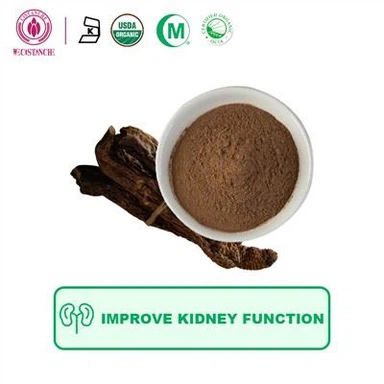
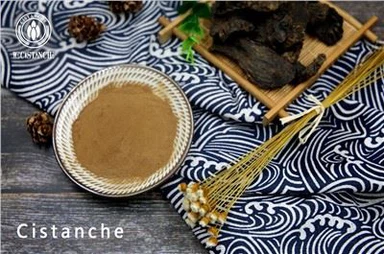
Sand Sea Gold Mining: Planting Cistanche Deserticola, Unlocking A New Password For Wealth
Apr 11, 2025
The first acquaintance with desert treasures
In the vast and boundless desert filled with yellow sand, the environment is harsh, water sources are scarce, and most plants find it difficult to survive. However, there is a plant that can grow tenaciously in such a desperate situation, and it is the Cistanche deserticola, which is known as the "desert ginseng" by people.
Cistanche deserticola, a perennial parasitic herbaceous plant belonging to the family Liliaceae, mainly parasitizes the roots of the desert plant Haloxylon ammodendron. Most of its plants are buried underground, and only during specific seasons will the spike-like inflorescence protrude from the ground. Its stem is thick and fleshy, as if it contains a mysterious power deep in the desert, while its leaves degenerate into scales, tightly arranged on the stem, silently guarding this precious life.
Since ancient times, Cistanche deserticola has been cherished as a precious traditional Chinese medicine. According to the Compendium of Materia Medica, Cistanche deserticola has a sweet taste, mild temperature, and is non-toxic. It has many effects such as tonifying kidney yang, nourishing essence and blood, moistening intestines, and promoting bowel movements. It can treat various diseases such as labor injury, essence deficiency, blackface, kidney deficiency, white turbidity, sweating, and constipation. Modern medical research has also shown that Cistanche deserticola is rich in active ingredients such as phenylethanoid glycosides, polysaccharides, alkaloids, etc. These ingredients endow it with antioxidant, anti-aging, immune regulating, and sexual function-improving effects. Therefore, Cistanche deserticola has always held an important position in the field of medicine, becoming an important raw material for many traditional Chinese medicine formulas and health products.
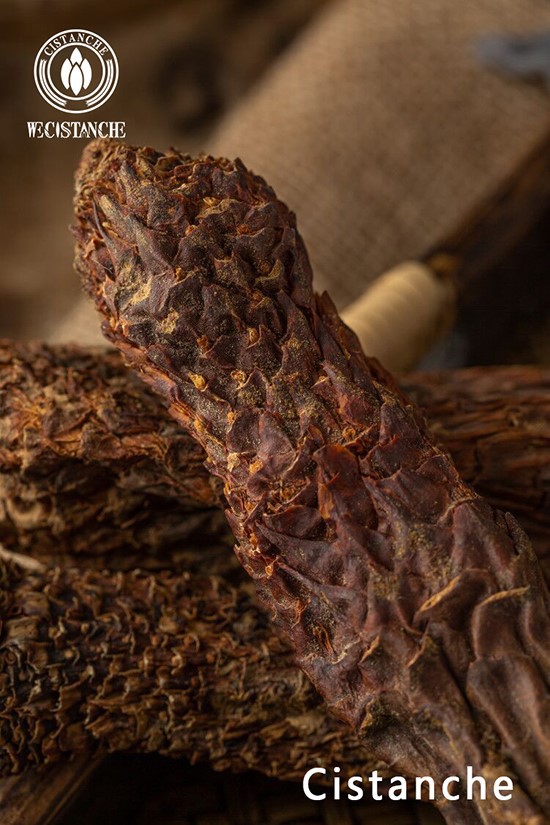
cistanche body building
Market Demand Unveiled
After the value of Cistanche deserticola was discovered, its market demand showed explosive growth. From domestic to international, Cistanche deserticola has demonstrated enormous market potential in multiple fields, showing a hot trend of supply shortage.
In the field of traditional Chinese medicine, Cistanche deserticola, as a commonly used medicinal herb, is widely used in various classic formulas for tonifying the kidneys, nourishing essence and moistening the intestines. With the increasing recognition of traditional Chinese medicine worldwide, the demand for Cistanche deserticola has also skyrocketed. The purchase of Cistanche deserticola by many Chinese medicine museums and pharmacies continued to increase to meet the needs of clinical formulas and production of traditional Chinese patent medicines and simple preparations. According to relevant data, in China's traditional Chinese patent medicines and simple preparations market, the sales of products involving Cistanche deserticola have maintained an annual growth rate of [X]% in recent years.
The health product industry is also one of the "main battlefields" of Cistanche deserticola. Modern people have a fast pace of life and high levels of stress, making them increasingly concerned about health and wellness. With its antioxidant, anti-fatigue, and immune regulating effects, Cistanche deserticola has become a popular ingredient in health products. From Cistanche deserticola soft capsules and oral liquids to Cistanche deserticola lozenges, various health products with Cistanche deserticola as the core ingredient are emerging one after another and are highly favored by consumers. On e-commerce platforms, the sales of related Cistanche deserticola health products have been increasing year by year, receiving rave reviews. Statistics show that in the past five years, the sales revenue of Cistanche deserticola health products in the domestic market has increased from X billion yuan to X billion yuan, with an average annual growth rate of X.
Cistanche deserticola has also emerged in the fields of food additives and functional foods. Some high-end nourishing foods may add Cistanche deserticola extract to enhance the nutritional value and unique flavor of the product; Specialty foods such as Cistanche wine, Cistanche tea, and Cistanche noodles continue to emerge, enriching consumers' choices and further expanding the market space of Cistanche.

Uyghur girl holding Cistanche deserticola in her hand
The international market has also shown strong interest in Cistanche deserticola. With the promotion of the "Belt and Road" initiative, the Chinese medicine culture has accelerated to the world. As a characteristic of Chinese medicine, Cistanche deserticola exports more and more year by year. In Japan, South Korea, and Southeast Asia, Cistanche deserticola is highly regarded for its health benefits; In the European and American markets, with the deepening research and understanding of natural plant-based medicines, Cistanche deserticola has gradually opened up sales channels and become a new favorite in the international health and pharmaceutical markets. According to relevant data, the export value of Cistanche deserticola in China has increased significantly from [X] million US dollars in [specific year 1] to [X] million US dollars in [specific year 2].
Overall, the market size of Cistanche deserticola is expanding at an astonishing pace. According to professional institutions' predictions, the global market size of Cistanche deserticola will continue to maintain an annual growth rate of over X% in the coming years and is expected to exceed X billion yuan by [specific year]. The huge and continuously growing market demand has laid a solid foundation for the development of the Cistanche deserticola planting industry, and also indicates that planting Cistanche deserticola contains enormous economic potential.
Large minimum cost profit margin
After understanding the market demand for Cistanche deserticola, let's further analyze the costs and profits of planting Cistanche deserticola and see how much economic benefits this industry can bring.

benefits of cistanche tubulosa
(1) Detailed Analysis of Planting Costs
Land rent: Cistanche deserticola mostly grows in arid areas such as deserts and sandy lands, where land rent is relatively low. In some areas with severe desertification, land rent is about 500-1000 yuan per acre per year. For example, in some desert edge areas of Inner Mongolia, the average land rent is 800 yuan per mu. But if it is a high-quality sandy land close to water sources and conveniently located, the rent may be slightly higher.
Seed cost: The price of Cistanche deserticola seeds varies depending on the variety, quality, and place of origin. Generally speaking, high-quality seeds of Cistanche deserticola are priced at around 800-1500 yuan per kilogram. Planting one acre of Cistanche deserticola requires approximately 0.5-1 jin of seeds, with a seed cost of around 500-1000 yuan. For example, high-quality Cistanche deserticola seeds produced in Xinjiang are sold for 1200 yuan per kilogram. If 0.8 kilograms of seeds are used to plant one acre of land, the seed cost is 960 yuan.
Host plant cost: Cistanche deserticola is a parasitic plant that mainly parasitizes the roots of plants such as Haloxylon ammodendron and Salix matsudana. If it is necessary to artificially plant host plants, taking Haloxylon ammodendron as an example, the cost of purchasing Haloxylon ammodendron seedlings is about 0.5-1 yuan per plant, and planting 100-200 Haloxylon ammodendron seedlings per mu costs about 100-200 yuan. In addition, irrigation and maintenance costs need to be considered during the process of planting host plants, which are about 300-500 yuan per mu per year.
Labor cost: From sowing, and daily management to harvesting, manpower is required. In the early stages of planting, the labor cost for sowing and planting host plants is about 500-800 yuan per mu. During the growth period, daily management such as watering, fertilizing, weeding, pest control, etc., incurs an annual labor cost of approximately 1000-1500 yuan per mu. During the harvest season, due to the technical and labor-intensive nature of harvesting Cistanche deserticola, the labor cost per acre is approximately 800-1200 yuan. Over one year, the total labor cost is approximately 2300-3500 yuan.
Other costs: including irrigation water expenses. In arid areas, irrigation costs are relatively high, about 500-1000 yuan per mu per year; The fertilizer cost, mainly organic fertilizer, is about 500-800 yuan per mu per year; In addition, it may also involve miscellaneous expenses such as the purchase of agricultural tools and equipment maintenance, with an annual cost of about 300-500 yuan per mu.
Based on the above costs, the total cost of planting one acre of Cistanche deserticola in the first year is approximately 5600-9500 yuan. Starting from the second year, there will be no need to invest in seed and host plant planting costs, and the cost will be reduced to approximately 3000-5000 yuan per year.

Cistanche deserticola - a bumper harvest for farmers
(2) The profit return is tempting
Yield analysis: The yield of Cistanche deserticola is influenced by various factors such as planting techniques, growth environment, and host plant growth status. Under proper management, the first-year yield of artificially planted Cistanche deserticola is relatively low, with a fresh yield of about 100-200 kilograms per acre; Starting from the second year, entering the peak production period, the yield of fresh products per mu can reach 300-500 kilograms, and in some high-yield areas, it can even reach over 600 kilograms. For example, in the experimental base of Cistanche deserticola cultivation at Guofeng Family Farm in Lijin County, Shandong Province, fresh Cistanche deserticola planted on saline-alkali land with a salt content of 0.6% achieved a yield of 1350 kilograms per mu, breaking the record for per mu yield of Cistanche deserticola in saline-alkali land.
Price analysis: The market price of Cistanche deserticola varies due to factors such as quality, origin, dryness, and freshness. The price of fresh Cistanche deserticola is generally around 10-30 yuan per kilogram; The price of dried Cistanche deserticola is relatively high, ranging from 200 to 800 yuan per kilogram depending on the quality. Taking medium-quality dried Cistanche deserticola as an example, the market price is about 400 yuan per kilogram; Fresh Cistanche deserticola costs 15 yuan per kilogram.
Profit calculation: Taking the example of producing 400 kilograms of fresh Cistanche deserticola per mu during the peak production period, based on a purchase price of 15 yuan per kilogram, the income per mu is calculated as 400 × 15=6000 yuan. Deducting the annual planting cost of 3000-5000 yuan (calculated at 4000 yuan), the profit per acre can reach 6000-4000 yuan=2000 yuan. If fresh products are processed into dry products and calculated based on 4-5 kilograms of fresh products producing 1 kilogram of dry products, 400 kilograms of fresh products can produce 80-100 kilograms of dry products. Calculated at 400 yuan per kilogram of dry products, the income is 80 × 400=32000 yuan. After deducting costs, the profit is even more considerable. Moreover, with a single planting of Cistanche deserticola, it can be harvested continuously for many years, and the stable production period can generally reach 5-7 years. As the planting years increase, the profits will become more abundant.
Exhibition results of planting examples
Theoretical analysis is certainly important, but practical cases can more intuitively demonstrate the economic benefits of Cistanche deserticola cultivation. There are successful examples of planting Cistanche deserticola in saline-alkali land in Dongying, Shandong, and vast forests of Haloxylon ammo dendron in Xinjiang. These places have shown us the bright prospects of the Cistanche deserticola planting industry with concrete data and achievements.
Dongying, Shandong, a region with a large amount of saline-alkali land, used to have poor soil and limited agricultural development. But in recent years, with the exploration and innovation of planting technology for Cistanche deserticola, the situation has undergone a huge transformation. Kenli District of Dongying City vigorously develops the industry of Cistanche deserticola on saline-alkali land with a salt content of 4 ‰ -6 ‰. By collaborating with research institutions and introducing advanced planting techniques, we have successfully overcome many challenges posed by saline-alkali environments. Nowadays, the average yield of Cistanche deserticola here has reached 921 kilograms per mu, with an average income of 4000 yuan per mu. At the Cistanche deserticola planting experimental base of Guofeng Family Farm in Lijin County, the results are even more astonishing. The yield of fresh Cistanche deserticola planted on saline-alkali land with a salt content of 0.6% reached 1350 kg/acre. This yield data not only refreshes people's understanding of the potential for planting in saline-alkali land but also opens up new paths for local agricultural development. With the development of the Cistanche deserticola industry, a complete industrial chain from planting, harvesting, and processing to sales has gradually been formed in the local area, which has driven employment and income growth for many farmers and promoted the development of the local economy.
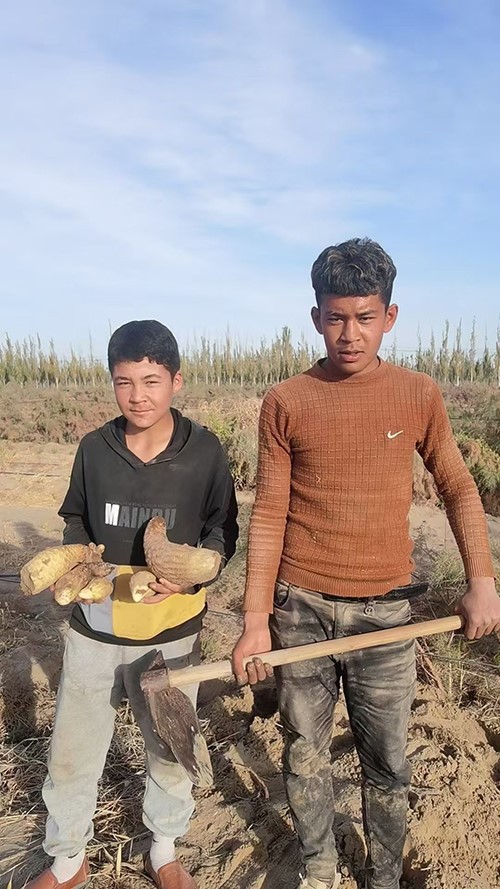
The villagers of Hetian Village in Xinjiang are digging and harvesting Cistanche deserticola
Click here to view Cistanche for Kidney disease products
【Ask for more】 Email:cindy.xue@wecistanche.com / Whats App: 0086 18599088692 / Wechat: 18599088692
Xinjiang, as one of the main production areas of Cistanche deserticola in China, has unique natural conditions and rich experience in the cultivation of Cistanche deserticola. In Shaya County on the edge of the Taklamakan Desert, local farmers have grafted Cistanche deserticola at the roots of the Haloxylon ammodendron forest, creating a unique path of coordinated development between ecology and economy. The Management Committee of Shaya County actively guides all villages to participate in the ecological construction of sand prevention and control and has created an 8000-acre planting base for large Yunzi (Cistanche deserticola). Kuduosi Jiamali is a member of the Kuduosi Dayun Medicinal Planting Farmers' Professional Cooperative in the Second Ranch of Shaya County. He happily said, "Based on this year's harvest situation, we can harvest about 30 tons in the first batch, and the cooperative's income is 540000 yuan. In this way, I can share more than 20000 yuan in the first batch." Tuohuti Dawuti, the secretary of the Tai'an Village Party Branch of the Tahe Management Committee in Shaya County, also said that in the past, villagers' income was single, but since planting Cistanche deserticola, their income has increased significantly. The 1000 acres of Cistanche deserticola planted in the village in 2021 were harvested for the first time in October of that year, with an estimated income of over 500000 yuan. Now, Shaya County plans to further expand the planting area of Cistanche deserticola and accelerate the development of the sand industry.
In the 34th Regiment of the 2nd Division of Xinjiang Production and Construction Corps, it is also a busy scene of harvest. This is located in the middle zone between the Taklamakan Desert and the Kumtag Desert, with a harsh natural environment. To improve the ecological environment, the 34th regiment planted Haloxylon ammodendron in the wasteland outside the company and inoculated Cistanche deserticola under the Haloxylon ammodendron forest. At present, 22000 acres of desert crops such as Haloxylon ammodendron have been successfully explored and utilized for large-scale planting of bitter and salty water in irrigation area drainage channels, with a cumulative inoculation of 11500 acres of Cistanche deserticola. During the harvest season of Cistanche deserticola, surrounding workers and masses join the mining team one after another, using their leisure time to work and increase income. Yin Chongliang, an employee of the 11th Company, said, "The excavation of Cistanche deserticola has a construction period of more than 10 days. I can dig more than 200 kilograms in one day and earn more than 500 yuan per day while working here." Jin Quanshun, the general manager of Xinjiang Youlian Tongchuang Biotechnology Co., Ltd., introduced, "We planted 3000 acres of Cistanche deserticola in the 34th Regiment, with a yield of 200 kilograms per acre and an economic benefit of 3000 yuan per acre." By developing the Cistanche deserticola industry, the 34th Regiment has achieved a win-win situation in ecological, economic, and social benefits, bringing new vitality to the desert.
Know the risks and challenges early on
(1) Uncontrollable natural factors
The path of planting Cistanche deserticola is not smooth sailing, and many risks and challenges are like hidden reefs on the path ahead. The first and foremost is the irresistible natural factors. Cistanche deserticola grows mostly in arid and semi-arid areas and is extremely sensitive to water and climate conditions. During drought, water scarcity affects the growth of the host plant, Haloxylon ammodendron. As a result, Cistanche deserticola cannot obtain sufficient nutrients and water from its host, leading to a significant decrease in yield and a significant reduction in quality. The thin and withered Cistanche deserticola makes it difficult to obtain good prices in the market. Once a flood disaster occurs, the situation becomes even more pessimistic. Excessive waterlogging can lead to poor soil permeability, oxygen deficiency in the roots of Cistanche deserticola, and cause root rot and other diseases. In severe cases, it can even cause plant death, and a year of hard work may be in vain.
Diseases and pests are also major competitors in the cultivation of Cistanche deserticola. For example, in mid to late April to early May, when the Cistanche deserticola is first unearthed, the adult moths will lay eggs at the tip of its stem. After hatching, the larvae will start to feed downwards from the tender buds, causing holes in the entire Cistanche deserticola plant and preventing it from being unearthed, flowering, and fruiting, resulting in severe yield reduction or even complete failure. There are also yellow-brown golden turtles, whose larvae harm the roots of Cistanche deserticola and Haloxylon ammodendron in the soil, biting off the parasitic roots of Haloxylon ammodendron, causing obstruction of the nutritional source of Cistanche deserticola, resulting in damage or death of small Cistanche deserticola, and gnawing on the fleshy stems. This not only affects yield but also damages the appearance and quality of Cistanche deserticola, reducing its market value. The powdery mildew of Haloxylon ammodendron mainly occurs on the branches and leaves of Haloxylon ammodendron that have photosynthesis. The branches and leaves are covered with powdery mildew, which reduces the photosynthetic ability and weakens the growth of Haloxylon ammodendron, thereby affecting the yield and quality of the parasitic Cistanche deserticola on them. Faced with these pests and diseases, growers need to remain vigilant at all times and do a good job in prevention and control.
(2) Market volatility carries risks
The instability of the market environment also brings many uncertainties to the cultivation industry of Cistanche deserticola. Market prices fluctuate frequently and are influenced by various factors such as supply and demand, macroeconomic conditions, and changes in consumer preferences. When the planting area of Cistanche deserticola increases significantly and there is excess production, the market supply exceeds demand, and the price will fall. If growers fail to grasp market trends promptly and blindly follow the trend to expand their planting scale, they may face difficulties such as price drops and sales difficulties in the year of harvest, and their income may be difficult to guarantee. On the contrary, when market demand is strong and production decreases due to natural disasters or other reasons, although prices will rise if growers lack sufficient preparation in the early stage, they cannot fully enjoy the price dividend.
The changes in market demand are also like unpredictable changes. With the improvement of consumer health awareness and the transformation of health concepts, the demand for Cistanche products is constantly changing in terms of category, quality, and other aspects. If growers and related enterprises cannot capture these changes promptly and produce products that meet market demand, it may lead to unsold products. In addition, the competition in the Cistanche deserticola market is becoming increasingly fierce, with not only competition among domestic peers but also challenges from the international market. Some countries and regions are also actively developing the Cistanche deserticola industry. If they cannot form advantages in quality, price, brand, etc., they are likely to be at a disadvantage in market competition. Therefore, growers and practitioners need to closely monitor market trends and prepare in advance to respond.
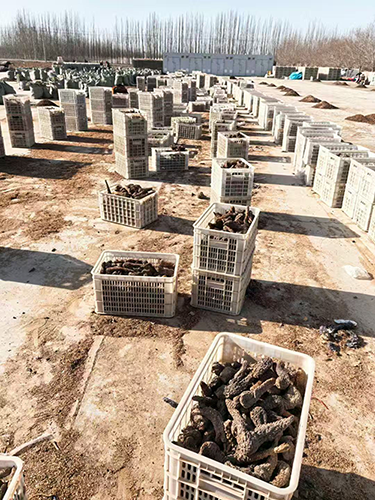
Drying of Cistanche deserticola
A brighter future outlook
Although the cultivation of Cistanche deserticola faces some risks and challenges, in the long run, its development prospects are still very broad and full of hope.
In terms of technological progress, researchers are continuously increasing their research investment in the cultivation technology of Cistanche deserticola. In the future, it is expected to further improve the yield and quality of Cistanche deserticola by optimizing planting techniques. For example, developing more precise irrigation and fertilization techniques to achieve precise water and nutrient supply according to the needs of different growth stages of Cistanche deserticola, while increasing yield and reducing resource waste; By utilizing gene editing technology, a new variety of Cistanche deserticola with greater stress resistance and high yield has been cultivated, enabling it to better cope with threats such as drought, pests, and diseases. With the application of emerging technologies such as artificial intelligence and big data in the agricultural field, the cultivation of Cistanche deserticola will also achieve intelligent management. Real-time monitoring of soil moisture, temperature, nutrient content, and other data through sensors, using intelligent devices to automatically control irrigation, fertilization, pest control, and other processes, improving planting efficiency and management level. In terms of mechanization, Xinjiang plans to increase the mechanization rate of Cistanche deserticola from around 20% to 70% in the next three years. The achievement of this goal will greatly reduce labor costs and improve harvesting efficiency.
With the continuous improvement of people's health awareness and the increasing demand for natural health products, the market demand for Cistanche deserticola in the fields of health products, pharmaceuticals, functional foods, etc. will further expand. Especially in the context of an aging society, the kidney tonifying and health-preserving effects of Cistanche deserticola will attract more elderly consumers; At the same time, the pursuit of a healthy lifestyle by the younger generation will also enable Cistanche products to find new market space among the younger generation. In the international market, the continuous promotion of the "Belt and Road" initiative will open a broader door to the international market for Cistanche deserticola. The dissemination of traditional Chinese medicine culture internationally will enable Cistanche deserticola to be recognized and loved by consumers in more countries and regions, and its export volume is expected to continue to grow.

Cistanche deserticola a nourishing legend that crosses regions
From the perspective of industrial development, the cultivation industry of Cistanche deserticola will gradually develop towards scale, intensification, and industrialization. Farmers will achieve large-scale planting, reduce production costs, and enhance market competitiveness through the establishment of professional cooperatives, joint operations, and other means. At the same time, the connection between upstream and downstream industries will become closer, forming a complete industrial chain from planting, harvesting, and processing to sales, and achieving coordinated development of industries. For example, enterprises are increasing their investment in the research and production of deep-processed products of Cistanche deserticola, developing more high-value-added products such as Cistanche deserticola health products, cosmetics, biologics, etc., further expanding the development space of the industry. In the process of industrial development, it will also drive the development of related industries such as packaging, transportation, and warehousing, create more employment opportunities, and promote local economic prosperity.
The cultivation industry of Cistanche deserticola contains enormous economic potential. Despite the challenges on the road ahead, as long as we actively respond and seize the opportunities of technological progress and market development, we will be able to make this treasure in the desert shine even brighter. Whether they are new farmers dedicated to agricultural entrepreneurship or practitioners seeking industrial transformation, they can turn their attention to the Cistanche deserticola planting industry, jointly opening the door to this hopeful green wealth, and bringing health to people while realizing their own economic and social value.