An 18-Amino-Acid Peptide, A Desert Polysaccharide, And A 60.9% Number
Nov 27, 2026
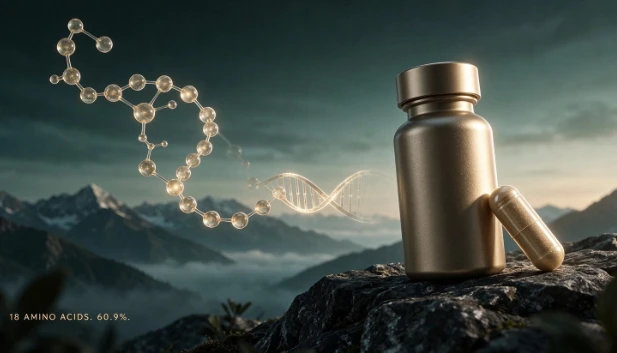
Most supplement stories about altitude start with a herb and end with an adjective. This one starts with a sequence of eighteen amino acids and ends with a number that can be compared to a prescription drug. The sequence is AGFQKVRAWGPGLKTGMVGK, a peptide isolated from sea buckthorn fruit residue. The polysaccharide comes from Cistanche. Together, in a Chinese invention patent application, they extended survival time in an acute hypoxia model by 60.9% - more than the salidroside control at 34.8%, and more than either ingredient achieved alone at the same total dose.
Whether you are packing for a 4,000-metre pass or formulating the next altitude product, the interesting material is in the method: how the peptide was found, why the polysaccharide is specified as a preparation and not a powder, and which parts of the result are genuinely load-bearing.
Hypoxia is an energy problem before it is an oxygen problem
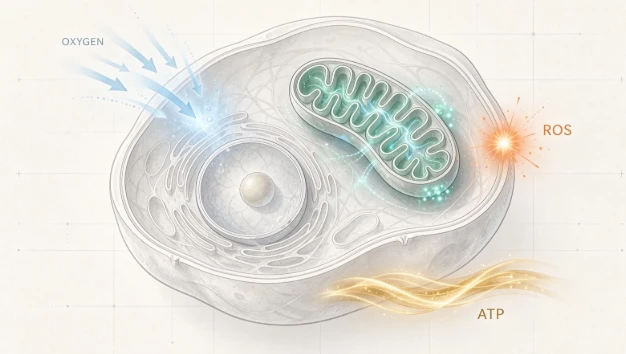
When oxygen supply drops, cells do not simply slow down. They switch fuel strategy, ramp up glycolysis, and generate more reactive oxygen species in the process. Mitochondria become less efficient, ATP output falls, and the resulting oxidative load damages the same membranes the cell needs to recover. That is why the felt experience of altitude is so diffuse: headache, poor sleep, breathlessness on stairs, flat mood, slow recovery.
This matters for product design. An ingredient that only scavenges free radicals does half the job; one that only pushes mitochondrial output does half the job and may increase oxidative load. The patent's own framing is explicit: the peptide is associated with SIRT1, a regulator sitting at the intersection of energy sensing, mitochondrial biogenesis and antioxidant defense.
Why crude botanical extracts plateau
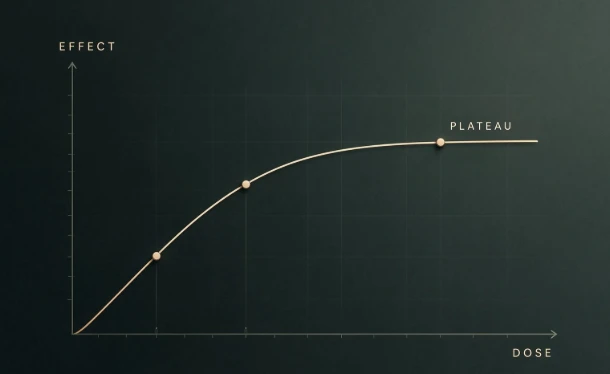
The background section of the patent makes an argument that any sourcing manager will recognise. Crude extracts and mixed flavonoid or polysaccharide fractions can show activity, but with an undefined active monomer you cannot control batch quality, and you cannot establish a dose-response curve. Without a dose-response curve, you cannot defend a dose, and without a defensible dose, a product is a story rather than a specification.
The patent's answer is to move down one level: identify a single peptide with a known sequence, pair it with a polysaccharide prepared by a fixed, reproducible route, and measure both against a pharmacological control.
The peptide: from juice waste to a defined 18-mer
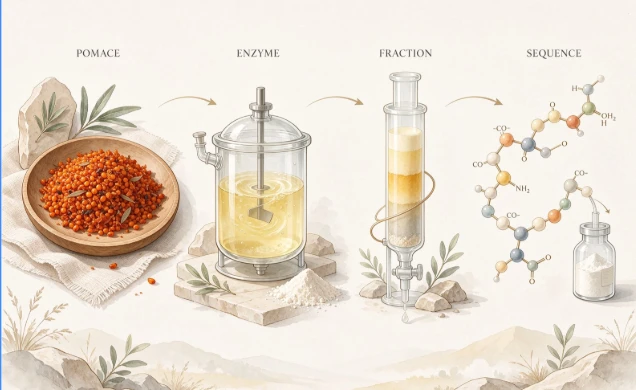
The starting material is sea buckthorn fruit residue - the pomace left after juice pressing, which is cheap, abundant and currently underused. The process is a three-enzyme hydrolysis: neutral protease, alkaline protease and flavourzyme in a 2:2:1 ratio, at 2.5% of the dry powder mass, 55 °C for four hours with shaking, then enzyme inactivation at 95 °C, centrifugation at 12,000 rpm, and freeze-drying of the supernatant.
The hydrolysate was then fractionated on a C18 preparative column with a stepped ethanol gradient. Four fractions were collected at 10%, 30%, 50% and 90% ethanol. The 50% fraction, labelled S3, was the only one that produced a statistically meaningful effect: 16.17 minutes of survival against 12.00 minutes for the control, a 34.8% extension, essentially matching the salidroside positive control at 33.3%.
Shotgun proteomics on the S3 fraction identified 52 sea buckthorn peptides. Docking them against SIRT1 ranked one sequence clearly first, and that sequence is the one claimed. It is now available by solid-phase synthesis, which is the difference between a discovery and a product: the peptide can be manufactured to a specification rather than extracted batch by batch from fruit waste.
The polysaccharide: a 2.31% yield, and why that number matters
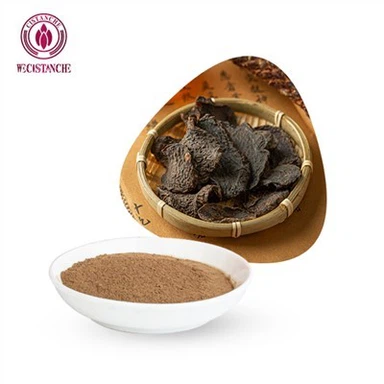
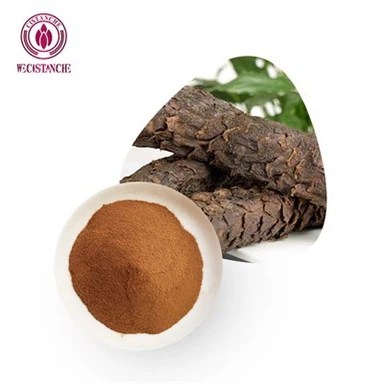
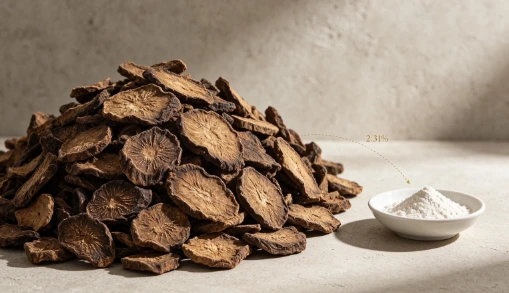
Cistanche polysaccharide is prepared by a route that is deliberately simple: Cistanche powder at a 1:30 material-to-liquid ratio, high-speed shearing for 30 seconds, reflux at 100 °C for 30 minutes, centrifugation, concentration to one tenth of the original volume, then three volumes of 95% ethanol at 4 °C overnight. The precipitate is washed with anhydrous ethanol and dried.
The reported yield is 2.31%, measured by the phenol-sulfuric acid method across three parallel runs. For a buyer, that single figure explains the price spread in the market: a kilogram of finished polysaccharide requires roughly 43 kilograms of raw material before losses. Any offer that looks unusually cheap is either a different extraction route, a diluted product, or a different plant part.
Note what the patent does not say: it does not specify a molecular weight range or a monosaccharide composition for the polysaccharide. That is a real gap, and it is exactly the first question a serious formulator should ask.
What the numbers show
Both ingredient studies use the same model: sodium nitrite-induced methemoglobinemia in mice, which mimics acute tissue hypoxia; ten animals per group; survival time measured from injection to respiratory arrest.
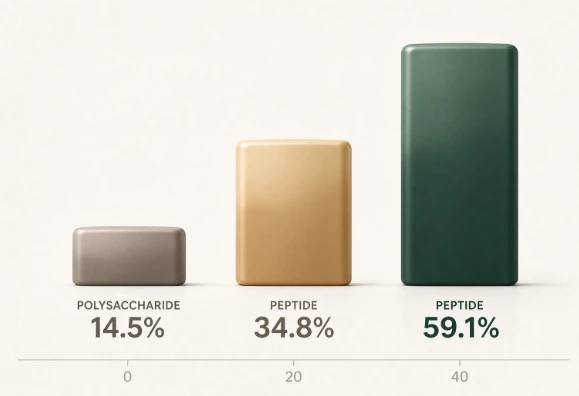
表7 Table 7 Single-ingredient dose response (sodium nitrite model, n = 10 per group)
|
Group |
Dose (mg/kg) |
Survival (min) |
Extension |
|
Model control |
0 |
11.35 ± 1.42 |
- |
|
Cistanche polysaccharide |
400 |
12.88 ± 1.65 |
13.5% |
|
Cistanche polysaccharide |
600 |
13.00 ± 1.68 |
14.5% |
|
Cistanche polysaccharide |
800 |
15.00 ± 1.95* |
32.2% |
|
Sea buckthorn peptide |
200 |
13.2 ± 1.8 |
14.8% |
|
Sea buckthorn peptide |
400 |
15.5 ± 2.1* |
34.8% |
|
Sea buckthorn peptide |
600 |
18.3 ± 2.3*** |
59.1% |
|
Positive control (salidroside) |
300 |
16.05 ± 2.01* |
41.4% |
Note on the control row: the polysaccharide and peptide experiments each ran their own salidroside control, at 41.4% and 40.0% respectively. Table 7 shows the polysaccharide series control; the peptide series control is 16.1 ± 2.0 minutes and 40.0%.
Two things are worth noticing. First, the peptide is roughly twice as potent per milligram as the polysaccharide: 400 mg/kg of peptide matches 800 mg/kg of polysaccharide at about 33%. Second, the polysaccharide curve is almost flat between 400 and 600 mg/kg - a 1-percentage-point difference - before jumping at 800. That flat segment is the clearest evidence in the document that adding more of a single polysaccharide is not a strategy.
The combination: half the peptide, the same result
The composition study used 300 mg/kg of polysaccharide plus 300 mg/kg of peptide, a total of 600 mg/kg, and compared it with 600 mg/kg of peptide alone and with salidroside.
表8 Table 8 Combination versus single components at matched total dose
|
Group |
Composition (mg/kg) |
Total |
Survival (min) |
Extension |
|
Model control |
Saline |
- |
11.50 ± 1.45 |
- |
|
Composition |
Polysaccharide 300 + peptide 300 |
600 |
18.50 ± 2.25*** |
60.9% |
|
Peptide alone (Table 4) |
Peptide 600 |
600 |
18.3 ± 2.3*** |
59.1% |
|
Polysaccharide alone (Table 1) |
Polysaccharide 600 |
600 |
13.00 ± 1.68 |
14.5% |
|
Positive control |
Salidroside 300 |
300 |
15.50 ± 1.95* |
34.8% |
Read that third row and fourth row together. At the same total dose of 600 mg/kg, peptide alone reaches 59.1% and the combination reaches 60.9%. The combination gets there with half the peptide - the most expensive component in the formula - while the polysaccharide on its own at that dose contributes almost nothing (14.5%).
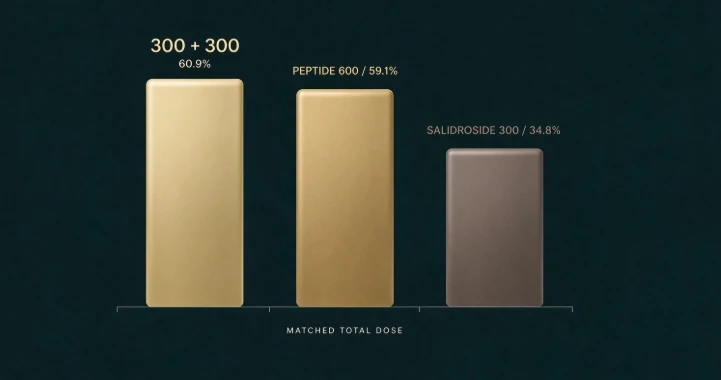
That is the commercial argument, and it is stronger than the efficacy argument: the polysaccharide is not there to add effect, it is there to make the peptide work at a lower dose. For a formulator, this is a cost-of-goods story first and a mechanism story second.
It is also a fair reading of the limits. The combination was not tested at 800 or 1,000 mg/kg, so we do not know whether it pulls further ahead at higher doses, and there is no isobologram analysis - the formal method for proving synergy rather than additivity. The patent states synergy; the data are consistent with dose-sparing, which is the more defensible claim.
SIRT1: what docking can and cannot tell you
The mechanistic hook is a docking study, not a wet-lab experiment. Six peptides were docked into SIRT1 using AutoDockFR for flexible conformer sampling and Rosetta FlexPepDock for refinement. The claimed sequence scored −9.6 kcal/mol on Vina and −12.9 on the Rosetta interface score, the best of the six by a clear margin.
Docking tells you a pose is geometrically and energetically plausible. It does not tell you the peptide binds in a cell, that SIRT1 activity changes, or that downstream acetylation of PGC-1α or FOXO1 shifts. No surface plasmon resonance, no enzymatic assay and no Western blot are reported. Treat the score as a hypothesis generator with a testable prediction - SIRT1 activation - rather than as proof of mechanism.
That said, the hypothesis is coherent: SIRT1 sits upstream of mitochondrial biogenesis and antioxidant defense, which are precisely the two systems the survival data imply are being protected. It is the kind of mechanism a formulation scientist can design a follow-up study around, which is more than most botanical claims offer.
If you are buying or formulating, four specifications
Sequence identity, not just peptide content. Ask for the LC-MS/MS confirmation of AGFQKVRAWGPGLKTGMVGK in the finished lot, with the mass error. "Sea buckthorn peptide powder" with no sequence is a different product category.
Peptide purity and salt form. Solid-phase synthesis carries trifluoroacetate and counter-ion residues; specify the assay on a dried basis and the residual TFA limit, and confirm whether the material is acetate or TFA salt.
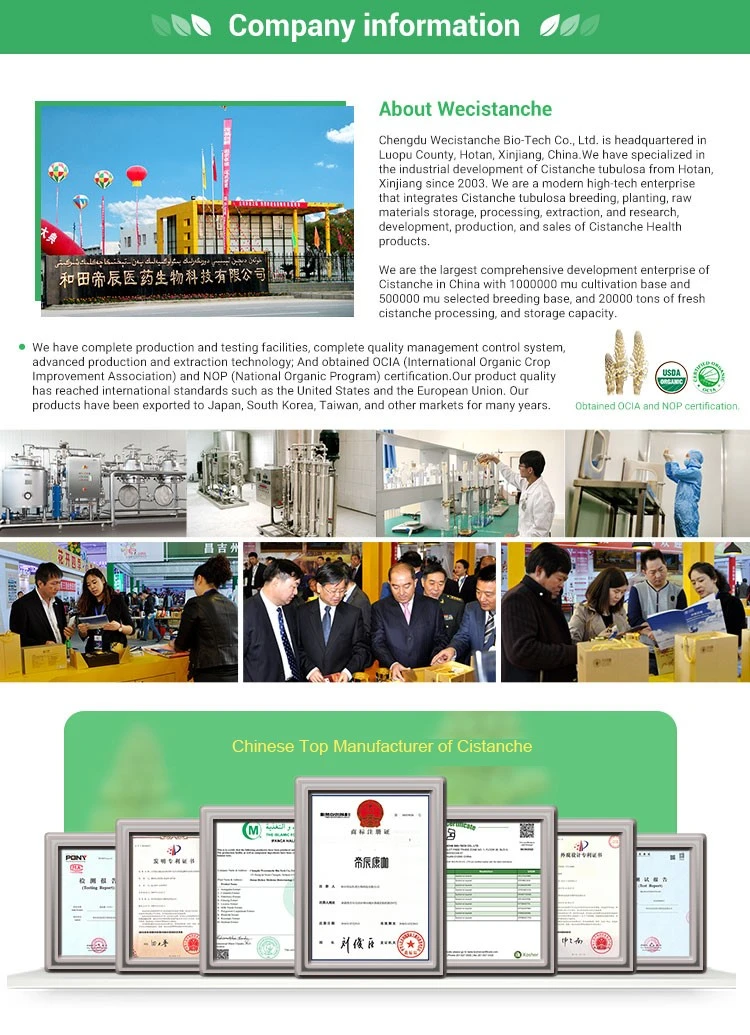
Cistanche Base Located In its Origin In China
Polysaccharide assay plus molecular weight. The patent reports a 2.31% yield by phenol-sulfuric acid but no MW range. Request a GPC/HPSEC distribution and a monosaccharide profile, otherwise batch variation is invisible until it reaches the customer.
The 1:1 ratio with a stated total dose. The tested combination is 300 + 300 mg/kg in mice. Human dosing must be derived by proper allometric conversion, not copied across; state the conversion basis in your technical dossier.
A practical framing for high-altitude travel
The tested protocol is a 30-day pre-load in mice, which does not map onto a traveller who books a flight on Thursday. What the data support is narrower and more honest: a defined peptide-polysaccharide pair improves tolerance to acute hypoxic stress in an animal model. How you translate that into a travel routine - start several days before ascent, continue through the first week - is a usage convention, not a clinical finding, and should be labelled as such on any product page.
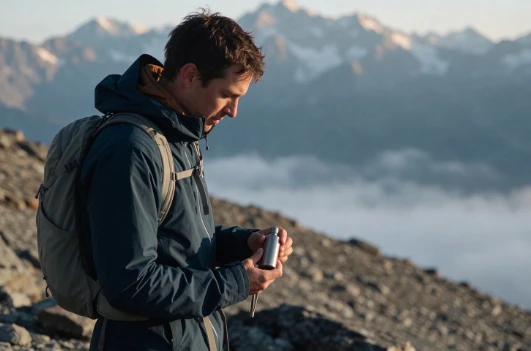
Two safety notes belong on the page, not in a footnote. Nothing here replaces acclimatisation, descent, or prescribed medication; ascent rate remains the single biggest determinant of who gets sick. And anyone with cardiovascular or respiratory disease, or who is pregnant, should be talking to a clinician before adding an altitude product, not after.