Study On Chemical Constituents Of Cistanche Deserticola, A Chinese Herbal Medicine For Nourishing Kidney And Strengthening The Yang
Mar 09, 2022
Contact: Audrey Hu Whatsapp/hp: 0086 13880143964 audrey.hu@wecistanche.com
Intro
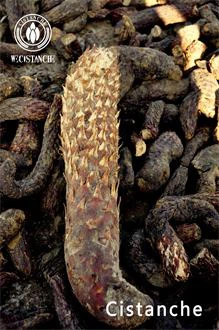
Cistanche deserticola which belongs to the family of Orobanchaceae is the dry fleshy stem of Cistanche deserticola, which is sweet, salty, and warm. It has the effects of Tonifying the kidney, strengthening the Yang, moistening the intestines, and relaxing the bowel. It is mainly used to treat impotence, cold and pain in the waist and knees, infertility, intestinal dryness, and constipation. The pharmacological effects of Cistanche deserticola have also been reported.
The Institute of traditional Chinese medicine of the Chinese Academy of traditional Chinese medicine has carried out chemical and pharmacological studies on Cistanche deserticola. It is proved that its ethanol extract affects the immune system. Nine compounds were separated and identified as D-Mannitol β- Sitosterol, daucosterol, succinic acid, Triacontanol, 8-epibrucine glucoside, betaine, caffeic acid glycolipid, and polysaccharide compounds. In addition to mannitol and 8-epibrucine glucoside, other components were obtained from Cistanche deserticola for the first time. Caffeic acid glycolipid, betaine, mannitol, succinic acid, and other compounds have a variety of physiological activities. They have effects on the immune system, sexual function, cardiovascular system, liver, anti-aging, and so on.
Experimental part
The melting point was measured by the Boetius PHMK microscope, and the thermometer was not adjusted; The mass spectrometry (EI) was determined by MMH 70-70 instrument (UK), and FD was determined by M-80 gas chromatography-mass spectrometer (Japan); Nuclear magnetic resonance (hydrogen spectrum) was determined by type JEOL FX 90Q instrument (Japan); ultraviolet spectrum was determined by type UV-3000 instrument; infrared spectrum was measured by Hitachi type 260-50 instrument, KBr tableting and silica gels were made from Qingdao marine chemical plant, gel LH-20 was made in Sweden. Dried meat stems of Cistanche deserticola were purchased from Beijing medicinal materials company and identified by Zhang Yanzhen.
1. Extraction and separation
Cistanche deserticola is crushed, percolated with 95% ethanol, the solvent is recovered, dissolved in a small amount of water, extracted with ether, silica gel column chromatography, eluted with petroleum ether-ether (6:4) to obtain the white crystal (I). The water layer extracted with ether is evaporated, heated, and dissolved with ethanol, cooled to obtain flocculent precipitation (II). Cistanche deserticola is percolated with 50% ethanol. Extracted with ethyl acetate, silica gel column chromatography, eluting with ethyl acetate, 20ml each (the same below) A total of 37 samples were collected and examined by thin-layer chromatography. The part containing crystal (III) initially flowed out was combined. 24 ~ 37 samples were filtered out of white floc (II) and evaporated to dryness. The residue was subjected to silica gel column chromatography and eluted with butanone- ethyl acetate-benzene-water (4:3:2:0.2). 12 samples were collected, of which 8 ~ 11 samples were separated of orange crystals; the water layer extracted by ethyl acetate was extracted by n-butanol, silica gel column chromatography, and eluted with chloroform-methanol-water (6:4:1). The fifth sample dissolved out a thin slice crystallization (IV), the other part of the thin layer chromatography, combined with the blue fluorescence part, then used the silica gel column chromatography, eluted with chloroform-methanol-water (7:3:2.5), used the same method combined with the blue fluorescence part, traversed the gel LH-20 column, eluted with methanol-water (1:1), The eighth sample dissolved out some yellow powder (V), continue to elute to 37 parts, combined with the required part above, silica gel column chromatography, spread by butanone-ethyl acetate-benzene-water (4:3:2:0.2), cut off the blue fluorescent segment, and elute with methanol to obtain light brown powder (VI).
95% ethanol extract, removing petroleum ether and dichloromethane, dissolving in methanol, low-pressure silica gel column chromatography, eluting with methanol-chloroform (9:l), 20ml each, the 18th ~ 28th parts dissolved out some colorless crystals (VII); extracted with water the residue of Cistanche deserticola after ethanol extraction, then concentrated the residue, cooling, dissolved out a large number of white crystals (VIII), removal of the crystallized water solution, and then treated with 4 times the amount of ethanol to produce more precipitation (IX).

2. Identification
Compound I: white needle crystal was obtained by recrystallization with acetone, mp136 ~ 137 ℃. Acetic anhydride-concentrated sulfuric acid reagent showed a positive reaction (green). EIMS m/z:414(M+). Thin-layer chromatography Rf value and infrared spectrum were consistent with β- Sitosterol standard, so it is confirmed as β- Sitosterol.
Compound II was recrystallized by heating and refluxing with ethanol twice to obtain white flocculent precipitation, mp290 ~ 291 ℃. Acetic anhydride-concentrated sulfuric acid reagent showed positive reaction (green), α- Naphthol reagent showed positive reaction. EIMS m/z:396 (base peak), 382, 255, 213, 81, 57, 43. Thin-layer chromatography was consistent with the known product of daucosterol, and the melting point of the mixture did not drop. It was confirmed as daucosterol.
Compound III the methanol recrystallized into some oblong crystals, mpl87 ~ 189 ℃, pH 2. EIMS m/z:119(M+1), 118(M+), 101, 100, 74, 73, 55 (base peak), 45, 28, 27. IR (KBr) cm-1: 3100 ~ 2500 (width, OH), 1690 (C=O), 1420, 1310, 1200, 920, 800. The RF value of thin-layer chromatography is the same as that of succinic acid standard. In addition, it is consistent with the standard mass spectrum and standard infrared spectrum of succinic acid, and the melting point of the mixture does not decrease. It is confirmed as succinic acid
Compound IV is recrystallized by ethanol as a white lustrous solid, mp83 ~ 84 ℃. EIMS m/z:420(M+-H2O), 57 (base peak). The Rf value of thin-layer chromatography is the same as that of known Triacontanol, and the melting point of the mixture does not decrease. The above data are consistent with Triacontanol reported in the literature.
Compound VI: after dissolved by acetone, silica gel column chromatography was performed and eluted with 60% methanol to obtain light yellow thin amorphous crystals, which are easily soluble in water and soluble in methanol, ethanol and acetone, the α- Naphthol reagent showed positive reaction. IR (KBr) cm-1: 3700 ~ 3000 (OH), 2900 (CH2, CH3), 1690 (C=O), 1600520 (C=C), 1440, 1350, 1280, 1260 (C-O-C), 1156, 1110, 1050 (C-O), 807. UV λ nm(log ε): 218 (sh, 4.30), 249 (3.91), 291 (4.08), 330 (4.15). H-NMR (CD3COD3) δ ppm: 1.18 (3H, D, J = 6, CH3 on rhamnose), 2.75 (2h, t, J = 7.2, β 2H on position C), 4.75 (1H, D, J = 8, C1-H on glucose), 5.17 (1H, D, J = 1.8, C1-H on rhamnose), 4.20 ~ 3.30 (12H, m, 2H on position C, 6H on glucose, 4H on rhamnose), 6.27 (1H, D, J = 16, 1H on position C), 7.52 (1H, a, J = 16 β Position C (1H), 6.60 (1H, a, J = 8, C5 "'- H), 6.90 (1H, DD, J = 8 / 2, C6"' - H), 7.10 (1H, D, J = 2, C2 "'- H), 6.70 (1H, D, J = 2, C2-H), 6.65 (1H, D, J = 8, C5-H), 6.52 (1H, DD, J = 8 / 2, C6-H), H-NMR (DMOS) δ ppm: 7.43 (1H. s, OH), 8.07 (1H, s, OH), 850 (2H, s, 2 * OH), disappeared after aggravating water exchange. [a] 22D: - 68.37 ° (C = 0.67MeOH). FDMS m/z:647(M++Na), 625 (M + + 1), 624 (M +), 479 (M +1-rhamnosyl), 478 (M +-rhamnosyl), which conforms to the molecular formula C29H36O15. After acid hydrolysis of compound VI, two brown spots are displayed on paper chromatography. The Rf value is completely consistent with rhamnose and glucose, and the melting point does not drop when mixed with the known acteoside. The above data are consistent with the 3,4-dihydroxy group described in the literature β- Phenethoxy-o- α- L-rhamnosyl (1 → 3) - 4-o-caffeic acid group- β D-glucopyranoside is basically carcinogenic.
Compound VII is a white crystal obtained by recrystallization of acetone methanol, above mp299℃ (decomposition), extremely soluble in water, easily deliquescent, and soluble in ethanol and methanol. Alkaloid reagent shows a positive reaction. Experimental values (%) of elemental analysis: C47.29,H9.16,N10.54; theoretical values (%): C47.54,H9.52,N11.11. It conforms to the molecular formula C5H11NO2.1/2H2O. IR (KBr) cm-1: 3360 (associated NH, OH), 2940, 1620 (C=O), 1470, 1390, 1330, 1240, 1125, 980, 930, 890. H-NMR (D2O) δ ppm: 3.28 (9 H,s, 3*CH3), 3.88 (2 H,s,CH2), 4.68 (D2O). EIMS m/z:117(M+), 100, 85, 73, 59, 58 (base peak), 44, 42. Thin-layer chromatography is completely consistent with the Rf value of the betaine standard, and the melting point of the mixture does not drop. The nuclear magnetic resonance spectrum, infrared spectrum, and mass spectrum are consistent with the standard spectrum of betaine, so betaine is recognized.
Compound IX: dissolved in water, extracted by n-butanol-chloroform (l:4), and the impurities were removed. The water layer was treated with 4 times the amount of ethanol, the precipitate was dissolved in water, decolorized by hydrogen peroxide, and the small molecular compounds were removed by dialysis. The membrane was treated with 5 times the amount of ethanol to obtain a light yellow precipitate. The Fehling’s reaction was negative before the hydrolysis of the precipitate, and a brownish-red precipitate was produced after hydrolysis. After acid hydrolysis, the hydrolysate was subjected to paper chromatography. Compared with the standard sugar, only glucose was detected, so it was confirmed that polysaccharides were detected, which are mainly composed of glucose.