Study On The Mechanism Of Gujian Powder Intervention On Steroid-induced Necrosis Of Femoral Head Based On Macrophages And Its Related Pathway Ⅱ
Aug 30, 2024
4 Gujiansan and steroid-induced femoral head necrosis
Professor Wei Guikang concluded in his long-term clinical practice that the treatment of SNOFH should focus on "unblocking", with the principle of warming and tonifying kidney yang, promoting qi and blood circulation, and removing blood stasis and unblocking collaterals as the treatment principle. Gujiansan contains 11 Chinese herbs, which means "two monarchs, four ministers, and five assistants, which is the middle of the system". The formula is: velvet antler, Panax notoginseng, American ginseng, Cistanche deserticola, saffron, radix quinquefoliate, fermented black beans and ginger, large bone, small bone, tangerine peel, and Sichuan cyathula. The whole formula can nourish the kidney and unblock the governor, strengthen tendons and bones, promote blood circulation and remove blood stasis, regulate qi, and relieve pain. See Table 1.

NEW HERBAL FORMULATION FOR BONE GROWTH
CLICK FOR MORE DETAILS
4.1 Deer antler
Deer antler is sweet in nature, salty and warm in taste, and enters the kidney and liver meridians. Deer antler is sweet, warm, and strong, salty, enters the kidney and blood, enters the liver and kidney meridians, and is a product of blood and flesh. It can replenish the primordial yang, replenish the essence and blood, strengthen the tendons and bones, and is an important medicine for treating kidney yang deficiency and replenishing the kidney and unblocking the governor. Deer antler contains a variety of organic nutrients, mainly amino acids, peptides and proteins. These organic substances can affect the functions of organs and organisms to varying degrees [25]. Deer antler peptides in deer antler have a protective effect on LPS-induced lung inflammation damage. This effect is achieved by affecting the Rho/NF-κB pathway to reduce pathological changes in inflammatory damage and reduce the activity of MPO and the expression of three inflammatory cytokines: IL-6, IL-1β and gamma interferon (IFN-γ) [26]. At the same time, deer antler extract can protect bones in osteoporosis models. In a dexamethasone-induced osteoporosis model, deer antler extract was used for treatment. The results showed that deer antler extract could significantly increase the density and length of trabecular bone in the osteoporosis model [27]. BMSCs, as source-differentiated cells, play an important role in bone formation and repair [28]. Studies have shown that deer antler extract can activate the p38/MAPK pathway and phosphorylate downstream osteogenic markers and bone sialoprotein, promoting the transformation of BMSCs into OB. Epidermal growth factor (EGF) can effectively limit the level of inflammation and play an important role in stabilizing bone homeostasis. The EGF/EGFR signaling pathway can downregulate the expression levels of inflammatory factors such as IL-1β, IL-6, and TNF-α in OB and participate in the control of bone inflammation levels [29].
4.2 Panax notoginseng
Panax notoginseng tastes sweet and slightly bitter, warm, and enters the liver and stomach meridians. Its effects are to disperse blood stasis, stop bleeding, and relieve swelling and pain. Panax notoginseng is mainly used to treat blood diseases. It has a good effect on bleeding or blood stasis caused by all internal and external injuries. At the same time, it has a significant effect on the treatment of pain and has always been an important medicine for orthopedics and traumatology. As one of the effective components of Panax notoginseng, total saponins of Panax notoginseng can intervene in the polarization process of macrophage M1 by intervening and affecting the GAS6/MERTK pathway, thereby reducing the expression of inflammatory factors such as TNF-α and IL-1-β, and delaying the inflammatory process[30]. The effective components of Panax notoginseng such as Panax notoginseng saponins and ginsenosides can promote osteogenic differentiation, inhibit osteoclast resorption, and promote angiogenesis in SNOFH by affecting the Wnt/β-catenin, MAPK and other pathways[31]. Panax notoginseng extract reduces the level of TNF-α in the LPS-induced inflammatory environment through the NF-κB signaling pathway, thereby reducing dermal connective tissue edema and inflammatory cell infiltration. This process is related to its inhibition of macrophage activation in tissues[32].
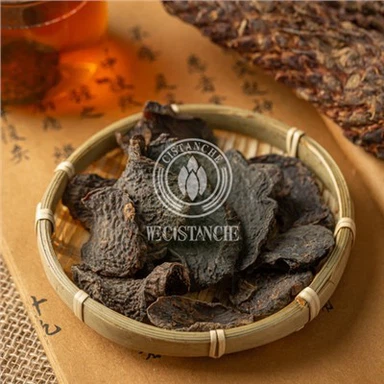
4.4 Cistanche deserticola
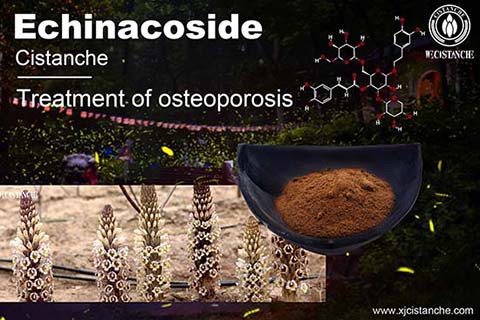
Cistanche deserticola tastes sweet and salty, is warm in nature, and enters the kidney and large intestine meridians. It nourishes kidney yang, benefits essence and blood, and moistens the intestines. Cistanche deserticola is a tonic without being harsh. It is an essential medicine for nourishing kidney yang. It is mainly used to treat kidney yang deficiency, insufficient essence and blood, and low back pain, weak legs, tinnitus, and blurred vision.
The active ingredients of Cistanche deserticola can promote the proliferation of BMSCs and promote the osteogenic differentiation of BMSCs[34]. The active ingredients of Cistanche deserticola can promote bone repair and bone reconstruction in SNOFH in two ways. On the one hand, Cistanche deserticola extract can affect multiple pathways such as HIF-1 and TNF to reduce the production of proinflammatory factors such as TNF-α and IL-6 in the body[35]. On the other hand, the active ingredients of Cistanche deserticola play an antioxidant role, which can reduce the content of ROS in the body, maintain the number of soft proteoglycans and collagen fibers, stabilize the ratio of OB and OC, and promote bone repair and bone reconstruction in SNOFH.
4.5 Saffron
Saffron tastes sweet and slightly sour, is mild and warm in nature, and enters the heart and liver meridians. It can promote blood circulation and remove blood stasis, relieve depression and unblock knots, regulate blood, nourish the essence and brighten the complexion after long-term use. It is an important medicine for treating swelling and pain caused by falls. Saffron extract can reduce the expression of inflammatory factors such as TNF-α, IL-6, and IL-1β in vascular endothelial cells through the TLR4/NF-κB signaling pathway, thereby inhibiting inflammation. At the same time, saffron extract can reduce ROS generation, thereby exerting a good therapeutic effect on ischemic vascular injury [36, 37, 38]. In SNOFH, it can promote the reconstruction of bone microvessels, promote bone healing and bone regeneration.
4.6 Psoralea corylifolia
Psoralea corylifolia is sweet in taste and warm in nature. It enters the liver and kidney meridians, strengthens muscles and bones, removes blood stasis, and replenishes qi and blood. Psoralea corylifolia is native to Guangxi and plays an important role in the clinical treatment of common orthopedic diseases. It is mainly used to treat falls, rheumatic bone pain, and soreness and weakness of the limbs. By regulating the NALP3 and aspase1 signaling pathways, the expression levels of inflammatory factors such as IL-1β, TNF-α, and IL-6 can be reduced[39], thus playing a positive role in SNOFH. The active ingredients of the herb can play an anti-inflammatory role, protect chondrocytes, and promote OB differentiation through multiple signaling pathways such as NF-Κb and APK[40].
4.7 Douchi ginger
Douchi ginger tastes spicy and bitter, is warm in nature, and enters the spleen, stomach, and liver meridians. It has the effects of removing rheumatism, relieving pain, and regulating tendons and bones. Clinically, it has a good effect on rheumatism, cold arthritis, trauma, and tendon and bone pain throughout the body. iNOS and COX-2 can induce the production of nitric oxide (NO) and prostaglandin E2 (PGE2), which can release inflammatory factors such as IL-6, thereby leading to inflammation and tissue damage[41]. Douchi ginger extract can reduce the expression of TNF-α, iNOS, and COX-2 through the NF-κB signaling pathway, thereby reducing the inflammatory level and swelling of local tissues[42], thus playing a positive role in SNOFH.

4.8 Large and small ribs
The large ribs are pungent and bitter in taste, neutral in nature, and belong to the liver and spleen meridians. They can promote blood circulation, remove blood stasis and promote new growth, relieve pain and reduce swelling, and heal broken bones. The active ingredients of the large ribs can effectively inhibit pain and reduce the swelling and inflammation level of local tissues[43]. The small ribs are pungent and warm in taste, belong to the liver and kidney meridians, dispel wind and relieve pain, heal tendons and bones, treat fractures, heal broken bones, and can treat traumatic injuries externally and remove blood stasis and promote new growth internally. The active ingredients in the small ribs play a positive role in SNOFH mainly through anti-oxidation and anti-inflammatory effects. The active ingredients of the small ribs can reduce the expression of inflammatory factors such as PGE2 and IL-6 by blocking pathways such as COX and iNOS. Extracts from the small sacral bone can reduce the production of NO in macrophages, thereby exerting an anti-inflammatory effect [44]. In clinical practice, the two drugs are generally used together, which has a good effect on the treatment of traumatic fractures, blood stasis and swelling, and rheumatic pain.
4.9 Tangerine peel
Tangerine peel is bitter and pungent in taste, warm in nature, and enters the lung and spleen meridians. It can regulate qi and strengthen the spleen, regulate the middle, dry dampness, and resolve phlegm. It is an important medicine for regulating qi, promoting qi, resolving phlegm and dispersing nodules. The active ingredients of tangerine peel can reduce the levels of inflammatory factors such as TNF-α and IL-1β through the STING/NF-κB signaling pathway, while inhibiting the formation of OC and increasing bone density and trabecular area [45]. The active ingredients of dried tangerine peel can reduce the expression levels of inflammatory factors such as TNF-α, IL6 and IL-1β and proteins such as rat phosphor-nuclear factor kappa B (p-NF-κB) by regulating the Notch/NF-κB/NLRP3 signaling pathway, while relieving local tissue edema and reducing the level of inflammatory infiltration[46], thereby playing an important role in inhibiting inflammation and promoting bone repair and reconstruction in SNOFH.
4.10 Rhizoma Cynoglossi
Rhizoma Cynoglossi has a sweet and slightly bitter taste and is neutral in nature. It enters the liver and kidney meridians, removes blood stasis and dredges the meridians, unblocks joints, promotes diuresis and relieves stranguria. It has a strong ability to break through the meridians and can activate blood circulation and dredge the meridians, remove blood stasis and relieve pain. It is clinically used for bruises, rheumatic pain, foot paralysis and muscle spasms and other blood stasis syndromes. The active ingredients in Rhizoma Cynoglossi can reduce the levels of inflammatory factors such as interleukin 17 (IL-17) and IL-6 through multiple signaling pathways such as NF-κB, TNF, and Toll-like receptors, and play a role in reducing local inflammatory infiltration, delaying the process of bone destruction, and resisting oxidative stress response [47]. The active ingredients in Rhizoma Cynoglossi can inhibit chondrocyte apoptosis and reduce the production of iNOS and COX-2. At the same time, it can regulate the NF-κB and MAPK pathways to reduce the number of inflammatory factors, improve the level of inflammation in bone joints and degenerative changes in bone tissue [48], and thus play a positive role in SNOFH. At present, there are few comprehensive studies on the compound formula of Gujiansan, and the interaction mechanism between the various Chinese medicines in Gujiansan is still unclear. In clinical use, powder and decoction are mostly used, both of which have good clinical efficacy, but the effect of the way of taking on their effects is not yet clear. However, it is certain that the various Chinese medicines in Gujiansan can reduce the expression level of inflammatory factors by regulating multiple inflammatory pathways such as NF-κB, Wnt/β-catenin, and MAPK, thereby playing a significant positive role in SNOFH.
Table 1|Pathways and mechanisms of Gujiansan Chinese medicine in preventing and treating steroid-induced osteonecrosis of the femoral head
| Drug | Signaling Pathway | Mechanism of Action |
|---|---|---|
| Rho/GTPase | Rho/NF-κB, EGF/EGFR, p38/MAPK | Inhibits IL-6, IL-1β, TNF-α, IFN-γ, and promotes OB (osteoblast) generation, enhancing bone formation. |
| GAS6/MERTK | Wnt/β-catenin | Inhibits TNF-α and IL-1β, reduces apoptosis, and promotes OB differentiation, enhancing bone formation. |
| MAPK | NF-κB signaling pathway | Enhances IL-6, TNF, and NF-κB signaling pathway activity. |
| HIF-1 | HIF-1, TNF signaling pathway | Stimulates the production of IL-6, promoting osteoclast activity. |
| TLR4 | NF-κB signaling pathway | Increases levels of IL-1β, IL-6, and promotes ROS generation, facilitating inflammation. |
| COX | iNOS signaling pathway | Reduces the production of IL-6, PGE2, and other inflammatory factors. |
| NALP3 | Caspase-1, NF-κB, MAPK | Regulates the inflammatory response, promoting osteoclast activity. |
| STING | NF-κB signaling pathway | Enhances the production of IL-6, promoting bone resorption and reducing bone formation. |
| Notch | NF-κB/NLRP3 signaling pathway | Modulates bone metabolism, affecting osteoblast and osteoclast activity. |
5 Results and prospects
5.1 Previous research progress and existing problems in related fields
SNOFH is one of the most difficult-to-treat diseases in orthopedics. In recent years, the incidence trend has tended to be younger, and 70% of patients will eventually suffer from femoral head collapse and require total hip replacement. However, surgical treatment alone cannot completely reverse the pathological process of SNOFH. [49].
With the continuous development of traditional medicine in China, traditional Chinese medicine plays an increasingly important role in the treatment of SNOFH. However, current clinical research on SNOFH mainly focuses on the effect of a certain prescription on a single signaling pathway in the treatment of SNOFH. For multiple pathways that interact with each other, There is no mature theoretical study on its role.
5.2 Characteristics that distinguish him from others
Based on years of clinical experience, Wei Guikang, a master of traditional Chinese medicine, created his own Gujian Powder, which has a significant effect on patients with early-stage SNOFH [4]. The eleven traditional Chinese medicines and their active ingredients in Gujian Powder are closely related to macrophage-related signaling pathways. This article combines domestic and foreign research on the treatment of SNOFH and found that the various Chinese medicines and their active ingredients in Gujian Powder can interact with macrophages through regulation. Multiple pathways such as NF-κB, Wnt/βcatenin, MAPK, COX, and iNOS that are closely related to phagocytes regulate various types of inflammation, including IL-6, IL-1β, IL-10, TNF-α, iNOS, COX-2, etc. Related important factors, as well as antioxidants, regulating the balance of OB and OC, etc., play a positive role in preventing and treating SNOFH.
5.3 Limitations of the article
However, because the current pathogenesis of SNOFH is too complex, this review only explains part of the mechanism, and there are many traditional Chinese medicines in Gujian powder, and the interaction mechanism of each traditional Chinese medicine between the prescriptions is not clear, so this article It can only be shown that the various traditional Chinese medicines in Gujian Powder have a positive impact on SNOFH. The effects of its formulation on reducing inflammatory factors, inhibiting inflammation levels, promoting bone formation mechanisms, and maintaining bone cell stability need to be further explored.

References
[1] Zhao D, Zhang F, Wang B, Liu B, Li L, Kim SY, Goodman SB, Hernigou P, Cui Q, Lineaweaver WC, Xu J, Drescher WR, Qin L. Guidelines for clinical diagnosis and treatment of osteonecrosis of the femoral head in adults (2019 version) [J].2020 Jan 6;21:100-110.
[2] Wang A, Ren M, Wang J. The pathogenesis of steroid-induced osteonecrosis of the femoral head: A systematic review of the literature[J].2018 Sep 10;671:103-109.
[3] Wang P,Wang C,Meng H,Liu G, Li H,Gao J,Tian H, Peng J.The Role of Structural Deterioration and Biomechanical Changes of the Necrotic Lesion in Collapse Mechanism of Osteonecrosis of the Femoral Head[J].2022 May;14(5):831-839.
[4] Han Jie, Wen Shuaibo, Zhang Xiaoyun, et al. Clinical observation on the treatment of early femoral head necrosis with Gujiansan[J]. Medicine, 2020, 43(05): 11-13.
[5] Ma J, Ge J, Gao F, Wang B, Yue D, Sun W, Wang W. The Role of Immune Regulatory Cells in Nontraumatic Osteonecrosis of the Femoral Head :A Retrospective Clinical Study. Biomed Res Int[J].2019 Nov 20;2019:1302015.
[6] Tang Shuo, Hou Decai. Construction of animal model of femoral head necrosis: How to get closer to clinical application[J]. Journal of Tissue Engineering Research Research, 2021, 25(29): 4691-4696.
[7] Cai Binggang, Zhu Jin, Wang Maorong. Research progress on Toll-like receptor 4 signaling pathway[J]. Journal of Medical Postgraduates, 2015, 28(11): 1228-1232 .
[8] Cao Chenghua, He Yajing, Gao Yingran, et al. LPS-mediated inflammatory response process and mechanism of action[J]. Journal of Henan University (Medical Edition), 2017, 36(01): 70-76.
[9] Ma M, Tan Z, Li W, Zhang H, Liu Y, Yue C. Osteoimmunology and osteonecrosis of the femoral head[J]. 2022 Jan;11(1):26-28..
[10] Tan Z, Wang Y ,Chen Y,Liu Y,Ma M,Ma Z,Wang C, Zeng H,Xue L, Yue C, Wang D. The Dynamic Feature of Macrophage M1/M2 Imbalance Facilitates the Progression of Non-Traumatic Osteonecrosis of the Femoral Head[J]. 2022 Apr 27;10:912133.