Summer Savior! Cistanche Can Actually Help You Block The Tanning Crisis
Jun 23, 2025
Summer's "tanning" troubles

Desert living cistanche-Antioxidant
In summer, the scorching sun is like fire, and the hot sunshine pours onto the earth without reservation. Walking on the street, the heat wave hits you, as if you are in a huge steamer. People are holding up umbrellas, wearing sunglasses and sun hats, trying to resist the invasion of ultraviolet rays, but even so, it is still difficult to escape the fate of getting tanned.
At the seaside, once fair skin gradually turns dark under the kiss of sunlight, People who exercise outdoors, sweat mixed with sunscreen, still cannot stop the deepening of skin color; Even just daily commuting and brief exposure to sunlight can quietly change skin color. Sunbathing not only changes our appearance and affects our appearance, but more importantly, excessive exposure to ultraviolet radiation can cause deep damage to the skin. It may cause skin sunburn, aging, and increase the risk of skin cancer. Therefore, how to prevent tanning and protect the skin in summer has become a hot topic of concern, and Cistanche deserticola may bring us unexpected help in this regard.
The secret behind tanning
Before delving deeper into the miraculous effects of Cistanche deserticola, let's first uncover the secrets behind tanning and understand the mechanism by which ultraviolet radiation affects the skin. Ultraviolet radiation can be divided into UVA, UVB, and UVC based on wavelength. Among them, UVC is absorbed by the ozone layer and will not affect our skin, but UVA and UVB cannot be ignored.
UVA is long-wave ultraviolet radiation, which has extremely strong penetration and can penetrate the surface of the skin directly to the dermis layer. Long-term exposure to UVA radiation will gradually darken the skin, accelerate aging, and wrinkles will quietly appear on the face. UVB is short-wave ultraviolet radiation that mainly acts on the surface of the skin and is the main culprit causing redness and sunburn. When we experience redness, fever, burning pain, and peeling on our skin after a period of outdoor activity, it is mostly due to UVB radiation.
When the skin is stimulated by ultraviolet radiation, melanocytes in the skin become abnormally active and begin to produce a large amount of melanin. Melanin is like the "shield" of the skin, which can absorb ultraviolet rays and protect the skin from further damage. Subsequently, melanin gradually transfers to the surface of the skin, making the skin appear increasingly dark in color. Moreover, after exposure to ultraviolet radiation, the skin can also trigger inflammatory reactions, making it sensitive and rough, which, to some extent, exacerbates the phenomenon of tanning.

Benefits of Cistanche tubulosa-inhibit tyrosinase expression
Although everyone knows about sun protection, there are many misconceptions about sun protection in daily life. Many people think that sun protection is only necessary in summer or on sunny days, but once it's cloudy or winter, they relax their vigilance. However, in reality, ultraviolet rays are available year-round, and up to 80% of them can penetrate clouds on cloudy days. In winter, the ultraviolet rays reflected by snow are even stronger than in summer. Some people believe that sun protection is not necessary indoors or in cars, but UVA rays can penetrate glass. Even when sitting indoors near windows or in a car, ultraviolet rays can still penetrate through the glass and pose a risk of getting tanned or sunburned over time. In addition, some people feel that applying sunscreen once before going out protects them for the whole day, but they do not know that sunscreen will gradually become ineffective with sweating, friction, and UV decomposition, especially chemical sunscreen, which will lose its protective power in about 2 hours.
Cistanche appears: a skincare treasure in the desert
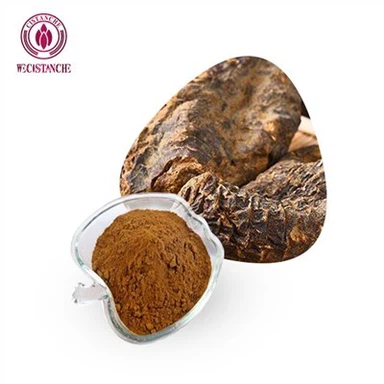
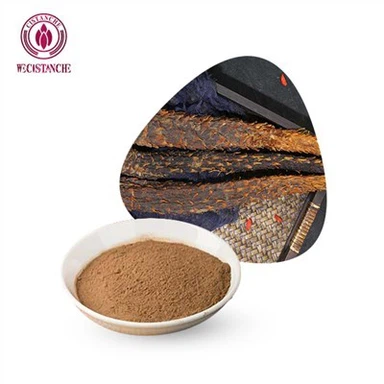
In the vast and boundless desert, there is a magical plant that grows tenaciously, which is the "desert ginseng" called Cistanche deserticola. Cistanche deserticola is a perennial parasitic herbaceous plant of the Cistanche genus in the family Liliaceae. It does not have true roots and leaves, and mainly relies on parasitizing the roots of desert plants such as Salix and Salix to absorb nutrients and water to sustain its life.
Cistanche deserticola has a long history of medicinal use in China, dating back to the "Shennong Bencao Jing". The book listed it as a top-grade herb, stating that it has a sweet and slightly warm taste, can treat the five stresses and seven injuries, nourish the middle, remove cold and hot pain from the stem, nourish the five organs, strengthen yin, nourish essence and qi, have many children, and treat women's ailments. Long-term consumption can lighten the body. In ancient times, Cistanche deserticola was regarded as a precious nourishing herb, often used to regulate the body and treat diseases. With the development of modern science and technology, research on Cistanche deserticola has become increasingly in-depth, and it has been found to have significant pharmacological effects in antioxidant, anti-inflammatory, and immune regulation. These effects have also laid a solid foundation for its application in the field of skincare.

Phenylethanol glycoside is the main active component of Cistanche deserticola
Cistanche deserticola is rich in various active ingredients, such as phenylethanolic glycosides, polysaccharides, flavonoids, etc. Among them, phenylethanolic glycosides have strong antioxidant capacity, which can effectively eliminate free radicals in the body and reduce oxidative stress damage to cells. Free radicals are one of the important factors leading to skin aging and tanning. When the skin is exposed to ultraviolet radiation, a large amount of free radicals are produced, which attack DNA, proteins, and lipids in skin cells, causing cell damage and aging. At the same time, they also stimulate melanocytes to produce more melanin, making the skin darker. The phenylethanolic glycosides in Cistanche deserticola can act as a "cleaner" to promptly remove these free radicals, protect skin cells from damage, and thus prevent tanning and skin aging from the source.
Cistanche deserticola also has anti-inflammatory effects. As mentioned earlier, ultraviolet radiation can trigger skin inflammation, and the active ingredients in Cistanche deserticola can inhibit the production and release of inflammatory factors, reducing skin inflammation symptoms. It is like a "firefighter" of the skin, able to quickly extinguish the "flames" of inflammation when the skin appears, keeping the skin in a healthy and stable state, and avoiding the aggravation of tanning and skin damage caused by inflammation. In addition, the polysaccharides in Cistanche deserticola can enhance the skin's immunity, help the skin resist external environmental damage, and establish a strong "protective wall" for the skin.
The miraculous mechanism of Cistanche deserticola in preventing tanning
(1) Absorb ultraviolet rays and hold up a natural 'sunscreen umbrella'
Benefits of Cistanche tubulosa-inhibit tyrosinase expression
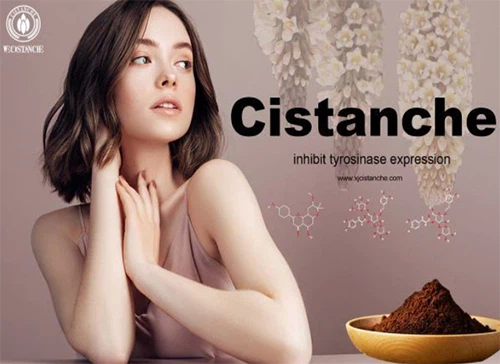
Cistanche deserticola can prevent tanning, and its key lies in the phenylethanolic glycoside component it contains. Research has found that phenylethanolic acid has a strong absorption ability in the ultraviolet band of 280-380nm, which is more harmful to the skin. This means that it is like a natural "sunscreen umbrella". When the extract of Cistanche deserticola acts on the skin, phenylethanolic acid can absorb a large amount of ultraviolet radiation, thereby reducing direct exposure to the skin.
Because of this, Cistanche deserticola has demonstrated unique application value in the field of sunscreen cosmetics. Compared with some chemical sunscreens, phenylethanolic acid in Cistanche deserticola is a natural ingredient that is safer, milder, and less likely to cause adverse reactions such as skin allergies. Moreover, when the addition of phenylethanolic acid in sunscreen is 1% or 2%, it not only has good stability, but also provides effective photoprotection for the skin for a long time. It not only absorbs ultraviolet rays, but also has antioxidant, DNA repair, and cell apoptosis reducing effects, protecting the skin from UV damage from multiple perspectives.
(2) Antioxidant, repair damaged skin
In addition to directly absorbing ultraviolet radiation, the antioxidant capacity of Cistanche deserticola also plays an important role in preventing tanning. When the skin is exposed to ultraviolet radiation, a large amount of free radicals are produced, which act as "troublemakers" and attack various components in the skin cells, causing cell damage. This is also one of the important reasons for skin tanning and aging. And the extract of Cistanche deserticola has a strong ability to scavenge free radicals.
Research has shown that extracts from Cistanche deserticola can significantly increase the levels of superoxide dismutase (SOD) and catalase (CAT) in animal serum, liver tissue, brain tissue, and skin. These enzymes are important antioxidant enzymes in the body that can help clear free radicals. Meanwhile, Cistanche deserticola can promote the secretion of glutathione peroxidase (GSH Px) and inhibit the accumulation of malondialdehyde (MDA) and lipofuscin. MDA is a product of lipid peroxidation, and an increase in its content indicates oxidative damage to cells, while the accumulation of lipofuscin is closely related to skin aging. By regulating the content of these substances, Cistanche deserticola reduces oxidative damage to the skin, repairs skin damage caused by ultraviolet radiation, delays the process of skin aging, and thus prevents tanning to a certain extent.

cistanche deserticola ma-whitening
Click to view Cistanche deserticola whitening products
【Ask for more】 Email:cindy.xue@wecistanche.com / WhatsApp: 0086 18599088692 / Wechat: 18599088692
(3) Reduce melanin production and brighten the skin
Another important mechanism for preventing tanning with Cistanche deserticola is to reduce the production of melanin. As mentioned earlier, ultraviolet radiation stimulates melanocytes to produce melanin, and the phenylethanolic total glycosides in Cistanche deserticola play a role as "inhibitors" in this process. Tyrosinase is a key enzyme in the synthesis of melanin, and its activity directly affects the amount of melanin produced. The total glycosides of phenylethanol in Cistanche deserticola can inhibit the activity of tyrosinase, just like putting the brakes on the production line of melanin synthesis.
Related experiments have shown that in an environment containing total glycosides of phenylethanol from Cistanche deserticola, the production of melanin in human epidermal melanocytes is significantly reduced. This is because total phenylethanolic acid inhibits the activity of tyrosinase, blocking the key step of melanin synthesis, preventing melanocytes from synthesizing melanin in large quantities, thereby reducing the deposition of melanin in the skin and achieving the effect of whitening the skin and preventing tanning.