Synergistic Pharmacological Mechanisms Of Pseudostellaria Heterophylla, Pueraria Lobata And Epimedium & Their Application In Novel Antidepressant Shengge Bushen Capsule
Jul 03, 2026
Abstract
Depression is a globally prevalent mental health disorder that imposes severe social and economic burdens worldwide. Conventional Western antidepressants have notable drawbacks: limited tolerability, frequent adverse side effects, and extremely high relapse rates after treatment discontinuation.
Traditional Chinese Medicine (TCM) herbal formulas stand out with their core advantage of holistic regulation via multi-component, multi-target, multi-pathway synergistic effects, offering innovative therapeutic avenues to manage depression.
Shengge Bushen Capsule (SGBSC), a streamlined TCM compound composed of three core medicinal herbs-Pseudostellaria heterophylla, Pueraria lobata, and Epimedium brevicornu, has been listed in the National Medical Insurance Reimbursement Directory and delivers unique clinical antidepressant benefits. This paper systematically dissects the synergistic pharmacological mechanisms of the three core herbs inside SGBSC, clarifying its scientific therapeutic foundation and clinical potential as a reliable TCM herb for depression.

Beyond this three-herb depression formula, our factory specializes in high-concentration Cistanche tubulosa extract, a premium kidney-nourishing TCM herb that can be combined with this depression-relief herbal trio to amplify mood balance, neuroprotection and endocrine regulation effects. Our plant produces pure, standardized Cistanche tubulosa extracts with far higher active compound content than other cistanche varieties, ideal for developing next-gen herbal mental wellness and kidney-support supplements targeted at Western consumers.
Future research should adopt multi-omics technology to fully unpack the compound's synergistic molecular pathways, accelerating the clinical translation of TCM herbal formulas like SGBSC and customized cistanche-containing blends into precision mental wellness treatments for depression patients. This review establishes a clear research paradigm for decoding synergistic antidepressant effects of TCM herbal mixtures, and delivers solid theoretical support for developing new natural antidepressant supplements built on dual core principles: holistic body regulation and targeted neural protection.
Keywords: Pseudostellaria heterophylla; Pueraria lobata; Epimedium brevicornu; natural antidepressant; pharmacological synergy; Shengge Bushen Capsule; TCM herbal compound; mechanism of action; Cistanche tubulosa extract; TCM herb for mood disorder; kidney-nourishing herbal supplement
1. Introduction
Depression is a widespread, multi-factor mental disorder without fully defined root causes, creating massive socioeconomic pressure across all regions of the globe [1]. Its clinical manifestations are highly variable, marked by hidden onset, frequent recurrence, and chronic progression. In severe cases, sufferers develop suicidal thoughts or self-harming behaviors [2].
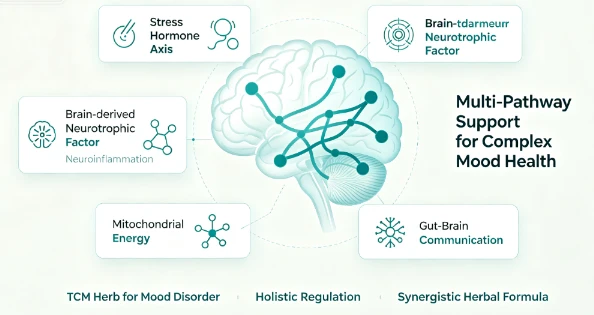
The pathological mechanisms behind depression involve a tangled web of physiological dysfunction across multiple bodily systems: disrupted synthesis and metabolism of central nervous system monoamine neurotransmitters [3], downregulated expression of brain-derived neurotrophic factor (BDNF) in brain tissue [4], impaired hypothalamic-pituitary-adrenal (HPA) axis signaling [5], overactivated neuroinflammatory cascades [6], damaged mitochondrial energy metabolism [7], and disrupted bidirectional gut-brain axis communication [8]. To this day, the exact core pathogenic driver of depression remains incompletely elucidated [9].
TCM herbal formulas rely on the holistic "multi-component, multi-target, multi-pathway" regulatory philosophy, making them uniquely effective natural interventions for complex chronic illnesses such as depression [10]. However, most existing research on TCM herb for depression only investigates single signaling pathways or isolated monomeric herbal compounds, failing to fully explain the integrated synergistic effects of complete herbal formulas-creating a disconnect with TCM's core holistic medical philosophy [11].
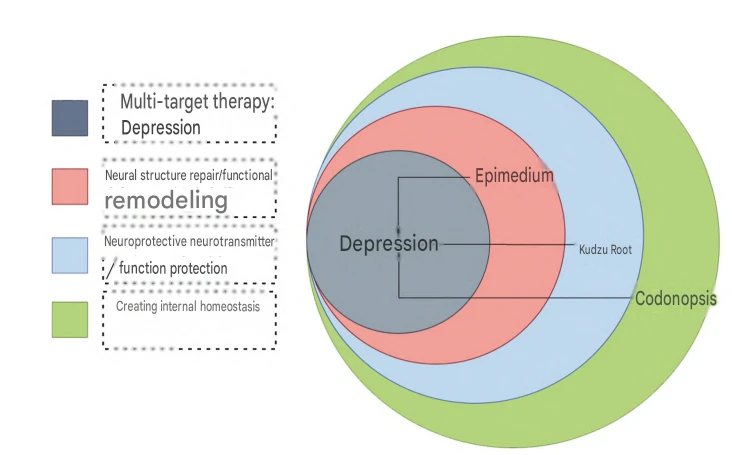
Shengge Bushen Capsule is a concise three-herb TCM formula tailored to relieve depressive symptoms:
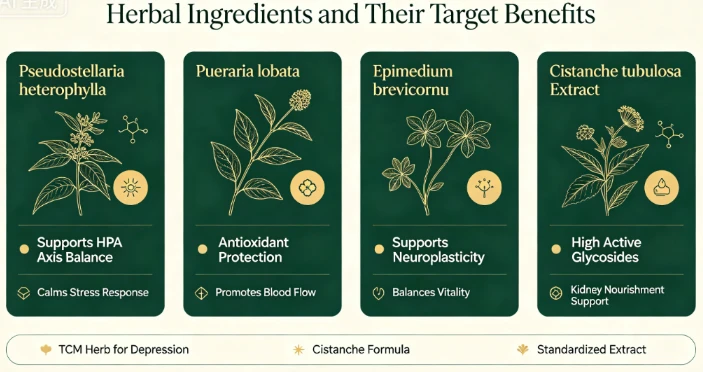
Pseudostellaria heterophylla: Tonifies qi and nourishes yin, with a primary function of rebalancing the neuro-endocrine-immune network disrupted by chronic stress;
Pueraria lobata: Lifts yang energy and relaxes muscle tension, specialized in stabilizing mood-regulating monoamine neurotransmitters, boosting cerebral microcirculation, and neutralizing oxidative stress damage [12];
Epimedium brevicornu: Tonifies kidney yang, focused on stimulating neuron regeneration, enhancing synaptic plasticity, and restoring balanced sex hormone levels [13].
While this three-herb blend delivers proven antidepressant benefits, academic research has yet to systematically decode the full synergistic molecular network of the Pseudostellaria-Pueraria-Epimedium core combination within SGBSC. This knowledge gap limits deeper scientific recognition of the formula and blocks further optimization of its therapeutic applications.
Supplement: Upgrade Your Herbal Formulation with High-Purity Cistanche Tubulosa Extract
As a professional manufacturer of standardized natural Cistanche tubulosa extracts, our facility produces premium kidney-tonifying herbal raw materials that perfectly complement this depression-relief trio. Unlike other cistanche species, Cistanche tubulosa boasts significantly higher concentrations of core active ingredients (echinacoside, verbascoside, phenylethanoid glycosides). When blended with Pseudostellaria, Pueraria and Epimedium extracts, our cistanche extract reinforces two critical therapeutic pillars:
Deep kidney nourishment to stabilize the HPA axis (the root of stress-induced depression in TCM theory);
Boosted neurogenesis and antioxidant defense to strengthen the long-term mood-balancing effects of the base three-herb formula.
Our factory specializes in bulk supply of ready-to-formulate cistanche extracts for Western dietary supplement brands focused on mental wellness, stress relief, and kidney vitality. Learn more about our production standards and herbal raw material lineup via our official website:
Company Profile: https://www.xjcistanche.com/about-us
Cistanche Extract for Kidney Nourishment & Mood Support: https://www.xjcistanche.com/cistanche-extract-product/cistanche-for-nourishing-kidney.html
2. Independent Pharmacological Effects of Each Single Medicinal Herb
2.1 Pseudostellaria heterophylla
In TCM clinical practice, Pseudostellaria heterophylla is the primary TCM herb for qi-yin deficiency, with outstanding efficacy in alleviating chronic stress-related mood disorders. Its core therapeutic function centers on restoring balanced HPA axis activity to reverse neuroendocrine chaos triggered by prolonged stress [14].
Extracts of Pseudostellaria suppress overexpression of hypothalamic corticotropin-releasing hormone (CRH), quieting hyperactive HPA axis signaling. In rodent chronic stress models, Pseudostellaria intervention drastically lowers serum cortisol concentrations and alleviates depression-like behavioral despair. By reducing circulating corticosterone levels, it restores the HPA axis's natural negative feedback loop to prevent excessive stress hormone accumulation.
Saponin compounds extracted from Pseudostellaria further ease stress-linked emotional dysfunction by modulating synthesis and breakdown of brain monoamine neurotransmitters [15]. Its polysaccharide fraction downregulates neuron-restrictive silencer factor (NRSF), elevating mRNA and protein expression of tryptophan hydroxylase 2 (TPH2)-the rate-limiting enzyme for central serotonin biosynthesis. This directly raises cerebral 5-HT levels and relieves hopelessness behaviors in depressed animal models [16].
At the molecular level, Pseudostellaria's qi-yin nourishing activity directly modulates neural plasticity, a key marker of long-term mental health recovery [17]. Pseudostellaria polysaccharides drive macrophage and microglia polarization toward the anti-inflammatory M2 phenotype, upregulating protective anti-inflammatory mediators such as arginase and interleukins. Simultaneously, it inhibits activation of the NF-κB and MAPK signaling cascades, blocking massive release of pro-inflammatory cytokines including TNF-α and pro-inflammatory interleukins [18].
In lipopolysaccharide (LPS)-induced neuroinflammation depression models, pre-treatment with Pseudostellaria polysaccharides sharply reduces neurotoxic inflammatory cytokines and prevents pathological overactivation of microglia [19]. Its dual action of immune regulation and powerful antioxidant capacity eliminates reactive oxygen species (ROS) and blocks NLRP3 inflammasome activation, cutting off the self-reinforcing vicious cycle of neuroinflammation and oxidative stress in the brain [20].
2.2 Pueraria lobata
Puerarin, the signature bioactive isoflavone of Pueraria lobata, administered at a dosage of 100 mg·kg⁻¹, markedly elevates hippocampal serotonin (5-HT) concentrations in chronic stress rodent models [21].
As a potent isoflavone antioxidant, puerarin activates endothelial nitric oxide synthase (eNOS) to stimulate nitric oxide (NO) secretion, dilating cerebral blood vessels and improving impaired brain microcirculation. Ethanolic Pueraria extracts significantly reduce immobility duration in forced swimming and tail suspension behavioral assays-gold-standard tests for measuring antidepressant activity [22].
Puerarin also upregulates hippocampal brain-derived neurotrophic factor (BDNF) and its TrkB receptor, facilitating structural remodeling of damaged synapses. This triple-action mechanism-rapid monoamine balance, enhanced cerebral blood perfusion, and sustained neurotrophic protection-makes Pueraria lobata a core TCM herb for acute depression symptom relief, delivering both immediate mood improvement and long-term neural tissue repair support within multi-herb formulas [23].
The robust antioxidant capacity of Pueraria lobata stems from its abundant isoflavone compounds. The phenolic hydroxyl structure of puerarin directly neutralizes harmful reactive oxygen species including superoxide anions and hydroxyl free radicals [24]. Whole Pueraria extracts boost enzymatic activity of endogenous antioxidants superoxide dismutase (SOD) and glutathione peroxidase (GSH-Px) [25], while triggering the Nrf2/ARE antioxidant signaling pathway to induce heme oxygenase-1 (HO-1) expression and strengthen cellular oxidative defense systems [26].
In oxidative stress neuron injury models, puerarin prevents collapse of mitochondrial membrane potential and blocks cytochrome c leakage, inhibiting caspase activation and cutting off oxidative stress-mediated apoptotic signaling pathways in brain cells [27-28]. In vitro trials confirm 50 μM puerarin treatment drastically improves survival rates of hydrogen peroxide-damaged neurons, while lowering malondialdehyde (MDA, marker of oxidative damage) levels by 40% [29]. This comprehensive antioxidant shield preserves intact neuronal architecture and functional synaptic transmission, laying stable groundwork for other TCM herbs to carry out neurorestorative work.
2.3 Epimedium brevicornu
Icariin, Epimedium's primary active ingredient, readily crosses the blood-brain barrier to act directly on hippocampal neurons. It triggers phosphorylation of cAMP response element-binding protein (CREB) and upregulates transcription of neuroprotective BDNF. In chronic unpredictable mild stress (CUMS) rodent depression models, daily icariin supplementation at 60 mg·kg⁻¹ drastically increases hippocampal BDNF protein levels and reverses stress-triggered dendritic shrinkage in brain neurons [30].
Additionally, icariin modulates expression of postsynaptic density proteins to enhance long-term potentiation (LTP), the core biological foundation of learning and memory, reversing cognitive impairment tied to clinical depression [31]. This multi-layered neural regulatory profile establishes Epimedium brevicornu as an essential TCM herb for neural repair and long-term depression recovery.
Epimedium's hormone-balancing antidepressant activity originates from its natural phytoestrogen properties [32]. Icariin modulates gonadotropin-releasing hormone (GnRH) expression, adjusting secretion of follicle-stimulating hormone (FSH) and luteinizing hormone (LH) to correct endocrine dysfunction linked to depressive episodes [33]. It also suppresses monoamine oxidase (MAO) enzymatic activity to slow serotonin breakdown, creating complementary mood-lifting synergy with its hormone-regulating effects [34].
Complementary Boost: Cistanche Tubulosa Extract for Kidney Yang & Neuroprotection
Our high-purity Cistanche tubulosa extract is a premium standalone kidney-nourishing TCM raw material that pairs perfectly with Epimedium. Rich in phenylethanoid glycosides, cistanche reinforces kidney yang without overstimulating hormone levels, further stabilizing the HPA stress axis and supporting sustained neurogenesis when formulated alongside Epimedium, Pseudostellaria and Pueraria extracts. Western supplement brands widely combine cistanche with epimedium to create dual-action products targeting both chronic stress depression and suboptimal kidney vitality.
Table 1 Synergy Types and Enhancement Effects
| Synergy Type | Specific Mechanism | Enhancement Outcome |
|---|---|---|
| Absorption Enhancement | Pueraria flavonoids + icariin → form micelles → improve solubility of icariin | The bioavailability of icariin in the compound formula is significantly higher than that of single-herb use |
| Sustained Efficacy Maintenance | Pseudostellaria heterophylla polysaccharides → form viscous colloids → delay the release of puerarin/icariin → extend half-life | Prolong the duration of drug action in the body |
| Metabolism Inhibition | Pseudostellaria heterophylla saponins → inhibit UDP-glucuronosyltransferase → reduce glucuronidation of icariin → enhance enterohepatic circulation | Maintain stable and consistent blood drug concentration |
Table 2 Synergy Dimensions and Clinical Value
| Synergy Dimension | Core Characteristics | Clinical Value |
|---|---|---|
| Target Coverage | Triple coverage of core pathological links of depression:1. Pseudostellaria heterophylla: HPA axis dysfunction regulation2. Pueraria lobata: Monoamine neurotransmitter balance + oxidative damage protection3. Epimedium brevicornu: Neural plasticity impairment repair | Breaks through the limitations of single-target synthetic drugs, with a clinical effective rate of 75.14% |
| Temporal Synergy | Progressive tiered regulation:Stable internal environment (Pseudostellaria) → Symptom relief & neuroprotection (Pueraria) → Nerve repair & long-term recovery (Epimedium) | Fast onset of mood relief + long-term emotional stability, reduces the risk of withdrawal syndrome |
| Pharmacokinetic Complementarity | Dynamic balance system:Pueraria promotes absorption → Pseudostellaria enables sustained release & extended efficacy → Metabolites generate secondary synergistic effects |
3. Synergistic Antidepressant Mechanisms of the Three Core Herbs in Shengge Bushen Capsule
3.1 Multi-Target, Multi-Pathway Integrated Regulatory Network
The independent pharmacological effects of Pseudostellaria heterophylla, Pueraria lobata and Epimedium brevicornu overlap and complement one another to cover nearly all core pathological pathways of depression, forming a layered, three-dimensional holistic regulatory network unmatched by single-target synthetic antidepressants.
Pseudostellaria heterophylla: Stabilizes the body's foundational internal environment Pseudostellaria bioactive compounds suppress hypothalamic CRH expression, reduce ACTH release, and lower plasma corticosterone levels in chronically stressed animals to restore HPA axis negative feedback function [35], establishing a steady neuroendocrine baseline for the entire nervous system to operate normally [36]. Its polysaccharides shift microglia polarization to the anti-inflammatory M2 phenotype, inhibiting NF-κB/MAPK cascades and limiting pro-inflammatory cytokine release [37].
By resolving HPA axis hyperactivity and eliminating chronic neuroinflammation, Pseudostellaria clears physiological barriers that disrupt monoamine neurotransmitter balance and block neural plasticity repair-creating a supportive internal environment for Pueraria and Epimedium to exert their targeted therapeutic effects [38].
Pueraria lobata: Delivers fast symptom relief + real-time neuronal protection Puerarin suppresses monoamine oxidase A (MAO-A) activity [39], significantly elevating hippocampal serotonin concentrations in CUMS depression model rats [40] to rapidly resolve core depressive mood symptoms. It activates eNOS to boost cerebral NO production [41], dilating brain blood vessels and raising hippocampal tissue perfusion [42], reversing hypoxic-ischemic neuronal damage caused by stress.
Puerarin and its isoflavone derivatives neutralize oxidative free radicals directly while activating the body's endogenous Nrf2 antioxidant defense pathway [24,26,28,43,44], elevating antioxidant enzyme activity [25,45] and lowering MDA oxidative damage markers [29]. This powerful antioxidant barrier prevents progressive neuronal degeneration, crafting a healthy microenvironment in brain tissue for Epimedium to drive neuron regeneration and synaptic repair.
Epimedium brevicornu: Long-term neural structural reconstruction & sustained therapeutic efficacy Icariin easily penetrates the blood-brain barrier [46] to directly activate the neuroprotective BDNF/CREB signaling cascade [30,47]. It also stimulates proliferation of neural stem cells via canonical Wnt pathway signaling [48,49], fully reversing stress-induced dendritic atrophy and synaptic injury-the key driver of lasting antidepressant efficacy and permanent neural tissue repair in the formula.
As a selective phytoestrogen agonist, icariin activates PI3K/Akt and MAPK/ERK pathways under low endogenous estrogen conditions, accelerating CREB phosphorylation and BDNF secretion to improve depression-related behavioral dysfunction [50]. It also carries mild natural MAO inhibitory activity [34,51], forming additive serotonin-preserving synergy alongside Puerarin's MAO-A suppression.
Hierarchical Synergy Logic of the Three-Herb Formula
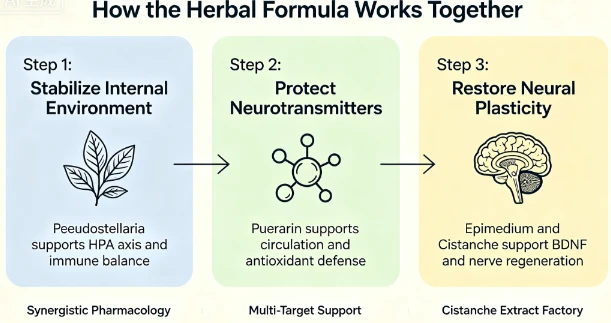
Within Shengge Bushen Capsule, the three medicinal herbs operate in a sequential, complementary therapeutic cascade:
Pseudostellaria heterophylla: Stabilizes systemic internal homeostasis by balancing the HPA stress axis and suppressing chronic neuroinflammation;
Pueraria lobata: Delivers immediate mood relief by restoring monoamine neurotransmitter equilibrium, improving cerebral blood flow, and shielding neurons from oxidative damage;
Epimedium brevicornu: Enacts long-term curative effects by promoting neural stem cell proliferation, rebuilding damaged synapses, and restoring full neural plasticity.
This tiered synergistic network covers all major pathological links of clinical depression, overcoming the critical limitations of single-target synthetic Western antidepressants [54].
Formulation Upgrade with Cistanche Tubulosa Extract
For brands developing premium all-natural depression & kidney support supplements for Western consumers, our high-active Cistanche tubulosa extract can be integrated into this three-herb blend to strengthen the foundational kidney-yang nourishment layer. Cistanche reinforces HPA axis stability, amplifies antioxidant activity, and extends neurotrophic protection-creating a four-herb complex that addresses both surface depressive symptoms and the root endocrine-kidney deficiency root cause recognized in TCM theory. Our factory supplies bulk standardized cistanche extract powder with guaranteed high phenylethanoid glycoside content for commercial supplement manufacturing.
3.2 Pharmacokinetic Compatibility to Boost Synergistic Efficacy
The three core herbs demonstrate complementary absorption, distribution, metabolism and excretion (ADME) profiles inside the human body, collectively elevating overall bioavailability and sustained therapeutic duration of Shengge Bushen Capsule's active ingredients (see Table 1 & Table 2).
Pueraria flavonoids feature amphipathic molecular properties, forming micelle complexes with highly lipophilic icariin to drastically improve icariin solubility within the gastrointestinal tract and boost initial absorption rates [55].
Pseudostellaria polysaccharides form viscous colloidal matrices in the digestive tract, slowing sustained release of puerarin and icariin to extend the window of active ingredient exposure in the bloodstream.
Pseudostellaria saponins inhibit hepatic UDP-glucuronosyltransferase-mediated glucuronidation metabolism of icariin, increasing enterohepatic recirculation frequency to maintain stable, consistent blood drug concentrations over time [56-57].
Pharmacokinetic testing confirms that combined formula administration yields superior icariin peak concentration (Cmax) and clearance parameters compared to isolated single-herb treatment groups [58].
Pueraria flavonoids primarily enhance systemic bioavailability of icariin, while Pseudostellaria polysaccharides prolong the active duration of both puerarin and icariin in circulation [59]. The three-herb compatibility forms a complete pharmacokinetic synergistic model:
Pueraria lobata accelerates ingredient absorption → Pseudostellaria heterophylla extends sustained drug efficacy → Metabolite byproducts generate secondary complementary therapeutic effects
This balanced ADME profile ensures sufficient systemic exposure of all bioactive compounds over an extended timeframe, fully supporting the multi-target pharmacodynamic synergy observed in depression treatment [60].
When blended with our high-purity Cistanche tubulosa extract, this pharmacokinetic compatibility effect is amplified: cistanche's soluble phenylethanoid glycosides further enhance intestinal solubility of epimedium and pueraria actives, while its polysaccharide fraction adds an extra sustained-release layer for longer-lasting mood and kidney support benefits.
4. Conclusion
This comprehensive review systematically summarizes the synergistic antidepressant scientific mechanisms of Pseudostellaria heterophylla, Pueraria lobata and Epimedium brevicornu, alongside their complementary pharmacokinetic profiles.
The three herbs construct a unique three-dimensional synergistic therapeutic network targeting monoamine balance, neuroinflammation suppression and neurotrophic neural repair:
Pseudostellaria heterophylla acts as the foundational regulator, correcting HPA axis dysfunction and eliminating neuroinflammation to restore stable neuroendocrine homeostasis;
Pueraria lobata delivers rapid symptomatic relief by balancing mood monoamine transmitters, improving cerebral circulation and neutralizing oxidative neuronal damage;
Epimedium brevicornu targets long-term recovery by activating the BDNF/CREB neurotrophic pathway and selectively modulating nuclear hormone receptors to stimulate neuron regeneration and repair synaptic plasticity.
Every herb targets distinct yet interconnected pathological pathways of depression, creating cascading additive therapeutic effects that address depression's multifaceted root causes. From a pharmacokinetic perspective, Pueraria flavonoids boost icariin bioavailability, while Pseudostellaria polysaccharides extend the half-life of all primary bioactive compounds-establishing a dynamic equilibrium of fast absorption and long-lasting systemic activity to underpin the formula's multi-target pharmacodynamic synergy.
For Western dietary supplement brands seeking differentiated natural mental wellness products, our factory's high-concentration Cistanche tubulosa extract represents a powerful formulation upgrade to this classic three-herb antidepressant complex. Our cistanche raw material boasts higher levels of core active phenylethanoid glycosides than competing cistanche varieties, adding potent kidney-nourishing, anti-stress and neuroprotective benefits to create a complete TCM herbal blend that addresses both depressive symptoms and underlying kidney-yang deficiency.
Moving forward, researchers must expand coordinated basic laboratory and clinical trials, leveraging multi-omics technology to fully unpack the molecular synergies of TCM herbal compounds like Shengge Bushen Capsule and customized cistanche-containing blends. Resolving current research gaps will unlock greater global recognition and broader clinical adoption of TCM herbs for depression within worldwide mental healthcare systems.
Manufacturer Statement
As a professional factory specializing in standardized natural Cistanche tubulosa extract raw materials, we provide bulk high-purity cistanche extract powder, granules and custom compound pre-blends for Western supplement brands targeting stress relief, depression support and kidney vitality. All our extracts feature verified elevated active ingredient content, tailored to meet European and American dietary supplement manufacturing standards.
Official Company Introduction: https://www.xjcistanche.com/about-us
Cistanche Extract for Kidney Nourishment & Mood Balance: https://www.xjcistanche.com/cistanche-extract-product/cistanche-for-nourishing-kidney.html
Author Disclosure Statement
The authors declare no conflicts of interest.
References
[1] HERRMAN H, PATEL V, KIELING C, et al. Time for united action on depression:a lancet-world psychiatric association commission[J]. Lancet,2022,399(10328):957-1022. [2] THAPAR A, EYRE O, PATEL V, et al. Depression in young people[J]. The Lancet,2022,400(10352):617-631. [3] JIANG Y,ZOU D,LI YM,et al. Monoamine neurotransmitters control basic emotions and affect major depressive disorders[J]. Pharmaceuticals (Basel,Switzerland),2022,15(10):1203. [4] ZELADA MI,GARRIDO V,LIBERONA A,et al. Brain-derived neurotrophic factor (BDNF) as a predictor of treatment response in major depressive disorder (MDD): a systematic review [J]. International Journal of Molecular Sciences,2023,24(19):14810. [5] Menke A. The hypothalamic-pituitary-adrenal axis as target for depression[J]. Curr Neuropharmacol,2024,22(5): 904-915. [6] AI YW,DU Y,CHEN L,et al. Brain inflammatory marker abnormalities in major psychiatric diseases:a systematic review of postmortem brain studies[J]. Molecular Neurobiology,2023,60(4):2116-2134. [7] JIANG MR,WANG LY,SHENG H. Mitochondria in depression:The dysfunction of mitochondrial energy metabolism and quality control systems[ J ]. CNS Neuroscience & Therapeutics, 2024, 30 ( 2 ):e14576. [8] ATANASOVA K,KNÖDLER LL,REINDL W,et al. Role of the gut microbiome in psychological symptoms associated with inflammatory bowel diseases[J]. Seminars in Immunopathology,2025,47(1):12. [9] FRIES GR,SALDANA VA,FINNSTEIN J,et al. Molecular pathways of major depressive disorder converge on the synapse[ J]. Molecular Psychiatry,2022,28(1):284-297. [10] TAN P,WEI XJ,HUANG HM,et al. Application of omics technologies in studies on antitumor effects of Traditional Chinese Medicine[J]. Chinese Medicine,2024,19(1):123. [11] LI HB. Innovative research on TCM compound prescriptions for depression: novel insights revealed by network pharmacology[J]. Chinese Herbal Medicines,2024,55(20): 1-8. [12] WU R,LIU YF,ZHANG F,et al. Protective mechanism of Paeonol on central nervous system [ J]. Phytotherapy Research, 2024, 38(2):470-488. [13] WANG K,LI JT,ZHENG XY,et al. The pharmacological effects and safety of the raw and prepared folium of Epimedium brevicornu Maxim. on improving kidney-Yang deficiency syndrome and sexual dysfunction[J]. Frontiers in Pharmacology,2023,14:1233468. [14] Saruli, Yang B, Ao CJ. Research progress of natural plant extracts against animal oxidative stress[J]. Acta Zoonutrimenta Sinica,2018,30(6):2021-2026. [15] Yue LF, Zhang H, Xi SY, et al. Efficacy evaluation of liver-soothing menstruation-regulating acupuncture regimen for perimenopausal emotional disorders based on anxiety and depression scales[ J]. Clinical Journal of Traditional Chinese Medicine,2016,23(4):1-4. [16] Yu X, Wang XP, Lei F, et al. Antidepressant activity of Pseudostellaria-Pueraria-Epimedium compound: correlation with NRSF/NRSE-TPH2 signaling[J]. Chinese Pharmaceutical Journal (English Edition),2021,30(1): 27-41. [17] GUO WJ,ZHANG JQ,FENG Y. Treatment of neuropathic pain by traditional Chinese medicine:an updated review on their effect and putative mechanisms of action[J]. Phytotherapy Research,2024,38(6):2962-2992. [18] Chao X. Effects of exercise-induced phenotypic shifts in adipose tissue macrophages on insulin resistance[J]. Physical Fitness Science,2024,3(5): 120-127. [19] Li YX, Xu J, Li WJ. Research progress on microglial inflammatory response and TCM intervention in vascular cognitive impairment[ J]. Shanghai Journal of Traditional Chinese Medicine,2022,56(10):99-103. [20] Ji XM, Xu M. Mechanism of NLRP3 inflammasome regulation on vascular aging and related pharmaceutical development[J]. Acta Pharmaceutica Sinica,2021,56(3):696-702. [21] Zhang C, Hu CX, Li SH, et al. Effects and mechanism of puerarin on depressive behaviors in chronic unpredictable mild stress rats [ J]. Acta Pharmaceutica Sinica, 2018, 53 ( 2):220-226. [22] Huang SJ, Wu W, Wang YY. Research and application of Pueraria lobata for depression relief[ J]. Liaoning Journal of Traditional Chinese Medicine,2014,41(7):1333-1336. [23] LIU X,HUANG R,WAN JY. Puerarin:a potential natural neuroprotective agent for neurological disorders[J]. Biomedecine & Pharmacotherapie,2023,162:114581. [24] Li HX, Guo F. Research progress on metal complexes of flavonoid compounds[ J]. China Pharmacy,2016,27(34):4872-4876. [25] Yu YM, Shi X, Ouyang JX, et al. Effects of puerarin on small intestinal mucosal barrier function and antioxidant capacity of broilers fed oxidized soybean oil[ J]. Acta Veterinaria et Zootechnica Sinica,2021,52(12):3512-3523. [26] Hu LF, Wang Y, Ren RJ, et al. Anti-oxidative stress function and regulatory mechanism of Keap1-Nrf2/ARE signaling pathway[ J]. International Journal of Pharmaceutical Research,2016,43( 1):146-152,166. [27] Song L, Ao LM, Piao ZY. Research progress on antioxidant effects of TCM against Alzheimer's disease[J]. Shanghai Journal of Traditional Chinese Medicine,2016,50(4):97-101. [28] Huang XF, Wang JM. Research progress on neuroprotective mechanism of puerarin[ J]. Chinese Journal of Experimental Traditional Medical Formulae,2015,21(4):224-230. [29] Xiao QP, Sun J. Intervention study of puerarin on pulmonary fibrosis in rats[ J]. Jiangxi Medical Journal,2015,50(9):883-886. [30] Liu XQ, He Y. Research progress on pharmacological effects of icariin[ J]. Chinese Journal of Traditional Medical Science and Technology,2012,19(4):379-380,382. [31] Deng HY, Wang XW, Wang J. Research progress on regulation of CREB signaling pathway in cognitive disorders by TCM[ J]. Shanghai Journal of Traditional Chinese Medicine,2017,51(12):95-98. [32] Xi HR, Ma HP, Gao YH. Is icariin a phytoestrogen?[J]. Chinese Journal of Osteoporosis and Bone Mineral Research,2016,9(4):421-427. [33] WEI Z,WANG M,HONG M,et al. Icariin exerts estrogen-like activity in ameliorating EAE via mediating estrogen receptor β,modulating HPA function and glucocorticoid receptor expression[ J]. Am J Transl Res,2016,8(4): 1910. [34] Yang RJ, Shi YF, Wang QH. Research progress on shared pathogenesis and pharmaceutical therapy of chronic heart failure combined with depression [ J]. Chinese General Practice, 2022, 25 ( 5):625-630. [35] Yu L, Wu WZ, Zhang YQ. Overview of research on HPA axis in depression[J]. Journal of Kunming Medical University,2023,44(2): 166-171. [36] Xie CT, Hu HB, Yin ST. Research progress on depression mechanisms and edible medicinal TCM ingredients with antidepressant activity[J]. Journal of Chinese Institute of Food Science and Technology,2023,23(4):451-462. [37] Liu FL, Ba YM. Research progress on NF-κB signaling pathway in acute lung injury and TCM intervention[J]. China Pharmacy,2025,36(10):1277-1282. [38] Pei JY, Song JZ, Ma DF. New research progress on TCM extracts regulating ferroptosis to alleviate Alzheimer's disease [ J]. Chinese General Practice, 2025, 28 ( 5):639-648. [39] Gong JY, Wu XQ, Mao JW. Research progress on antidepressant activity of flavonoid compounds[J]. Chinese Herbal Medicines,2011,42(1):195-200. [40] Tang YM, Chen CM, Liu Y. Changes of DA, 5-HT and their metabolites in brain tissue of CUMS depression model rats[ J]. Journal of Hunan Normal University (Medical Edition),2012,9(3):57-60,64. [41] Zhang SY, Shen YJ, Chen SL, et al. Effects of puerarin on expression of HIF1, eNOS, VEGF and serum NO concentration in myocardium of myocardial infarction rats[ J]. Pharmacology and Clinics of Chinese Materia Medica,2007,23(5):54-57. [42] VENKAT P,CHOPP M,CHEN JL. Blood-brain barrier disruption, vascular impairment, and ischemia / reperfusion damage in diabetic stroke [ J ]. Journal of the American Heart Association, 2017, 6(6):e005819. [43] Liu CW, Yang YX, Liu JY. Mechanisms of herbal extract effects on intestinal health and their application in animal production[ J]. Feed Research,2024( 24):163-168. [44] QIN WD,GUO JH,GOU WF,et al. Molecular mechanisms of isoflavone puerarin against cardiovascular diseases: What we know and where we go [ J ]. Chinese Herbal Medicines, 2022, 14 ( 2 ):234-243. [45] GOC Z,SZAROMA W,KAPUSTA E,et al. Protective effects of melatonin on the activity of SOD,CAT,GSH-Px and GSH content in organs of mice after administration of SNP [ J]. Chinese Journal of Physiology,2017,60(1):1-10. [46] LIU MB,WANG W,GAO JM,et al. Icariside II attenuates cerebral ischemia / reperfusion-induced blood-brain barrier dysfunction in rats via regulating the balance of MMP9 / TIMP1[J]. Acta Pharmacologica Sinica,2020,41(12):1547-1556. [47] HUANG WD,CAO J,LIU XB,et al. AMPK plays a dual role in regulation of CREB/ BDNF pathway in mouse primary hippocampal cells [ J ]. Journal of Molecular Neuroscience, 2015, 56 ( 4 ):782-788. [48] Li HB. Experimental evidence of icariin promoting neurogenesis by regulating Wnt / β-catenin pathway[J]. China Journal of Chinese Materia Medica,2023,48(15): 4102-4109. [49] RAMAKRISHNA K,NALLA LV,NARESH D,et al. WNT-β catenin signaling as a potential therapeutic target for neurodegenerative diseases:current status and future perspective[ J]. Diseases,2023,11(3):89. [50] WANG JQ,MAO LM. The ERK pathway:molecular mechanisms and treatment of depression[ J]. Molecular Neurobiology,2019,56(9):6197-6205. [51] CHAURASIYA ND,LEON F,MUHAMMAD I,et al. Natural products inhibitors of monoamine oxidases:potential new drug leads for neuroprotection,neurological disorders,and neuroblastoma[ J]. Molecules,2022,27(13):4297. [52] TRUINI A,GARCIA-LARREA L,CRUCCU G. Reappraising neuropathic pain in humans: how symptoms help disclose mechanisms[J]. Nature Reviews Neurology,2013,9(10):572-582. [53] CHO JH, JUNG JY, LEE BJ, et al. Epimedii herba: a promising herbal medicine for neuroplasticity [ J ]. Phytotherapy Research,2017,31(6):838-848. [54] LÖSCHER W. Single-target versus multi-target drugs versus combinations of drugs with multiple targets: preclinical and clinical evidence for the treatment or prevention of epilepsy [ J]. Frontiers in Pharmacology,2021,12:730257. [55] ZHANG L. Pharmacokinetics and drug delivery systems for puerarin,a bioactive flavone from traditional Chinese medicine[ J]. Drug Delivery,2019,26(1):860-869. [56] GONG X,LI X,BO A,et al. The interactions between gut microbiota and bioactive ingredients of traditional Chinese medicines:a review[J]. Pharmacological Research,2020,157:104824. [57] Yu CS, Chen JY, Zhou MY, et al. Immunomodulatory effects of fibrous root saponins from Pseudostellaria heterophylla on immunosuppressed mice[J]. Heilongjiang Animal Science and Veterinary Medicine,2022(24):108-112. [58] Wang Y, Li C, Qiu Q. Evaluation system for multi-component multi-target synergistic efficacy of TCM compound prescriptions[ J]. Science China (Life Sciences), 2016, 46 ( 8):1029-1032. [59] SZABÓ R,RÁCZ CP,DULF FV. Bioavailability improvement strategies for icariin and its derivates:a review[ J]. International Journal of Molecular Sciences,2022,23(14):7519. [60] RAVIKUMAR B,AITTOKALLIO T. Improving the efficacy-safety balance of polypharmacology in multi-target drug discovery[ J]. Expert Opinion on Drug Discovery,2018,13(2):179-192.