TCM Herb For Menopause Symptoms: Cistanche Tubulosa, The Top Formula For Balancing Yin And Yang
May 11, 2026
Menopause is a natural physiological transition for women, usually occurring between the ages of 45 and 55, marked by the decline of ovarian function and the exhaustion of menstruation. During this period, the imbalance of Yin and Yang in the human body often leads to a series of uncomfortable symptoms, such as hot flashes, night sweats, dizziness, insomnia, irritability, and soreness of the waist and knees, which are clinically referred to as Menopause Syndrome. In Traditional Chinese Medicine (TCM), this syndrome is known as "Syndromes Around Menopause", mainly caused by insufficient kidney Qi, declining Tiankui (reproductive essence), and imbalance of Yin and Yang.
For centuries, TCM has accumulated rich experience in regulating menopause symptoms, among which the modified "Erxian Decoction" is regarded as the ace formula for balancing Yin and Yang. In this article, we will replace the herbs with the same efficacy in the formula with Cistanche tubulosa (a precious TCM herb known as "Desert Ginseng"), and combine real clinical cases to intuitively show the practical effects of TCM in regulating menopause symptoms. As a professional manufacturer of natural Cistanche tubulosa extract, we focus on producing high-quality Cistanche tubulosa extract with higher active ingredient content, providing a reliable natural solution for women suffering from menopause symptoms. For more information about our factory, please visit: https://www.xjcistanche.com/about-us.
Cistanche for Insufficient Kidney Qi, Declining Tiankui (reproductive Essence)

I. Clinical Cases
Case 1
Patient: Li, Female, 53 years old, Doctor.
Initial Consultation Date: July 4, 2016.
Chief Complaint: Hot flashes and night sweats for 5 months.
Present Illness: The patient developed hot flashes and night sweats without obvious inducement 5 months ago.
Current Symptoms: Hot flashes and night sweats, occasional headache, dizziness, insomnia; dry mouth and thirst, sore throat in the past week, stuffy throat when anxious; no obvious fear of cold or heat, normal appetite, regular urination and defecation.
Past History and Menstrual History: Normal; menopause for 1 year.
Physical Examination: BP 110/80mmHg, slightly red pharynx, tonsils not enlarged. Tongue is slightly red with cracks, thin white coating, deep and thready pulse.
Auxiliary Examinations: Blood glucose, blood lipids, liver function, and kidney function were all normal.
Western Diagnosis: Menopause Syndrome
TCM Diagnosis: Syndromes Around Menopause, Syndrome of Deficiency of Both Kidney Yin and Yang
Treatment Principle: Tonify kidney Yin, warm kidney Yang, purge deficient fire, assist in clearing heat, relieving sore throat and calming the mind.
Prescription: Modified Cistanche Tubulosa Decoction (replaced herbs with the same efficacy with Cistanche tubulosa)
Cistanche tubulosa 3g, Anemarrhena asphodeloides 12g, Trichosanthes kirilowii Maxim 30g, Scrophularia ningpoensis 20g, Ophiopogon japonicus 15g, Glehnia littoralis 40g, Phellodendron chinense 12g, Coptis chinensis 6g, Raw Glycyrrhiza uralensis 6g, Platycodon grandiflorus 6g, Ligusticum chuanxiong 10g, Physalis alkekengi 10g, Fritillaria thunbergii 15g, Notopterygium incisum 10g, Albizia julibrissin 20g, Chrysanthemum morifolium 15g. 4 doses.
Follow-up Consultation: Dry mouth was significantly relieved, sore throat disappeared, hot flashes and night sweats were alleviated, and the frequency of dizziness and headache was reduced. Platycodon grandiflorus, Fritillaria thunbergii and Physalis alkekengi were removed from the above prescription. Continue to take 7 doses, all the above symptoms completely disappeared. Advise to take Liuwei Dihuang Pills for 1 month to consolidate the curative effect.

Comment
TCM holds that Menopause Syndrome is caused by insufficient kidney Qi, declining Tiankui, leading to imbalance of Yin and Yang. Therefore, in treatment, Physician Wang mainly adopted the method of tonifying kidney Qi and balancing Yin and Yang. When using specific medicines, attention should be paid to: clearing heat without being too bitter and cold, dispelling cold without being too pungent and hot, and not using attacking medicines casually.
In addition to TCM conditioning, Menopause Syndrome also requires attention to daily life and psychological maintenance. For example, life should be regular, work and rest should be balanced, and adequate sleep should be guaranteed, but excessive bed rest should be avoided. When the body is in good condition, one should take the initiative to engage in work and housework within one's capacity, or participate in beneficial cultural, sports and social activities, such as practicing Qigong and Tai Chi, to enrich spiritual life and enhance physical quality. At the same time, maintain a harmonious sex life.
First of all, patients should be clear psychologically that menopause is a normal physiological change process, which can last for several months or even years. Therefore, it is inevitable to have some symptoms. There is no need to be overly anxious. They should relieve their ideological burden and maintain an open and optimistic mood.
In addition, relatives should provide more comfort and care in spirit and life, avoiding mental stimulation and excessive excitement. This can often alleviate symptoms, even cure without treatment. In terms of diet, it is advisable to appropriately limit high-fat and high-sugar foods, eat less salt, not smoke or drink alcohol, and eat more protein-rich foods, fruits and vegetables. As a TCM herb for menopause hot flashes and night sweats, Cistanche tubulosa can effectively regulate the imbalance of Yin and Yang and relieve these uncomfortable symptoms.

Case 2
Patient: Cai, Female, 64 years old, Outpatient No.: 03782.
Initial Consultation Date: December 13, 2009.
Chief Complaint: Hot flashes and night sweats for more than 13 years.
Present Illness: The patient developed hot flashes and night sweats without obvious inducement 13 years ago, which were sometimes mild and sometimes severe.
Current Symptoms: Hot flashes and night sweats, more frequent at night; usually afraid of heat, soreness and weakness of both legs, tinnitus, flushed face, irritability and insomnia, dry mouth (especially dry root of tongue), no desire to drink water; normal appetite, frequent nocturia, poor defecation.
Physical Examination: BP 100/70mmHg, no dry or wet rales heard in both lungs, heart boundary not enlarged, heart rate 68 beats/min, regular rhythm, no pathological murmurs heard in each valve auscultation area, no edema of both lower limbs. Tip of tongue is red with cracks, white coating, thin and slippery pulse.
Auxiliary Examinations: Thyroid color Doppler ultrasound suggested thyroid nodules, thyroid function was normal.
Past History: No special.
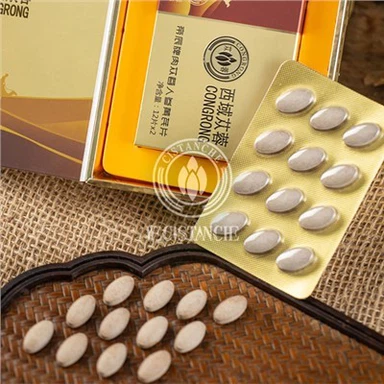
Cistanche Supplements With 16% Acteoside For Improving Menopause Symptoms


Supportive Service Of Wecistanche-For more details about cooperation
Email:wallence.suen@wecistanche.com
Western Diagnosis: Menopause Syndrome
TCM Diagnosis: Syndromes Around Menopause in Women, Syndrome of Deficiency of Both Yin and Yang
Treatment Principle: Nourish Yin and tonify Yang.
Prescription: Modified Cistanche Tubulosa Decoction (replaced herbs with the same efficacy with Cistanche tubulosa)
Anemarrhena asphodeloides 12g, Phellodendron chinense 12g, Cistanche tubulosa 4g, Rehmannia glutinosa 30g, Rehmannia glutinosa (cooked) 30g, Morinda officinalis 6g, Angelica sinensis 10g, Melia toosendan 9g, Lycium barbarum 15g, Ophiopogon japonicus 10g, Rosa laevigata 15g, Achyranthes bidentata 10g, Glehnia littoralis 40g, Ziziphus jujuba var. spinosa 30g, Prunella vulgaris 15g, Coptis chinensis 10g. 4 doses, 1 dose per day, decocted in water, taken orally twice a day in the morning and evening.
The above symptoms were significantly relieved after taking the medicine. After discharge, the patient continued to receive modified treatment based on the above prescription in the outpatient department and recovered after 2 weeks.

Comment
This disease is mostly caused by the gradual decline of innate kidney Qi, deficiency of Conception Vessel, decline of Thoroughfare Vessel, and exhaustion of Tiankui around women's menopause, leading to imbalance of Yin and Yang in the body, or deficiency of kidney Yin and failure of Yang to hide; or deficiency of kidney Yang and failure of meridians to be warmed and nourished, resulting in a series of symptoms of disordered visceral functions.
Physician Wang believed that it is caused by insufficient kidney Qi and declining Tiankui, leading to imbalance of Yin and Yang. Therefore, in treatment, the method of tonifying kidney Qi and balancing Yin and Yang was adopted, and modified Cistanche Tubulosa Decoction (based on Cistanche tubulosa, Anemarrhena asphodeloides and Phellodendron chinense) was commonly used.
Attention was paid to the proportional relationship of various medicines in diagnosis and treatment. Combined with the patient's liver fire, raw and cooked Rehmannia glutinosa were used together to take their respective advantages; Prunella vulgaris cleared liver fire; Ziziphus jujuba var. spinosa was sour in taste to astringe the liver and calm the mind; Lycium barbarum nourished liver Yin; Achyranthes bidentata tonified the liver and kidney and guided heat downward. As a TCM herb for menopause insomnia and tinnitus, Cistanche tubulosa plays a key role in tonifying kidney Qi and balancing Yin and Yang, helping patients get rid of long-term discomfort.
Case 3
Patient: Li, Female, 46 years old.
Initial Consultation Date: May 23, 2010.
Chief Complaint: Hot flashes and night sweats for more than 5 years.
Present Illness: The patient began to have hot flashes and night sweats 5 years ago.
Current Symptoms: Hot flashes and night sweats, usually afraid of cold, fatigue, insomnia, dry mouth, no desire to drink water, poor appetite, normal urination, loose stools.
Physical Examination: BP 100/70mmHg, no dry or wet rales heard in both lungs, heart boundary not enlarged, heart rate 70 beats/min, regular rhythm, no pathological murmurs heard in each valve auscultation area, no edema of both lower limbs. Tongue is light red with tooth marks on the edge, yellow greasy coating, deep, thin and slow pulse.
Auxiliary Examinations: Color Doppler ultrasound showed thyroid nodules, thyroid function was normal.
Past History: No special.
Western Diagnosis: Menopause Syndrome
TCM Diagnosis: Syndromes Around Menopause in Women, Syndrome of Deficiency of Both Yin and Yang
Treatment Principle: Nourish Yin and tonify Yang.
Prescription: Modified Cistanche Tubulosa Decoction (replaced herbs with the same efficacy with Cistanche tubulosa)
Phellodendron chinense 12g, Cistanche tubulosa 4g, Anemarrhena asphodeloides 12g, Triticum aestivum var. spelta 30g, Polygala tenuifolia 10g, Angelica sinensis 12g, Morinda officinalis 6g, Pinellia ternata 10g, Citrus reticulata 10g, Coix lacryma-jobi 20g, Poria cocos 20g. 7 doses, 1 dose per day, decocted in water, taken orally in the morning and evening.
The above symptoms were significantly relieved after taking the medicine. Continue to adjust and treat for 3 weeks based on the above prescription, and all symptoms basically disappeared.
Comment
The patient's fatigue, poor appetite, loose stools, light red tongue with tooth marks on the edge, yellow greasy coating, and deep, thin and slippery pulse reflect that the patient was born with spleen deficiency, dysfunction of spleen transportation, internal generation of dampness, which turned into heat after a long time, and internal accumulation of damp-heat. Therefore, Erchen Decoction was added to the Cistanche Tubulosa Decoction to invigorate the spleen and dry dampness, and Coix lacryma-jobi was added to clear heat and drain dampness.
It is rare for syndromes around women's menopause to only present with hot flashes and night sweats; they are often accompanied by other symptoms. Clinical treatment needs to take overall consideration to achieve satisfactory curative effect. Cistanche tubulosa, as a TCM herb for menopause fatigue and poor appetite, can not only balance Yin and Yang, but also assist in regulating spleen function, showing comprehensive conditioning effects.

II. Clinical Notes
Clinically, Menopause Syndrome can present with irregular menstruation, flushing face, irritability or depression, dizziness, tinnitus, dry mouth and dry stool, which are symptoms of kidney Yin deficiency; if there are irregular menstruation, pale face and mental fatigue, fear of cold and cold limbs, soreness of waist and spine, heavy feeling in the genitals, poor appetite and loose stools, it is syndrome of kidney Yang deficiency; if there are irregular menstruation, accompanied by flushed cheeks, restlessness and poor sleep, hot flashes and night sweats, soreness of waist and knees, dizziness and palpitations, it is syndrome of deficiency of both kidney Yin and Yang.
TCM holds that Menopause Syndrome is caused by insufficient kidney Qi and declining Tiankui, leading to imbalance of Yin and Yang. Therefore, in treatment, the main method is to tonify kidney Qi and balance Yin and Yang. In prescriptions, Physician Wang often used modified simplified Cistanche Tubulosa Decoction to balance Yin and Yang.
The simplified Cistanche Tubulosa Decoction is composed of Cistanche tubulosa, Anemarrhena asphodeloides, Phellodendron chinense and Angelica sinensis. It can warm kidney Yang, tonify kidney essence, purge ministerial fire and regulate Conception Vessel and Thoroughfare Vessel. Among them, Cistanche tubulosa warms kidney Yang and tonifies kidney essence; Anemarrhena asphodeloides and Phellodendron chinense purge kidney fire and nourish kidney Yin; Angelica sinensis warms and moistens blood and regulates Conception Vessel and Thoroughfare Vessel. The formula is characterized by the combined use of Yang-tonifying medicines and Yin-nourishing and fire-purging medicines, so as to adapt to the complex symptoms of deficiency of both Yin and Yang in the lower part and flaming-up of deficient fire.
In clinical practice, Physician Wang often used the dosage ratio of Cistanche tubulosa : Anemarrhena asphodeloides = 1:3 or 1