Discussion On Differentiation-Treatment Ideas & Clinical Practice Of Cancer-Related Fatigue Based On The Theory Of “Phlegm-Toxin Inducing Deficiency”
Jul 07, 2026
Abstract
Cancer-related fatigue (CRF) is highly prevalent throughout the entire tumor journey, severely impairing patients' quality of life and long-term prognosis. Traditional TCM therapies mostly categorize CRF under "consumptive disease", holding visceral insufficiency and qi-blood depletion as its fundamental pathogenesis. However, after anti-tumor treatments, patients often present complicated mixed pathogenic factors including phlegm, toxin, blood stasis and deficiency; simple tonification therapy often fails to deliver satisfactory curative effects. Based on the theory of "phlegm-toxin inducing deficiency", this paper proposes that the core pathogenesis of CRF lies in intermingled phlegm and toxin leading to deficiency originated from excessive pathogenic factors, which persists across all disease stages. By comparative analysis against theories such as "consumptive disorder caused by deficiency" and "cancer toxin damaging healthy qi", this paper elaborates the theoretical foundation and pathogenic evolution of the proposed theory, and establishes a core therapeutic principle of resolving phlegm, detoxifying, invigorating the spleen and tonifying the kidney. Stage-based differentiation and treatment protocols are formulated for active treatment phase, rehabilitation phase, advanced tumor phase and intractable fatigue cases, offering novel theoretical basis and clinical strategies for precise TCM syndrome differentiation and integrated TCM-Western medicine intervention against CRF.
Keywords: cancer-related fatigue; phlegm-toxin inducing deficiency; TCM syndrome differentiation and treatment; stage-based therapy; resolving phlegm and detoxifying; invigorating spleen and tonifying kidney CLC Number: R273
Cancer-related fatigue (CRF) refers to persistent subjective physical, emotional and cognitive exhaustion linked to malignant tumors or their corresponding therapies, which is disproportionate to daily activity levels and severely disrupts normal daily function. Beyond physical weakness, lassitude and fatigue, CRF is frequently accompanied by poor mental state, impaired concentration, sleep disturbance, anxiety and depression, making it a critical challenge in tumor supportive care. Modern medical research attributes CRF to inflammatory responses, neuroendocrine imbalance, mitochondrial dysfunction and toxic side effects of anti-cancer therapies, yet its exact core mechanism remains unclarified with no specific targeted interventions available.
No term equivalent to "cancer-related fatigue" exists in ancient TCM classics; according to its hallmark manifestations of persistent exhaustion, shortness of breath, lassitude and mental weariness, modern TCM clinicians classify CRF under "consumptive disease" and "vital essence depletion" categories. Clinically, fatigue lingers stubbornly after surgery, chemotherapy, radiotherapy, targeted therapy or immunotherapy, accompanied by poor appetite, chest stuffiness, greasy tongue coating, heavy limbs and dark tongue stasis marks-signs of internal obstruction by phlegm-dampness and stasis-toxin. Pure tonification targeting "deficiency" often yields limited outcomes, and may even worsen stagnation after supplementation, proving CRF's pathogenesis is far more complex than simple visceral insufficiency. Instead of singular deficiency, CRF manifests as root deficiency complicated by secondary pathogenic factors such as dampness, phlegm, qi stagnation and blood stasis varying individually. Clinical treatment usually combines qi-tonifying, blood-nourishing, yang-warming and yin-enriching therapies with auxiliary methods of clearing heat and detoxifying, resolving phlegm, eliminating dampness, activating blood stasis and soothing liver stagnation, adopting a combined attacking-tonifying approach.
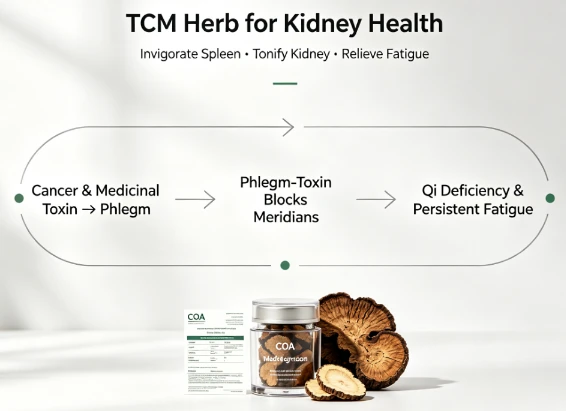
Integrating long-term clinical practice and theoretical research, this paper puts forward the theory of "phlegm-toxin inducing deficiency", clarifying that CRF's core pathogenesis is not isolated visceral depletion. Instead, cancer toxin and medicinal therapy toxin generate phlegm; intermingled phlegm and toxin block meridians and collaterals, gradually consuming healthy qi over time, forming a dynamic vicious cycle of excessive pathogenic factors triggering deficiency and mutual transformation between excess and deficiency.
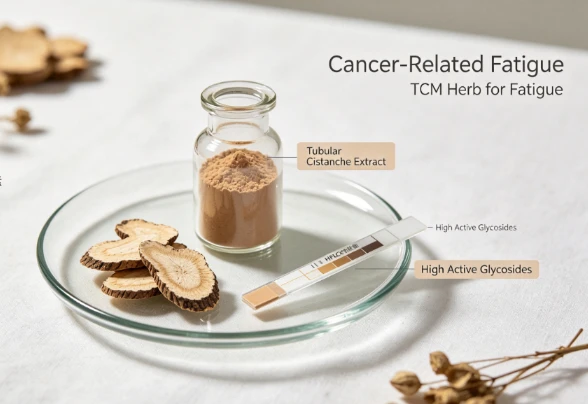
Tcm Herb Cistanche Extracts For Cancer-related Fatigue

1 Theoretical Foundation of the "Phlegm-Toxin Inducing Deficiency" Theory
The theory of "phlegm-toxin inducing deficiency" originates from time-honored TCM records on phlegm and toxin. Danxi's Experience in Medicine states: "Phlegm travels with qi, ascending and descending to every corner of the human body… Any lumps or masses throughout the body are mostly rooted in phlegm", illustrating the widespread pathogenic scope of phlegm evils. Complete Works of Zhang Jingyue records: "All visceral disorders produce phlegm, especially spleen dysfunction… When fluid metabolism loses balance, visceral lesions arise, body fluids turn turbid, and qi and blood transform into phlegm-drool", elaborating the reciprocal causal pathological relationship between phlegm evils and visceral insufficiency.
In TCM, "toxin" refers to pathogenic evils accumulated and unresolved for a long time, characterized by stagnation, heat transformation and healthy qi impairment. As a unique type of toxin, cancer toxin features severe healthy qi damage, stubborn concealment and invasive metastasis, standing as the core pathogenesis of malignant tumors. Medical Case Records of Clinical Guidance notes "Phlegm coagulates with blood stasis, toxin accumulates to form masses", indicating intermingled phlegm and toxin are the root of abdominal masses and tumor lesions.
Multiple distinguished TCM oncology experts emphasize the pathogenic role of phlegm-toxin in tumor progression. Professor Zhou Zhongying pioneered the "cancer toxin" theory, highlighting intermingled cancer toxin, phlegm, stasis and dampness as the core tumor pathogenesis. Wang Wenping et al. proposed that "phlegm-toxin flowing and spreading" serves as the pathological basis for tumor progression and metastasis. Professor Jia Yingjie established the tumor pathogenesis view of "intrinsic healthy qi deficiency coexisting with toxin and stasis", advocating simultaneous healthy qi reinforcement, detoxification and stasis removal in treatment. Professor Zhou Daihan treats tumors starting from phlegm, confirming resolving phlegm and tonifying deficiency as core therapeutic strategies, commonly applying invigorating spleen-dampness, resolving phlegm and dissipating masses, detoxifying and tonifying healthy qi formulas. Collectively, these academic viewpoints confirm phlegm and toxin act as both pathological products and healthy qi-consuming pathogenic factors, persisting throughout tumor onset, progression and therapeutic intervention.
The "phlegm-toxin inducing deficiency" theory discussed in this paper distinguishes CRF-related "phlegm-toxin" from ordinary invisible phlegm. It forms when severe cancer toxin impairs healthy qi, medicinal therapy toxin directly damages visceral organs, and spleen-kidney insufficiency generates turbid fluid transformed into phlegm, resulting in intermingled phlegm, cancer toxin and medicinal toxin spreading across the whole body. Its core pathogenesis lies in intermingled phlegm and toxin triggering deficiency via excessive pathogenic evils. Chemotherapy, radiotherapy and other medicinal toxins further damage the spleen and stomach, depleting healthy qi and aggravating deficiency, creating a destructive cycle of "phlegm-toxin-deficiency".
In routine CRF TCM treatment, clinicians excessively prioritize visceral qi-blood deficiency while overlooking phlegm-toxin pathogenic factors. To clarify the differences and advantages of the "phlegm-toxin inducing deficiency" theory against mainstream traditional viewpoints, comparative analysis is conducted as follows:
1.1 Contrast: "Deficiency Leading to Fatigue" vs "Excess Pathogens Triggering Deficiency" - Comparison with "Consumptive Disease" and "Spleen-Kidney Dual Insufficiency" Theories
The theories of "consumptive disease" and "spleen-kidney insufficiency" argue that long-term tumor depletion, coupled with qi-yin-blood impairment after surgery, radiotherapy and chemotherapy, causes dysfunctional spleen transportation and essence depletion of the kidney, leading to "fatigue originating from intrinsic deficiency". This perspective accurately identifies the root deficiency foundation of CRF with great clinical value. Nevertheless, CRF develops against a backdrop of unresolved cancer toxin and residual medicinal therapy toxin, with excessive pathogenic evils persisting throughout the disease course, frequently accompanied by phlegm-dampness, toxin and blood stasis manifestations. Many patients' fatigue fails to alleviate after adequate rest, proving singular "tonification for deficiency" cannot resolve fatigue symptoms fundamentally. Clinical observations reveal mixed excess-deficiency syndromes dominate CRF in lung cancer patients, with phlegm-dampness syndrome ranking the most prevalent excess pattern. Professor Zheng Yuling pointed out that although tumor patients present deficient manifestations, tumors are tangible masses formed by accumulated solid pathogenic evils; all deficiency symptoms stem from excessive pathogens consuming healthy qi, therefore eliminating excess evils stands as the primary therapeutic principle. Spleen-kidney insufficiency is not only the onset foundation of CRF but also a pathological outcome of visceral qi consumption due to stagnant cancer toxin and medicinal toxin blocking qi movement.
The "phlegm-toxin inducing deficiency" theory clarifies CRF arises from accumulated phlegm-toxin obstructing qi movement and collaterals, gradually damaging healthy qi over time, classified as "deficiency triggered by excess pathogens" rather than simple "fatigue caused by intrinsic deficiency". Clinical diagnosis must first assess the presence and severity of excess pathogenic evils, then determine the priority of tonifying healthy qi and eliminating pathogens, avoiding inappropriate tonification therapy.
1.2 Contrast: "Toxin as Primary Pathogen" vs "Equal Weight on Phlegm and Toxin" - Comparison with "Cancer Toxin Damaging Healthy Qi" Theory
The "cancer toxin" theory confirms cancer toxin as the core driver of malignant tumor development, emphasizing its stubborn nature and healthy qi-consuming properties, highlighting the unique pathogenic characteristics of cancer. Cancer toxin carries amplified toxic effects far exceeding ordinary pathogenic toxins, damaging human qi, blood, body fluids and visceral functions, offering critical insight into CRF pathology. However, focusing solely on "toxin damaging healthy qi" cannot fully explain CRF's complex pathological manifestations. Radiotherapy and chemotherapy deplete qi, blood and yin fluid, impair spleen-stomach qi movement and transform damaged body fluid into phlegm, intertwining medicinal toxin with turbid phlegm. Phlegm's sticky nature obstructs systemic qi movement and acts as a carrier for toxin diffusion, enabling toxin to spread throughout the body and causing stubborn, recurrent fatigue. Interpreting CRF merely through "toxin impairing healthy qi" is incomplete, requiring integration of phlegm as a key pathogenic factor.
The "phlegm-toxin inducing deficiency" theory balances equal importance of phlegm and toxin: phlegm serves as the transport carrier for spreading toxin, while toxin acts as the root of phlegm coagulation. This dual-pathogen mechanism better aligns with CRF's characteristic persistent and recurrent fatigue. Treatment must simultaneously resolve phlegm and detoxify to break the cycle of phlegm-toxin intermingling.
1.3 Contrast: "Qi Stagnation Transforming into Toxin" vs "Intermingled Phlegm and Toxin" - Comparison with "Stagnation-Toxin Inducing Deficiency" Theory
The "stagnation-toxin inducing deficiency" theory centers on emotional disorders: tumor patients often suffer anxiety and fear leading to liver qi stagnation, qi stagnation transforms into fire-toxin, consuming qi and blood and triggering fatigue, insomnia and depression. Feng Zhengquan stated persistent emotional distress in cancer patients disrupts liver conveyance, obstructing qi, blood and body fluid circulation and generating fatigue. TCM theory holds CRF originates from visceral qi-blood-yin-yang insufficiency, or intermingled phlegm-dampness, qi stagnation and blood stasis forming tumor masses. Clinically, most patients experience not only low mood but also heavy limbs, abdominal fullness and other physical symptoms linked to tangible pathogenic evils. Treating exclusively from qi stagnation and toxin only focuses on liver soothing and heat detoxification, failing to address tangible phlegm-toxin masses.
The "phlegm-toxin inducing deficiency" theory identifies "phlegm-toxin" as tangible excess pathogens causing simultaneous physical and mental exhaustion after collateral obstruction. While acknowledging emotional qi stagnation disrupts qi circulation, it prioritizes resolving phlegm and unblocking collaterals as core therapy, supplemented by liver-soothing stagnation relief, restoring qi and blood nourishment to limbs and brain to fundamentally alleviate combined physical and mental fatigue.
1.4 Contrast: "Yin Fluid Depletion" vs "Phlegm-Dampness Damaging Healthy Qi" - Comparison with "Spleen Yin Insufficiency" Theory
The "spleen yin insufficiency" theory targets radiotherapy heat-toxin-induced yin damage symptoms including dry mouth and throat, red tongue with scant coating, applying yin-nourishing fluid-generating therapies. Excessive fire consumes qi, heat scorches body fluid; radiotherapy severely damages original qi and yin fluid, triggering qi-yin deficiency and kidney essence depletion, resulting in malnourished brain marrow and impaired mental function. This therapy delivers targeted relief for patients with severe yin depletion yet ignores the core metabolic disorder of body fluid metabolism underlying most CRF cases.
The "phlegm-toxin inducing deficiency" theory proposes dryness manifestations in such patients rarely stem from pure yin insufficiency. Instead, obstructed qi movement and disrupted body fluid distribution caused by accumulated phlegm-toxin prevent fluid upward transportation to the mouth, generating dry mouth, while impaired middle jiao transportation generates internal dampness presenting as greasy tongue coating. The therapeutic priority lies not in isolated yin tonification, but resolving phlegm and detoxifying to restore unobstructed qi movement and normal body fluid circulation, making this approach superior to simple yin nourishment for complicated CRF patients with concurrent dryness and dampness manifestations.
2 Pathogenic Evolution Mechanism of "Phlegm-Toxin Inducing Deficiency"
CRF represents a dynamic evolving pathological state of mutual interaction between cancer toxin, medicinal therapy toxin, phlegm turbidity, blood stasis and healthy qi depletion, shifting continuously with tumor progression, anti-tumor therapeutic intervention and fluctuating balance between healthy qi and pathogenic evils. The initial stage features cancer toxin and medicinal toxin disrupting qi transformation to generate phlegm; intermediate stage presents intermingled phlegm-toxin blocking collaterals; prolonged progression leads to intertwined phlegm and stasis with gradual healthy qi consumption, ultimately forming deficiency triggered by excess pathogens with mixed excess-deficiency syndrome.
2.1 Initial Stage: Cancer & Medicinal Toxins Disrupt Qi Transformation, Visceral Dysfunction Generates Turbid Phlegm
CRF onset is primarily driven by latent cancer toxin and attacking medicinal therapy toxin. Cancer toxin acts as the core pathogenic factor of tumor formation and progression, inherently consuming qi and blood and disrupting visceral function. While radiotherapy, chemotherapy, targeted therapy and immunotherapy eliminate tumor pathogens, they simultaneously damage the spleen and stomach, deplete body fluid and disrupt whole-body qi transformation. Latent cancer toxin and stagnant qi form the root of tumor onset; coagulated cancer toxin consuming healthy qi initiates CRF. Medicinal therapy toxin inherently impairs healthy qi, injures the spleen and stomach and depletes qi and blood, leading to malnourished visceral meridians, tendons and muscles, manifesting systemic weakness and fatigue. Spleen dysfunction fails to transform water dampness; impaired lung diffusion inhibits body fluid distribution; disrupted kidney vaporization fails to descend turbid yin, collectively generating endogenous turbid phlegm. Phlegm intertwines with toxin to form the pathological foundation for subsequent CRF progression.
From a modern medical perspective, the vicious cycle initiated by cancer toxin corresponds to pro-inflammatory cytokine release within the tumor microenvironment. These cytokines trigger anemia, cachexia, anorexia, fever and emotional depression, all primary drivers of fatigue. Dysregulated cytokine networks activate central nervous system inflammatory signaling to induce exhaustion symptoms, serving as a microcosmic reflection of TCM "phlegm-toxin" pathology. Medicinal therapy toxin damaging the middle jiao aligns with chemotherapy-induced gastrointestinal mucositis, intestinal flora imbalance, liver-kidney function impairment and neuroinflammation. Post-surgical trauma stress correlates with postoperative stress response, pain, fluid loss, malnutrition and immune suppression, activating inflammatory pathways and elevating CRF risk and severity. These modern pathological mechanisms share essential similarities with TCM theories of "toxin damaging healthy qi, disrupted qi transformation generating phlegm turbidity". Therefore, CRF fatigue extends far beyond simple physical exhaustion, resulting from combined disruption of internal bodily homeostasis by cancer toxin and medicinal therapy toxin.
2.2 Intermediate Stage: Intermingled Phlegm-Toxin Obstructs Collaterals, Blocking Qi-Blood-Fluid Circulation
Prolonged exposure to cancer toxin and treatment-related toxin disrupts visceral qi transformation and water metabolism, generating endogenous turbid phlegm that intertwines with toxin to form phlegm-toxin complexes. Instead of local accumulation, phlegm-toxin circulates throughout the body following ascending and descending qi movement, blocking minute collaterals. Collaterals serve as subtle interconnected channels transporting qi, blood and body fluid, linking internal visceral organs to external limbs and connecting the brain orifices. When phlegm-toxin obstructs collaterals, clear yang fails to ascend and turbid yin cannot descend, halting the distribution of qi, blood and body fluid, manifesting as mental weariness, heavy limbs, dizziness, chest and abdominal fullness, memory impairment and other hallmark CRF symptoms. This explains why CRF patients experience severe fatigue disproportionate to activity levels, with no relief even after sufficient rest-an advantage distinguishing the phlegm-toxin collateral obstruction theory from singular root deficiency or liver qi stagnation frameworks.
Phlegm-toxin collateral obstruction presents distinct localized symptoms: middle jiao blockage causes poor appetite, nausea and abdominal distension; limb-muscle obstruction induces heavy, weak limbs; brain collateral blockage generates mental fatigue, slow reaction and cognitive decline; meridian obstruction may accompany numbness and stabbing pain. Collateral stagnation functions as the critical intermediate link connecting phlegm-toxin to fatigue manifestations, representing the core differentiation advantage of this theory against alternative academic viewpoints.
2.3 Advanced Prolonged Stage: Intertwined Phlegm & Stasis Gradually Deplete Healthy Qi, Forming Consumptive Deficiency Triggered by Excess Pathogens
Medical Case Records of Clinical Guidance summarizes long-term phlegm-toxin progression as "Phlegm coagulates with blood stasis, toxin accumulates to form masses". Over time, cancer toxin mutually generates phlegm, stasis and dampness, forming compound intertwined pathogenic evils. Patients present drastically aggravated fatigue accompanied by persistent pain, limb numbness, dry rough skin, dull facial complexion, dark purple tongue with stasis macules and other stasis manifestations. Qi-blood imbalance and phlegm-toxin formation form a reciprocal vicious cycle: qi-blood dysfunction generates internal phlegm-toxin, while phlegm-stasis collateral obstruction further exacerbates qi-blood depletion and visceral malnutrition, progressively worsening fatigue. Internal phlegm-toxin also induces exhaustion, heavy limbs and bitter dry mouth, potentially accelerating tumor advancement.
The "phlegm-stasis homology" and "interrelated phlegm-stasis" theories confirm spreading phlegm-toxin damages collaterals to generate blood stasis. Intertwined phlegm-toxin and blood stasis block meridians, disrupt qi-blood generation and amplify deficiency, creating intractable fatigue resistant to routine treatment. This confirms CRF pathogenesis evolves sequentially from cancer/medicinal toxin generating phlegm-toxin, to phlegm-toxin collateral obstruction, ultimately progressing to intertwined phlegm-stasis and healthy qi depletion induced by excess pathogens. Clinical treatment must avoid rigid singular tonification or blind pathogen elimination, adjusting the balance between pathogen elimination and healthy qi reinforcement based on disease stage, treatment background and fluctuating balance between pathogenic evils and healthy qi.
3 Stage-Based Differentiation & Treatment Strategies Rooted in "Phlegm-Toxin Inducing Deficiency" Theory
Practical clinical application of the "phlegm-toxin inducing deficiency" theory extends beyond simply adding phlegm-resolving and detoxifying herbs; it requires prioritizing phlegm-toxin pathogenic factors while differentiating CRF's root deficiency and branch excess. Stage-based diagnosis and treatment integrate tumor treatment timeline, combined symptom patterns, appetite, defecation, tongue coating and pulse manifestations to comprehensively assess waxing and waning of pathogenic evils and healthy qi, adjusting the proportional balance of tonification and pathogen elimination accordingly. Clinicians must evaluate three core dimensions: severity of phlegm-toxin excess, degree of healthy qi depletion, and concurrent phlegm-stasis collateral obstruction. Core therapeutic protocols are categorized into three phases: resolving phlegm, detoxifying and harmonizing the stomach to awaken spleen function for active treatment phase; invigorating spleen, tonifying kidney and clearing residual phlegm for rehabilitation phase; dissipating phlegm, removing stasis, reinforcing healthy qi and dissipating masses for advanced and intractable fatigue phase.
3.1 Active Treatment Phase: Resolve Phlegm, Detoxify, Harmonize Stomach & Awaken Spleen
The active treatment phase covers post-surgery recovery, concurrent radiotherapy/chemotherapy and intensive treatment cycles, characterized by unresolved cancer toxin and overwhelming medicinal therapy toxin. Li Dongyuan's Treatise on the Spleen and Stomach states "All illnesses originate from internal spleen-stomach impairment". Chemotherapeutic agents severely damage the spleen and stomach, triggering poor appetite, loose stool, nausea, vomiting and abdominal distension-classic spleen deficiency manifestations. Blind heavy tonification upon observing fatigue will trap dampness and obstruct stomach function, amplifying turbid phlegm accumulation and worsening stagnation after supplementation; conversely, excessive bitter cold detoxification agents further damage middle jiao primordial qi and aggravate exhaustion. Therefore, this phase prioritizes "eliminating pathogens first while moderately protecting healthy qi".
Clinical focus targets phlegm-toxin obstruction of the middle jiao, identified via accompanying poor appetite, greasy tongue coating, abdominal fullness and heavy limbs. When such signs predominate, therapy prioritizes resolving phlegm, detoxifying, harmonizing stomach, awakening spleen and lightly unblocking collaterals to smooth middle jiao qi movement and dissolve turbid phlegm, naturally alleviating fatigue. Concurrent bitter mouth, dry throat, red tongue with yellow greasy coating signals excessive phlegm-heat toxin, requiring supplementary heat-clearing herbs; chest stuffiness, belching and emotional depression require mild liver-soothing stagnation relief, with harmonizing middle jiao and resolving phlegm remaining foundational therapy.
Cancer toxin pathogenesis theory confirms cancer toxin frequently combines with phlegm, stasis, heat and dampness; phlegm-toxin syndrome treatment adopts resolving phlegm, dissipating masses and anti-tumor detoxification, modified from Erchen Decoction, Wendan Decoction and Xiaoluo Pills. Core medicinal herbs include Cremastra appendiculata, raw Arisaema erubescens, Prunella vulgaris and roasted Bombyx batryticatus. Severe vomiting adds Inula japonica and Hematitum; abdominal distension and loose stool add Pogostemon cablin, Amomum villosum, fried Setaria italica sprout and fried Hordeum vulgare sprout; excessive heat-toxin supplements Hedyotis diffusa and Scutellaria barbata. The core therapeutic logic prioritizes unblocking middle jiao qi movement and dissolving turbid phlegm before introducing tonification therapy.
3.2 Rehabilitation Phase: Invigorate Spleen & Tonify Kidney, Eliminate Residual Phlegm
The rehabilitation phase covers post-radiotherapy/chemotherapy recovery and treatment intervals, featuring receding toxin severity yet prominent healthy qi depletion. Typical manifestations include severe lassitude, shortness of breath, slack speech, soreness and weakness of the waist and knees, alongside thin greasy tongue coating or dark tongue stasis-mixed deficiency-excess syndrome. Complete Works of Zhang Jingyue emphasizes "All phlegm transformation relies on the spleen; the root of all phlegm resides in the kidney", establishing invigorating spleen qi and tonifying kidney essence as the foundation of healthy qi reinforcement. This phase follows the principle of "prioritize tonifying healthy qi, supplemented by pathogen elimination".
Therapy centers on reinforcing primordial qi with mild residual phlegm-toxin elimination and gentle collateral unblocking, enabling healthy qi restoration without lingering residual pathogenic evils. Clinically, rehabilitation phase CRF is rarely pure deficiency suitable for heavy tonification; instead, hidden residual phlegm obstructs collaterals, and blind heavy tonification traps lingering pathogens and delays recovery. Therefore, this phase's core therapeutic principle is "tonification embedded with unblocking, reinforcing healthy qi without retaining pathogenic evils".
The "Three Primordial Reinforcement Methods" for CRF prioritize tonifying qi-blood, nourishing liver-kidney essence and invigorating spleen function to alleviate visceral insufficiency and dual qi-blood depletion. Clinical formulas adjust based on primary spleen qi deficiency, kidney yin-yang insufficiency or unresolved residual phlegm: modified Liujunzi Decoction, Xiangsha Liujunzi Decoction and Buzhong Yiqi Decoction combined with Erchen Decoction for spleen deficiency; Jinkui Shenqi Pills, Liuwei Dihuang Pills, Erzhi Dihuang Decoction, Erxian Dihuang Decoction, Zuogui Yin and Yougui Yin for kidney essence depletion, balancing tonification without trapping pathogens and pathogen elimination without damaging healthy qi. Residual phlegm-toxin adds small doses of Bulbus Fritillaria thunbergii, Fructus Trichosanthes kirilowii, Prunella vulgaris and Cremastra appendiculata to ensure tonification avoids stagnation; unsmooth collaterals supplement Salvia miltiorrhiza, Spatholobus suberectus and Ligusticum wallichii to activate blood and unblock meridians. Overall treatment adopts gradual primordial qi reinforcement with embedded qi unblocking.
3.3 Advanced Tumor & Intractable Fatigue Phase: Dissipate Phlegm, Remove Stasis, Reinforce Healthy Qi & Dissipate Masses
In advanced tumor stages or after multiple lines of systemic therapy, patients present long-term lingering phlegm-toxin, intertwined phlegm and stasis, damaged collaterals and severe healthy qi depletion, manifesting as intractable, unrelievable fatigue accompanied by fixed stabbing pain, dull facial complexion, purple tongue with stasis macules and complete bed confinement. This phase features highly stubborn excessive pathogenic evils coupled with extreme healthy qi depletion; isolated tonification delivers minimal relief, while aggressive pathogen elimination cannot be tolerated by weakened patients. Treatment adopts balanced simultaneous pathogen elimination and healthy qi reinforcement, focusing on dissipating phlegm, removing stasis, reinforcing healthy qi and dissipating tumor masses.
Clinical practice highlights phlegm and stasis as primary drivers of persistent intractable fatigue, with unrelieved exhaustion stemming from phlegm-stasis obstructing collaterals and inhibiting clear yang ascent, blocking qi-blood circulation to the limbs. Severe fatigue with copious chest phlegm and thick greasy tongue coating signals dominant phlegm, requiring priority phlegm dissipation to unblock stagnation; fixed pain and prominent tongue stasis macules prioritize blood activation and collateral unblocking; cold limbs, poor appetite and loose stool indicate spleen-kidney yang deficiency; dry mouth, tidal fever and red scant tongue reflect dual qi-yin depletion.
Therapeutic herbs include Eucommia ulmoides and Morinda officinalis for warming and tonifying spleen-kidney; Bulbus Fritillaria thunbergii, Semen Descurainia sophia, Coix lacryma-jobi and Poria cocos for resolving phlegm and eliminating dampness. Self-formulated Healthy Qi Reinforcement & Detoxification Decoction targets dual healthy qi tonification, phlegm resolution and toxin clearance. Qi-Tonifying Phlegm-Dissipating Formula uses Codonopsis pilosula, Atractylodes macrocephala and Glycyrrhiza uralensis to invigorate spleen qi; Bulbus Fritillaria thunbergii and Pericarpium Trichosanthes kirilowii clear heat and resolve phlegm; Prunella vulgaris and Houttuynia cordata clear toxin and dissipate masses; prominent stasis adds Prunus persica, Carthamus tinctorius, Salvia miltiorrhiza and Panax notoginseng to activate blood and eliminate stasis.
In summary, stage-based differentiation adjusts the balance between pathogen elimination and healthy qi reinforcement based on the relative severity of phlegm-toxin and healthy qi depletion: active treatment phase prioritizes pathogen elimination; rehabilitation phase prioritizes tonification with auxiliary residual pathogen clearance; advanced and intractable fatigue phase adopts balanced simultaneous pathogen elimination and healthy qi reinforcement. This multi-stage framework better aligns with CRF's complex mixed excess-deficiency, long-term recurrent clinical characteristics compared to singular tonification, isolated detoxification or liver-stagnation targeted therapies.

4 Conclusion
While fatigue represents CRF's primary clinical manifestation, its pathogenesis extends far beyond isolated root deficiency. The "phlegm-toxin inducing deficiency" theory establishes CRF's core pathogenesis as cancer toxin and medicinal therapy toxin impairing healthy qi, intermingled phlegm-toxin obstructing collaterals, long-term intertwined phlegm-stasis masses and deficiency triggered by excessive pathogenic factors. Inheriting valuable insights from traditional "consumptive disease" and "cancer toxin damaging healthy qi" theories, this framework additionally highlights phlegm-toxin's decisive pathogenic role, enabling comprehensive interpretation of complicated mixed CRF clinical manifestations.
For clinical differentiation and treatment, resolving phlegm and detoxifying serve as universal core therapeutic methods, flexibly adjusted across disease phases: active treatment phase focuses on resolving phlegm, detoxifying, harmonizing stomach and awakening spleen; rehabilitation phase focuses on invigorating spleen, tonifying kidney and clearing residual phlegm; advanced and intractable fatigue phase focuses on dissipating phlegm, removing stasis, reinforcing healthy qi and dissipating masses via balanced simultaneous pathogen elimination and tonification. The theory's clinical value lies not in negating alternative academic viewpoints, but revealing CRF's core pathological nature of "deficiency originating from excess pathogens with mixed excess-deficiency syndrome", providing more targeted TCM differentiation and treatment strategies for CRF intervention.
Future research requires large-scale clinical observation, experimental laboratory studies and high-quality evidence-based trials to further validate the syndrome characteristics, core medicinal herb pairs and efficacy mechanisms linked to the "phlegm-toxin inducing deficiency" theory, continuously enhancing its theoretical persuasion and clinical promotion value worldwide.
Supplementary Brand & Cistanche Raw Material Marketing Insertion (Naturally Embedded for Western Readers, Adapted for Nutraceutical & TCM Herb Supplement Marketing)
For global patients seeking natural TCM herb for fatigue, natural TCM herb for kidney health and adjuvant supportive care during cancer treatment, high-quality Tubular Cistanche (Cistanche tubulosa) extract stands out as a premium herbal raw material compatible with the above TCM phlegm-resolving, detoxifying, spleen-kidney tonifying therapeutic framework.

Chengdu Wecistanche Bio-Tech Co., Ltd, established in 2003, operates the world's largest dedicated Cistanche industrial base and manufacturing factory, headquartered in Luopu County, Hotan, Xinjiang - the authentic origin of high-potency Tubular Cistanche tubulosa. Unlike Cistanche deserticola and Cistanche salsa, our exclusive Tubular Cistanche raw material accumulates drastically higher concentrations of key active compounds: echinacoside, verbascoside and total phenylethanoid glycosides, verified by our full COA lab testing with total phenylethanoid glycosides reaching 81.6% and echinacoside hitting 35.2% in our standard extract powder, far exceeding industry average standards.

Our complete closed-loop industrial chain covers 200,000 acres of certified Cistanche planting land, including 20,000 acres of seed breeding base and 85,000 acres standardized cultivation fields, paired with a 20,000-ton annual fresh Cistanche processing GMP workshop equipped with 100,000-class clean production zones, ultrafiltration & nanofiltration purification lines and 10,000-class microbial laboratories. We hold global authoritative certifications including USDA Organic, NOP, HALAL, KOSHER, HACCP and SC food safety certificates, alongside 14 independent invention patents covering proprietary Cistanche membrane separation extraction technology, ensuring our extract complies with US and EU food supplement safety regulations for Western market distribution.
From the TCM perspective outlined in this paper, Tubular Cistanche extract acts as a premium TCM herb for kidney support, anti-fatigue and immunity boost, perfectly matching the therapeutic logic of invigorating spleen-kidney primordial qi while resolving residual turbid phlegm without generating stagnation. Modern lab validation confirms its core glycoside ingredients inhibit kidney cell apoptosis, promote renal cell proliferation, dilate renal blood vessels, alleviate systemic oxidative stress and reduce inflammatory cytokine overexpression - the exact micro-pathological drivers of CRF fatigue, kidney dysfunction and persistent physical exhaustion.

Daily oral dosage of pure Tubular Cistanche extract powder is 3–5g, suitable for direct blending into custom fatigue-support supplement formulas, kidney care capsules, immune-boosting functional food blends and TCM adjuvant care products for tumor rehabilitation patients. Our factory supplies bulk 25kg medical-grade paper drum packaging with free global shipping for bulk MOQ orders, with 3-year shelf life under cool dry storage.
Our R&D team is led by chief scientist Professor Pengfei Tu from Peking University School of Pharmacy, maintaining long-term joint research partnerships with top universities across China, Japan and Southeast Asia, continuously optimizing Cistanche extraction technology to retain maximum active ingredient potency for global nutraceutical brands, health supplement manufacturers and TCM clinic formulation partners worldwide.
For Western brand formulators developing natural plant-based adjuvant care products targeting cancer-related fatigue, chronic exhaustion and renal sub-health, our high-purity Tubular Cistanche tubulosa extract delivers a evidence-backed TCM herbal ingredient that aligns with the "phlegm-toxin inducing deficiency" stage-based treatment logic:
Treatment stage matching: Harmonize stomach, reduce medicinal toxin-induced nausea and fatigue, clear mild phlegm-dampness accumulation during chemo/radiotherapy cycles;
Rehabilitation stage matching: Reinforce spleen-kidney essence, relieve persistent post-treatment lassitude, clear lingering residual phlegm without heavy tonification stagnation side effects;
Advanced intractable fatigue auxiliary use: Boost systemic immunity, alleviate oxidative stress and chronic inflammatory exhaustion as a gentle healthy qi-reinforcing herbal adjuvant alongside phlegm-stasis resolving herbal formulas.
If you are sourcing standardized, high-active Cistanche extract raw materials for Western health supplement lines, visit our official website for full factory qualification documents, COA test reports and custom formulation technical support: Company Introduction Page: https://www.xjcistanche.com/about-us Tubular Cistanche Kidney Nourishment Extract Produ
Reference List
[1] Xie Xiaodong, Zhang Xiaoyu. Latest Progress on Cancer-Related Fatigue - Interpretation of NCCN 2018 Cancer-Related Fatigue Guidelines[J]. Chinese Journal of Clinical Oncology, 2018,45(16):817-820. [2] Li Juan, Yang Zhu, Long Fengxi. Data Mining of Medication Experience of National TCM Master Liu Shangyi for Cancer-Related Fatigue[J]. Liaoning Journal of Traditional Chinese Medicine, 2018,45(4):703-706. [3] YANG S, CHU S, GAO Y, et al. A narrative review of cancer-related fatigue(CRF) and its possible pathogenesis[J]. Cells, 2019,8(7):738. [4] FENG L R, WOLFF B S, LIWANG J, et al. Cancer-related fatigue during combined treatment of androgen deprivation therapy and radiotherapy is associated with mitochondrial dysfunction[J]. Int J Mol Med, 2020, 45(2):485-496. [5] Xiong Jiaqing, Li Kui, Wu Yongrong. Overview of TCM Syndrome Differentiation Treatment for Cancer-Related Fatigue[J]. China Journal of Traditional Chinese Medicine and Pharmacy, 2021,36(2):986-989. [6] Wang Xiaolin. Clinical Observation on Abdominal Acupuncture Combined with Moxibustion for Improving Cancer-Related Fatigue[D]. Beijing University of Chinese Medicine, 2019. [7] Xiong Li, Zhang Qi. Research Progress on Phlegm-Stasis Intermingling Pathogenesis for Severe Intractable Diseases[J]. Hebei Journal of Traditional Chinese Medicine, 2007,29(8):763-764. [8] Cheng Haibo, Wu Mianhua. Analysis of National TCM Master Zhou Zhongying's "Cancer Toxin" Academic Thought[J]. China Journal of Traditional Chinese Medicine and Pharmacy, 2010,25(6):866-869. [9] Wang Wenping, Jiang Liangdu, Liu Ming. Research Framework for the "Phlegm-Toxin Diffusion" Pathogenesis Hypothesis of Tumor Metastasis[J]. Liaoning Journal of Traditional Chinese Medicine, 2002,29(3):137-138. [10] Jia Yingjie. Discussion on Tumor Pathogenesis View of "Intrinsic Healthy Qi Deficiency Coexisting with Toxin and Stasis"[J]. New Journal of Traditional Chinese Medicine, 2013,45(6):9-11. [11] Lin Lizhu. Introduction to Professor Zhou Daihan's Experience Treating Tumors Starting from Phlegm Differentiation[J]. New Journal of Traditional Chinese Medicine, 2006,38(3):10-12. [12] Cao Liping, Chen Guoqing. TCM Diagnosis and Treatment Thoughts for Lung Cancer After Radiotherapy and Chemotherapy[J]. Modern Journal of Traditional Chinese Medicine, 2012,32(3):69-70. [13] Dong Fang, Zhu Ranpei, Zheng Yuling. Experience of Treating Cancer-Related Fatigue Based on Vital Essence Depletion Theory[J]. China Journal of Traditional Chinese Medicine and Pharmacy, 2024,39(7):3462-3465. [14] Zhu Hongyu, Xu Zhenhua, Li Maolu, et al. Trajectory Changes and Predictive Factors of Cancer-Related Fatigue in Gastric Cancer Patients During Chemotherapy[J]. Nursing Research, 2023,37(9):1588-1593. [15] Yu Tao, Zou Xiaojuan, Liu Hongtao. Literature Review of TCM Syndromes of Cancer-Related Fatigue[J]. Journal of Traditional Chinese Medicine, 2017,58(24):2151-2154. [16] Xu Yongmei, Cheng Peiyu, Yang Guowang. Clinical Observation on Characteristics and TCM Syndromes of Cancer-Related Fatigue in Lung Cancer Patients[J]. China Journal of Traditional Chinese Medicine and Pharmacy, 2017,32(10):4746-4749. [17] Gao Chunlin, Dai Xiaojun. Professor Zhang Xiaochun's Experience Treating Cancer-Related Fatigue[J]. Acta Chinese Medicine, 2019,34(3):517-520. [18] Cai Yun, Chen Yuanbin, Ye Fang. National TCM Master Zhou Zhongying's Experience Treating Lung Cancer Based on Cancer Toxin Theory[J]. China Journal of Traditional Chinese Medicine and Pharmacy, 2020,35(6):2879-2882. [19] Cao Peng, Zheng Guoyin, Ruan Yizhi. Professor Ling Changquan's Experience Treating Malignant Tumors Based on Cancer Toxin Theory[J]. Chinese Journal of Integrated Traditional and Western Medicine, 2020,40(6):756-759. [20] Gao Xiaoyu, Niu Nan, Sun Lisha. Discussion on Mechanism of Shenbailing Granules for Breast Cancer-Related Fatigue Based on "Stagnation-Toxin Inducing Deficiency" Theory[J]. Beijing University of Chinese Medicine, 2025,44(6):705-711. [21] Jiang Bingmei, Feng Zhengquan. Professor Feng Zhengquan's Experience Treating Cancer-Related Fatigue from Liver and Spleen Differentiation[J]. New Journal of Traditional Chinese Medicine, 2019,51(1):271-273. [22] He Yihua, Wei Hailin, Wu Shuting. Clinical Observation on Treating Cancer-Related Fatigue Starting from the Spleen[J]. Chinese Journal of Practical Medicine, 2025,20(8):160-162. [23] Zhou Lingxian, Jin Jun, Yu Xihe. Professor Jin Jun's Experience Treating Cancer-Related Fatigue from Spleen Yin Insufficiency[J]. Hebei Journal of Traditional Chinese Medicine, 2021,43(12):2067-2070,2112. [24] Zhao Changlin, Cheng Shaobing, Li Hengmou. Analysis of Etiology and Pathogenesis of Malignant Tumor Radiotherapy and Chemotherapy Damage to Human Body[J]. Shandong Journal of Traditional Chinese Medicine, 2010,29(1):22-23. [25] Liu Zhiyan, Wang Xueqian, Lin Hongsheng. Professor Lin Hongsheng's Experience Applying TCM to Prevent and Treat Chemotherapy Side Effects[J]. World Journal of Integrated Traditional and Western Medicine, 2015,10(3):314-319. [26] Jiang Yu, Sun Leitao, Ruan Shanming. Discussion on TCM Pathogenesis of Anti-Tumor Therapy Adverse Reactions[J]. Journal of Zhejiang Chinese Medical University, 2023,47(5):540-543. [27] Zhou Ting, Wu Yongrong, Xiong Jiaqing, et al. Analysis of TCM Etiology of Cancer-Related Fatigue[J]. China Journal of Traditional Chinese Medicine and Pharmacy, 2022,37(2):982-985. [28] SANTOS J C, PYTER L M. Neuroimmunology of Behavioral Comorbidities Associated With Cancer and Cancer Treatments[J]. Front Immunol, 2018, 9: 1195. [29] BARSEVICK A, FROST M, ZWINDERMAN A, et al. I'm so tired: biological and genetic mechanisms of cancer-related fatigue[J]. Qual Life Res, 2010, 19(10): 1419-1427. [30] BOWER J E. Cancer-related fatigue--mechanisms, risk factors, and treatments[J]. Nat Rev Clin Oncol, 2014, 11(10): 597-609. [31] VICHAYA E G, CHIU G S, KRUKOWSKI K, et al. Mechanisms of chemotherapy-induced behavioral toxicities[J]. Front Neurosci, 2015, 9: 131. [32] CHENG Z, JOHAR A, NILSSON M, et al. Cancer-Related Fatigue After Esophageal Cancer Surgery: Impact of Postoperative Complications[J]. Ann Surg Oncol, 2022, 29(5): 2842-2851. [33] Chang Zhongfei, Hu Xiumin, Chen Peifeng. New Tumor Metastasis Theory of "Meridian Metastasis" Discussed via TCM Theory[J]. Acta Chinese Medicine and Pharmacology, 2008,26(1):167-169. [34] Zeng Yun, Gu Wenzhe, Shen Zhengjie. Analysis of Treating Breast Cancer Based on Cancer Toxin Pathogenesis Theory[J]. Jiangsu Journal of Traditional Chinese Medicine, 2017,49(10):27-29. [35] Li Xiaobin, Li Xiang, Wang Wenping. Professor Wang Wenping's Experience Treating Lung Cancer from Phlegm-Stasis Differentiation[J]. Chinese Journal of Library and Information Science for Traditional Chinese Medicine, 2024,48(4):218-220. [36] Wang Wenping, Wang Chuijie. Theoretical Formation Basis and Practical Significance of the "Phlegm-Toxin Diffusion" Tumor Metastasis Theory[J]. Chinese Journal of Basic Medicine in Traditional Chinese Medicine, 2002,8(5):4-6. [37] Li Jing, Su Zhao, Cao Wen. Discussion on Treating Cancer-Related Fatigue Based on the "Consumptive Disease" Theory in Synopsis of Prescriptions of the Golden Chamber[J]. Clinical Journal of Chinese Medicine, 2024,16(6):67-70. [38] Cheng Haibo, Wang Junyi, Li Liu. Classification of Cancer Toxin Pathogenesis and Its Clinical Application in Tumor Treatment[J]. Journal of Traditional Chinese Medicine, 2019,60(2):119-122. [39] Fu Lanxuan, Zhang Qiuyu, Yi Dan. National TCM Master Jia Yingjie's Experience Treating Cancer-Related Fatigue with "Three Primordial Reinforcement Methods"[J]. Shaanxi Journal of Traditional Chinese Medicine, 2024,45(12):1686-1690. [40] Liang Jingjing, Cao Wei, Jia Wenkui. Professor Jia Wenkui's Experience Applying Kidney-Reinforcing Collateral-Unblocking Therapy for Cancer-Related Fatigue[J]. Journal of Shanxi University of Chinese Medicine, 2022,23(4):364-366,370. [41] Jiang Mei, Zhang Enxin, Yang Liting. Discussion on Medicinal Formula Regularity of Professor Zhou Daihan Treating Spleen-Dampness Phlegm Type Non-Small Cell Lung Cancer[J]. Journal of Guangzhou University of Chinese Medicine, 2020,37(2):348-353. [42] Li Ye. Clinical Research on Self-Formulated Healthy Qi Reinforcement & Detoxification Decoction for Cancer-Related Fatigue in Gastric Cancer Patients After Chemotherapy[D]. Qinghai University, 2022. [43] Sun Lingling, Lin Lizhu. Theoretical Discussion and Clinical Application of Qi-Tonifying Phlegm-Dissipating Therapy for Lung Cancer[J]. Journal of Chinese Medical Research, 2011,24(10):1-3