Clinical Experience In Treating Prostate Disorders With Traditional Chinese Medicine
May 19, 2026
A Comprehensive Guide to Understanding TCM Approaches for Prostate Health
Introduction: A Different Perspective on Prostate Health
Prostate problems-including benign prostatic hyperplasia (BPH), prostatitis, and related urinary difficulties-affect millions of men worldwide. While Western medicine offers effective treatments, many patients seek complementary approaches that address root causes rather than just symptoms.
Traditional Chinese Medicine (TCM) offers a unique framework for understanding and treating prostate disorders. Rather than viewing the prostate in isolation, TCM considers how imbalances in different organ systems-particularly the lungs, spleen, and kidneys-can affect urinary function.
In this comprehensive guide, we present clinical insights from a renowned TCM practitioner, along with modern scientific understanding of how natural ingredients like Cistanche tubulosa extract can support prostate health.
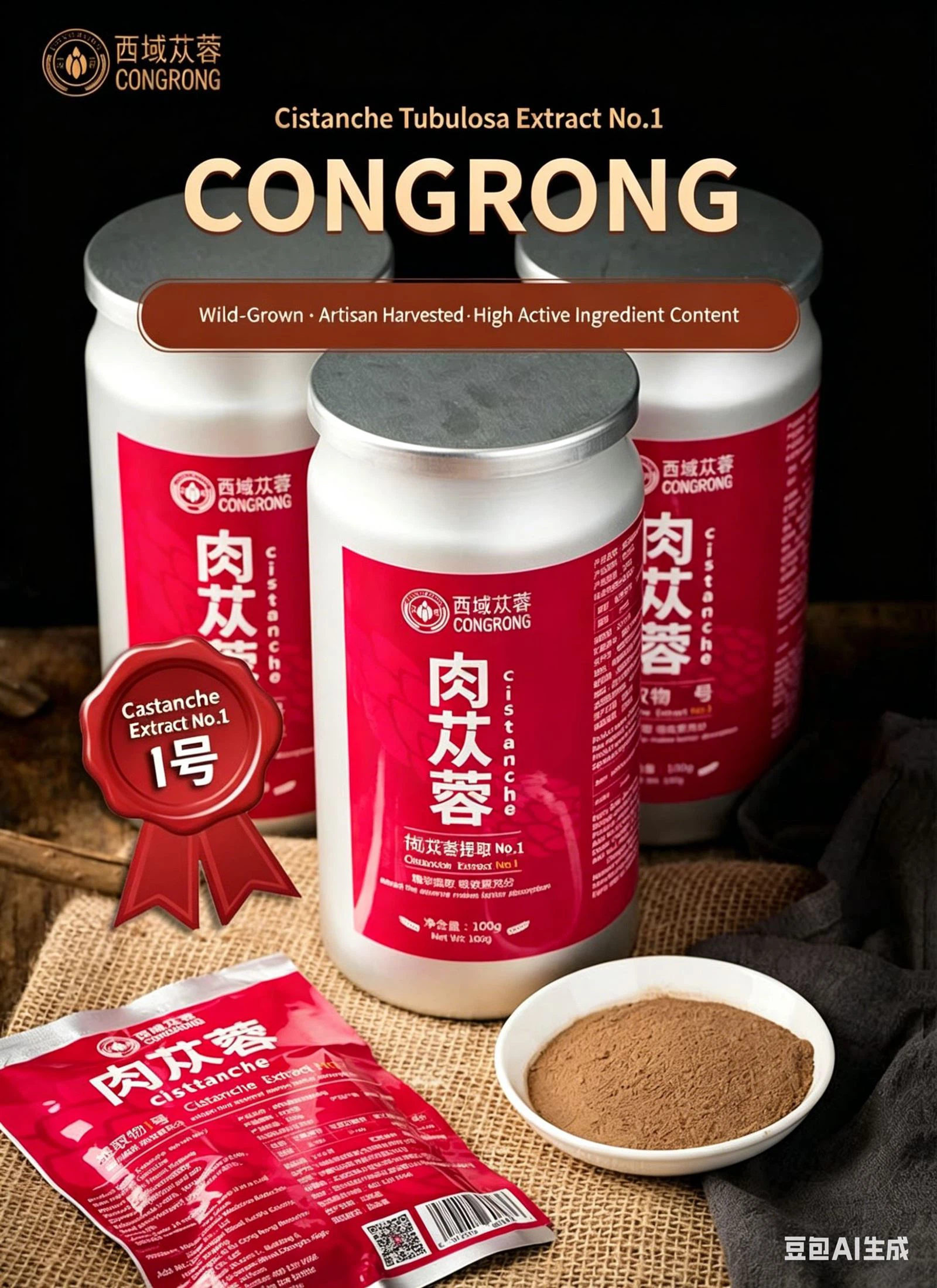
About Chengdu Wecistanche Bio-Tech Co., Ltd. - the world's largest Cistanche processing company, with a 200,000-acre Cistanche cultivation base, a GMP factory capable of processing 20,000 tons of fresh Cistanche annually, and over 14 patents related to Cistanche extraction technologies including advanced membrane separation technology. We specialize in Cistanche tubulosa extract, which naturally contains a higher content of phenylethanoid glycosides, making it the superior choice for prostate health supplements.
Supportive Service Of Wecistanche-For more details about cooperation
Email:wallence.suen@wecistanche.com
Part 1: Understanding the TCM Framework for Prostate Disorders
In TCM, prostate problems are understood through the lens of "dysfunctional urination" (Lin Syndrome or Dysuria) . The key insight is that the ability to urinate freely depends on the harmonious functioning of multiple organ systems, not just the prostate or bladder.
The Three Burner Theory (San Jiao)
TCM divides the body into three functional regions called "burners" (Jiao):
Upper Burner (Shang Jiao) : The lungs and heart
Middle Burner (Zhong Jiao) : The spleen and stomach
Lower Burner (Xia Jiao) : The liver, kidneys, and bladder
Each burner plays a specific role in fluid metabolism and urination. When any of these systems becomes imbalanced, prostate symptoms can develop.
Part 2: Clinical Patterns and Treatment Approaches
Pattern 1: Upper Burner Imbalance - Lung Dysfunction
The TCM Perspective: In TCM, the lung is described as the "upper source of water." When lung qi descends properly, it helps regulate water passages and directs fluids downward to the bladder. However, when heat accumulates in the upper burner, it obstructs the lung's descending function, leading to difficult urination.
Clinical Presentation: This pattern is commonly seen in elderly men with prostate enlargement who have:
Recently contracted an external pathogen (cold or flu) that transformed into heat
Consumed excessive alcohol or spicy foods
Failed to respond to other treatments
TCM Herb for Urinary Retention: The approach focuses on clearing heat, soothing the lung, and unblocking the upper burner.
Prescription Modified Qingfei Yin:
Platycodon grandiflorus (Jiegeng) - 10g
Mulberry bark (Sangbaipi) - 10g
Apricot seed (Xingren) - 10g
Scutellaria baicalensis (Huangqin) - 10g
Gardenia (Shanzhizi) - 10g
Poria (Fuling) - 10g
Plantain seed (Cheqianzi) - 10g
Ophiopogon (Maidong) - 10g
Tetrapanax (Tongcao) - 10g
Talc (Huashi) - 20g
Imperata rhizome (Maogen) - 30g
Clinical Note: This approach has proven effective for patients who have not responded to prolonged conventional treatments.

Pattern 2: Middle Burner Imbalance - Spleen Qi Sinking
The TCM Perspective: The spleen and stomach form the middle burner. The spleen governs transportation and transformation, with a function characterized by ascending (lifting). The stomach governs reception and ripening, with a function characterized by descending. This ascending-descending dynamic creates a pivotal mechanism in the middle burner.
When middle qi is insufficient or lung qi is weak, the spleen cannot distribute fluids properly for the stomach, leading to water retention that blocks the ascent of clear yang and descent of turbid yin. As a result, fluids cannot reach the bladder, causing urinary difficulty.
Causes: Overwork damaging the spleen, chronic illness with weakness, or improper diet harming the spleen and stomach - all leading to sinking of middle qi.
TCM Herb for Chronic Prostatitis: The approach focuses on supplementing middle qi, lifting clear yang, and descending turbid yin.
Prescription Modified Buzhong Yiqi Tang:
Astragalus (Huangqi) - 15g
Codonopsis (Dangshen) - 15g
White atractylodes (Baizhu) - 10g
Angelica sinensis (Danggui) - 10g
Citrus peel (Chenpi) - 10g
Rehmannia (Shudi) - 15g
Poria (Fuling) - 10g
Alisma (Zexie) - 10g
Cimicifuga (Shengma) - 8g
Bupleurum (Chaihu) - 8g
Licorice root (Zhigancao) - 8g
Imperata rhizome (Maogen) - 30g
Important Note: This formula is contraindicated for patients with yin deficiency constitution or hypertension, as it may cause yin deficiency leading to hyperactive yang.
Pattern 3: Lower Burner Imbalance - Intermingled Deficiency and Excess
The liver, kidneys, and bladder belong to the lower burner. The lower burner's functions include separating clear from turbid, permeating into the bladder, and excreting waste - characterized by downward movement of qi.
The Core Insight: Kidney deficiency is the primary manifestation of prostate enlargement in the lower burner. Clinically, this presents in four distinct subtypes:
Different Herbs For Yin And Yang Deficiency
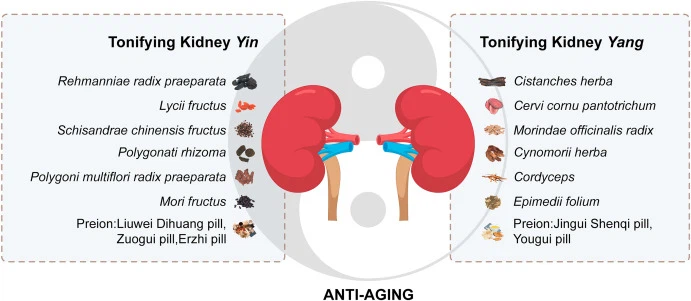
Subtype 3.1: Kidney Yang Deficiency
Pathophysiology: In elderly individuals, kidney yang deficiency leads to decline of life-gate fire, causing failure of bladder qi transformation, resulting in urinary retention.
TCM Herb for BPH Natural Treatment: Warm the kidneys and promote diuresis.
Prescription Modified Jinkui Shenqi Wan:
Cinnamon twig (Guizhi) - 8g
Prepared aconite (Fupian) - 8g
Astragalus (Huangqi) - 15g
Dioscorea (Shanyao) - 15g
Rehmannia (Shudi) - 15g
Cornus (Shanzhuyu) - 10g
Alisma (Zexie) - 10g
Poria (Fuling) - 10g
Moutan bark (Danpi) - 10g
Plantain seed (Cheqianzi) - 10g
Achyranthes (Niuxi) - 10g
Fennel (Chaoxiaohui) - 6g
Additions based on symptoms:
For sexual dysfunction including impotence and premature ejaculation: add Cistanche tubulosa extract (Roucongrong), Epimedium (Yinyanghuo), Cynomorium (Suoyang), and deer antler powder (Lurongmo)
For yang deficiency with blood stasis: add Sparganium (Sanleng) and Curcuma zedoaria (Ezhu)
For prostatitis or urinary tract infection with perineal distension and pain: add Imperata (Maogen), Achyranthes (Niuxi), Lonicera (Rendongteng), Tetrapanax (Tongcao), and Plantain (Cheqianzi)
The Cistanche Active Ingredients

Subtype 3.2: Kidney Yin Deficiency with False Heat
Pathophysiology: Constitutional yin deficiency allows deficient fire to arise internally.
TCM Herb for Prostatitis: Nourish yin and drain fire.
Prescription Modified Zhibai Dihuang Wan:
Rehmannia (Shengdi) - 15g
Dioscorea (Shanyao) - 15g
Anemarrhena (Zhimu) - 10g
Phellodendron (Huangbai) - 10g
Cornus (Shanzhuyu) - 10g
Alisma (Zexie) - 10g
Poria (Fuling) - 10g
Moutan bark (Danpi) - 10g
Additions based on symptoms:
For minister fire agitation disturbing the essence chamber with nocturnal emissions: add Euryale (Qianshi), Rosa laevigata (Jinyingzi), raw oyster shell (Shenglonggu), and raw dragon bone (Shengmuli)
For minister fire scorching the essence chamber causing blood heat with hematospermia: add lotus node (Oujie), Cirsium (Xiaoji), Eclipta (Hanliancao), Imperata (Maogen), and Histostemma (Huashirui)
For yin deficiency with failure of qi transformation: use Zishen Tongguan Wan (Phellodendron, Anemarrhena, Cinnamon) combined with Liuwei Dihuang to nourish yin, transform qi, and promote urination
Subtype 3.3: Damp-Heat Accumulation in the Lower Burner
Pathophysiology: Kidney deficiency leads to failure of bladder qi transformation, causing water retention that stagnates and transforms into heat. This pattern is commonly seen in younger and middle-aged men with prostatitis.
TCM Herb for Enlarged Prostate: Clear heat, promote diuresis, transform stasis, and unblock painful urinary dysfunction.
Prescription Modified Bazheng San:
Tetrapanax (Tongcao) - 10g
Plantain seed (Cheqianzi) - 10g
Dianthus superbus (Qumai) - 10g
Polygonum aviculare (Bianxu) - 10g
Gardenia (Shanzhizi) - 10g
Achyranthes (Niuxi) - 10g
Sparganium (Sanleng) - 10g
Curcuma zedoaria (Ezhu) - 10g
Licorice root (Shengcao) - 8g
Processed rhubarb (Shujun) - 8g
Talc (Huashi) - 20g
Imperata rhizome (Maogen) - 30g
Juncus effusus (Dengxin) - 3 strands
For turbid urine: add Dioscorea hypoglauca (Bixie), Poria (Fuling), and Acorus gramineus (Shengchangpu)
Subtype 3.4: Liver Qi Stagnation with Damp-Heat
Pathophysiology: Liver qi stagnation leads to vessel blockage. When stagnation persists, it transforms into fire and interacts with dampness in the lower burner, resulting in liver channel damp-heat accumulating in the bladder.
TCM Herb for Prostatitis and BPH: Drain the liver and promote diuresis.
Prescription Modified Longdan Xiegan Tang:
Gentiana scabra (Longdancao) - 10g
Akebia (Mutong) - 10g
Alisma (Zexie) - 10g
Plantain seed (Cheqianzi) - 10g
Rehmannia (Shengdi) - 10g
Angelica sinensis (Danggui) - 10g
Gardenia (Shanzhizi) - 10g
Scutellaria baicalensis (Huangqin) - 10g
Toosendan (Chuanlianzi) - 10g
Achyranthes (Niuxi) - 10g
Bupleurum (Chaihu) - 8g
Licorice root (Shenggancao) - 8g
Imperata rhizome (Maogen) - 30g
For purple tongue margins and wiry pulse: add Sparganium (Sanleng), Curcuma zedoaria (Ezhu), and red peony root (Chishao) to invigorate blood and transform stasis.
Part 3: The Role of Cistanche in Prostate Health
A Modern Scientific Perspective on a Traditional TCM Herb for BPH
Cistanche (Roucongrong) has been used in TCM for centuries to tonify kidney yang and support urinary function. Modern research has validated these traditional uses and revealed the active compounds responsible for its therapeutic effects.
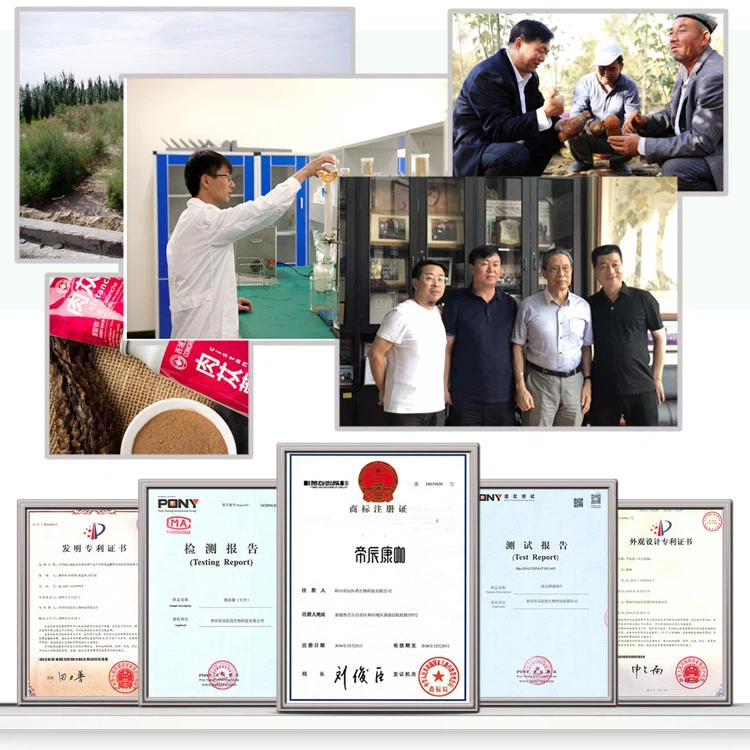
Chengdu Wecistanche Bio-Tech Co., Ltd. , the world's largest Cistanche processing company, has pioneered the cultivation and extraction of Cistanche tubulosa - the species with naturally higher concentrations of beneficial phenylethanoid glycosides compared to other Cistanche varieties.
Wecistanche Factory For Cistanche Cultivation and Extraction
Supportive Service Of Wecistanche-For more details about cooperation
Email:wallence.suen@wecistanche.com
Why Cistanche tubulosa is Superior for Prostate Health
Our research and production facilities, backed by over 14 patents including advanced membrane separation technology, produce Cistanche tubulosa extract standardized to high levels of key active compounds:
|
Active Compound |
Primary Benefits for Prostate Health |
|---|---|
| Echinacoside | Anti-inflammatory; supports normal urination |
| Acteoside | Antioxidant; protects prostate cells |
| Tubuloside A | Reduces prostatic swelling |
| Isoacteoside | Supports healthy cell function |
How Cistanche Complements the TCM Formulas Above
In the clinical treatment patterns described earlier, Cistanche is specifically indicated for the Kidney Yang Deficiency subtype - the most common pattern in elderly men with BPH. When added to the Modified Jinkui Shenqi Wan formula, Cistanche:
Strengthens kidney yang to support normal bladder qi transformation
Promotes healthy urinary flow without harsh diuretic effects
Supports sexual function - addressing the common concern of impotence or premature ejaculation that often accompanies chronic prostate problems
For optimal results, we recommend combining Cistanche tubulosa extract with the appropriate TCM formula based on individual pattern differentiation.
Part 4: Clinical Cases
Case Study 1: Chronic Prostatitis in a Young Adult
Patient: Mr. Deng, 27 years old
Chief Complaint: The patient had experienced nocturnal emissions for many years, initially disregarding the issue. Over time, the frequency increased - progressing from emissions with dreams to seminal loss without dreams. After being married for over a year, he developed difficulty urinating, occasional turbid discharge from the urethra, discomfort and dragging pain at the base of the penis, and decreased libido.
Previous Treatment: He had tried various Chinese patent medicines for tonifying the kidneys and stabilizing essence, all without effect. The patient was distressed and dispirited.
Examination Findings:
Urological examination revealed mild prostate enlargement, with pressure causing pain radiating to the testicles
Prostatic fluid analysis: lecithin (+), red blood cells (+), pus cells (+++)
Ultrasound: indicated prostatitis
Previous antibiotic therapy had been ineffective
TCM Examination:
Pulse: deep and thready (chen xi)
Tongue: dark red with thin, yellow, greasy coating
Chief complaint: After prostate massage, he experienced discomfort around the penis, dragging pain, occasional turbid urethral discharge, and frequent seminal loss
TCM Pattern Diagnosis: Kidney qi deficiency with insecure essence gate. Longstanding disease had led to blood stasis internally, with damp-heat production and leakage of turbid discharge.
Treatment Principles: Tonify the kidney, transform stasis, clear heat, and promote diuresis
TCM Herb for Prostatitis Prescription (Modified Bazheng San):
Polygonum aviculare (Bianxu) - 10g
Dianthus superbus (Qumai) - 10g
Tetrapanax (Tongcao) - 10g
Plantain seed (Cheqianzi) - 10g
Sparganium (Sanleng) - 10g
Curcuma zedoaria (Ezhu) - 10g
Dioscorea hypoglauca (Bixie) - 10g
Acorus gramineus (Shengchangpu) - 10g
Poria (Fuling) - 10g
Licorice root (Shengcao) - 8g
Cuscuta (Tusizi) - 10g
Alpinia oxyphylla (Yizhiren) - 10g
First Follow-up (after 10 doses): Turbid discharge reduced, only one episode of seminal loss, urination gradually becoming smoother. Pulse remained deep and thready; tongue was red with thin yellow coating; reported dry mouth.
Modified Prescription (Zhibai Dihuang Wan with astringents):
Anemarrhena (Zhimu) - 10g
Phellodendron (Huangbai) - 10g
Rehmannia (Shengdi) - 15g
Cornus (Shanzhuyu) - 15g
Alisma (Zexie) - 10g
Poria (Fuling) - 10g
Moutan bark (Danpi) - 10g
Rosa laevigata (Jinyingzi) - 10g
Euryale (Qianshi) - 10g
Raw oyster shell (Shenglonggu) - 20g
Raw dragon bone (Shengmuli) - 20g
Tribulus (Baijili) - 10g
Second Follow-up (after 20 doses): Urination was smooth, no turbid discharge, nocturnal emissions had stopped.
Maintenance: Advised to continue with Zhibai Dihuang Wan pills. Also advised to moderate sexual activity, abstain from alcohol, and avoid "trigger foods." Ultrasound at 6 months showed no prostate abnormalities.
Key Takeaway: This case demonstrates the importance of addressing both deficiency (kidney qi) and excess (damp-heat, blood stasis) - a principle that can be enhanced by incorporating high-quality Cistanche tubulosa extract to tonify kidney yang without exacerbating heat.
Case Study 2: BPH with Urinary Retention in an Elderly Patient
Patient: Mr. Qian, 79 years old
Chief Complaint: Complete inability to urinate for 8 days. Severe lower abdominal distension with urgent urge to urinate but inability to pass urine. Poor appetite, mild eyelid edema.
Previous Treatment: Digital rectal examination at a hospital revealed significantly enlarged prostate. Urinalysis was normal. Diagnosis: BPH with urinary retention. The patient required daily catheterization to relieve severe abdominal distension. After one week with no improvement, the patient sought TCM treatment.
TCM Examination:
Tongue: pale red with thin white greasy coating
Pulse: wiry and large (xian da)
TCM Pattern Diagnosis: Dysuria due to middle qi deficiency with qi transformation failure - inability to lift clear yang and descend turbid yin.
Treatment Principles: Supplement qi, promote diuresis.
TCM Herb for BPH Natural Treatment Prescription:
Astragalus (Huangqi) - 15g
Codonopsis (Dangshen) - 10g
White atractylodes (Baizhu) - 10g
Angelica sinensis (Danggui) - 10g
Licorice root (Zhigancao) - 8g
Citrus peel (Chenpi) - 10g
Bupleurum (Chaihu) - 6g
Cimicifuga (Shengma) - 6g
Rehmannia (Shudi) - 15g
Imperata rhizome (Maogen) - 30g
Poria (Fuling) - 10g
Alisma (Zexie) - 10g
First Follow-up (after 3 doses): Able to urinate spontaneously but with difficulty - weak stream, dribbling, burning sensation. Fatigue after urination. Abdominal distension slightly reduced. Tongue: pale red with thin yellow coating. Pulse: wiry and thready.
Modified Prescription:
Astragalus (Huangqi) - 15g
Codonopsis (Dangshen) - 15g
White atractylodes (Baizhu) - 10g
Angelica sinensis (Danggui) - 10g
Cimicifuga (Shengma) - 8g
Bupleurum (Chaihu) - 8g
Citrus peel (Chenpi) - 10g
Dioscorea (Shanyao) - 15g
Second Follow-up (after 3 more doses): Urination completely smooth, abdominal distension resolved, all symptoms disappeared. Mild residual issue: frequent urination at night.
Maintenance: Prescribed Buzhong Yiqi pills for further tonification. Long-term follow-up showed continued normal urination.
Key Takeaway: This elderly patient's recovery was remarkable considering his age and severity of retention. The principle of "lifting to descend" - raising clear yang to enable downward movement of turbid fluids - proved highly effective for this pattern of middle qi sinking.
Part 5: Integrating Cistanche into Prostate Health Protocols
Why Choose Cistanche tubulosa Extract from Chengdu Wecistanche?
| Feature | Benefit |
|---|---|
| Higher active compound content | Cistanche tubulosa naturally contains higher levels of phenylethanoid glycosides (including echinacoside and acteoside) compared to other Cistanche species |
| 200,000-acre cultivation base | Consistent quality and sustainable supply |
| GMP-certified facility | Processing capacity of 20,000 tons of fresh Cistanche annually |
| 14+ patents | Including advanced membrane separation technology for optimal extraction |
| International certifications | SC, HACCP, SOCA, NOP (US Organic Program), and OCIA certified |
Recommended Protocols for Prostate Health
Based on the clinical patterns described above, Cistanche tubulosa extract can be integrated as follows:
For Kidney Yang Deficiency Pattern (most common in elderly BPH patients):
Combine Cistanche tubulosa extract with Modified Jinkui Shenqi Wan
Dosage: 500-1000mg of standardized extract daily
Duration: Minimum 8-12 weeks for significant improvement
For mixed deficiency-excess patterns:
Use Cistanche as an adjunct to Bazheng San or Longdan Xiegan Tang after acute damp-heat symptoms have resolved
Start with lower doses (300-500mg) and gradually increase
For maintenance and prevention:
300-500mg daily for men over 50 with no active symptoms but family history of BPH
Combines well with saw palmetto and beta-sitosterol for synergistic effects
Safety and Quality Assurance
All Chengdu Wecistanche products are:
Produced in GMP-certified facilities
Tested for heavy metals and microbial contaminants
Standardized to guaranteed levels of active phenylethanoid glycosides
Free from adulterants and fillers
Conclusion: A Holistic Approach to Prostate Health
The TCM framework for treating prostate disorders offers valuable insights that complement modern medical approaches. By understanding how imbalances in the lungs, spleen, and kidneys affect urinary function, practitioners can develop more targeted treatment strategies.
The clinical cases presented demonstrate that with proper pattern differentiation, TCM can achieve remarkable results - even in severe cases that have not responded to conventional treatment.
For manufacturers and formulators, Chengdu Wecistanche Bio-Tech Co., Ltd. provides the highest quality Cistanche tubulosa extract available. Our vertically integrated operation - from cultivation through extraction - ensures consistent quality and potency. Whether you are developing dietary supplements, functional foods, or pharmaceutical preparations for prostate health, our extracts deliver the active compounds needed for optimal efficacy.
About Chengdu Wecistanche Bio-Tech Co., Ltd.
Chengdu Wecistanche Bio-Tech Co., Ltd. is the world's largest Cistanche processing company, with the most complete industrial chain from cultivation to finished products.
Our Advantages:
200,000-acre Cistanche base - ensuring supply chain security
GMP factory - processing capacity of 20,000 tons of fresh Cistanche annually
Over 14 patents - including advanced membrane separation technology
International certifications - meeting US and EU quality standards
Research-backed - published scientific studies validating our extraction methods and quality control
Our Products:
Cistanche tubulosa extract powder (standardized to phenylethanoid glycosides)
Custom formulations for prostate health supplements
Bulk ingredients for functional foods and beverages
OEM services for finished products
Contact Us:
Website: www.xjcistanche.com
Learn more about Cistanche for prostate health: www.xjcistanche.com/news/say-goodbye-to-prostate-problems-with-cistanch-83534746.html
About our company: www.xjcistanche.com/about-us