The Second Spring: How Cistanche Tubulosa Supports Women Through Menopause And Beyond
Sep 21, 2026
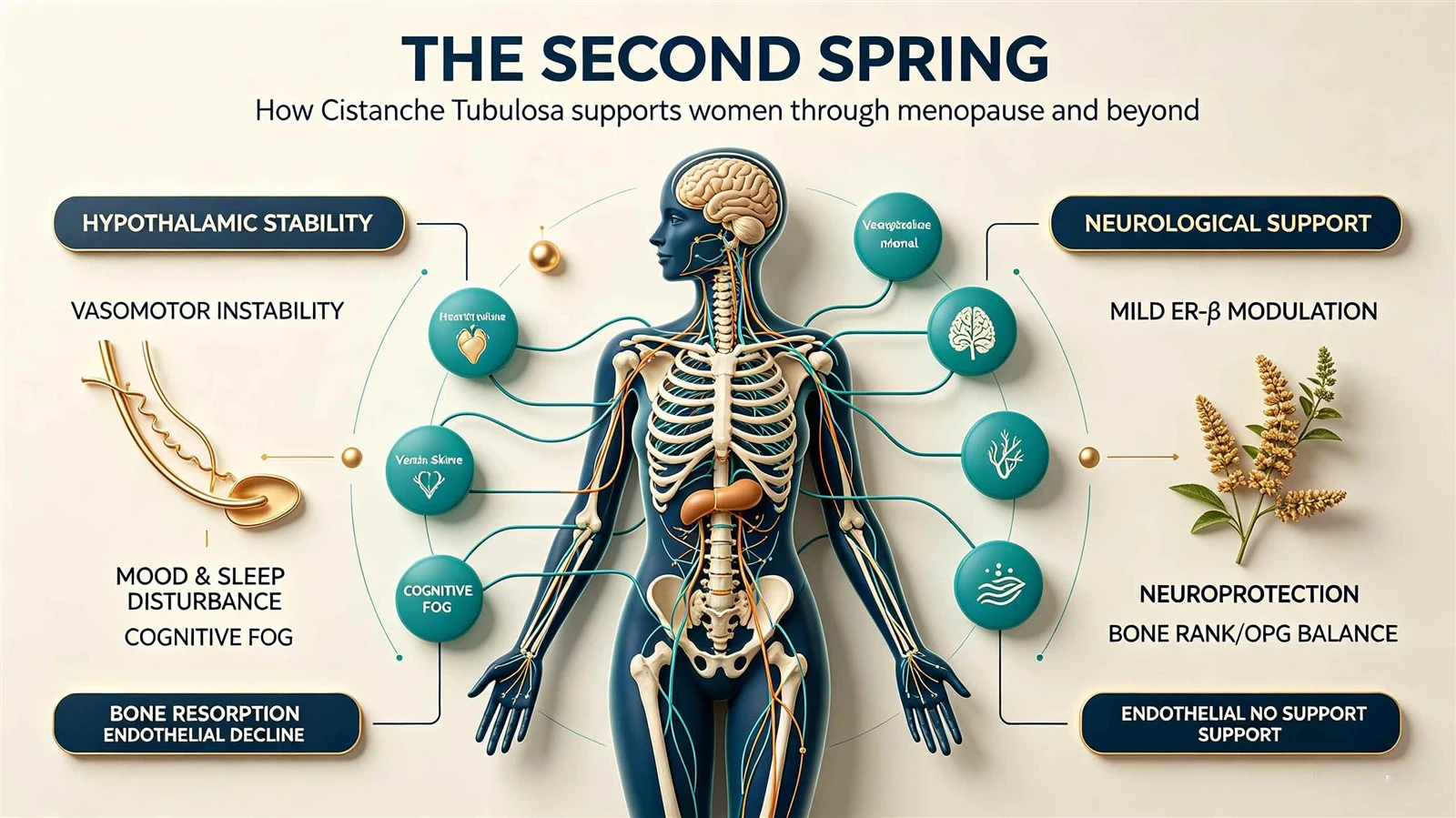
Menopause is not a disease, but it is a profound physiological transition-one that affects every system in the body. Estrogen and progesterone levels fall, and because these hormones have receptors throughout the body-in the brain, bones, blood vessels, skin, and reproductive tract-their withdrawal produces a constellation of symptoms that can disrupt sleep, mood, intimacy, and long-term health. Hot flashes, night sweats, mood swings, vaginal dryness, and cognitive fog are the acute manifestations. Osteoporosis and cardiovascular disease are the long-term consequences that can affect quality of life for decades. Hormone replacement therapy is effective for many but carries risks that lead a significant proportion of women to seek natural alternatives. Cistanche tubulosa, a desert plant traditionally used to nourish Kidney essence-the energetic foundation of female vitality in traditional Chinese medicine-is emerging as a multi-targeted botanical support for the menopausal transition. Its active ingredients echinacoside and acteoside address the vasomotor, neurological, skeletal, and metabolic dimensions of this life stage.
What Happens During Menopause
Menopause is defined by the permanent cessation of ovarian function. Estrogen and progesterone production declines sharply, disrupting the hypothalamic thermoregulatory center. This destabilization triggers hot flashes and night sweats-the most common vasomotor symptoms, affecting up to 75% of women during the transition. In the brain, falling estrogen affects serotonin, dopamine, and norepinephrine systems, contributing to mood swings, anxiety, and insomnia. Estrogen also supports the cholinergic system; its decline is linked to the memory lapses and brain fog many women report.
In bone, estrogen normally restrains osteoclast activity. Its withdrawal unleashes a wave of bone resorption, accelerating bone loss and raising the risk of osteoporosis. Women can lose up to 20% of their bone density in the five to seven years following menopause. In blood vessels, estrogen supports endothelial nitric oxide production; its loss contributes to the sharp rise in cardiovascular risk after menopause. In the skin and vaginal mucosa, estrogen maintains thickness, elasticity, and moisture; its decline causes thinning, dryness, and discomfort that can affect intimate relationships.
An ideal natural support would offer gentle estrogenic modulation, calm the nervous system, protect bone, support cardiovascular health, and combat oxidative stress. Cistanche tubulosa addresses several of these needs simultaneously through its phenylethanoid glycosides.
How Cistanche Tubulosa Supports Menopause
1. Mild Estrogen Receptor Modulation
Acteoside has been shown to bind to estrogen receptors, particularly ER-beta, exerting mild estrogenic effects in tissues such as bone, brain, and blood vessels without strongly stimulating breast or uterine tissue. This selective activity may help stabilize the hypothalamic thermoregulatory center, reducing hot flash frequency and severity. It is not a replacement for hormone therapy, but for women with mild to moderate symptoms, it offers a gentle, non-hormonal option. The tissue selectivity is key: unlike conventional HRT, which stimulates estrogen receptors throughout the body, acteoside's modulation appears to favor tissues where mild estrogenic support is beneficial while avoiding the proliferative effects on breast and endometrial tissue that raise safety concerns.
2. Neuroprotection and Mood Support
Echinacoside, through Nrf2 activation, upregulates the brain's antioxidant enzymes, protecting neurons from oxidative damage. Acteoside's NF-kB inhibition calms neuroinflammation, which contributes to mood disturbances and cognitive complaints. Acteoside also modulates GABA-A receptors, providing a mild anxiolytic effect that improves sleep quality. Echinacoside's BDNF upregulation supports synaptic plasticity and may help counter memory lapses. Together, these mechanisms address the neurological and emotional dimensions of menopause that are often overlooked in favor of vasomotor symptoms.
3. Bone Protection Through RANKL/OPG Modulation
In the ovariectomized rat model of postmenopausal osteoporosis, echinacoside preserved bone mineral density by downregulating RANKL and upregulating osteoprotegerin. Acteoside promotes osteoblast differentiation through Wnt signaling. This dual action-suppressing bone resorption while supporting bone formation-addresses the core mechanism of postmenopausal bone loss. Unlike bisphosphonates, which work by killing osteoclasts, Cistanche's approach is more balanced, modulating the signaling pathways that regulate bone remodeling rather than shutting down one side of the equation entirely.
4. Cardiovascular Support
Cistanche phenylethanoid glycosides support endothelial nitric oxide synthase activity, promoting vasodilation and maintaining healthy blood pressure. Acteoside's anti-inflammatory effects protect the vessel wall, reducing the adhesion molecule expression that initiates atherosclerosis. For postmenopausal women, this cardiovascular support is a critical but often overlooked benefit. The loss of estrogen's protective effects on the endothelium is a major contributor to the increased cardiovascular risk after menopause, and supporting eNOS function through botanical means may help mitigate this risk.
5. Skin and Vaginal Tissue Health
The phenylethanoid glycosides' mild estrogen receptor modulating activity may help maintain vaginal mucosal thickness and natural lubrication, addressing one of the most distressing symptoms of menopause. Their anti-inflammatory effects reduce vaginal tissue inflammation that can cause discomfort during intimacy. In the skin, echinacoside's antioxidant protection and acteoside's anti-glycation activity help preserve collagen elasticity and skin moisture, addressing the visible signs of aging that accelerate during the menopausal transition.
A comprehensive 2022 review in Frontiers in Pharmacology catalogs the antioxidant, anti-inflammatory, neuroprotective, bone-protective, and estrogen-modulating properties of Cistanche tubulosa, confirming its multi-targeted relevance to menopausal health. (Frontiers in Pharmacology review)
Using Cistanche for Menopause
A daily dose of 400–600 mg of a standardized extract, taken with a meal, is recommended. Improvements in hot flashes, sleep, and mood typically become noticeable over 4–8 weeks. It pairs well with vitamin D3 for bone health, calcium for bone mineral density, omega-3 fatty acids for mood and cardiovascular support, and magnesium for sleep and muscle relaxation. Women with a history of hormone-sensitive cancer, such as estrogen-receptor-positive breast cancer or endometrial cancer, should consult their oncologist before using any botanical with potential estrogenic activity. For the majority of women navigating this natural transition, Cistanche offers a gentle, science-informed layer of support.
For those seeking reliable, research-grade support, we offer Cistanche tubulosa extract products with verified active ingredient content.
Safety and Medical Context
Cistanche tubulosa has a centuries-long history of safe use. Its SERM-like activity appears mild and tissue-selective. However, menopause is a significant physiological transition that warrants medical oversight. Women experiencing severe symptoms or considering hormone therapy should consult their gynecologist. This botanical is a supportive tool, not a replacement for medical management of menopausal symptoms or long-term health risks.