The Stereological Study Of The Renal And Adrenal Glandular Structure Of Red-legged Partridge (Alectoris Chukar)
May 04, 2023
Background
Partridge is a major bird species that has recently gained increasing importance as an alternative food source and a game animal in hunting tourism. Herein, we aimed to examine the histological structure and stereological properties of the renal and adrenal glands of the red-legged partridge.
Materials and methods
Seven healthy adult red-legged partridges (Alectoris chukar) of both genders were used in this study. The Alectoris chukars were perfused with the intracardiac method and were kept in 10% formaldehyde for 72 h for optimal fixation. The tissues were embedded in paraffin after routine light microscopic processes. Then, 5-µm thick sections were taken, which were stained with hematoxylin and eosin, photographed, and examined in the light microscope. The modified Cavalieri principle was used for volume calculation as stereological analysis. Total tissue volume ratios were calculated with the help of a point grid provided by the Shtereom 1.5 packaged program. Mann Whitney U test was used for inter-group comparisons. The significance level was set at 5% SPSS (ver: 13) statistical software was used for all statistical analyses.
Results
The renal histological structure was found to resemble those of other bird species and contained a mixed type (mammalian, reptilian) glomerular structure. It was also found that the adrenal histology was not in the form of separate layers but composed of cell groups with different properties. Stereological renal volume assessment revealed statistically similar right and left renal size (p > 0.05). In adrenal gland volume assessment, the right and left adrenal volumes were also statistically similar (p > 0.05).
Conclusions
The obtained data in the present study is thought to contribute to the understanding of the stereological, morphological, and histological structure of the red-legged partridge (Alectoris chukar) kidney and adrenal gland. (Folia Morphol 2021; 80: 1: 210–214)

Click here to get the benefits of Cistanche
Keywords
adrenal gland; kidney; partridge; stereology; the effects of Cistanche.
Introduction
The partridge is the common name for belonging to the Alectoris and Perdix species of the Phasianidae family [4]. The partridge is a major bird species that has recently gained increasing importance as an alternative food source and a game animal in hunting tourism.
The kidneys are located on both sides of the abdominal aorta and inferior vena cava in the dorsal part of the abdominal cavity, and the adrenal glands are located on the cranial pole of both kidneys [16]. The kidneys of bird species have an intermediate structure between mammalians and reptilians. The bird species do not possess a renal pelvis, urinary bladder, or urethra [14]. Histologically, their kidneys have a multilobulated pattern and isolated cortex and medulla which are separated by a fine connective tissue. They have two types of nephron structures. The first one is designated as the mammalian or medullary type and is composed of a renal corpuscle, a proximal convoluted tubule, a distal convoluted tubule, a collecting tubule, and thin and thick segments of Henle’s loop. The second type is the reptilian type also called the cortical type, which has a smaller renal corpuscle but no Henle’s loop; additionally, there is a short section between the proximal convoluted tubule and distal convoluted tubule, which is named the intermediate tubule [13]. Adrenal glands are anatomic structures that play an important role in accommodation to all types of stress and, by hormones they produce, they contribute to many metabolic processes. In bird species, the shape of the adrenal glands is highly variable, with inter-species and even inter-individual variations being possible. Experimental removal of adrenal glands results in the death of birds [16]. It was shown in a review of the literature that there have been anatomic studies on red-legged partridge, but not specifically on its renal and adrenal gland structure. It aimed to perform a detailed histological and stereological study of red-legged partridge’s renal and adrenal glandular structures in this study.

Cistanche supplements
Materials and methods
Seven healthy adult red-legged partridges (Alectoris chukar) of both genders were used in this study. The animals were obtained from Van Yuzuncu Yil University Wildlife Protection Centre. It was approved by Van Yuzuncu Yil University Local Ethics Committee (27/06/2019/ 06) and complied with the study procedures. The partridges were anesthetized with 10 mg/ /kg Xylazine HCL (Rompun 2%, 50 mL, Bayer) and with 40 mg/kg i.m. Ketamine HCL (Ketalar 50 mg/mL, 10 mL vial, Pfizer). The animals were perfused with the intracardiac method and dissected tissues were kept in 10% formaldehyde for 72 h for optimal fixation [18]. The tissues were embedded in paraffin after the completion of routine histological light microscopy procedures. Then, 5-µm thick sections were obtained. The first section was randomly selected and then the 40th section was taken. The sections were stained with hematoxylin and eosin, photographed, and examined in a light microscope.
Stereological analysis
Stereology, random and systematic sampling is utilized to gain unbiased and quantitative information. Among stereological analyses, the modified Cavalieri principle was used for volume calculation. Then, total tissue volume ratios were calculated using a point grid provided by the Shtereom 1.5 packaged program (Fig. 1). Volume calculation was carried out using the following formula: V(obj) = t × a/p × ∑P. V(obj) is the volume of the objective, t is the section thickness, a/p represents the area of each point on the point counting grid and Sp is the total number of points hitting the renal and adrenal areas [9, 10]. The coefficient of error (CE) and coefficient of variation (CV) was used to determine the optimum sample size in each group in the standard stereological approach [8]. The values of the CE and CV in our study were by the literature data.

Statistical analysis
Descriptive statistics included median, mean, standard deviation, minimum and maximum. Inter-group differences were analyzed with the Mann-Whitney U test. The significance level was set at 5%. All statistical analyses were performed with SPSS (ver.13) statistical software package program.
Results

The stereological analysis revealed that the left and right kidneys had similar sizes. A stereological volume calculation showed a right renal volume of 2.28 mm3 and a left kidney volume of 3.02 mm3. A comparison of both renal volumes revealed a slight but statistically non-significant difference between both kidneys (p > 0.05) (Table 1). The microscopic examination of the histological sections demonstrated that the kidney was composed of lobules, each being composed of the cortical and medullary parts and encapsulated by connective tissue containing blood vessels. The renal structure was composed of 60% cortex and 40% medulla on the right side and 80% cortex and 20% medulla on the left kidney. The nephrons had structure two types of nephrons the reptile and mammalian nephrons (Fig. 2). The number of reptilian nephrons was larger than the mammalian nephrons. The two nephron types also had different distributions so that they were more numerous in the cortex but there were only tubal structures in the medulla. The mammalian-type nephrons were located in the deep cortex, close to the medullary cone, whereas the reptilian nephrons were located in the peripheral and middle parts of the cortex, aligned in a horseshoe shape around the central vein (Fig. 3).

Examination of the adrenal glandular structure showed that the left and right adrenal glands had some differences in shape but not in size, and a stereological volume assessment revealed that the volume of both adrenal glands was 0.02 mm3 (p > 0.05) (Table 1). A general histological examination showed that the adrenal gland did not have three distinct different layers but only cellular differentiation (dark, light-colored; having different nuclear structures); the glands were encapsulated by a connective tissue containing blood vessels capsule separating them from the kidneys. The adrenal gland had a separate vascular supply (Fig. 4).

Discussion
It was shown that the renal structure of red-legged partridge was similar to those of other bird species in this study. Red-legged partridge had two kidneys encapsulated by connective tissue containing blood vessel sheaths and composed of multiple lobules containing the cortical and medullar parts. The stereological volume assessment has shown that the right and left renal sizes were similar statistically. Previous studies on the right and left renal size of bird species have revealed variable results. One study reported that there was no difference between the right and left renal size [6] whereas another study reported a difference between the left and right renal size [17]. Similarly, studies assessing the cortical and medullary volumes of bird species have reported variable results. A study has reported that 90% of the total volume of bird kidneys was composed of the cortex and 2% of the medulla [3]; another one has reported corresponding figures of 77% and 10%, respectively [19]. It was founded that the cortical ratio was similar to the literature data, but the medullary ratio was slightly higher in this study. Casotti and Braun [5] reported that renal volume varied by the living environment of the bird species. Literature data suggest that a bird’s renal shape, size, and structure change by its diet, phylogeny, and environmental factors [17]. All animals were in the same region and climatic conditions (maximum temperature 30–33°C). The basic renal structure is composed of nephrons. The bird kidney is different from the mammalian one because it is composed of two types of nephrons resembling mammalian and reptilian nephrons [2, 12]. Similarly, in our study, two types of nephrons were observed. Prior studies have shown that more numerous reptile nephrons are located in the periphery of the lobule, a small renal corpuscle, and no loop of Henle. It has been reported that the mammalian nephrons are larger and had a more complex renal corpuscle and are located deep in the cortex neighboring the medulla; additionally, they contain a loop of Henle and are less in number [1]. Herein, it was shown a similar number and distribution of nephrons. The nephrons are responsible for filtration, reabsorption, and secretion, thereby forming urine. The bird’s nephrons are composed of a glomerulus, a proximal tubule, a distal tubule, and collecting ducts [14]. This study also revealed similar results.
The present study demonstrated that the adrenal glands were located at the cranial pole of the kidneys and medial to them, as Nickel et al. [15] have reported. It was found the adrenal histology was not in the form of separate layers but composed of cell groups with different properties (having a dark or light color and varying nuclear structure). It was also shown that the right and left adrenal glands had different shapes and there were also inter-individual differences. The adrenal gland was separated from the kidney tissue with a connective tissue sheath and had a separate vascular supply. The results of this study are by the previous studies on bird species [16]. Among the studies on adrenal gland size, Humayun et al. [11] and Wells and Wight [20] reported that the left adrenal gland was larger than the right one in chickens of both genders whereas Ozudogru et al. [16] as well as Elbajory [7] reported that the right adrenal gland was larger than the left one. The weight, length, width, and thickness of the adrenal glands vary by several factors, such as species, breed, age, health status, and environment [11]. In this study, it was detected that there is no difference between stereologically calculated volumes between the right and left adrenal glands.

Cistanche pills
Conclusions
The obtained data in the present study is thought to contribute to the understanding of the stereological, morphological, and histological structure of the red-legged partridge (Alectoris chukar) kidney and adrenal gland. We think that it will be a guide for the studies about red-legged partridge (Alectoris chukar).
How Cistanche extract can help improve kidney disease?
Cistanche extract is a popular herbal supplement that has been traditionally used in Chinese medicine for centuries to improve overall health and wellness. More recently, scientific studies have shown that Cistanche extract may also help to improve kidney disease.
Kidney disease is a serious medical condition that affects approximately 10% of the global population. The kidneys are vital organs responsible for filtering waste products out of the blood and regulating fluid balance, electrolytes, and acid-base balance. When the kidneys are damaged or function poorly, it can lead to a range of complications including high blood pressure, anemia, bone disease, and even cardiovascular disease.
Research suggests that Cistanche extract may offer several potential benefits for individuals with kidney disease. One of the main ways in which Cistanche extract can help improve kidney disease is by reducing inflammation. Chronic kidney disease (CKD) is often characterized by persistent inflammation within the kidneys, which can cause further damage over time. Cistanche extract has been shown to contain anti-inflammatory compounds that may help to reduce inflammation in the kidneys and improve their overall function.
Another way in which Cistanche extract can help improve kidney disease is by reducing oxidative stress. Oxidative stress occurs when there is an excess of reactive oxygen species (ROS) within the body, leading to cellular damage and dysfunction. Research suggests that Cistanche extract may reduce oxidative stress in the kidneys by increasing antioxidant activity, helping to prevent further damage and promote healing.
Cistanche extract can also help improve kidney disease by promoting kidney cell regeneration. Kidney cells are responsible for maintaining healthy kidney function and repairing any damage incurred. Cistanche extract has been shown to contain bioactive substances that can increase the proliferation of kidney cells, promoting self-healing and restoring overall kidney function.

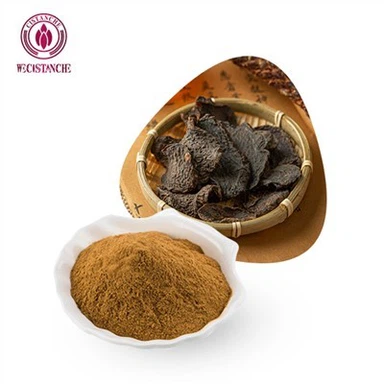
Cistanche powder
Finally, Cistanche extract may also be effective in preventing or reducing the progression of chronic kidney disease by promoting vasodilation and improving blood flow to the kidneys. This increased blood flow can provide the kidneys with the oxygen and nutrients they need to function properly and repair any damage.
Overall, Cistanche extract is a promising natural remedy for individuals looking to improve their kidney health. Its ability to reduce inflammation, improve antioxidant activity, promote self-healing, and increase blood flow may help to prevent or slow the progression of chronic kidney disease and improve overall renal function. However, as with all herbal supplements, it's important to consult with a healthcare provider before incorporating Cistanche extract into your routine to ensure its safety and suitability for your individual needs.
References
1. Akaydın Y, Ozcan Z. Hindi (Meleagris gallopavo) böbreğinin yapısı üzerinde ışık ve elektron mikroskobik çalışmalar. Ankara Üniv Vet Fak Derg. 2005; 52(1): 149–155.
2. Aslan S. Üriner sistem. In, Aslan S (Ed): Kanatlı Histolojisi. Dora Basım Yayın Dağıtım, Bursa, Turkey. 2018: 85–98.
3. Batah AL. Morphological and histological study for the kidneys of coot bird (Fulica atra). Bas J Vet Res. 2012; 11(1): 128–136.
4. Can M, Ozdemir D. Kaya kekliği (Alectoris graeca) plexus sacralis’i üzerinde makro-anatomik araştırmalar. Kafkas Univ Vet Fak Derg. 2012; 18(1): 141–146.
5. Casotti G, Braun E. Renal anatomy in sparrows from different environments. J Morphol. 2000; 243(3): 283–291.
6. Dhyaa AA, Ali FR, Azhar SK, et al. Comparative anatomical and histological features of the kidney in harrier (Circus aeruginous), chicken (Gallus domesticus), and mallard duck (Anas platyrhynchos). Iraqi J Vet Sci. 2014; 38(1): 107–113.
7. Elbajory SIA. Morphometric study of the adrenal gland of the adult Sudanese Chicken (Gallus domesticus) and Duck (Anas platyrhynchos). Curr Res J Biol Sci. 2012; 4: 239–241.
8. Gundersen HJ, Jensen EB. The efficiency of systematic sampling in stereology and its prediction. J Microsc. 1987; 147(Pt 3): 229–263.
9. Gundersen HJ, Bendtsen TF, Korbo L, et al. Some new, simple, and efficient stereological methods and their use in pathological research and diagnosis. APMIS. 1988; 96(5): 379–394.
10. Howard CV, Reed MG. Unbiased stereology, three-dimensional measurements in microscopy. BIOS Scientific Publishers, Oxford, UK 1998: 39–68.
11. Humayun K, Aoyama M, Sugita S. Morphological and histological studies on the adrenal gland of the chicken (Gallus domesticus). J Poult Sci. 2012; 49(1): 39–45.
12. Kocamıs H, Aslan S, Deprem T. Kazların böbrek yapısı üzerine histolojik ve histometrik inceleme. Kafkas Univ Vet Fak Derg. 2003; 9(2): 157–160.
13. Koral Tasci S, Gulmez N, Aslan S, et al. Immunohistochemical localization of Catalase in Geese (Anser anser) kidney. Kafkas Univ Vet Fak Derg. 2020; 26(1): 41–46.
14. Mutus R. Tavuk ve bıldırcında böbrek arterleri. İstanbul Üniv Vet Fak Derg. 1995; 21(1): 59–67.
15. Nickel R, Schummer A, Seiferle E. The anatomy of the domestic birds. 1st ed. Verlag Paul Parley, Berlin, Germany 1977: 40–61.
16. Ozudogru Z, Özdemir D, Balkaya H, et al. Civcivlerde Adrenal Bezin Gelişimi Üzerine Farklı Fotoperiyotların Etkisi. Ataturk Univ Vet Bil Derg. 2017; 12(3): 250–258.
17. Richardson KC, Wooller RD, Casotti G. The relative sizes and asymmetry of kidneys in passerine birds from Australia and North America. J Anat. 1991; 175: 181–185, indexed in Pubmed: 2050563.
18. Romeis B. Microscopic technique. R.Oldenburg, München, Germany 1948: 51–52.
19. Warui CN. Light microscopic morphometry of the kidneys of fourteen avian species. J Anat. 1989; 162: 19–31, indexed in Pubmed: 2808116.
20. Wells JW, Wight PAL. The adrenal glands, In Physiology and biochemistry of the domestic fowl. Bell DJ and Freeman GM eds. Academic Press, London 1971: 489–520.
N. Colcimen 1, G. Cakmak 2
1. Department of Histology and Embryology, Faculty of Medicine, Van Yuzuncu Yil University, Van, Turkey.
2. Department of Anatomy, Faculty of Veterinary Medicine, Van Yuzuncu Yil University, Van, Turkey.