The Value And Medicinal Uses Of Cistanche Tubulosa
Nov 06, 2026
Abstract: Cistanche tubulosa (Schenk) Wight (Orobanchaceae), commonly known as "desert ginseng" in the Xinjiang region of China, is a holoparasitic herb that grows on the roots of Tamarix shrubs. Together with C. deserticola, it is an official botanical source of the traditional Chinese medicine "Rou Cong-Rong" (Herba Cistanche).

Cistanche tubulosa
1. Botanical Origin and Distribution
The genus Cistanche (Orobanchaceae) comprises approximately 20 species worldwide, four of which occur in China: C. deserticola, C. tubulosa, C. salsa and C. sinensis. Since the 2005 edition of the Chinese Pharmacopoeia, both C. deserticola and C. tubulosa have been accepted as the legal sources of Herba Cistanche.
C. tubulosa is mainly distributed in the southern fringe of the Taklamakan Desert, particularly around the Hotan (Hetian) region of southern Xinjiang. It parasitizes the roots of Tamarix species such as T. ramosissima and T. hispida. Its dried, scale-leafed succulent stem is fusiform or flat-fusiform, brownish in colour, with vascular bundles arranged in a wavy ring on the cut surface. Owing to the maturity of artificial cultivation techniques, C. tubulosa has become one of the dominant commercial sources of Herba Cistanche in China.
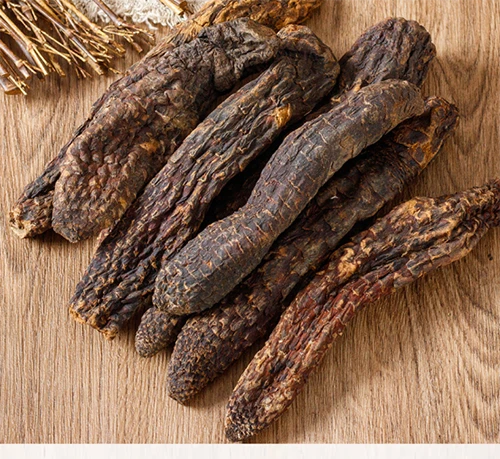
Cistanche tubulosa
In the classical tradition, Herba Cistanche was first recorded in Shennong Bencao Jing (Shennong's Classic of Materia Medica) as a "superior" tonic. It was described as tonifying the five viscera, strengthening yin, benefiting essence, and relaxing the bowels-mild in action, warm but not drying, and moistening but not purging. This "gentle tonic" profile remains the hallmark of C. tubulosa.
2. Phytochemistry
Phytochemical investigations have shown that C. tubulosa contains phenylethanoid glycosides (PhGs), iridoid glycosides, lignan glycosides, polysaccharides, oligosaccharides, alditols, alkaloids, and volatile components. Among these, phenylethanoid glycosides are the characteristic and pharmacologically most important constituents, and they serve as the quality markers specified in the Chinese Pharmacopoeia.

Main Chemical Constituents of Cistanche tubulosa
2.1 Phenylethanoid Glycosides (PhGs)
The major PhGs of C. tubulosa include echinacoside, acteoside (verbascoside), isoacteoside, cistanoside A, cistantubuloside A and B, and 2-acetylacteoside. The Pharmacopoeia requires that the total content of echinacoside and acteoside in medicinal Herba Cistanche be no less than 0.30%. Notably, C. tubulosa generally contains a higher level of echinacoside than C. deserticola, which is one of its distinguishing chemical features.

Phenylethanol glycoside is the main active component of Cistanche tubulosa
2.2 Iridoid Glycosides
Iridoid constituents include 8-epiloganic acid, geniposidic acid, mussaenosidic acid, and adoxoside. They have been reported to act synergistically with PhGs in neuroprotection and antidepressant-like effects.
2.3 Polysaccharides, Alditols and Other Constituents
Cistanche polysaccharides exhibit marked antioxidant and immunomodulatory activity, while galactitol and oligosaccharides are considered the chemical basis for its laxative effect. Lignan glycosides such as syringaresinol glucoside have also been isolated.
3. Pharmacological Activities
The traditional functions of Herba Cistanche-tonifying kidney yang, benefiting essence and blood, and moistening the intestines-have been systematically verified and extended by modern experimental studies on C. tubulosa extracts, total glycosides, and isolated compounds.
3.1 Kidney-Yang Tonification and Endocrine Regulation

Effects of Cistanche-Improve kidney function
Click here to view Cistanche for Kidney disease products
【Ask for more】 Email:cindy.xue@wecistanche.com / WhatsApp: 0086 18599088692 / WeChat: 18599088692
Animal studies have demonstrated that PhGs from C. tubulosa improve "yang-deficiency"-like symptoms, enhance gonadal function, and improve semen quality. In addition, echinacoside isolated from C. tubulosa has been reported to stimulate growth hormone secretion through activation of the ghrelin receptor (GHSR-1a), providing an endocrine-level explanation for the traditional claim that the herb "benefits essence and lightens the body with prolonged use".
3.2 Neuroprotection and Anti-Neurodegeneration
This is one of the most active research areas. Echinacoside and acteoside cross the blood–brain barrier and act through multiple targets:
Anti-Parkinson effects: activation of the Nrf2 pathway, improvement of mitochondrial function and autophagy, inhibition of α-synuclein aggregation, and suppression of the NLRP3 inflammasome and NF-κB pathway, thereby protecting dopaminergic neurons.

Superman herbs cistanche-Anti Parkinson's disease
Anti-Alzheimer and cognition-enhancing effects: reduction of amyloid-β-related neurotoxicity, inhibition of acetylcholinesterase, and improvement of learning and memory in D-galactose-induced ageing models, accompanied by elevated SOD activity and decreased MDA in brain tissue.
Protection against cerebral ischaemia: attenuation of excitotoxicity and ischaemia–reperfusion injury.
3.3 Antioxidant, Anti-Ageing and Immunomodulatory Effects
Phenylethanoid glycosides and polysaccharides from C. tubulosa are potent natural antioxidants. They increase SOD and GSH-Px activities, decrease MDA levels, and scavenge free radicals. In D-galactose-induced ageing mice, they shorten the learning response period, prolong the memory latency, and increase the spleen index. Cistanche polysaccharides also enhance macrophage phagocytosis and systemic immune function.
3.4 Antidepressant-Like Effect
Research groups from Shanghai Jiao Tong University have demonstrated that the total glycosides (TG) of C. tubulosa constitute the material basis of its antidepressant action. Both PhGs (echinacoside, acteoside, isoacteoside) and iridoid glycosides (8-epiloganic acid, geniposidic acid) synergistically modulate the hypothalamic–pituitary–adrenal (HPA) axis and improve depressive-like behaviour in chronic mild stress models.

3.5 Hepatoprotection and Anti-Fibrosis
Phenylethanoid glycosides from C. tubulosa (CPhGs) have been shown to suppress hepatic stellate cell activation and block TGF-β1/Smad signalling, suggesting their potential as anti-hepatic-fibrosis agents.
3.6 Uric Acid-Lowering Effect
In hyperuricaemic (HUA) rat models, acteoside and echinacoside from C. tubulosa improve renal function, inhibit adenosine deaminase (ADA) and xanthine oxidase (XOD), and modulate the expression of urate transporters including URAT1, GLUT9, OAT1 and OAT3, thereby reducing serum uric acid.
3.7 Intestinal Motility and Laxative Action
The mild laxative effect of Cistanche is attributed mainly to galactitol and oligosaccharides, which increase intestinal osmotic pressure and promote peristalsis. Unlike stimulant anthraquinone laxatives, this action is gentle and is traditionally used for constipation in the elderly, the debilitated, and women after childbirth.

Effects of cistanche-treated constipation
3.8 Retinal Protection
Recent studies have shown that C. tubulosa extract protects the retina against low-luminance blue-light-induced degeneration through antioxidant and anti-apoptotic mechanisms, highlighting its potential in ocular health applications.
4. Industrial and Economic Value
The value of C. tubulosa is built on an integrated "medicinal–food–export" chain. Medicinally, it is a Pharmacopoeia-listed source of Herba Cistanche and a raw material for numerous proprietary Chinese medicines and formula granules. In the health-food sector, Cistanche is included in pilot programmes for substances with dual food and traditional-medicine status, supporting products positioned for anti-fatigue, immune-enhancing and memory-support effects. Internationally, standardized C. tubulosa extracts rich in echinacoside and acteoside are widely used in anti-ageing, men's health and brain-health dietary supplements in East Asian and North American markets.
Ecologically, contracted cultivation of C. tubulosa is closely linked to Tamarix afforestation, desertification control and agricultural structural adjustment in southern Xinjiang, representing a model of "growing medicinal plants to restore desert ecosystems".
Desert ginseng-Improve immunity
5. Safety and Precautions
C. tubulosa is traditionally regarded as a mild tonic, and acute and long-term toxicity studies indicate a favourable safety profile. Nevertheless, the following precautions are recommended:
It should be used cautiously, or under professional guidance, in individuals with yin deficiency with effulgent fire or loose stools.
It is not suitable as a sole remedy for constipation due to intestinal excess-heat.
Pregnant or breastfeeding women, and children, should consult a physician or pharmacist before long-term use.
Quality-controlled material from standardized cultivation, conforming to Pharmacopoeia limits for echinacoside and acteoside, should be preferred; wild endangered populations and sulphur-fumigated or pesticide-residue-contaminated material should be avoided.