Cistanche Tubulosa: Domestic And International Applications Of A Desert-Derived Medicinal Plant
Nov 06, 2026
Abstract
Cistanche tubulosa (Schenk) Wight (Orobanchaceae), commonly known as "desert ginseng," is a holoparasitic plant native to the arid regions of Xinjiang, China, where it parasitizes the roots of Tamarix species. Used in Traditional Chinese Medicine (TCM) for over two millennia as a top-grade tonic for kidney-yang deficiency, essence supplementation, and bowel lubrication, C. tubulosa has recently transformed from an empirical herbal remedy into a globally recognized functional botanical ingredient. This article provides a comprehensive overview of the domestic and international application scenarios of C. tubulosa, examining its chemical basis, pharmacological evidence, regulatory status, and market positioning across China, Japan, the United States, the European Union, and South Korea. The principal bioactive constituents-phenylethanoid glycosides (PhGs), represented by echinacoside and acteoside-underpin a broad spectrum of neuroprotective, androgenic, antioxidant, hepatoprotective, immunomodulatory, and gut-microbiota-modulating activities. Domestically, C. tubulosa is integrated into proprietary Chinese medicines, health foods, herbal infusions, and cosmetic formulations. Internationally, it has gained traction as a dietary supplement ingredient, particularly in Japan (classified as a food since 2005), the United States (GRAS-recognized botanical), and emerging EU markets (novel food application under review). The article concludes by identifying key trends, including the rise of highly standardized extracts, the therapeutic potential in neurodegenerative disease, the cosmetic sector as an emerging frontier, and the critical role of regulatory compliance in global market expansion.

Harvest of Cistanche tubulosa
1. Introduction
Cistanche tubulosa (Schenk) Wight is a perennial, achlorophyllous, holoparasitic herb belonging to the family Orobanchaceae. It attaches to the roots of Tamarix shrubs and thrives in the sandy deserts of southern Xinjiang, western Inner Mongolia, and western Gansu in northwestern China. Because of its potent tonic properties-comparable to those of Panax ginseng-and its desert habitat, C. tubulosa has been known since antiquity as "desert ginseng" (shā dì rén shēn). It was first classified as a "top-grade" (shàng pǐn) medicine in the Shennong Bencao Jing (Divine Farmer's Classic of Materia Medica), the earliest extant Chinese pharmacopoeia, where it was described as replenishing the five viscera, strengthening yin, and augmenting essence.

Phenylethanol glycoside is the main active component of Cistanche tubulosa
Historically, the commercial species of Cistanche was Cistanche deserticola Ma, which parasitizes Haloxylon ammodendron and was listed in Appendix II of the Convention on International Trade in Endangered Species of Wild Fauna and Flora (CITES) due to overharvesting. However, beginning in the 1990s, a research team led by Professor Tu Pengfei at Peking University successfully developed artificial cultivation technology for C. tubulosa on Tamarix hosts, establishing large-scale planting bases in Hotan (Hetian), Yutian (Keriya), and Minfeng counties in the Xinjiang Uyghur Autonomous Region. This breakthrough not only resolved the resource scarcity crisis but also created an integrated "ecology–industry–livelihood" model in which sand-fixing Tamarix shrubs serve as hosts for commercially valuable C. tubulosa, simultaneously combating desertification and raising rural incomes. Today, C. tubulosa has become the dominant cultivated species in the Cistanche industry, with a value chain extending from desert agroforestry to high-value health products and international exports.
2. Chemical Constituents and Pharmacological Basis
2.1 Phytochemical Profile
Phytochemical investigations have identified more than 513 compounds in C. tubulosa. The most pharmacologically significant and characteristic class is the phenylethanoid glycosides (PhGs). The major PhGs isolated from C. tubulosa include:
Echinacoside (ECH) - the signature marker compound and the primary quality-control index listed in the Chinese Pharmacopoeia;

Echinacoside, the main chemical component of Cistanche tubulosa
Acteoside (Verbascoside, ACT/AS) - also known as verbascoside, a potent antioxidant phenylethanoid glycoside;
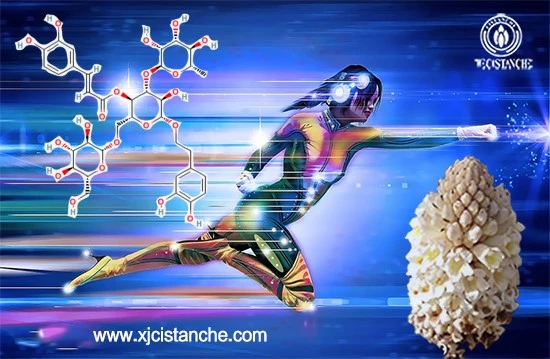
Acteoside is the main chemical component of Cistanche tubulosa
Isoacteoside (IAT);
Tubuloside A (TA).
Additional constituents include iridoids and iridoid glycosides (e.g., 8-epiloganic acid), lignans, polyols (e.g., D-mannitol), oligosaccharides, and polysaccharides. Comparative studies have demonstrated that C. tubulosa contains significantly higher PhG content than C. deserticola, which accounts for its preferential adoption in modern industrial extraction.
2.2 Pharmacological Activities
A substantial body of preclinical and clinical evidence supports the following pharmacological activities of C. tubulosa extracts and their active constituents:
Neuroprotection and cognitive enhancement. PhGs, particularly echinacoside, exert neuroprotective effects against amyloid-beta-induced neurotoxicity, dopaminergic neuron loss, and ischemic brain injury. Mechanistic studies have identified protein kinase CK2α′ as a direct molecular target of echinacoside. C. tubulosa extract has demonstrated antidepressant-like effects in chronic unpredictable stress (CUS) rat models, mediated in part through restoration of gut microbiota homeostasis and modulation of the microbiota–gut–brain axis, with significant upregulation of hippocampal 5-hydroxytryptamine (5-HT) and brain-derived neurotrophic factor (BDNF) expression. A randomized controlled trial conducted by the Nutrilite Health Institute (Amway) showed that a C. tubulosa–Ginkgo biloba combination enhanced memory performance via cortico-cerebellar reorganization.
Benefits of Cistanche tubulosa- Treatment of Parkinson's disease
Endocrine and reproductive effects. Consistent with its traditional "kidney-yang tonifying" indication, C. tubulosa extract has been shown to stimulate growth hormone secretion via activation of the ghrelin receptor, and to exert androgen-related effects in Leydig cells. These actions underpin its use in male vitality and anti-fatigue products.
Antioxidant and anti-aging effects. Acteoside and echinacoside exhibit potent free-radical scavenging activity and inhibit lipid peroxidation. In topical formulations, C. tubulosa extract promotes dermal elastic microfibril formation and restores elastic fiber retraction function, supporting its use in anti-wrinkle skincare.
Hepatoprotective activity. Preclinical studies have demonstrated protective effects against chemical-induced and alcohol-induced hepatic injury, attributed to PhGs and iridoid constituents.
Immunomodulation and anti-fatigue. C. tubulosa polysaccharides and PhGs enhance immune function and improve physical endurance, supporting its traditional use in fatigue recovery and general tonification.
Desert ginseng-Improve immunity
3. Domestic Applications in China
3.1 Proprietary Chinese Medicines and Pharmaceutical Products
In China, C. tubulosa remains firmly anchored in the pharmaceutical sector. Key medicinal products include:
Shenbao series - classic compound formulations containing Cistanche, Epimedium, and Dodder Seed, widely used for kidney-yang deficiency patterns in the over-the-counter (OTC) market.
China Jin Jiu - a herbal liquor infused with Cistanche, Lycium, and Angelica, ranking among the top-selling (medicinal wines) in China with annual sales in the billions of RMB.
Congrong Zonggan Capsule - a Class II new drug developed under the leadership of Professor Tu Pengfei, indicated for vascular dementia. This product represents a landmark in the evidence-based modernization of Cistanche from empirical TCM to a clinically validated therapeutic agent.
In addition, processed Cistanche decoction pieces (e.g., high-quality slices, wine-processed Cistanche) are widely prescribed in TCM clinical practice for kidney-yang tonification, essence supplementation, and intestinal lubrication.

cistanche supplement near me
3.2 Health Foods and Dietary Supplements
Health foods constitute the largest application segment for C. tubulosa extract in China, accounting for approximately 48.2% of the market share in 2025. Notable approved products include:
C. tubulosa and American Ginseng Capsules (Guoshi Jianzhu G20230676), indicated for immune enhancement;
Cistanche and Polygonatum Oral Liquid (Guoshi Jianzhu G20200253), indicated for immune enhancement and protection against chemical-induced liver injury;
Nutrilite Ginkgo–Cistanche Tablets - developed by Amway Nutrilite in partnership with the Yutian planting base in Xinjiang; each tablet contains 150 mg of C. tubulosa extract standardized to ≥28% echinacoside, positioned as a memory-support supplement marketed in China, the United States, and Japan.
Beyond approved "blue-hat" health foods, a wide range of functional consumer products have emerged, including Cistanche wine, Cistanche tea, Cistanche coffee, and Cistanche solid beverages. These primarily target: (i) middle-aged and elderly consumers seeking anti-aging and bowel health; (ii) male consumers seeking anti-fatigue and vitality support; (iii) office workers with sub-health conditions related to chronic sleep deprivation and sedentary lifestyles; and (iv) individuals at risk of cognitive decline.

cistanche supplement near me
3.3 Cosmetics and Personal Care
The cosmetic application of C. tubulosa is a rapidly expanding niche. At inclusion levels of 0.1%–10%, the extract is incorporated into:
Anti-wrinkle serums and neck creams - leveraging its promotion of dermal elastic microfibril regeneration;
Men's skincare lines - targeting fatigue-induced dull skin through its polyphenol-driven antioxidant capacity;
Soothing and repair formulations - utilizing the anti-inflammatory activity of iridoid constituents for sensitive-skin products.
Chinese cosmetic raw material suppliers are increasingly marketing C. tubulosa extract under "desert repair" and "natural anti-aging" conceptual frameworks.

Cistanche facial mask
3.4 Cultivation and the Desert Agro-Ecology Industry
Beyond end products, the upstream cultivation sector itself constitutes a major application scenario. The "Tamarix + Cistanche" intercropping model practiced in Hotan, Yutian, and Minfeng counties provides dual ecological and economic benefits: Tamarix shrubs stabilize sand and combat desertification, while the parasitic Cistanche provides a high-value cash crop for rural households. Companies such as Minfeng Huijin Cistanche Farm Co., Ltd. are at the forefront of this industry, which has become a pillar of rural revitalization and sand-control efforts in southern Xinjiang.
4. International Applications
4.1 Japan: The Pioneer Market
Japan was the first international market to embrace C. tubulosa. In 2005, Japan's Ministry of Health, Labour and Welfare (MHLW) revised its food–drug classification, formally categorizing C. tubulosa as a food, thereby enabling its use in functional foods.
Oryza Oil & Fat Chemical Co., Ltd. stands out as a leading Japanese developer. Its C. tubulosa extract (standardized to ≥25% echinacoside and ≥3% acteoside) completed Phase I safety trials and proceeded to Phase II/III clinical trials. In these trials, oral administration of 600 mg/day of C. tubulosa extract showed significant anti-fatigue and male vitality support.
Japanese market products are primarily positioned as:
Anti-fatigue and energy supplements targeting middle-aged working men;
Male vitality support products, often combined with Lepidium meyenii (maca) and zinc;
Cognitive health supplements for the elderly.
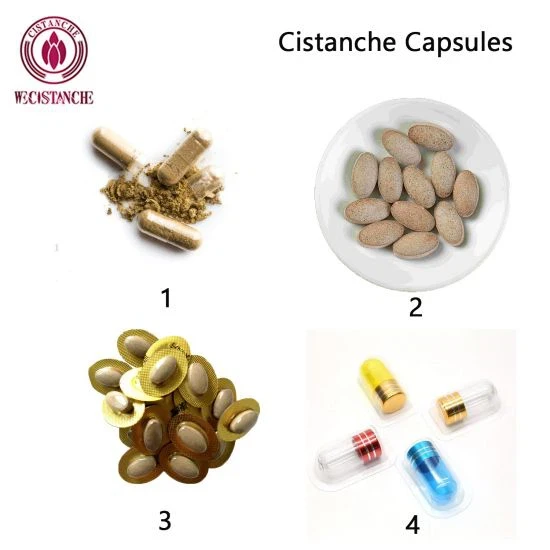
cistanche supplement near me
In 2025, Japan absorbed 38.5% of China's C. tubulosa extract exports by volume. Notably, 92.4% of exports to Japan are high-purity 20% echinacoside extracts conforming to JIS standards, commanding an average export price of USD 1,940 per kilogram-substantially above the industry average.
4.2 United States: Rapidly Growing Dietary Supplement Market
In the United States, C. tubulosa is marketed primarily as a dietary supplement under the Dietary Supplement Health and Education Act (DSHEA) framework. The U.S. Food and Drug Administration (FDA) recognizes C. tubulosa as a botanical ingredient generally recognized as safe (GRAS).
U.S. market positioning differs meaningfully from the Chinese market, with the following leading categories:
Men's health. This is the largest segment. Products are labeled as "Cistanche," "Desert Ginseng," or "Desert Hyacinth" and are marketed for testosterone support, libido enhancement, and exercise recovery. C. tubulosa is frequently combined in proprietary blends with maca, Eurycoma longifolia (Tongkat Ali), and zinc.
Nootropics and brain health. Nutrilite Ginkgo–Cistanche Tablets are available in the U.S. market, positioned for memory and cognitive support. Additionally, nootropic (smart drug) brands have begun incorporating C. tubulosa extract as a natural cognitive enhancer.
Adaptogens and anti-aging. Within the growing Western "adaptogen" trend, C. tubulosa is categorized as an herbal adaptogen that supports the body's response to stress and promotes overall resilience.
Products are sold in capsule, tablet, and powder forms through e-commerce platforms (Amazon, iHerb), specialty retailers (GNC), and direct-to-consumer brands. In 2025, the United States accounted for 26.3% of China's C. tubulosa extract export volume, making it the second-largest export destination.

Cistanche tubulosa extract
Click here to view Cistanche Tubulosa Extract Natural Supplement Powder
【Ask for more】 Email:cindy.xue@wecistanche.com / WhatsApp: 0086 18599088692 / WeChat: 18599088692
4.3 European Union: Novel Food Pathway
The European Union operates a more restrictive regulatory framework for novel botanical ingredients. In the EU, C. tubulosa extract is processed under the Novel Food Regulation (EU) 2015/2283. According to the European Commission's publicly available application summary, an applicant submitted a notification in 2019 for a C. tubulosa stem extract, intended for use in:
Food supplements (solid, liquid, and syrup/chewable forms), with a maximum intake of 2 g/day;
Food for special medical purposes (as defined by Regulation (EU) No 609/2013), at a maximum level of 100,000 ppm.
The authorization process remains ongoing. Within the EU, member states exhibit divergent attitudes:
Germany, the United Kingdom, and the Netherlands demonstrate relatively high acceptance of herbal supplements, with some products entering the market through import channels;
France currently prohibits C. tubulosa as a food ingredient;
Southern European countries (Spain, Italy) show stronger receptivity to traditional botanical medicines and represent significant latent demand.
Once the novel food authorization is granted, the EU market-driven by strong demand for natural anti-aging and men's health products-represents a substantial growth opportunity for C. tubulosa.
4.4 South Korea and Southeast Asia
South Korea is the third-largest export market, absorbing approximately 15.1% of China's C. tubulosa extract exports. Korean consumers, familiar with the shared East Asian herbal medicine tradition, use C. tubulosa primarily in:
Red ginseng combination products, leveraging the "Eastern tonic" conceptual framework;
Post-surgery and convalescence nutritional supplements;
Middle-aged and elderly wellness foods.

cistanche-Improve memory
Southeast Asian markets (Singapore, Malaysia, Thailand, Indonesia) benefit from the cultural influence of the Chinese diaspora, where C. tubulosa is well established as a kidney-tonifying herb. Product forms include medicinal wines, powders, and capsules.
5. Comparative Analysis: Domestic versus International Application
The following table summarizes key differences between domestic and international application scenarios:
|
Dimension |
China |
Japan |
United States |
European Union |
|
Regulatory status |
TCM material + health food (Blue Hat) |
Food (since 2005) |
Dietary supplement (GRAS) |
Novel food (under review) |
|
Core positioning |
Kidney-yang tonic, essence supplementation, bowel lubrication |
Anti-fatigue, male vitality |
Men's health, nootropics, adaptogens |
Emerging (anti-aging, vitality) |
|
Typical forms |
Decoction pieces, proprietary medicines, medicinal wine, oral liquids, capsules |
Functional foods, capsules |
Capsules, tablets, powders, gummies |
Pending authorization |
|
Target consumers |
Middle-aged/elderly wellness, male tonification, office sub-health |
Middle-aged working men |
Fitness/wellness men, nootropic users, adaptogen enthusiasts |
Health-conscious consumers |
|
Standardization |
Echinacoside + verbascoside dual markers |
≥20% echinacoside (JIS) |
% echinacoside labeling |
Pending |
|
Price tier |
Mid-range mass market |
High-purity premium ingredient |
Mid-to-premium supplement |
Pending |
These differences reflect fundamentally different conceptual frameworks: the Chinese market approaches C. tubulosa through the TCM paradigm of kidney–essence–yin–yang, whereas Western markets decompose the herb into standardized active constituents (echinacoside for neuroprotection, acteoside for antioxidant activity) and embed them into established product categories such as men's health, nootropics, and adaptogens.
6. Future Trends and Outlook
1. Standardized high-purity extracts will dominate. Both the Japanese market's demand for 20% echinacoside and Western markets' preference for quantified active content signal that low-grade crude extracts will face declining margins. The competitive frontier lies in advanced extraction and purification technologies yielding high-content PhG fractions and isolated monomers.
2. Neurodegenerative disease therapeutics represent a high-value frontier. With global population aging accelerating, the market for Alzheimer's disease and Parkinson's disease interventions is enormous. The robust preclinical evidence for C. tubulosa neuroprotection, validated by the success of Congrong Zonggan Capsule in vascular dementia, positions echinacoside-rich extracts as promising candidates for future nutraceutical and pharmaceutical development in cognitive health.
3. Cosmeceuticals constitute an emerging blue ocean. Relative to the increasingly competitive dietary supplement space, topical applications of C. tubulosa remain underdeveloped. Its demonstrated anti-glycation, antioxidant, and elastogenic properties-combined with a compelling "desert botanicals" narrative-position it as a potentially iconic natural skincare ingredient.
4. Regulatory compliance is the critical barrier. Export success requires systematic navigation of DSHEA and FDA requirements in the U.S., novel food authorization in the EU, food classification in Japan, and import sanitary certificates in South Korea. Early regulatory engagement and documentation will determine first-mover advantage.
5. Sustainability and ESG branding carry premium value. The "Tamarix + Cistanche" cultivation model-anchored in desertification control, rural revitalization, and carbon sequestration-resonates strongly with ESG-conscious Western consumers. This sustainability narrative can serve as a powerful differentiator for premium brands targeting the European and North American markets.
7. Conclusion
Cistanche tubulosa has traversed a remarkable trajectory: from a little-known parasitic herb of the Xinjiang deserts to a globally traded functional botanical ingredient. Its transformation reflects the convergence of traditional empirical knowledge, modern phytochemical research, industrial extraction technology, and cross-cultural health consumer demand. The pharmacological evidence-centered on phenylethanoid glycosides such as echinacoside and acteoside-provides a credible scientific foundation for its diverse applications, from neuroprotection and male vitality to skincare and gut health.
For the Chinese Cistanche industry, the path forward requires a transition from raw material export to branded product development, supported by rigorous regulatory compliance, clinical evidence generation, and sustainability storytelling. As global awareness of this "desert ginseng" continues to grow, the full therapeutic and commercial potential of C. tubulosa-cultivated on the sandy soils of northwestern China-is only beginning to be realized on the world stage.