Toxicological Studies On The Safety Of Cistanche Deserticola Extract
Aug 22, 2024
Abstract:
Objective To evaluate the general toxicity and genetic toxicity of Cistanche deserticola extract and provide a basis fordeveloping further functional studies. Methods An acute oral toxicity test and a repeated dose 90-day oral toxicity test in rats were carried out to observe the general toxicity of Cistanche deserticola extract. Three mutagenicity assays including a bacterial reverse mutation test ( Ames test), a mouse bone marrow polychromatic erythrocyte and an in vitro mammalian chromosome aberration test were carried out to evaluate the genetic toxicity of Cistanche deserticola extract. All the test methods were conducted according to the national standards. The experimental data were statistically processed using either the χ 2 - test or analysis of variance. The test level of α was 0. 05.
Results The acute oral median lethal dose (LD50 ) of Cistanche deserticola extract in both female and male mice was over 10g / kg. The results of the Ames test showed that Cistanche deserticola extract did not cause any increase of back mutation colonies of all the tested strains, and there was a negative result. The results of mouse bone marrow polychromatic erythrocyte showed that there was no statistically significant difference ( χ 2 = 3. 036, 1. 755, all P > 0. 05) in micronucleus rates in female and male mice between the dose groups and the solvent control group, and there was a negative result. The results of in vitro mammalian chromosome aberration test showed that with or without metabolic activation system, there were statistically significant differences (χ 2 = 13. 244,9. 955, all P<0. 05) in chromosome aberration rate of Chinese hamster lung (CHL) cell between the positive control groups and the solvent control groups, and there were no statistically significant differences (χ 2 = 0. 436,1. 008, all P>0. 05) in chromosome aberration cell rate between the dose groups of Cistanche deserticola extract and the solvent control groups, and there was a negative result. During the period of the repeated dose 90-day oral toxicity test in rats, the activities, food consumption, and water consumption of animals were normal. No obvious behavior change and poisoning manifestations were observed, and no death was observed. Compared with the control group, no obvious abnormality in body mass, food consumption, hematological and biochemical indexes, organ weight, and relative organ weight of rats in each dose group was observed. No obvious pathological abnormal change was found in the histopathological examination. Conclusion Under the present experimental conditions, Cistanche deserticola extract has no general toxicity and genetic toxicity, and further functional studies could be carried out.
Keywords: Safety evaluation; Cistanche deserticola extract; Acute toxicity; Genetic toxicity; General toxicity

NATURAL CISTANCHE RAW MATERIAL FOR SALE
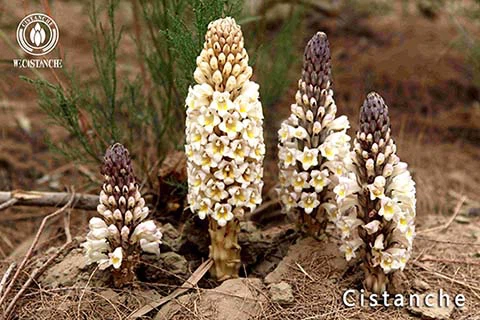
Phytochemicals are a class of low molecular weight bioactive substances that contain various health functions in addition to essential nutrients in plants [1]. In recent years, with the continuous development of nutrition science, the beneficial effects of various phytochemicals on the human body, such as anti-fatigue, lowering blood lipids, and enhancing immunity, have been continuously discovered. Cistanche deserticola, also known as earth spirit, cistanche, and day, is commonly known as "desert ginseng" [2]. In my country, there are 6 species and 1 variant, namely Cistanche deserticola, Cistanche alsa, Cistanche tubulosa, Cistanche sinensis, Cistanche lanzhouensis, Cistanche ambigua, and variant Cistanche salsavar [3]. Cistanche deserticola mainly grows in saline-alkali land, sandy land, and desert environments. In my country, it is mainly distributed in the Inner Mongolia Autonomous Region, Gansu Province, and Shaanxi Province. Its extract has health benefits such as moisturizing the intestines, enhancing cellular immunity, and protecting the liver [4-7]. Currently, there are few animal toxicity studies on Cistanche deserticola extract. This study systematically evaluated its acute toxicity, general toxicity, and genetic toxicity to assess its safety and lay the foundation for further in-depth research in the future.
1 Materials and methods
1. 1 Material
1. 1. 1 Test substance
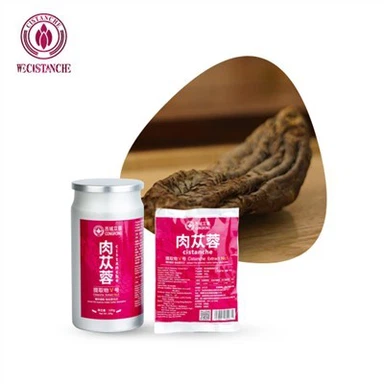
Cistanche deserticola extract is a powdered solid, produced and provided by Inner Mongolia Yuhangren High-tech Industry Co., Ltd., batch number: 211101. The recommended human consumption is 0. 72g/d, which is converted into a daily recommended consumption of 12mg/kg·bw.
1. 1. 2 Experimental animals
Healthy adult-specific pathogen-free (SPF) grade Sprague-Dawley (SD) rats were purchased from Hunan Slake Jingda Experimental Animal Co., Ltd., with an animal production license number of SCXK (Xiang) 2019-0014. They were kept in the barrier-grade animal room of the Hunan Occupational Disease Prevention and Control Institute, with a temperature of 21~24℃ and a humidity of 45%~68%. The experimental animal use license number is SYXK (Xiang) 2017-0001.
1. 1. 3 Bacteria
Histidine-deficient Salmonella typhimurium. The strains are TA97, TA98, TA100, and TA102, all provided by MOLTOX, USA, and identified by our laboratory as meeting the requirements.
1. 1. 4 Cells Chinese hamster lung (CHL) cell line, purchased from the Cell Bank of the Chinese Academy of Sciences (Shanghai, China).
1. 2 Methods
1. 2. 1 Acute oral toxicity test
This test adopted the limit method. 20 SD rats with a body weight of 185. 80 ~ 220. 00g were selected, half female and half male, and fasted for 16h. Set up a dose group of 10.00g/kg·bw, take 50.04g of the test sample, and add pure water to 75.00 ml to prepare a test solution with a concentration of 666.70mg/ml. The test solution was administered orally at a dose of 15.00ml/kg·bw. The observation period was 14 days, and the poisoning symptoms and deaths of the animals were recorded daily. The animals were weighed at the beginning of the experiment, on the 7th day after administration, and at the end of the experiment. After the observation period, the rats were killed by CO2 anesthesia, and the gross anatomical examination of the animals was completed.
1.2.2 Ames test
Set up 5 doses of 50, 158, 500, 1580, and 5000μg/dish, and set up a positive mutation control group and a solvent control group. The positive substances are sodium azide, 2-aminofluorene, 1, 8-dihydroxyanthraquinone, and dichlorothiazide, and the solvent is pure water. Three parallel dishes were set up for each dose group in this test. The test was carried out in two systems with S9 (liver microsomal enzyme) and without S9, and the cells were cultured in a 37℃ constant temperature incubator for 48 hours after administration.

1.2.3 Mouse bone marrow polychromatic erythrocyte micronucleus test
Kunming mice, 25 females, and 25 males, with a body weight of 29.3~35.0g. The test set up three dose groups of 2.5, 5.0, and 10.0g/kg·bw, a positive control group, and a solvent control group. The positive substance was cyclophosphamide (CP; manufacturer: Baxter; batch number: OH397A), and the dose was 40 mg/kg·bw. The solvent control group and the dose group were given 40 ml/kg·bw, and the positive control group was given 20 ml/kg·bw. The administration method was to administer the drug twice within 30 hours, and the last administration was performed 24 hours after the first administration. The animals were killed 6 hours after the end of the administration, the sternum bone marrow was taken for preparation, and the number of cells containing micronuclei was counted under a microscope (manufacturer: Olympus, model: CX23).
1.2.4 In vitro mammalian cell chromosome aberration test
The test set up a solvent control group (pure water), 250, 500, and 1000μg/ml dose groups, and a positive control group. The positive controls were 20μg/ml methyl methanesulfonate (MMS) (manufacturer: West Asia Reagent, batch number: 20200109) (without metabolic activation system) and 10μg/ml cyclophosphamide (manufacturer: Baxter, batch number:
OH397A) (with metabolic activation system). After confirming that the cells are not contaminated, adjust the cell concentration to 5 × 10
5/ml, add 2.00ml of cell suspension to each bottle, then add 3.00ml of Dulbecco's modified eagle medium (DMED) (manufacturer: Zhejiang Jinuo Biomedical Technology Co., Ltd., batch number: 22112501), and place in the incubator for about 24 hours. After the culture medium in the bottle is sucked out, add 4.95ml of DMEM complete medium (without metabolic activation system) or 4.45ml of DMEM complete medium and 0.50ml of S9 mixed solution (with metabolic activation system) to each bottle, and finally add 50μl of the prepared test sample or control sample, and place the culture bottle in the incubator (manufacturer: Shanghai Lishen Scientific Instrument Co., Ltd., model: HF160W) for 4 hours of exposure to the poison. After the infection, discard the culture medium, wash the cells three times with Hanks balanced salt solution (HBSS) (manufacturer: Zhejiang Jinuo Biomedical Technology Co., Ltd., batch number: 2109220213), and then add 5.00ml DMEM complete culture medium to each bottle, culture for 24 hours and harvest the cells.
4 h before harvesting, add 50 μl of 100 mg/ml colchicine to each bottle, incubate for 4 h, digest with 0.25% trypsin solution (manufacturer: Zhejiang Jinuo Biopharmaceutical Technology Co., Ltd., batch number: 22071201), centrifuge and harvest the cells, prepare slides according to the routine method, prepare one slide per bottle, and stain with 10% Giemsa stain [manufacturer: China Pharmaceutical (Group) Shanghai Chemical Reagent Company, batch number: 20220114].
Under an oil immersion lens (manufacturer: Olympus, model: CX23), 100 metaphases were analyzed in each group, the number of aberrant cells, aberration type, and coordinates of the aberrant visual field were observed and recorded, and the chromosome aberration rate was calculated.
1.2.5 90-day oral toxicity test in rats
120 SD rats, 4 weeks old, half female and half male, with a body weight of 75.5-97.0 g at the beginning of the test for female rats and 80.5-99.8 g for male rats. The experiment set up three dose groups of 600, 1,200, and 3,600 mg/(kg·bw·d) and one positive control group, with 10 female and male animals in each group. In addition, there were a mid-term control satellite group, recovery period control satellite group, mid-term high-dose satellite group, and recovery period high-dose satellite group, with 5 female and male mice in each group. The dosage of low, medium, and high dose groups was equivalent to 50, 100, and 300 times the recommended human consumption, respectively. The test solution was freshly prepared every day, and the gavage volume was 10ml/(kg·bw·d). The animals were observed every day during the experiment and their general conditions were recorded. At the end of the experiment, blood was collected after fasting for 16 hours, and blood routine and blood biochemistry were measured, and gross organ lesions and histopathological examinations were observed.
1.3 Statistical analysis
IBM SPSS Statistics 20.0 statistical software was used to analyze the data. The mammalian erythrocyte micronucleus test was statistically analyzed using Poisson distribution and variance analysis. The in vitro mammalian cell chromosome aberration test was statistically analyzed using the χ2 test. The 90-day oral toxicity test was statistically analyzed using one-way variance analysis and (or) t-test. P<0.05 was considered statistically significant, and the test level was α = 0.05.