Effect of Chinese Herb Medicine Cistanche on Early Embryo-Fetal Development
Mar 08, 2022
Contact: Audrey Hu Whatsapp/hp: 0086 13880143964 Email: audrey.hu@wecistanche.com
Li Yufang 1, Xu Qinwei 2, Zhang Li 2, Zhang Wenchang 2, Feng Shutang 3*
[Abstract] Use pig embryos from in vitro fertilization for research and comparison. The effect of adding Chinese medicine ingredients Cistanche and Astragalus to the development of early embryos in the medium NCSU-23 was proved. The experiment proved that: (1) The volume ratio of 0.10% Cistanche and 0.10% Astragalus was added to the culture broth, and the Cistanche addition group The blastocyst rate (15.76%) was significantly higher than that of the blank group (9.26%) (P<0.05). The blastocyst rate of the Astragalus-added group (10.09%) and the blank group (9.26%) were not significantly different (P>0.05), indicating that Cistanche deserticola can significantly promote early embryonic development. (2) When the concentration (V/V) of Cistanche is 0.05% and 0.10%, the blastocyst rate (17.02% and 16.75%) is significantly higher than the blank group (0) (P<0.01) and 0.15% group (8.94%) (P<0.05). (3) Adding 0.10% traditional Chinese medicine Cistanche in the culture medium at the 2-cell stage, the blastocyst development rate (13.81%) was significantly higher than that at the 4-cell stage (7.53%) (P<0.05), and compared with the addition of Cistanche before cleavage (13.67%) ) Is slightly higher, but the difference is not obvious (P>0.05).
Due to the differences in the developmental environment in vivo and in vitro, the embryos will be damaged by free radicals during the in vitro culture of early pig embryos, causing cell metabolism disorders, or damage to DNA, RNA, and proteins [1]. In order to further improve the development rate of in vitro fertilization by frozen semen, this experiment explored adding a certain concentration of Cistanche and Astragalus to improve the embryo development environment in vitro.

1. Material and methods
1. 1 Culture conditions:
In vitro maturation of porcine oocytes, in vitro fertilization, and in vitro culture of early embryos were all carried out in an incubator with 5% CO2 and a maximum saturated humidity of 39 ℃.
1.2 Reagents and culture medium:
The oocyte maturation basal liquid is NCSU-23, the oocyte washing liquid is PVA-TL-HEPES liquid, the fertilization liquid is Tris buffer (mTBM) containing 0.1% BSA, and the sperm washing liquid is Dubecco's with 0.1% BSA. Phosphate buffered saline (DPBS), sperm thawing fluid is BTS, cumulus fluid is 1 mg/mL hyaluronidase PBS, oocyte operation fluid is HEPES buffered NCSU-23, and early embryos basic culture fluid is supplemented with 0.4 %BSA NCSU-23, add (V/V) 0.05%~0.15% Cistanche as needed, use BTS for thawing semen. Before use, preheat and equilibrate for more than 4 h in an incubator containing 5% CO2 air and a maximum saturated humidity of 39 ℃ [2].
1.3 The boiling method of Chinese medicine Cistanche:
Cistanche solution: Take 5 g and put it in a 100 ml beaker, add ultrapure water and immerse it in ultrapure water, boil on high fire, and keep it boiling for 20 minutes, then collect the soup; repeat the above process, collect 3 times in a row, constant volume to 100 mL, 0.22 μm filter spare. Astragalus solution: Take 5 g and put it in a 100 ml beaker, add ultrapure water and immerse it, boil on high fire, and keep it boiling for 20 minutes, then collect the medicinal soup; repeat the above process, collect 3 times in a row, set the volume to 100 mL, filter 0.22 μm spare.

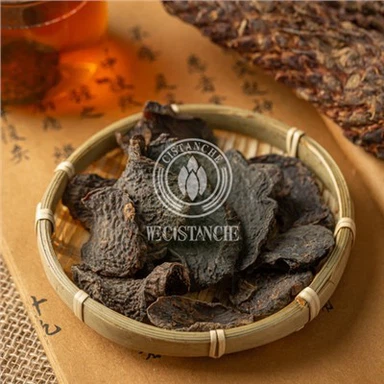
Chinese Medicine Herbal: Cistanche
1.4 In vitro maturation of pig oocytes:
The ovaries of sows were collected from the Beijing Pengcheng Food Slaughterhouse, placed in 0.9% normal saline containing antibiotics at around 38 ℃, transported back to the laboratory within 4 hours, and washed with normal saline three times. Use a 10 mL syringe with a 12-gauge needle to extract oocytes with 2-6 mm diameter follicles on the surface of the ovary. Wash 3~4 times in TL-HEPES solution and 3~4 times in NCSU-23 that has been equilibrated in a carbon dioxide incubator for more than 4 hours. Transfer 20~30 oocytes as a group to 100 μL, add 10% PFF, 10 IU/mL HCG, 10 IU/mL PMSG, 10 ng/mL EGF NCSU-23 droplets and culture for about 22 hours , Change the medium to NCSU-23 droplets with 10% PFF, 10 ng/mL EGF and continue to culture for 44~46 h[3].
1.5 Sperm capacitation and in vitro fertilization:
Prepare the mTBM solution without caffeine and BSA and equilibrate it for 48 hours in an incubator with 5% CO2 and a maximum saturated humidity of 39 ℃, adjusting the pH value within the range of 7.2~7.8; add caffeine and BSA 44 hours before use, and continue to equilibrate. The semen was tested for quality, and 10 mL was centrifuged at 900 r/min for 3 min, 10 mL of DPBS solution containing 0.1% BSA was added for suspension, and centrifuged at 900 r/min for 3 min [3]; after 1 mL of TBM solution was suspended, it was tilted 60 ° Upstream energy harvesting treatment is carried out in an incubator with 5% CO2 air and a maximum saturated humidity of 39 ℃ for 1 h[3~5]. The oocyte-cumulus cell complex that matures to 44~46 is placed in the oocyte washing solution containing 0.1% hyaluronidase, and the cumulus cells are removed by pipetting, and then the oocytes are exposed. Wash 3 times in the balanced TBM, and finally put each 10-15 pieces in a group of 50 μL TBM, and wait for the sperm [6, 7]. Inject 50 μL of upstream semen from capacitation into a droplet of TBM-containing oocytes, and perform fertilization for 6 h in an incubator with 5% CO2 and a maximum saturated humidity of 39 ℃.
1.6 Early development and detection of fertilized eggs:
After 6 hours of fertilization, the oocytes were treated with NCSU-23 buffered with the operating fluid HEPES or NCSU- 23 with 0.4% BSA in the embryo culture fluid. 23 Rinse 3 times, change the medium to a balanced 0.4% BSA NCSU-23 droplet and incubate for more than 8 days. Check the split rate of hypothetical fertilized eggs on the 2nd day, check the morula rate (+blastocyst rate) on the 6th day, and check the blastocyst rate on the 8th day [8]. All were examined and recorded under the body mirror.
1.7 Experimental design:
1.7.1 The effect of traditional Chinese medicine ingredients Cistanche on early embryo development.
Wuzhishan pig[8] After capacitation, in vitro fertilization, the fertilization is completed, and after the cleavage occurs, the embryos are exchanged until they are added to 0.1% (V/V). Cistanche, 0.1% astragalus, and NCSU-23 (0.4% BSA) with no important ingredients (blank group) were cultivated to observe the development of fertilized eggs and early embryos, and judge the effects of the two traditional Chinese medicine components on early in vitro embryo development Influence.
1.7.2 The effect of the concentration of Cistanche on the early development of embryos.
Wuzhishan pig semen is capacitated and undergoes in vitro fertilization. After the fertilization is completed, the fluid is changed to 0% (blank group), 0.05%, 0.1%, and 0.1%, respectively. In 15% Cistanche NCSU-23 (0.4% BSA), observe the development of fertilized eggs and judge the influence of different concentrations of Chinese medicine component Cistanche on early in vitro embryo development.
1.7.3 The effect of the Cistanche addition period on the early embryo development.
Wuzhishan pig semen is capacitation and undergoes in vitro fertilization. After the end of fertilization, the fertilized egg splits to the 2-cell stage, and the fertilized egg splits to the 4-cell stage, the fluid is exchanged and added separately. 0.1% Cistanche NCSU-23 (0.4%BSA), observe the development of fertilized eggs and judge the effect of adding cistanche on early in vitro embryo development at different stages.
1.8 Statistical analysis:
Use SPSS13.0 chi-square (χ2) test and one-way analysis of variance.

2. Result in analysis
2. 1 The influence of traditional Chinese medicine ingredients on early embryonic development
As shown in Table 1, in the Cistanche and Astragalus group, the morula rate was not significantly different from that of the blank group (P>0.05). The blastocyst rate of the two groups was higher than that of the blank group, and the blastocyst rate of the Cistanche group was different from that of the blank group. Significant (P<0.05). It is believed that Cistanche has a better effect on promoting early embryonic development.
2.2 The influence of the concentration of the Chinese medicine ingredient Cistanche on the early embryonic development
As shown in Table 2, the addition of Cistanche at a volume concentration of 0.05% to 0.10% in the embryo culture fluid has a better promoting effect on WZSP frozen sperm liquid in vitro fertilization embryos, and the development rate of blastocysts is significantly different from that of the blank group (P<0.05); The blastocyst development rate of 0.15% Cistanche deserticola was 0, which was significantly different from other groups (P<0.01). It means that if the concentration of Cistanche is too high, it may cause inhibition.
2.3 The effect of adding a period of Chinese medicine ingredient Cistanche on the early embryonic development
As shown in Table 3, after testing and analysis, the addition of Cistanche at a volume concentration of 0.10% at the 2-cell stage has a better-promoting effect on the WZSP frozen sperm liquid in vitro fertilization-embryo, and there is no significant difference from the addition before the cleavage (P>0.05). However, there was a significant difference compared with the addition of 4 cells (P<0.05); it indicated that the addition of Cistanche at a volume concentration of 0.10% in the 2 cell stage was most suitable for early embryo development.
3. Discussion
Compared with the normal developing embryos in vivo, the developmental environment of IVF fertilized embryos is significantly different. During the process of embryo growth and division, a large amount of No., free radicals, and some toxic substances are produced, which is unfavorable for embryo growth. Normally developing embryos in the body can eliminate these unfavorable factors through internal environment metabolism; these unfavorable factors will always accumulate in the embryo growth environment of in vitro fertilization. The traditional Chinese medicine ingredient Cistanche may have the function of reducing no concentration and eliminating certain free radicals, in order to further improve the development rate of in vitro fertilization by frozen semen. The experiment explored adding a certain concentration of Cistanche and Astragalus. The results confirmed that Astragalus had no effective effect on improving the in vitro culture environment. A proper concentration of Cistanche has a certain promoting effect on early embryo development, but when the concentration of Cistanche exceeds a certain concentration, it also has an inhibitory effect on embryo development.
We further explored the different effects of Cistanche, a traditional Chinese medicine component, at various stages, and the experiment found that the early embryos have a higher development rate in the later stage when cistanche is added at the 2-cell stage. The possible reason is due to the external environment of the receptor. Nitric oxide (NO) is a signal molecule and cytotoxic factor with a wide range of biological activities. The effect of NO on early embryo development should be traced back to the early embryonic development stage, which may be caused by one of the causes of 2-cell block (2-cellblock) in mammalian embryo culture, and in vitro block of pigs occurs at the 4-cell stage [9]. The addition of traditional Chinese medicine ingredients may eliminate the free radical of NO to a certain extent and alleviate the unfavorable factors of embryo growth [10].

Cistanche
References
[1] Comport M. Three models of free radical-induced cell infury[J]. Chem Biol Interact, 1989, 72( 1/2) :1- 56.
[2] Pan Dengke. Study on the factors affecting the development of pig somatic cell cloned embryos [D]. Beijing: China Agricultural University, 2005.
[3] Zhang Yunhai. Research on the production of pig cloned embryos using somatic cell nuclear transfer technology [D]. Beijing: China Agricultural University, 2005.
[4] Lu Shengsheng, Zhang Yanling, Shi Deshun, et al. Effects of adding a bovine serum and porcine follicular fluid during maturation on nuclear maturation of pig oocytes and early embryonic development after in vitro fertilization [J]. Heilongjiang Animal Husbandry and Veterinary Medicine, 2002, (8):1- 3.