Treadmill Exercise Prevents Decline in Spatial Learning And Memory in 3×Tg-AD Mice Through Enhancement Of Structural Synaptic Plasticity Of The Hippocampus And Prefrontal Cortex Part 2
Jul 23, 2024
2.5. Western Blot
Mice were anesthetized by isoflurane inhalation and decapitated. Tissues of the hippocampus or prefrontal cortex were lysed in cold RIPA lysis buffer (Thermo Scientific Pierce, Waltham, MA, USA) supplemented with protease and phosphatase inhibitor cocktail (Roche, Indianapolis, IN, USA).
Lysis buffers allow researchers in biological laboratories to better control experimental conditions, thereby better studying the growth and changes of cells, which plays an important role in academia and medical research.
In addition to being helpful for research, lysis buffers may also have a positive impact on improving human memory. According to the latest research, the chemical components rich in lysis buffers may help promote the growth and development of nerve cells, thereby enhancing the brain's memory.
A study found that certain components in lysis buffers can promote signal transmission between certain nerve cells, thereby enhancing the brain's learning and memory abilities. In addition, these components can stimulate the growth of nerve cells and help the brain better adapt to new environments and new learning. The result of these effects is that people can better grasp new knowledge and remember it for longer.
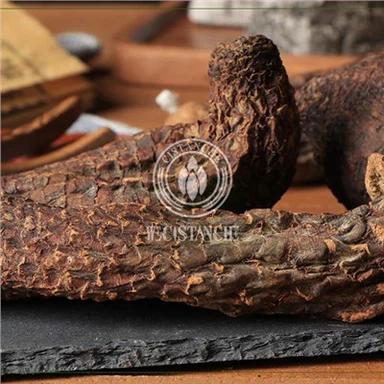
Of course, lysis buffers themselves cannot magically solve all memory problems. Scientists still need to conduct more research on how to use these findings to enhance human memory. However, the positive significance of this discovery is already very clear: lysis buffers can provide a good start for enhancing human memory and provide more possibilities for future scientific research work. It can be seen that we need to improve memory, and Cistanche can significantly improve memory because Cistanche is a traditional Chinese medicinal material with many unique effects, one of which is to improve memory. The effect of Cistanche comes from the various active ingredients it contains, including tannic acid, polysaccharides, flavonoid glycosides, etc. These ingredients can promote brain health in various ways.

Click Know Ways to Improve Memory
Total protein was measured using the BCA assay (Thermo Scientific Pierce, USA). Samples were heated at 100 ◦C for 15 min. For Western blot, equal amounts of protein were loaded (20 ug/well) onto a 12% gel. After electrophoresis and transfer to PVDF membranes (Millipore, IPVH00010, Burlington, MA, USA), they were incubated for 1 h at room temperature with a blocking buffer (5% BSA buffer).
The PVDF membranes were incubated overnight with the primary antibody (GAPDH, 1:10,000, Abcam, Boston, MA, USA; PSD95, 1:500, Abcam, USA; Syn, 1:500, Abcam, USA).
They were then washed with a TBST buffer three times at 5 min intervals and incubated for 1 h with an HRP-conjugated goat anti-rabbit or HRP-conjugated goat anti-mouse secondary antibody (1:15,000, Proteintech Group, Rosemont, IL, USA), followed by TBST washes at 5 min intervals.
Protein levels were detected with chemiluminescent reagents (Thermo Scientific Pierce, Waltham, MA, USA) and the bands were measured using Image J software.
2.6. Electron Microscopy
Mice were deeply anesthetized with chloral hydrate and perfused transcardially with PBS, followed by 4% paraformaldehyde and 2.5% glutaraldehyde solution in 0.1 M phosphate buffer for 20 min.
The brain was removed and immersed in the same fixative overnight. The hippocampus and prefrontal cortex were stained with 1% osmium tetroxide, and then dehydrated in a graded series of acetone.
Tissues were cut into ultrathin sections, stained with uranyl acetate and lead citrate, and examined with a Hitachi H-7100 electron microscope. Photographs of random positions from these specimens were taken at ×30,000 magnification (22 µm2 ).
Synapses with round vesicles, asymmetric synapses, and a single large synaptic contact were presumed to be excitatory synapses, while presynaptic terminals with pleomorphic flattened vesicles and symmetric synapses were presumed to be inhibitory synapses [48].
We analyzed the number of presumable excitatory synapses (22 µm2/each image field, Figure 2) in the hippocampus and prefrontal cortex of each mouse, and then averaged the number of synapses of six image fields from the same group (6 image fields from 4 mice in each group).

The length of the synaptic active zone, the width of the synaptic cleft, the curvature of the synaptic interface, and thickness of postsynaptic density from 12–15 randomly selected synapses were quantified and compared from 4 mice per group (Figure 3).
The length of the active zone and the thickness of postsynaptic density were measured according to Güldner [49]. Synaptic cleft was defined as the brightest region between pre-and postsynaptic membranes [50].
Synaptic curvature was determined using the formula: R = a/2 + b2/8a, where b is the line joining the two ends of the postsynaptic thickening and a is the perpendicular distance from the postsynaptic membrane to b [51,52] (see Figure 3A).

Figure 2. Treadmill exercise increases synapse numbers of the hippocampus and prefrontal cortex in 3×Tg-AD mice. (A) Representative electron microscope imaging of hippocampus and prefrontal cortex in non-Tg control, non-Tg exercise, 3×Tg-AD control, and 3×Tg-AD exercise mice.
The blue arrowheads mark the synapses. The red box represents an enlarged synapse. An expanded, high-magnification view of synapses in the prefrontal cortex is shown in the red square box at the bottom. (B, C) The synapse numbers of the hippocampus (B) and prefrontal cortex (C) were significantly decreased in the 3×Tg-AD control group compared to the non-Tg control group (*** p < 0.001, n = 6 image sections), and this decrease was blocked by treadmill exercise pretreatment both in the hippocampus (B) and prefrontal cortex (C) (*** p < 0.001, n = 6 image sections).
Treadmill exercise pretreatment increased the synapse numbers of the hippocampus (B) and prefrontal cortex (C) in non-Tg mice (** p < 0.01, n = 6 image sections). Each data set was obtained from 4 mice.

Figure 3. Treadmill exercise improves synaptic structural parameters of the hippocampus and prefrontal cortex in 3×Tg-AD mice. (A) A representative measurement of synaptic structural parameters.
The formula R = a/2 + b2/8a, where b is the line joining the two ends of the postsynaptic thickening and a is the perpendicular distance from the postsynaptic membrane to b, was used to determine synaptic curvature.
(B, C) The length of the synaptic active zone of the hippocampus (B) and prefrontal cortex (C) was significantly decreased in the 3×Tg-AD control group compared to the non-Tg control group (*** p < 0.001, n = 12–15 synapses), and this decrease was blocked by treadmill exercise pretreatment both in the hippocampus and prefrontal cortex (*** p < 0.001, n = 12–15). (D, E) The width of the synaptic cleft of the hippocampus (D) and prefrontal cortex (E) was significantly increased in the 3×Tg-AD control group compared to the non-Tg control group (*** p < 0.001, n = 12–15 synapses), and this increase was blocked by treadmill exercise pretreatment both in the hippocampus (D; *** p < 0.001, n = 12–15 synapses) and prefrontal cortex (E; ** p < 0.01, n = 12–15). (F, G) The synaptic curvature of the hippocampus (F; *** p < 0.001, n = 12–15), and prefrontal cortex (G; ** p < 0.01, n = 12–15) was significantly decreased in the 3×Tg-AD control group compared to the non-Tg control group, and this decrease was blocked by treadmill exercise pretreatment both in the hippocampus (F; ** p < 0.01, n = 12–15) and prefrontal cortex (G; *** p < 0.001, n = 12–15). (H, I) The thickness of postsynaptic density of hippocampus (H) and prefrontal cortex (I) was significantly decreased in the 3×Tg-AD control group compared to the non-Tg control group (*** p < 0.001, n = 12–15), and this decrease was blocked by treadmill exercise pretreatment both in the hippocampus (H; ** p < 0.01, n = 12–15) and prefrontal cortex (I; *** p < 0.001, n = 12–15).

Each data set consisted of 12 and 15 synapses from 4 mice in each group.
2.7. Statistics
Data analysis was blind to the genotypes and treatment history of the mice. Data are presented as the mean ± SEM. Data sets were compared with two-way ANOVA followed by Tukey's post hoc analysis. Post-hoc analyses were performed only when ANOVA yielded a significant main effect or a significant interaction between the two factors. Results were considered to be significant at p < 0.05.
3. Results
3.1. Treadmill Exercise Prevented Decline in Spatial Learning and Memory in 3×Tg-AD Mice
We first sought to determine whether six-month-old 3×Tg-AD mice exhibited spatial learning and memory impairment and whether treadmill exercise pretreatment prevented the decline in spatial learning and memory in six-month-old 3×Tg-AD mice.
Non-Tg control mice and 3×Tg-AD mice received 12 weeks of treadmill exercise or non-exercise control treatment beginning at three months of age (2 × 2 factorial design: genotype vs. exercise).
After the 12-week training, the eight-arm radial maze test was used to investigate the spatial learning and memory of mice. Both working memory (the ability to remember for a relatively brief period) and reference memory (memory for information that is held constant over time) were measured (the difference between working and reference memory has been described in Section 2, Figure 1A).
Two-way ANOVA showed that genotype and treadmill exercise had significant effects on the percentage of working memory errors on day 5 (genotype: F1,39 = 8.6, p = 0.006; treadmill exercise: F1,39 = 5.5, p = 0.024; genotype × treadmill exercise interaction: F1,39 = 4.2, p = 0.047; Figure 1B) and day 6 (genotype: F1,39 = 6.1, p = 0.019; treadmill exercise: F1,39 = 6.4, p = 0.016; genotype × treadmill exercise: F1,39 = 4.6, p = 0.039; Figure 1B) of the acquisition session.
Tukey's post hoc tests indicated that the percentage of working memory errors was significantly increased in the 3×Tg-AD control group compared to the non-Tg control group (both day 5 and day 6: p < 0.01; Figure 1B).
The increase in the percentage of working memory errors was prevented by treadmill exercise pretreatments (both day 5 and day 6: p < 0.01; Figure 1B). However, two-way ANOVA found that genotype and treadmill exercise had no significant effects on the percentage of reference memory errors (e.g., day 10, genotype: F1,39 = 0.2, p = 0.6; treadmill exercise: F1,39 = 0.04, p = 0.8; genotype × treadmill exercise interaction: F1,39 = 0.873, p = 0.4; Figure 1C) in all 10 days of the acquisition session.
Together, these results suggest that six-month-old 3×Tg-AD mice exhibited impaired spatial working memory but not reference memory, and treadmill exercise prevents a decline in spatial working memory in 3×Tg-AD mice.
3.2. Treadmill Exercise Increased Synapse Numbers and Improved Synaptic Structural Parameters of the Hippocampus and Prefrontal Cortex in 3×Tg-AD Mice
To investigate whether treadmill exercise-induced reduction in spatial learning and memory was associated with structural synaptic plasticity, we quantified synapse numbers and synaptic structural parameters of the hippocampus and prefrontal cortex that are critical for transmitting information related to learning and memory (Figure 2A).
Two-way ANOVA revealed that genotype and treadmill exercise had significant effects on the synapse numbers both in the hippocampus (genotype: F1,23 = 59.3, p < 0.001; treadmill exercise: F1,23 = 51.0, p < 0.001; genotype × treadmill exercise interaction: F1,23 = 5.7, p = 0.027; Figure 2B) and prefrontal cortex (genotype: F1,23 = 48.6, p < 0.001; treadmill exercise: F1,23 = 59.8, p < 0.001; genotype × treadmill exercise interaction: F1,23 = 8.5, p = 0.009; Figure 2C). Tukey's post hoc tests indicated that the hippocampus and prefrontal cortex synapse numbers were significantly decreased in the 3×Tg-AD control group compared to the non-Tg control group (p < 0.001; Figure 2B, C).
Treadmill exercise pretreatment blocked a decrease in the synapse numbers both in the hippocampus and prefrontal cortex in 3×Tg-AD mice (p < 0.001; Figure 2B, C).
Meanwhile, treadmill exercise increased the synapse numbers in the hippocampus and prefrontal cortex in non-Tg mice (p < 0.01; Figure 2B, C).
To further assess the efficiency of synaptic transmission, we measured and analyzed the ultra-structural parameters by electron microscopy (EM), including the length of the synaptic active zone, the width of the synaptic cleft, synaptic curvature, and the thickness of the postsynaptic density in the hippocampus and prefrontal cortex (Figure 3A).
Previous studies have uncovered that the larger synaptic active zone is more effective at exciting postsynaptic neurons, and the shortening of the active zone may reflect a condition of impaired efficiency of synaptic transmission [36].
Two-way ANOVA showed that genotype and treadmill exercise had significant effects on the length of the synaptic active zone both in the hippocampus (genotype: F1,53 = 10.6, p = 0.002; treadmill exercise: F1,53 = 5.0, p = 0.03; genotype × treadmill exercise interaction: F1,53 = 9.2, p = 0.004; Figure 3B) and prefrontal cortex (genotype: F1,56 = 17.4, p < 0.001; treadmill exercise: F1,56 = 5.0, p = 0.03; genotype × treadmill exercise interaction: F1,56 = 6.8, p = 0.012; Figure 3C).
Tukey's post hoc tests indicated that the length of the synaptic active zone of the hippocampus and prefrontal cortex was significantly decreased in the 3×Tg-AD control group compared to the non-Tg control group (p < 0.001; Figure 3B, C).
Treadmill exercise pretreatment enhanced the length of the synaptic active zone both in the hippocampus (p < 0.001; Figure 3B) and prefrontal cortex (p = 0.001; Figure 3C) in 3×Tg-AD mice. The synaptic cleft is a ~20 nm narrow space between the axon terminal of the presynaptic neuron and the membrane of the postsynaptic neuron.
The optimal shortening of the synaptic cleft may have an adaptive function of optimizing synaptic strength by enhancing the effective concentration of released neurotransmitters and decreasing the effective cleft resistance [37,38].
Two-way ANOVA showed that genotype and treadmill exercise had significant effects on the width of the synaptic cleft both in the hippocampus (genotype: F1,55 = 21.5, p < 0.001; treadmill exercise: F1,55 = 15.1, p < 0.001; genotype × treadmill exercise interaction: F1,55 = 5.4, p = 0.025; Figure 3D) and prefrontal cortex (genotype: F1,53 = 10.6, p = 0.002; treadmill exercise: F1,53 = 5.0, p = 0.03; genotype × treadmill exercise interaction: F1,53 = 9.2, p = 0.004; Figure 3E).
Tukey's post hoc tests indicated that the width of the synaptic cleft of the hippocampus and prefrontal cortex was significantly increased in the 3×Tg-AD control group compared to the non-Tg control group (p < 0.001; Figure 3D, E).
Treadmill exercise pretreatment decreased the width of the synaptic cleft both in the hippocampus (p < 0.001; Figure 3D) and prefrontal cortex (p = 0.001; Figure 3E) in 3×Tg-AD mice.

For more information:1950477648nn@gmail.com