Tubuloside B From Cistanche Salsa Rescues The PC12 Neuronal Cells From 1-Methyl-4-phenylpyridinium Ion-Induced Apoptosis And Oxidative Stress
Mar 06, 2022
Contact: Audrey Hu Whatsapp/hp: 0086 13880143964 Email: audrey.hu@wecistanche.com
Guoqing Zheng, Xiaoping Pu, Li Lei, Pengfei Tu, Changling Li
Abstract:
The neuroprotective effects of tubuloside B from cistanche, one of the phenylethanoids isolated from the Chinese herbal medicine Cistanche salsa, on 1-methyl-4-phenylpyridinium ion (MPP+)-induced apoptosis and oxidative stress in PC12 neuronal cells were investigated. PC12 cells treated with MPP +underwent apoptotic death as determined by MTF assay, flow cytometry, and DNA agarose gel electrophoresis; intracellular accumulation of reactive oxygen species (ROS) was measured by DCFH-DA staining with laser scanning confocal microscopy (LSCM). Simultaneous treatment with tuhuloside B markedly attenuated MPP+ -induced cytotoxicity, DNA fragmentation, and intracellular accumulation of ROS. These results strongly indicate that tubuloside B prevents MPP-induced apoptosis and oxidative stress. Tubuloside B may be applied as an anti-Parkinson's disease agents.
Introduction
Pathologically, sporadic Parkinson's disease (PD) is typically characterized
by a loss of catecholaminergic neurons, particularly dopaminergic neurons of the
substantia nigra pars compacta (SNc), and the presence of characteristic intraneurona| inclusions called Lewy bodies in affected brain regions. Despite a
variety of factors having been implicated in the pathogenesis of PD, the mechanisms
involved in the initiation and progression of PD remain uncertain, Even though
the cause of PD remains answered, several lines of evidence strongly suggest the involvement of oxidative stress, finally leading to neuronal death or apoptosis by
the excessive generation of free radicals [1 ], [2], [3]. The fact that the nigral
dopaminergic system can produce high levels of free radicals and has relatively low
levels of antioxidative defense system further support this hypothesis. Both in
vivo and in vitro studies showed oxidative stress-mediated neurotoxicity of MPP+, an active metabolite of l-methyl-4-phenyl-l,2,3,6-tetrahydropyridine (MPTP)
on dopaminergic neurons [4], [5]. The involvement of free radicals excessively
produced by oxidative stress as the proximate cause of neurodegenerative
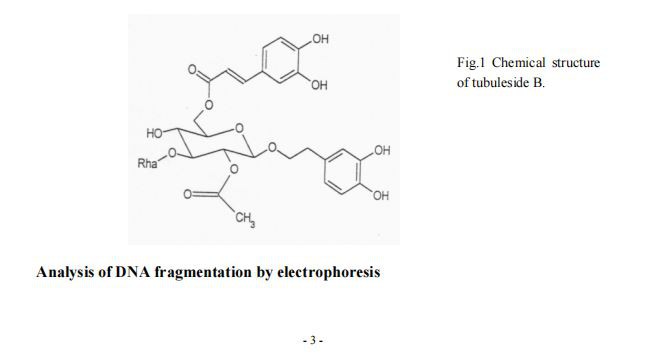
disorders such as PD suggests a pivotal role for antioxidants. Tubuloside B (Fig. l)
was one of the phenylethanoid compounds isolated from the stems of Cistanche
salsa. Previous studies had found many phenylethanoids including tubuloside B
showed a strong free radical scavenging activity[6], [7].
Considering these findings, we investigated in the present study the effect of tubu]nside B on MPP+-induced neurotoxicity in vitro, using the sympathetic nerve pheochromocytoma cell line PC12 that has been successfully used over the years to study neuronal function [8], [9].

anti-Parkinson's disease: cistanche
Materials and Methods
Materials
Tubuloside B from Cistanche salsa was kindly supplied by Dr. Li Lei (Department of Natural Products, School of Pharmaceutical Sciences, Peking University, Beijing, China). The purity of the compound was more than 98% by HPLC analysis. Dulbecco's modified Eagle's medium (DMEM), horse serum, and fetal calf serum were purchased from GIBCO BRL, 1-methyl~-phenylpyridinium ion (MPP+), poly-L-lysine, 3-(4,5 -dimethylthiazol-2 -yl)-2,5- diphenyltetrazolium bromide (MTT), propidium iodide (PI), RNase A, proteinase K, and 2;7'-dichlorofluorescein diacetate(DCFH-DA) were purchased from Sigma.
Cell culture
PCI2 cells were maintained in DMEM supplemented with 10% horse serum, 5% fetal calf serum, 100U/ml penicillin and100μg/ml streptomycin. The cells were cultured in a humidified incubator aerated with 95% air and 5% CO2 at 37 ℃. All experiments were carried out 24-48 h after cells were seeded. The cells were routinely harvested by trypsinization 0.25 % when the cells approached the subconfluent stage and plated in 25 cm culture flasks split at 1: 8.
Analysis of cell viability
The cell viability was determined using a modified MTT assay as described previously [10], In brief, PC12 cells were seeded in 96-well plates at a density of I × 104 ceils per well. The cultures were grown for 48 h, and then the medium was changed to that containing various concentrations of tubulnside B or MPP+. After incubation for up to 48h and 72 h, MTr solution(5 mg/ml in DMEM) was added to the 96-well plates and the cells were allowed to incubate for 4h at 37 ℃. After the medium had been removed, the cell and dye crystals were solubilized by adding 200μL of DMSO, and the absorption was measured at 570nm (540 nm as a reference) with a model 550 microplate reader (Bio-Rad). Cell viability was also analyzed using the trypan blue exclusion method. The cells were collected, gently pelleted, and stained with a 0.6% solution of trypan blue for 3 rain. The percentage of non-colored cells was subsequently assessed in ten randomly selected microscope fields. As a positive drug, 100 ng/ml epidermal growth factor (EGF) was used.
Detection of apoptosis by flow cytometry
Apoptotic cells were detected by flow cytometry using propidium iodide (PI) [11 ]. Briefly, about 1 × 10⁶ cells incubated with test substances were harvested by centrifugation and were washed once with PBS. Cells were fixed with 70 % ethanol for 24 h at - 20 ℃and washed once with PBS. Cells were then resuspended in 300μL of PBS containing 0.5 mg/ml RNase and 0.5 mg/ml PI. After further incubation for 30 min in the dark, flow cytometry was performed with a FACScan (Becton Dickinson, Heidelberg, Germany).
We applied Moore's protocol [12] that isolated only fragmented DNA and experiments were normalized by using an equal number of cultures from each test group. Briefly, 3 × 10⁶ neurons from each of the treated samples were washed in Hank's balanced salt solution (1000g for 10 min), and the pellets formed at the bottom of the tube were homogenized with 1 ml lysis buffer (10 mM Tris at pH 7.4. 5 mM EDTA, 1% Triton X-100) for 20 min on ice. After centrifugation at 11,000 g for 20 rain at 4 ℃, supernatants containing fragmented DNA were removed and digested with 20 mg/ml RNase A at 37 ℃ for 1 h, and 0.1 mg/ml proteinase K at 56 ℃ for an additional 1 h. The fragmented DNA was extracted using phenol and chloroform and centrifuged at 1O,000g for 1 rain at 4 C. The aqueous phase was transferred into a new Eppendorf tube, mixed with 2 volumes of ice-cold ethanol, and then placed at-20 ℃ for at least 1 h to precipitate DNA. After centrifugation at15,000g for 20 min at 4 ℃, supernatants were removed, and DNA pellets were washed with 80 % ethanol once (15,000 g for 15 min at4 ℃), air-dried, and dissolved in 20μL TE buffer at pH 7.6. The entire sample was then electrophoresed on a 1.5% agarose gel for 1h at 85 V. The gel was examined and photographed by an Ultra Violet Products Gel Documentation System (GELDOC-2000, Bio-Rad, USA).
Measurement for intracellular ROS formation
Formation of intracellular peroxides was detected with a confocal scanning laser microscope using a non-fluorescent compound, 2"7"-dichlorofluorescein diacetate (DCFH-DA) [13], which is esterified within cells by endogenous esterases to the ionized free acid, 2;7"-dichlorofluorescein. 2",7-Dichlorofiuorescin is capable of being oxidized to fluorescent 2"7"-dichlorofluorescein (DCF) by hydroantioxidants. Cells were incubated with 10 μM DCFH-DA for 30 min at 37 ℃. Cultures were washed twice with Hank's balanced salt solution and imaged in the same medium. Imaging was done using a confocal scanning laser microscope, DCF was excited at 488 nm and the emission filter was a 510nm barrier filter, To provide a valid comparison, the same acquisition parameters were used for all observations. The optimal vertical position at the middle of the cells was set, and then the field was rapidly scanned. Because illumination at the excitation wavelength of 488 nm caused increased fluorescence because of oxidation of this dye, each field was exposed to Light for exactly the same time. Baseline values from unstimulated cells were used as control values to compare with MPP-treated cells in the presence or absence of tubuloside B. After scanning, the average relative fluorescence intensity in 15-20 neuronal cell bodies per microscope field was quantified in four separate cultures per treatment condition.

cistanche
Statistical analysis
All values obtained were expressed as means ±SD. Statistical significance of differences between groups was determined by Student's t-test; Calculated p values of less than 0.05 were considered as statistically significant.
Results
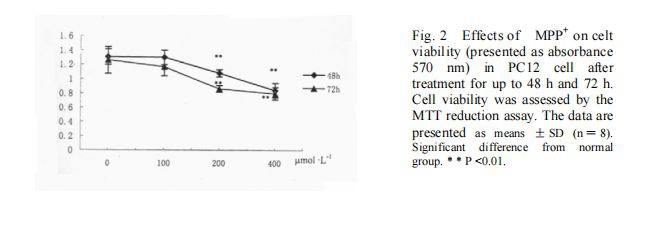
As shown in Fig. 2, MPP+ produced a dose-dependent decrease in the viability of the PCI2 cells. In contrast, EGF, a well-known neurotrophic factor, produced significant protection of cell viability at 100ng/mL MPP+-induced cytotoxic effects were also attenuated in the presence of tubuloside B (5, 10, 50 or100μg-ml-1), although with less potency than the reference drug (Fig.3). Tubuloside B at these concentrations exhibited cytoprotective effects in a dose-dependent manner and the compound alone did not cause any apparent cytotoxicity(data not shown). Gel electrophoresis of the DNA extract from PCI 2 cells treated with 200 µM MPP+for 48 h showed DNA laddering. a classical hallmark of apoptosis,tubuloside B, at doses of 10 and100μ g·ml-1educedformationoftheDNAladder(Fig.4).Fig.5 shows typical histograms of the flow cytometric analysis of apoptotic cell death induced by MPP+ in PC12 cells in the presence or absence of tubuloside B.Quantitation of the cell cycle profile with PI revealed the number of ceils with subdiploid characteristics(M1 region)indicative of apoptotic DNA fragmentation. In untreated cells, the apoptotic subdiploid fraction was minimal up to 5.94%of total 10000 cells(Fig.5 A). After 48 h exposure to MPP+, the percentage of apoptosis increased to 43.02;j;(Fig.5 B). When added to the cell culture,tubuloside B inhibited MPP+induced apoptosis in a dose-dependent manner. At a concentration of 10 μg·ml-1the protection by tubuloside B was not statistically significant, but at50 and 1 00μg·ml-1, a 45%and 63%decrease.respectively, was observed resulting in an increase in the percentage of survival cells(Fig.5D, E).
Accumulation of intracellular ROS can be detected by the use of DCFH—DA.PC12 cells treated with 200 uM MPP+ for 48 h displayed intense fluorescence inside the cell after staining with DCFH-DA dye(Fig.6). Simultaneous treatment with tubuloside B(at doses of 10 and 100μg·ml。)inhibited MPP+一 induced ROS production(reduced percentage were 24.52%and 55.63%, respectively).
Discussion
The pathogenesis of PD involves strong oxidative stress, reduced antioxidant levels, and mitochondrial defects. all known to induce apoptosis in several cellular systems. In particular, free radicals have been shown to trigger active cell death in neurons[14]. MPTP produces an irreversible and severe parkinsonian-like syndrome that causes selective degeneration of the nigrostriatal dopaminergic neurons in humans. This neurotoxin has been used to create animal models of PD[15].MPTP is converted by monoamine oxidase B to MPP+, which is accumulated in mitochondria. where it inhibits mitochondrial complex I and those mitochondrial days. function causes apoptosis[16].Therefore, MPP+一induced neurotoxicity in dopaminergic neurons has been employed extensively as an etiologic model of PD for screening neuroprotective agents.
In the present study, we have demonstrated that MPP+-induced cell death via oxidative stress in PC12 cells was reduced by tubuloside B. Further, we demonstrated that tubuloside B also protected in a dose-dependent manner against the MPP+-induced DNA laddering and apoptosis, as measured using DNA gel electrophoresis and flow cytometric analysis. Moreover, simultaneous treatment with higher concentrations of tubuloside B inhibited MPP-induced ROS production. Thus, tubuloside B has shown multi-functionally neuroprotective effects. Several mechanisms, separately or in association, may be involved in the actions of tubuloside B. The antioxidant effect is a possible mechanism for tubuloside B-mediated neuroprotection. Xiong Q found that tubuloside B showed a strong free radical scavenging activity on the 1,1-diphenyl-2-picrylhydrazyl radical and xanthine]xanthine oxidase generated superoxide anion radical [6].
Several phenylethanoids have been recently reported to possess free radical scavenging properties and protect oxidative stress-induced toxic injuries. ROS
produced by MPP+ such as hydrogen peroxide, superoxide anion, and
hydroxyl radical readily damage biological molecules, which can ultimately
lead to apoptotic or necrotic cell death. Thus, tubuloside B may have direct
scavenging effects against ROS. While our data do not establish the exact site
at which tubuloside B acts to suppress ROS accumulation, they do suggest
that the neuroprotective mechanism involves stimulation of antioxidants
pathways. A study of the molecular structure of tubuloside B also indicates that
it possesses a potent capacity for scavenging free radicals (personal
communication).
Other mechanisms could also be pertinent. For example, tubuloside B may have the capacity to counteract the toxicity of MPP+ by inhibiting the opening of mitochondrial permeability transition pore and dysfunction. In addition, whether tubuloside B has a direct growth-promoting effect on neuronal cells should also be considered. The exact mechanism of the neuroprotective action of tubuloside B remains unclear. Additional studies are required to elucidate the full picture of its neuroprotective effect.
Conclusively, tubuloside B from Cistanche salsa extract has evident protective effects on MPP+-induced apoptosis and oxidative stress. Its neuroprotective effects against MPP + toxicity might be important and suggest it may have therapeutic potential in the prevention and treatment of PD.

treatment of PD: cistanche
References
7. Xiong Q, Tezuka Y, Kaneko 1", Li H, Tran LQ Hase K, Namba T, Kadota S. Inhibition of nitric oxide by phenylethanoids in activated macrophages. Eur J Pharmaco12000; 400:137 –44
8. Greene LA, Tischler AS. Establishment of a noradrenergic clonal line of adrenal pheochromocytoma cells which respond to nerve growth factor. Proc Nat Acad Sci 1976; 73:2424-8
9. Yao Z, Drieu K, Szweda LI, Papadopoulos V. Free radicals and lipid peroxidation do not mediate β-amyloid induced neuronal cell death. Brain Res 1999; 847: 203- 10
10. Yamamoto T, Yuyama K, Nakamura K, Kato T, Yamamoto H. Kinetic characterization of the nitric oxide toxicity for PC12 cells: effect of half-life time of NO release. Eur J Pharmacol 2000; 397:25-33
11. Nicoletti l, Migliorati G, Pagliacci MC, Grignani E Riccardi C. A rapid and simple method for measuring thymocyte apoptosis by propidium iodide staining and flow cytometry. J Immunol Methods 1991; 139: 271-9
12. Moore KJ, Matlashewski C. Intracellular infection by Leishmania do nova inhibits macrophage apoptosis. J Immunol 1994; 152: 2930- 7
13. Mark RJ, Keller JN, Kruman I, Mattson MP. Basic FGF attenuates amyloid β peptide-induced oxidative stress, mitochondrial dysfunction, and impairment of Na +-K +-ATPase activity in hippocampal neurons. Brain Research 1997; 756: 205-14
14. Merad-Boudia M, Nicole A, Santiard-Baron D, Saille C, CeballosPicot L Mitochondrial impairment as an early event in the process of apoptosis induced by glutathione depletion in neuronal cells: relevance to Parkinson's disease. Biochem Pharmaco11998; 56: 645-55
15. Langston JW, Ballard P, Tetrud JW, Irwin I. Chronic Parkinsonism in humans due to a product of meperidine-analog synthesis. Science 1983; 219:979-80
16. Mizuno Y, Sone N, Suzuki K, Saitoh T. Studies on the toxicity of 1-me ethyl-4-phenylpyridinium ion (MPP +) against mitochondria of the mouse brain.J Neurol Sci 1988; 86: 97-110