What Should Chronic Kidney Disease Patient Eat ?
May 09, 2022
The incidence of chronic kidney disease in the Chinese population over 40 years old is greater than 10%. Among the many causes, diabetes, hypertension, glomerulonephritis, and metabolic syndrome are the most important causes of chronic kidney disease. For the diet of patients with chronic kidney disease, the standard recommendation is to be low in salt and low in high-quality protein (meat, eggs, and milk), and avoid rice noodles. But even with this, many patients still develop to the point where dialysis is required. After dialysis, it is even more tangled: low protein is good for the kidneys, but only high protein can make up for the protein lost by dialysis. How does this make patients better? Don't worry, let's find the answer in the scientific literature.
Click to Cistanche in India and Cistanche tubulosa benefits for kidney
Electrolyte
Chronic kidney disease patients have higher blood phosphorus levels. A meta-study found that every 1 mg/dL increase in blood phosphorus concentration was associated with a 36% increase in the risk of renal failure and a 20% increase in the risk of death.
Hyperphosphatemia induces secretion of the hormone FGF23, which, in addition to promoting the excretion of phosphorus from the kidneys, inhibits vitamin D activation. Elevated FGF23 correlates with decreased renal function and increased risk of death. Hyperphosphatemia also leads to increased parathyroid hormone secretion. Disruption of the parathyroid hormone and vitamin D systems results in dysregulated calcium metabolism. Calcium is lost from bones, which in turn promotes vascular calcification, increasing the risk of cardiovascular disease and death.
Therefore, limiting phosphorus intake is crucial for patients with chronic kidney disease. The survey found that the main sources of phosphorus in the American diet are grains, meat, and dairy products; for children and adolescents, milk provides nearly half of the phosphorus. Absorption rate and net content are equally important. The form in which phosphorus is present in food determines its absorption rate. Inorganic phosphorus is more readily absorbed from processed foods (such as canned food and beverages), while organic phosphorus from plant sources (legumes, seeds, grains) is less absorbed.

In particular, some foods, such as some beverages, are manufactured with phosphates added, but these additions do not necessarily appear on the nutrition label. The marking rate in the US market is about 70%. Another source that will not be labeled is the inorganic phosphorus added to the meat during the production process. The survey found that current standard production procedures in the United States increase the phosphorus content of meat by an average of about 28 percent.
Combining the above factors, it is not difficult to understand why the blood phosphorus and urinary phosphorus of vegetarians are much lower under the same phosphorus intake. Plant-based foods have a lower overall phosphorus absorption rate, so less phosphorus actually enters the body, which corresponds to a lower risk of death. In addition to phosphorus, renal impairment can lead to blocked potassium excretion and elevated serum potassium concentrations. The risk of death was significantly increased when serum potassium was above 5.5 mmol/L. Therefore, patients with severe chronic kidney disease are advised to avoid foods high in potassium, such as fresh vegetables and fruits.
Can't eat vegetables and fruits! How can this make chronic kidney disease patients vegetarian?
Concerns about potassium are justified but don't need to be overly concerned. Studies have found that when the vegetables are fully cooked in boiling water, the potassium content in the vegetables can be reduced to an acceptable level by eating only the vegetables without the soup. A more effective method is freezing - thawed and then soaked in water. This method reduces the potassium content of vegetables by 90%. In addition, only patients with chronic kidney disease with serum potassium higher than 5.5 mmol/L need to pay attention to the problem of potassium, and other patients can choose a combination of fruits and cooked vegetables.
There is no strong clinical evidence for current dietary recommendations for low salt. However, because a large proportion of patients with chronic kidney disease suffer from hypertension, and a low-salt diet can help lower blood pressure and reduce urinary protein excretion, it is necessary to maintain the current low-salt recommendation. Acid Load and Protein The average modern American excretes 70 milliequivalents of acid per day, equivalent to a state of metabolic acidosis.
The acid load has a lot to do with kidney disease. The more acid excretion per day, the higher the urine protein, the lower the renal function (glomerular filtration rate GFR), and the higher the incidence of chronic kidney disease. Conversely, decreased renal function can lead to acid retention and metabolic acidosis, forming a vicious circle. Excessive accumulation of acid in the body can cause bone and muscle loss, as well as abnormalities in the acid-base buffering system (decreased bicarbonate ratio). The dietary structure that has the greatest impact on acid intake is protein. Proteins are digested and broken down to release small molecules of amino acids, so the more protein you eat, the higher the acid load.
Different sources of protein have different effects on acid load. One study found that after ingesting tuna, normal people's kidneys began to work at a high level (GFR increased) to excrete harmful substances. However, for patients with severe kidney disease, ingestion of tuna led to a decline in renal function, indicating that the toxicity of this food damaged renal function. In contrast, healthy subjects did not have a protective response (GFR unchanged) to tofu with the same protein content; renal function in patients with severe renal disease decreased slightly, but not as significantly as tuna intake. This suggests that tofu is less nephrotoxic than tuna protein.
Due to the high proportion of sulfur-containing amino acids such as methionine, animal protein will produce a strong acid - sulfate and release a large number of hydrogen ions during the metabolism process; while the vegetable protein contained in vegetables and fruits is metabolized to produce less acidic substances, and can be used by vegetables and fruits. Balanced by the alkaline components of the belt. Studies have found that plant foods can improve blood acid-base balance. When total protein [0.6 g/(kg body weight day)] was decreased and vegetable intake was increased (i.e. "alkaline diet"), the declining trend of renal function in patients with chronic kidney disease was immediately reversed, and renal function was stabilized or even gradually improved.
This conclusion has been repeatedly confirmed by more studies. And foods prepared with soy protein are more popular with people with chronic kidney disease than animal protein.
Another series of studies further reduced total protein to 0.3 g/(kg body weight day) on the basis of a plant-based diet, supplemented with ketone analogs (to help recover urea, supplement amino acids), electrolytes in patients with chronic kidney disease, kidney function than ordinary low-protein diets have been greater improvement, the incidence of death and malignant heart events are almost zero, and there is no malnutrition.
Uremic toxins - microbiota metabolites
Some metabolites are normally excreted by the kidneys. However, for patients with chronic kidney disease, these substances cannot be effectively excreted, and accumulate as uremic toxins. At higher concentrations, these toxins cause damage to various organs, including the kidneys themselves. The uremic toxins that have been studied more in recent years include indoxyl sulfate, p-cresol, and TMAO.

Indoxyl sulfate is the product of tryptophan metabolized by harmful intestinal bacteria and processed by the liver. Elevated blood concentrations of indoxyl sulfate correspond to decreased renal function. In the kidney, indoxyl sulfate promotes glomerulosclerosis and renal parenchymal fibrosis. p-Cresol is a gut bacterial metabolite of tyrosine and phenylalanine, which forms derivatives in the liver. These p-cresol derivatives can directly act on the kidneys and cause renal damage. A meta-study found that the concentration of p-cresol derivatives in patients with renal failure predicted the risk of death and sudden cardiovascular disease.
TMAO is a choline metabolite known to promote arteriosclerosis, and gut bacteria and the liver also play a key role in its transformation. The higher the TMAO in the blood of patients with chronic kidney disease, the lower the renal function and the higher the risk of death. In one study, the highest 1/4 of subjects with TMAO levels had a 2.8-fold increased risk of death compared to the lowest 1/4 of subjects. The common feature of indoxyl sulfate, p-cresol, and TMAO is that they need to be transformed by harmful intestinal bacteria and processed by the liver before they become toxins that accumulate in patients with chronic kidney disease. Therefore, promoting the growth of intestinal probiotics, inhibiting non-probiotics, and eliminating the production of these toxins from the source can effectively improve the survival rate and quality of life of patients with kidney disease.
Studies have found that taking probiotic products can significantly improve renal dysfunction in patients with diabetic nephropathy. Adding prebiotics-dietary fiber to renal dialysis patients can effectively reduce serum indoxyl sulfate and p-cresol concentrations. The best way to build and maintain healthy gut bacteria in the long term is to increase dietary fiber, avoid animal protein and saturated fat, and follow a low-fat, vegan diet. Another study found that TMAO levels in vegans did not change within 24 hours after consuming choline donors such as lecithin, while TMAO levels continued to rise substantially in omnivores.
Urine toxin - AGE
The terminal glycosylation product AGE is a glycated protein formed by the reaction of carbohydrates and certain amino acids in proteins. During the breakdown of AGE proteins, glycated amino acid adducts are produced, which are excreted by the kidneys.
Elevated AGE concentrations induce cross-linking between proteins. When cross-linking occurs in cells, it can cause apoptosis and tissue inflammation, and induce a series of degenerative diseases, such as Alzheimer's disease, renal fibrosis, cataract, muscle loss, etc. When cross-linking occurs in the blood vessel wall, it can lead to the accumulation and oxidation of LDL cholesterol and promote arteriosclerosis. Vascular complications of diabetes and cardiovascular disease are strongly associated with AGEs. AGE levels in the human body depend on three factors: dietary intake, formation in the body, and metabolic excretion.
Dietary AGEs contribute significantly to the body's overall AGE load. The main source of AGEs in the diet is animal food. Animal-derived proteins are often already rich in AGEs themselves and are also prone to new AGEs after cooking. Sugar-sweetened sodas and soy sauce are also food sources high in AGEs. Conversely, carbohydrate-rich fruit and vegetable whole grains contain very little AGEs, and even after cooking, they do not increase much. Diabetes is considered to be the most important factor in the production of AGEs in the body. Hyperglycemia promotes glycosylation. In addition, hyperlipidemia and increased free radicals also promote the formation of AGEs. On the other hand, excretion capacity also affects AGE levels in the body. Nephropathy can lead to obstruction of clearance of AGEs, resulting in accumulation of AGEs.
The study found that the higher the serum AGE, the more serious the kidney disease. Under the same diet, the higher the urinary AGE, the lower the urinary protein, and the better the renal function. Diabetic patients can excrete 30% of their AGE intake, but renal failure patients excrete less than 5%.
Fat/cholesterol
The function of the kidneys is to filter out toxins and waste products from the blood and retain other substances that are useful to the body. To perform these functions, the kidneys are rich in blood vessels. Thus factors associated with vascular disease are also associated with chronic kidney disease. As early as 1982, people put forward the hypothesis of renal lipotoxicity, arguing that one of the driving forces for the loss of renal function is glomerular vascular sclerosis caused by elevated blood lipids. The correctness of this view has been proved by more and more studies. Studies have found that animal-based dietary factors such as cholesterol and saturated fat promote kidney tissue damage, while dietary fiber and plant-based diets have protective effects on the kidneys.
All in one. Whether in terms of electrolytes, acid-base balance, uremic toxins, or hardening of the arteries, we once again found that plant-based diets are the most beneficial to our (kidney) health, and animal products are the worst. The main causes of kidney disease such as hypertension, diabetes, hyperlipidemia, and metabolic syndrome are also associated with animal-based diets and can be reversed by plant-based diets. Therefore, a vegetarian diet is also a diet for preventing kidney disease.
More clinical studies have found that when our diet is closer to a whole plant-based diet, the healthier our kidneys are, the easier it is to control or even reverse kidney disease, the lower the medical expenses, and the lower the mortality rate. The American Kidney Foundation states: “A plant-based diet can be followed after a diagnosis of kidney disease. A planned vegetarian or partial vegetarian diet is not only safe but also beneficial for people with kidney disease.”
The following are dietary recommendations for people with chronic kidney disease:
(1) Take vegetables, fruits, beans, and grains as the core of the diet, in which the vegetables are cooked and the soup is removed;
(2) Avoid animal foods, oils, and high-fat foods;
(3) Protein 0.6 g/kg body weight per day (or 0.3 g/kg body weight under professional guidance, auxiliary ketone analogs);
(4) Avoid foods high in phosphorus, especially inorganic phosphorus-containing foods such as beverages, canned foods, and processed foods;
(5) Low salt (less than 6 grams of salt or 2 grams of sodium per day);
(6) Sunbathing;
(7) If serum potassium is higher than 5.5 mmol/L, avoid high-potassium foods including certain fresh fruits;
(8) Dialysis patients should increase their intake of vegetable protein according to the doctor's advice.

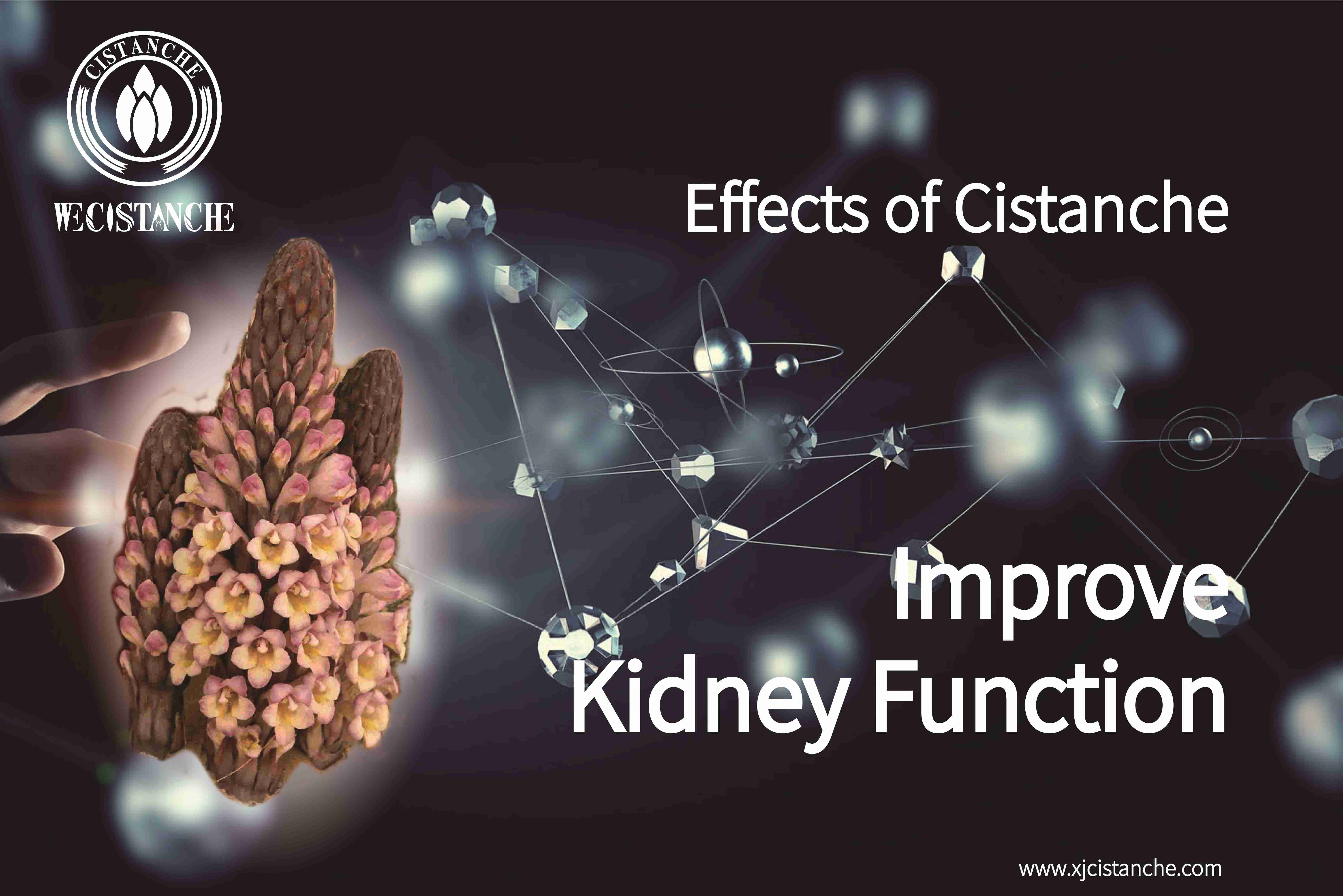
Cistanche--The best herb for kidney disease
Cistanche is one of the nine Chinese fairy herbs. It is as famous as ginseng, Ganoderma lucidum, and Cordyceps Sinensis. The medicinal effect of Cistanche is listed as the top grade in the "Shen Nong's Classic of Materia Medica", so it has been used as a traditional Chinese medicinal material in China for more than 2,000 years. Modern pharmacological activity studies have shown that Cistanche is rich in phenylethanoid glycosides with verbascoside and echinacoside as the iconic components, which can increase the proliferation rate of human kidney cells by 8-10 times. Cistanche can protect renal tubular cells, prevent renal interstitial lesions, slow down the rate of kidney failure, and also effectively prevent secondary bacterial infections in patients with chronic kidney failure.
for more information:ali.ma@wecistanche.com