When 500,000 Alzheimer's Families Are in Trouble, Can This Desert Ginseng, Cistanche Tubulosa, Become A Beacon Of Hope?
Sep 08, 2025
The heavy burden on 500000 families

Benefits of cistanche tubulosa: Anti-Alzheimer's disease
In our country, there is a special group of families who are enduring immense pain and pressure, and this is the 500000 Alzheimer's families. Alzheimer's disease, also known as the "brain eraser," mercilessly erodes patients' memory and cognitive abilities, and puts entire families in a difficult situation.
I once read a news story about an elderly person with Alzheimer's disease who got lost while going for a walk. After discovering it, the family was extremely anxious and searched everywhere, mobilizing all relatives and friends, and even calling the police for help. During the long search process, the family's hearts were filled with anxiety and fear. They were afraid that the elderly person would encounter accidents and would never see them again. Fortunately, after multiple efforts, the elderly person was finally found, but such an experience undoubtedly brought a heavy mental burden to the family.
This example is not an isolated case. According to incomplete statistics, a large number of Alzheimer's disease patients get lost every year, like boats lost in the vast sea, unable to find their way home. In addition to the risk of getting lost, the patient's abnormal behavior also exhausts the family members. Some patients may experience hallucinations, delusions, and baseless accusations against their family members; Some patients turn day and night upside down and make noise in the middle of the night, making it impossible for their families to rest normally; Some patients may engage in dangerous behaviors such as playing with fire or touching electrical appliances, constantly threatening their own and their family's safety.
Family members not only have to endure mental torture, but also bear enormous economic pressure and heavy caregiving work. To care for patients, many family members must give up their jobs and accompany them around the clock. They are responsible for the patient's clothing, food, housing, and transportation, taking care of the patient's diet and daily life, and constantly monitoring the patient's emotions and behavioral changes to prevent accidents from happening. Long-term care work has left the family members physically and mentally exhausted, and their physical and mental states have been severely affected.

Alzheimer's disease: a hidden health killer
Alzheimer's disease, although the name may not be unfamiliar to many people, there are not many people who truly understand it. It is a progressive neurodegenerative disease with a hidden onset, like a killer lurking in the dark, silently eroding the patient's brain.
In the early stages of the disease, patients may only occasionally forget what they just said, did, or cannot remember the name of an acquaintance. These symptoms are often mild, easily overlooked, and considered normal signs of aging. As the condition progresses, the patient's memory decline will become increasingly apparent, not only forgetting recent events, but also gradually blurring their memories. They may repeatedly ask the same question, be unable to find their way home after leaving, and even forget their loved ones.
In addition to memory loss, Alzheimer's disease can also lead to a decline in patients' cognitive abilities, such as language expression, calculation, spatial orientation, etc. Patients may experience speech confusion and be unable to express themselves; Simple mathematical calculations have also become difficult for them; Even in familiar environments, they may lose their direction and not know where they are.
The development of Alzheimer's disease is usually divided into seven stages, from the asymptomatic stage to the extremely severe cognitive decline stage, with symptoms gradually worsening in each stage. In the asymptomatic stage, some nerve cells have already shown abnormalities, but there have been no obvious symptoms such as memory loss. At the stage of extremely mild cognitive decline, patients may feel their memory decline and occasionally forget familiar words and names, but those around them may not notice. As the condition progresses, in the stage of mild cognitive decline, patients' memory problems become more apparent, often forgetting where valuable items are placed, and some abnormalities can also be found in clinical tests. Entering the stage of moderate cognitive decline, patients often forget what they have recently done, their mental arithmetic ability declines, and their ability to perform complex tasks is also greatly reduced, becoming silent and introverted. In the stage of slightly severe cognitive decline, the patient's memory and cognitive function further decline, and they may forget their home address. Daily activities such as eating and going to the bathroom require assistance. In the stage of severe cognitive decline, patients' memory is severely impaired, and they can hardly remember their recent experiences and their surroundings. They often get lost and may also experience personality changes, leading to behaviors that lose their sense of shame. In the stage of severe cognitive decline, patients completely lose the ability to respond to the environment and engage in dialogue, and can only speak simple words or phrases. They experience psychological symptoms such as emotional indifference and unpredictable crying and laughing, and are completely unable to take care of themselves.

Benefits of cistanche tubulosa: Anti-Alzheimer's disease
According to relevant data, there are approximately 15.07 million dementia patients aged 60 and above in China, of which 9.83 million are Alzheimer's disease patients. Moreover, there is a growing trend of younger Alzheimer's disease patients in China, with 21.3% of Alzheimer's disease patients under the age of 60 being surveyed. This data is shocking and also makes us realize that Alzheimer's disease is no longer exclusive to the elderly; it is gradually threatening the health of more and more middle-aged and young people.
The cause of Alzheimer's disease is currently not fully understood, but research has shown that genetic factors, lifestyle, environmental factors, and other factors may be related to the onset. People with Alzheimer's disease in their family have a relatively higher risk of developing the disease; long-term smoking, alcohol abuse, lack of exercise, hypertension, high blood sugar, high blood lipids, and other unhealthy lifestyles and health problems can also increase the risk of illness.
Alzheimer's disease not only brings immense pain to patients themselves, but also imposes a heavy burden on families and society. The patient's quality of life has seriously declined, gradually transforming from an independent person to someone who requires comprehensive care from others. And the family members have to endure mental torture, economic pressure, and heavy caregiving work. According to statistics, the average household cost of Alzheimer's disease patients in the past decade has reached 400000 yuan, which is only the cost of medication and does not include other indirect losses. In addition to financial burden, family members also have to face various problems such as missing patients and abnormal behavior, which can lead to mental stress.
Faced with Alzheimer's disease, this hidden health killer, we cannot sit idly by. Understanding its symptoms, developmental stages, and causes of onset can help us detect and intervene early, delaying the progression of the disease. At the same time, we also need to provide more understanding, support, and care to Alzheimer's disease patients and their families, so that they are no longer alone in the fight against the disease.
The Wisdom and Hope of Traditional Medicine
Modern medicine faces many challenges in the treatment of Alzheimer's disease. At present, although some drugs are used to alleviate symptoms, most of them can only delay the development of the disease to a certain extent and cannot completely cure Alzheimer's disease. These drugs not only have limited therapeutic effects, but may also bring various side effects, causing more trouble to the patient's body and life. Moreover, long-term medication treatment is expensive and also imposes a heavy economic burden on families.
At a time when modern medicine is facing bottlenecks, traditional medicine has brought us new hope. As a treasure of traditional Chinese medicine, traditional Chinese medicine has a unique understanding and treatment methods for Alzheimer's disease. Traditional Chinese medicine classifies Alzheimer's disease as "dementia" and "forgetfulness" and believes that its onset is closely related to the overall state of the human body.
According to traditional Chinese medicine theory, the kidneys store essence, the main bone generates marrow, and the brain is a sea of marrow. If the kidney essence is sufficient, the medullary sea is filled, and the brain function is normal; On the contrary, kidney essence deficiency and marrow sea deficiency can easily lead to symptoms such as memory loss and intellectual decline, which in turn can trigger Alzheimer's disease. In addition to kidney deficiency, factors such as insufficient qi and blood, phlegm turbidity obstructing the orifices, and blood stasis obstructing the brain meridians are also related to the onset of Alzheimer's disease. Insufficient Qi and blood can lead to insufficient blood supply to the brain, making it unable to nourish the brain; Phlegm obstructing the orifice can obscure the clear orifice and affect the normal function of the brain; Stagnation of the brain meridian can hinder the circulation of qi and blood, preventing the brain from receiving sufficient nutrition.
Based on these theories, traditional Chinese medicine focuses on treating Alzheimer's disease from a holistic perspective, by regulating the balance of yin and yang, the circulation of qi and blood, and the function of organs, in order to achieve the goal of treating the disease. Traditional Chinese medicine uses a variety of treatment methods, including Chinese medicine, acupuncture and moxibustion, massage, and so on. These methods work together and can have a synergistic effect, further improving patients' symptoms.

Dragon Herbs cistanche-improve kidney function.on
The Legend of "Desert Ginseng" Cistanche deserticola
In the vast and boundless desert, there grows a magical plant called Cistanche deserticola, which is known as the "desert ginseng" and has unique medicinal value and a long history and culture.
(1) The origin of the name "Desert Ginseng"
Cistanche deserticola is a parasitic plant that parasitizes the roots of desert trees such as red willows. It is mostly hidden underground and only appears on the ground during specific seasons. Its growth environment is extremely harsh, with drought, high temperatures, and sandstorms in the desert not hindering its growth, but rather endowing it with unique vitality.
The medicinal value of Cistanche deserticola is extremely high, as it has the effects of tonifying kidney yang, nourishing essence and blood, moistening intestines, and promoting bowel movements. In terms of enhancing physical strength, resisting fatigue, etc., Cistanche deserticola has a mild taste, moderate strength, and is not overly strong. Due to its nourishing effects comparable to ginseng, and without the "heat up" and "dryness" of ginseng, it is known as "desert ginseng".
(2) The figure of Cistanche in history
The application history of Cistanche deserticola in China has a long and rich history. As early as ancient times, it was regarded as a precious traditional Chinese medicine. In the "Shennong Bencao Jing", Cistanche deserticola is listed as a top-grade herb. The book records: "Cistanche deserticola has a sweet taste and a slight warmth. It is known for its five functions and seven injuries, tonifying the middle, removing cold and hot pain from the stem, nourishing the five organs, strengthening yin, nourishing essence and qi, and having more children. Women have the right symptoms, and long-term consumption can lighten the body." This indicates that at that time, people had already recognized the medicinal value of Cistanche deserticola and used it to treat various diseases.
Li Shizhen, a medical expert in the Ming Dynasty, also recorded in detail about Cistanche deserticola in his "Compendium of Materia Medica": "Cistanche deserticola is sweet but warm in nature, salty but moist in texture, with the characteristics of tonifying yang without dryness, warming and promoting kidney yang to tonify kidney deficiency; tonifying yin without greasiness, moistening intestines and promoting abdominal function to treat constipation." He also mentioned that Cistanche deserticola is a "tonic. It is warm but not hot, firm but not dry, warm but not dry, smooth but not leaking, and has a calm and gentle appearance, hence the name Cistanche deserticola.
Cistanche deserticola is not only highly praised in medical literature but also has an inexplicable connection with historical figures. Legend has it that Cistanche deserticola is a divine artifact bestowed upon Genghis Khan by the divine horse sent by the gods. In the famous' Battle of the Thirteen Wings', Genghis Khan was besieged on a sandy mountain covered in red willows, hungry and exhausted. At this moment, the divine horse shot its essence and blood towards the roots of the red willow tree, and used its hooves to sprout plant root blocks that resembled the divine horse's reproductive organs. This is the Cistanche deserticola. After Genghis Khan and his generals ate a piece of food, their divine power surged,a nd they rushed down the Sha Mountain, defeating the Zhamuhe tribe in one fell swoop and laying the foundation for the unification of Mongolia. From then on, Genghis Khan ushered in an era of conquering the Eurasian continent. Although this legend carries mythological elements, it also indirectly reflects the preciousness and magic of Cistanche deserticola.
(3) discoveries in modern research
With the continuous development of modern science and technology, people's research on Cistanche deserticola is becoming increasingly in-depth. Modern pharmacological research has confirmed that Cistanche deserticola contains various beneficial components for the human body, such as phenylethanolic glycosides, polysaccharides, lignans, and so on. These ingredients endow Cistanche deserticola with various biological activities, making it have antioxidant, anti-fatigue, immune regulation, liver, and cardiovascular protection effects.
In recent years, an increasing number of studies have shown that Cistanche deserticola has potential therapeutic effects on Alzheimer's disease. Cistanche deserticola and its extracts can exert neuroprotective effects through various pathways, thereby improving the symptoms of Alzheimer's disease patients. Research has found that the total glycosides of Cistanche deserticola can enhance the learning and memory levels of Alzheimer's disease mice, improve certain pathological changes in brain tissue, and reduce the rate of brain cell apoptosis. The total glycosides of Cistanche deserticola can also have a good protective effect on the ultrastructure of the hippocampus in D-galactose-induced brain aging model mice, and show a dose-response relationship. This suggests that Cistanche deserticola may play a role in delaying aging and preventing senile dementia through antioxidant mechanisms.

Effects of Cistanche-Anti Alzheimer's disease
Click here to view Cistanche Improving Memory Preventing Alzheimer's Disease products
【Ask for more】 Email:cindy.xue@wecistanche.com / WhatsApp: 0086 18599088692 / Wechat: 18599088692
The monomeric compounds with the highest content of phenylethanolic glycosides in Cistanche deserticola, including pineal glycoside, the main component verbascoside, and the included component guanosine, may also become a good drug for alleviating Alzheimer's disease. These monomeric compounds can protect nerve cells and inhibit their apoptosis; Promote the growth and repair of nerve cells; Increase the release of neurotransmitters in the brain; and improve cerebral circulation. Through these effects, they can effectively improve memory and prevent dementia in the elderly.
Network pharmacology studies have also found that the active ingredients in Cistanche deserticola have multiple potential targets associated with Alzheimer's disease, including AChE, COX, BACE1, etc. Cistanche deserticola can exert pharmacological effects against Alzheimer's disease by inhibiting AChE activity, reducing inflammatory response, and inhibiting the formation of Aβ.
How does Cistanche improve symptoms of Alzheimer's disease
How does Cistanche deserticola, this magical 'desert ginseng', work in the treatment of Alzheimer's disease? Modern scientific research has revealed the mysteries behind it to us.
(1) Regulating neurotransmitters
Neurotransmitters play a crucial role in the neural transmission process in the brain, and Alzheimer's disease patients often have abnormal levels of neurotransmitters. The active ingredients in Cistanche deserticola can regulate the levels of neurotransmitters such as acetylcholine. Acetylcholine is a neurotransmitter closely related to learning and memory, and its levels are significantly reduced in the brains of Alzheimer's disease patients. Cistanche deserticola can increase the level of acetylcholine in the brain by inhibiting the activity of acetylcholinesterase, reducing the breakdown of acetylcholine. In this way, the neural transmission function of the brain is improved, and the patient's memory and cognitive abilities are also enhanced. It's like a comprehensive maintenance and upgrade of the information transmission channel in the brain, allowing information to be transmitted more smoothly.
(2) Antioxidant stress
The production of free radicals is inevitable in our bodies. Under normal circumstances, the body's own antioxidant defense system can maintain a balance of free radicals. But with age, especially in the case of Alzheimer's disease, this balance is disrupted, and a large amount of free radicals accumulate, causing severe oxidative stress damage to nerve cells. Cistanche deserticola is rich in various antioxidant components, such as phenylethanolic glycosides and polysaccharides. These antioxidant components are like brave "guardians" that can effectively eliminate excess free radicals in the body. They can react with free radicals to convert them into stable substances, thereby reducing oxidative stress damage to nerve cells. In this way, Cistanche deserticola protects the structure and function of nerve cells, assuring the normal functioning of the brain.
(3) Inhibit neuroinflammation
Neuroinflammation plays an important role in the pathogenesis of Alzheimer's disease. When the brain undergoes an inflammatory response, a large amount of inflammatory factors, such as tumor necrosis factor, interleukin, etc., are produced. These inflammatory factors can cause damage to nerve cells, leading to cell death and dysfunction, thereby accelerating the development of Alzheimer's disease. Cistanche deserticola has the effect of inhibiting the brain's inflammatory response. It can regulate inflammation-related signaling pathways and reduce the production and release of inflammatory factors. In this way, the damage to nerve cells will be reduced, and the development of the disease can also be delayed to a certain extent. It's like putting the brakes on inflammation in the brain, preventing the condition from worsening rapidly.

Benefits of cistanche tubulosa-anti-inflammatory
(4) Evidence from clinical studies
In addition to the aforementioned mechanisms of action, clinical studies have also provided strong evidence for the treatment of Alzheimer's disease with Cistanche deserticola. A comparative experiment was conducted between Cistanche deserticola total glycosides capsules and the commonly used drug Aricept for treating Alzheimer's disease in clinical practice. 124 Alzheimer's disease patients who met the criteria were selected for the experiment and randomly divided into two groups. The control group was given Anlishen, while the treatment group was given Cistanche total glycosides capsules. Both treatment groups have a duration of 12 weeks. The experimental results showed that after 12 weeks, the clinical dementia severity scale (CDR) and activities of daily living (ADL) scores of both groups of patients significantly decreased, while the Mini-Mental State Examination (MMSE) scores significantly increased. This indicates that both groups of drugs have an improving effect on the degree of dementia and the daily living self-care ability of patients. Moreover, there was no statistically significant difference in the scores between the two groups. This indicates that the total glycosides of Cistanche deserticola have a therapeutic effect similar to that of Aricept in Alzheimer's disease patients. It is worth mentioning that the adverse reactions of Cistanche deserticola total glycosides capsules were less than those of the control group. This research result fully demonstrates the effectiveness and safety of Cistanche deserticola in the treatment of Alzheimer's disease, providing a new option for the treatment of Alzheimer's disease.
Usage and suggestions of Cistanche deserticola
(1) The consumption method of Cistanche deserticola
There are various ways to consume Cistanche deserticola, and everyone can choose according to their preferences and needs.
Cistanche deserticola infused wine: This is a popular method of consumption. Wash and cut Cistanche deserticola into thin slices, soak in Baijiu, seal and store for 15-30 days before drinking. Cistanche deserticola wine not only has a rich and mellow taste, but also has the effects of nourishing the kidneys, promoting yang, moistening the intestines, and promoting bowel movements. For some people with kidney yang deficiency, insufficient essence and blood, and cold and painful waist and knees, moderate consumption of Cistanche deserticola wine is like injecting a warm force into the body, which can effectively alleviate discomfort symptoms. However, it should be noted that alcohol can cause certain damage to the liver, so drinking alcohol must be moderate and should not be consumed in large quantities for a long time.
Cistanche deserticola tea brewing: easy and convenient to operate. Cut the Cistanche deserticola into thin slices, put them in a teacup, and brew them with boiling water before drinking. In the busy work and life, brewing a cup of Cistanche deserticola tea can not only enjoy a moment of tranquility, but also have the health benefits of nourishing the kidneys, promoting yang, moistening the intestines, and promoting bowel movements. Especially suitable for those who pay attention to health preservation and hope to achieve health through daily drinks. However, it should be understood that the efficacy of brewing tea with Cistanche deserticola is relatively limited and cannot replace medication for treating diseases.
Boil Congee with Cistanche: Cut Cistanche into thin pieces and cook Congee with rice. When the nutrition of Cistanche deserticola is integrated into the soft glutinous Congee, it not only increases the taste and nutritional value of Congee, but also gives full play to the efficacy of Cistanche deserticola. This method is particularly suitable for people who need to warm up or regulate their digestive system. In the morning, a bowl of Congee with cistanche will kick off a day full of vitality.
Cistanche deserticola soup: Cut the Cistanche deserticola into thin slices and make soup with chicken, pork ribs, and other ingredients. In the process of slow stewing, the essence of Cistanche deserticola slowly integrates into the soup, making the soup more delicious and nourishing. Cistanche deserticola soup also has the effects of tonifying the kidney and yang, moistening the intestines, and promoting bowel movements. It is suitable for people with kidney yang deficiency and insufficient blood and essence. A family sitting together, drinking a steaming bowl of Cistanche deserticola soup, not only warms the body, but also enhances family affection.
(2) Precautions for use
Although Cistanche deserticola is good, it is not suitable for everyone, and there are also some things to pay attention to during use.
People with yin deficiency and excessive fire, loose stools and diarrhea, and constipation caused by excess heat should avoid using Cistanche deserticola. People with yin deficiency and excessive fire may have insufficient yin fluid in their bodies, resulting in a relatively strong yang qi. However, Cistanche deserticola has a warm nature, and consuming it may exacerbate the dryness and heat in their bodies, like adding another stick of firewood to a raging fire. People with loose stools, diarrhea, and constipation caused by excessive heat have abnormal intestinal function, and the laxative effect of Cistanche deserticola may worsen the condition.
When using Cistanche deserticola, the dosage must be strictly controlled to avoid excessive consumption. Excessive consumption may lead to some adverse reactions, such as excessive heat and gastrointestinal discomfort. Just like eating, even the most delicious food can be unbearable to overeat.
Cistanche deserticola is not suitable for use with certain drugs. For example, Cistanche deserticola should not be used together with traditional Chinese medicines such as resveratrol and Wulingzhi, as they may interact with each other, affect the efficacy of the medicine, and even cause adverse reactions. Before using Cistanche deserticola, if you are taking other medications, be sure to consult a doctor or pharmacist to ensure safety.
(3) Choose high-quality Cistanche deserticola
It is crucial to choose high-quality Cistanche deserticola in order to maximize its effectiveness.
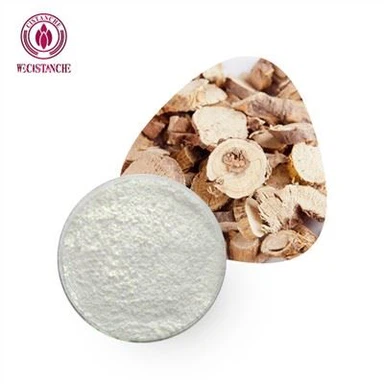
When selecting Cistanche deserticola, one can make a preliminary judgment by observing its appearanceHigh-qualityyy Cistanche deserticola has a flattened cylindrical shape, slightly curved, with a brown or gray brown surface, densely covered with tile-shaped, arranged fleshy scales and leaves. The scales are usually compact, and the texture is soft and tough. And those Cistanche deserticola with a dry appearance, dull color, and loose scales may not be of good quality.
Smelling is also an important method. Good Cistanche deserticola has a unique and fragrant aroma. If you smell a strange or pungent odor, it indicates that there may be a quality issue with Cistanche deserticola.
You can also taste a little bit of Cistanche deserticola. High-quality Cistanche deserticola has a sweet and slightly bitter taste. If the taste is too bitter or has other strange flavors, it is necessary to choose carefully.
To ensure the purchase of high-quality Cistanche deserticola, it is essential to choose legitimate channels for purchase. You can go to reputable Chinese medicine stores, Chinese medicine counters in supermarkets, or choose legitimate e-commerce platforms to purchase. Avoid purchasing from small vendors or unknown sources to avoid buying counterfeit and inferior products.

Benefits of cistanche tubulosa
The light of hope is ahead.
Cistanche deserticola, a gift from the desert, has brought new hope to 500000 Alzheimer's families. As a treasure of traditional medicine, it has opened up a new path for the treatment of Alzheimer's disease with its unique medicinal value.
Cistanche deserticola regulates neurotransmitters, resists oxidative stress, and inhibits neuroinflammation, providing scientific evidence for improving symptoms in Alzheimer's disease patients. Clinical studies have strongly demonstrated that the total glycosides of Cistanche deserticola have therapeutic effects on Alzheimer's disease patients similar to commonly used drugs, with fewer adverse reactions. This undoubtedly gives the patient's family a glimmer of hope and increases their confidence in overcoming the disease.
If you or someone around you is struggling with Alzheimer's disease, you may want to try using Cistanche deserticola as an adjuvant therapy under the guidance of a doctor. Perhaps it can become the key to improving patients' symptoms and enhancing their quality of life.
At the same time, we also call on all sectors of society to pay more attention to the Alzheimer's disease population. Provide understanding, support, and care to patients and their families, so that they are no longer alone in the fight against the disease. I believe that with everyone's joint efforts, we will be able to find better ways to overcome the medical challenge of Alzheimer's disease, so that every life can shine brightly.