You Get What You Pay For: The Difference Between Cheap And Expensive Cistanche Is Not Just The Price
Mar 05, 2026
When it comes to cistanche, many people only focus on the price, thinking that "all cistanche are the same, so cheaper ones are fine". However, they don't know that between cheap and expensive cistanche, there is a world of difference in quality and efficacy, as well as a huge gap between the gifts of nature and manual perseverance. In particular, Xinjiang Tubular Cistanche (Cistanche tubulosa), compared with the common Inner Mongolia Cistanche on the market, fully embodies the principle of "you get what you pay for" - its high price is never an artificial price hike by merchants, nor is it a simple brand premium. Instead, every inch of its flesh contains irreplaceable nutritional advantages, nurtured by the unique desert environment, precipitated by a long growth cycle, and supported by strict processing techniques. Every penny of the price corresponds to solid quality, which is also the core reason why it can surpass Inner Mongolia Cistanche and become the "top choice" among cistanche varieties.

Cistanche deserticola and Cistanche tubulosa
In the health preservation market, the price of cistanche varies greatly. Cheap ones cost only a few dozen yuan per catty, while expensive ones can reach several hundred or even thousands of yuan. Many consumers are misled by the price and blindly choose cheap products, thinking they can "achieve great things with little money". Little do they know that this choice often does more harm than good. Most of the cheap cistanche on the market are inferior miscellaneous products, or low-quality goods with extremely short growth cycles and insufficient nutrition. Some unscrupulous merchants even pass off rhizomes of other plants as cistanche, passing off inferior products as high-quality ones and misleading consumers. Not only can they not achieve the health-preserving effect, but they may also cause unnecessary burdens on the body due to excessive impurities and improper processing. The core strength of high-priced cistanche often comes from the unique advantages of Xinjiang Tubular Cistanche, which are unattainable by Inner Mongolia Cistanche and incomparable to cheap and inferior cistanche. First of all, the inherent gap in the production environment has laid an insurmountable quality divide between the two, and also determined the difference in their prices and values.

desert ginseng
Xinjiang Tubular Cistanche is mainly concentrated in the oasis edges around the Taklamakan Desert in southern Xinjiang, China, which is the most suitable area for the growth of Tubular Cistanche in the world, bar none. The Taklamakan Desert is the largest desert in China and the second largest mobile desert in the world. It has a suitable altitude and abundant sunlight all year round, with an annual sunshine duration of more than 3,000 hours. Sufficient sunlight allows the Tubular Cistanche to carry out sufficient photosynthesis and accumulate more nutrients. At the same time, the temperature difference between day and night here is extremely large - the maximum temperature during the day can reach more than 40℃, while the minimum temperature at night can drop to below 0℃. This huge temperature difference can inhibit the respiration of Tubular Cistanche, reduce the consumption of nutrients, and allow nutrients to be more concentrated in the fleshy stems. In addition, it is naturally nourished by the glacial meltwater from the Kunlun Mountains. The glacial water is pure and pollution-free, rich in various minerals and trace elements, providing a sufficient and high-quality water source for the growth of Tubular Cistanche. More importantly, the soil here is mostly sandy soil with excellent air permeability, allowing the roots of Tubular Cistanche to go deep into the ground, fully absorb nutrients in the soil, and avoid water accumulation and rot, providing unique natural conditions for its growth. Xinjiang Tubular Cistanche grown in such an environment is plump and thick, with delicate flesh and warm color. When cut open, it has clear textures, a brown or black-brown cross-section, flexible texture, and a light, natural medicinal fragrance without impurities or peculiar smells, making it of superior quality.
In contrast, most Inner Mongolia Cistanche grows in the desert and semi-desert areas in western and central Inner Mongolia, where the growth environment is vastly different from that in southern Xinjiang. In the desert areas of Inner Mongolia, the soil is mostly poor sandy loam with low nutrient content, lacking various minerals and trace elements required for the growth of Tubular Cistanche. At the same time, the sunshine duration here is insufficient, with an annual sunshine duration of only 2,000-2,500 hours, far less than that in southern Xinjiang, leading to insufficient photosynthesis of cistanche and insufficient accumulation of nutrients. In addition, the temperature difference between day and night here is small, which cannot effectively inhibit the respiration of cistanche, resulting in faster consumption of nutrients. Coupled with an insufficient water supply, which relies mostly on natural precipitation that is scarce and unevenly distributed, Inner Mongolia Cistanche grows fast but cannot accumulate enough active ingredients. Therefore, the flesh of Inner Mongolia Cistanche is generally loose with a strong fibrous texture and a light color, mostly yellowish-brown or light brown. When cut open, it has vague textures, a hard cross-section, a faint medicinal fragrance, and some even have a sandy odor, so its quality is far inferior to that of Xinjiang Tubular Cistanche. More notably, some areas in the growth environment of Inner Mongolia Cistanche have mild salinization. Although cistanche itself is salt-tolerant, excessive salinization will affect the absorption of nutrients, further reducing its quality.

Abundant harvest of Cistanche tubulosa
If the production environment is the "innate foundation" for the quality gap between the two, then the difference in the content of core nutrients is the "core strength" that makes Xinjiang Tubular Cistanche superior to Inner Mongolia Cistanche, and also the key to the price gap between them. According to the clear provisions of the Pharmacopoeia of the People's Republic of China (2020 Edition), the total content of the core active ingredients, echinacoside and verbascoside, in Xinjiang Tubular Cistanche shall not be less than 1.5%, while this index for Inner Mongolia Cistanche (mainly Desert Cistanche) only needs to reach 0.3%. The content of the former is more than 5 times that of the latter, and this gap directly determines the world of difference in their nourishing effects.

Main Chemical Constituents of Cistanche tubulosa
Many people may not be familiar with echinacoside and verbascoside. These two ingredients are the key support for cistanche to exert its core effects of "tonifying kidney yang, benefiting essence and blood, and moistening the intestines to relieve constipation", and are also the core indicators to measure the quality of cistanche. Echinacoside has a strong antioxidant and anti-aging effect, which can effectively scavenge free radicals in the body, delay cell aging, improve kidney function, promote the production of essence and blood, and has a significant regulating effect on symptoms such as soreness and weakness of the waist and knees, dizziness and tinnitus, fatigue and night sweats caused by insufficient kidney yang and deficiency of essence and blood. Verbascoside can enhance the body's immunity, regulate the endocrine, improve intestinal function, relieve constipation, and also help nourish the skin, making the complexion more ruddy. With its ultra-high content of active ingredients, Xinjiang Tubular Cistanche has more prominent effects of tonifying the kidney and benefiting essence, resisting aging and moistening dryness, and moistening the intestines to relieve constipation. It is especially suitable for people with insufficient kidney yang, deficiency of essence and blood, dry intestines, and low immunity to regulate. Taking it persistently, the effect is faster and more stable, and it can truly achieve the purpose of health preservation.

Echinoside the main chemical component of Cistanche tubulosa

Acteoside, the main chemical component of Cistanche tubulosa
In contrast, due to the low content of core active ingredients, Inner Mongolia Cistanche has a relatively mild and weak nourishing effect. Even if taken for a long time, it is difficult to achieve the ideal regulating effect. For example, when used to tonify the kidney and benefit essence, taking Xinjiang Tubular Cistanche for 1-2 months can bring obvious improvement, while taking Inner Mongolia Cistanche may take 3-6 months or even longer to feel a slight effect. For people who need rapid regulation, it is undoubtedly "half the effort with twice the work". This is also the core reason why Inner Mongolia Cistanche is relatively cheap - insufficient nutrients and limited efficacy make it impossible to support a high price. More notably, some cheap Inner Mongolia Cistanche on the market, to pursue output, will apply chemical fertilizers and pesticides during the growth process. Although this can speed up the growth rate, it will damage the natural nutritional structure of cistanche, reduce the content of active ingredients, and even leave harmful substances. Long-term use may cause potential harm to the body.
In addition, the differences in growth cycle and harvesting standards have further widened the quality gap between Xinjiang Tubular Cistanche and Inner Mongolia Cistanche, and also made the price gap between them more obvious. As a nationally protected wild plant, Xinjiang Tubular Cistanche is strictly protected. At present, most of the Xinjiang Tubular Cistanche on the market is artificially planted, but the planting process strictly follows the laws of nature, without applying any chemical fertilizers, pesticides, or ripening agents, and relies entirely on the natural environment for growth. Its growth cycle is extremely long - it takes at least 3-5 years from inoculation to maturity, and some even 5-7 years. The long growth cycle allows the Tubular Cistanche to have enough time to absorb nutrients and water in the soil, accumulate sufficient active ingredients, and make the flesh more plump and nutritious.
Moreover, the harvesting of Xinjiang Tubular Cistanche has strict standards. Artificial harvesting can only be carried out when the fleshy stems are fully mature, and the nutrient content reaches its peak. The harvesting time is mostly concentrated in spring and autumn every year, when the quality of Tubular Cistanche is the best. After harvesting, it also needs to go through fine drying, cleaning, and processing techniques to remove impurities and excess water, and adopt low-temperature drying to retain its core nutrients to the greatest extent and avoid the loss of effective substances. The entire processing process is free of additives to ensure the natural quality of Tubular Cistanche. Therefore, high-quality Xinjiang Tubular Cistanche is not only nutritionally sufficient but also highly safe, suitable for long-term use.

Effects of cistanche-Improve Kidney Function
Click here to view Cistanche for Kidney disease products
【Ask for more】 Email:cindy.xue@wecistanche.com / WhatsApp: 0086 18599088692 / Wechat: 18599088692
In contrast, some growers of Inner Mongolia Cistanche, in order to pursue output, shorten the growth cycle and obtain faster economic benefits, will adopt artificial ripening methods, apply ripening agents, chemical fertilizers, etc., to shorten the growth cycle of cistanche to 1-2 years. Although this can achieve a rapid harvest, the flesh is loose, the nutrition is lacking, the content of active ingredients is greatly reduced, and the quality is greatly compromised. At the same time, the harvesting standards for Inner Mongolia Cistanche are relatively loose. Many growers will harvest cistanche before it is fully mature to meet the construction period. At this time, the nutrient content of cistanche has not been fully accumulated, so the effect is naturally not good. After harvesting, the processing technology is also relatively simple, mostly using high-temperature exposure. This not only leads to the massive loss of nutrients but also may make the flesh dry and hard due to excessive exposure, further reducing the taste and quality. What's worse, some unscrupulous merchants will dye and smoke the harvested Inner Mongolia Cistanche to pass it off as high-quality cistanche, deceiving consumers. Such cistanche, although cheap, has no nutritional value at all.

Harvest of Cistanche tubulosa
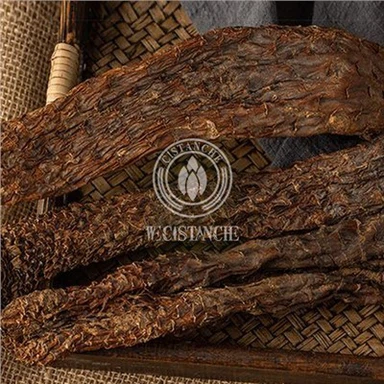
In addition to the differences in production area, nutrient content, growth cycle, and processing technology, there are also obvious differences in appearance and taste between the two, which are the keys for consumers to quickly distinguish when purchasing. High-quality Xinjiang Tubular Cistanche is oblate cylindrical, slightly curved, generally 10-30 cm in length and 2-5 cm in diameter. Its surface is brown or black-brown, with obvious longitudinal wrinkles and horizontal lenticels, a flexible texture, and is not easy to break. When cut open, the cross-section is brown, shiny, and with clear textures, with a light, natural, medicinal fragrance. When chewed, it has a delicate taste, slightly sweet, and no fibrous texture. In contrast, Inner Mongolia Cistanche is mostly cylindrical, shorter in length, generally 5-20 cm in length and 1-3 cm in diameter. Its surface is yellowish-brown or light brown, with unobvious longitudinal wrinkles, a hard texture, and easy to break. When cut open, the cross-section is yellowish-white or light brown, with vague textures and a faint medicinal fragrance. When chewed, it has an obvious fibrous texture, dry taste, and even a slight bitterness or sandy taste.
Many people mistakenly think that "cheap cistanche just has less nutrition and can be used casually", but they don't know that this idea is a misunderstanding of health preservation and is even irresponsible to their own bodies. Inferior cistanche not only has little effect and cannot achieve the purpose of health regulation, but also may cause burdens on the intestines, stomach, liver, and other organs due to improper processing, excessive impurities, and residual harmful substances. Long-term use may even cause discomfort. The high price of Xinjiang Tubular Cistanche is a respect for natural growth, a commitment to quality, a reflection of the value of every nutrient, and a responsibility to consumers' health. Compared with Inner Mongolia Cistanche, it is more plump, more delicate, more nutritious, more effective, and safer. It is a better choice for both daily health preservation and symptomatic regulation.
In today's health preservation market, more and more people begin to pay attention to quality and abandon the misunderstanding of "only looking at the price", because everyone gradually understands that the core of health preservation is "effectiveness", and effectiveness comes from quality. The reason why Xinjiang Tubular Cistanche is relatively expensive is that every link of it strives for perfection - the unique growth environment, the long growth cycle, the strict harvesting standards, and the fine processing techniques all require a lot of time, manpower, and material resources, so the cost is naturally high. In contrast, due to the general growth environment, short growth cycle, and simple processing technology, the cost of Inner Mongolia Cistanche is low, so the price is naturally relatively low, but the quality and efficacy are also greatly reduced.

The villagers of Hetian Village in Xinjiang are digging and harvesting Cistanche tubulosa
"You get what you pay for" is never an empty saying, especially for cistanche. Cheap cistanche saves money but loses effectiveness, and may even cost health. Xinjiang Tubular Cistanche is expensive in price but wins in quality and peace of mind. It is a high-quality ingredient that can truly exert the value of "desert ginseng". Compared with Inner Mongolia Cistanche, every advantage of it is worth the price, and only such cistanche can truly live up to every original intention of health preservation and protect our health.
Finally, it is also a reminder to all consumers that when buying cistanche, do not blindly pursue low prices. Learn to distinguish between Xinjiang Tubular Cistanche and Inner Mongolia Cistanche, recognize high-quality products, and choose regular channels to buy to avoid buying shoddy and counterfeit products. After all, health preservation is never a "money-saving thing". Choosing high-quality ingredients can achieve the ideal health-preserving effect, which is also the most basic responsibility to your own body. Xinjiang Tubular Cistanche proves its value with quality and gains recognition with efficacy. Its high price is reasonable and well-founded, and it is worthy of choice for every person who pays attention to health preservation.