A Classic TCM Formula “Unblocking Urination”: What It Means Today—and What Cistanche’s Real Benefits May Be For Bone Health
Apr 27, 2026
"Zhang Zhongjing's Only Formula to 'Unblock the Prostate'"
In today's article, I want to talk with everyone about the "medical sage" of the Han dynasty, Zhang Zhongjing, and how he left us a herbal combination that can be applied to benign prostatic hyperplasia (BPH).
At this point, you may think I'm talking nonsense: the prostate is something modern medicine recognized especially after anatomy advanced enough to identify it. Ancient people didn't even know what the prostate was-let alone in Zhang Zhongjing's era. So how can I claim that Zhang Zhongjing had a formula to "unblock the prostate"?
Don't worry-let me finish the case first. After that, you'll understand.
When I had just begun studying with my teacher, we once received a consultation request. The patient had prostatic hyperplasia. At first, he could not urinate at all-his lower abdomen was distended and urgent, painful, and he rejected pressure on palpation. What should be done? A person can't be killed by urine retention. So catheterization was done first.
After catheterization, the patient said he had taken many Western medicines without success, and he did not want surgery, so he requested Traditional Chinese Medicine treatment. That was how my teacher was invited.
On examination, the patient was in his 60s. His tongue body was dark red, the coating was yellow and greasy, and the pulse was slippery and rapid. He also had a strong, foul mouth odor-noticeable as soon as he spoke.
My teacher didn't overthink it at the time and said: let's try a decoction.
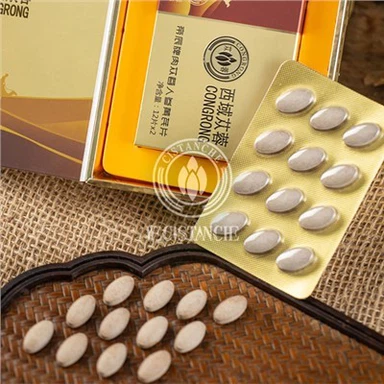
A NEW TCM HERB CISTANCHE FOR CURING PROSTATE DISEASE

Supportive Service Of Wecistanche-For more details about cooperation
Email:wallence.suen@wecistanche.com
He prescribed the following formula:
Adzuki bean (Chi Xiao Dou) 30 g
Patrinia (Bai Jiang Cao) 30 g
Rhubarb (Da Huang) 15 g
Angelica sinensis (Dang Gui) 20 g
Decoct in water and take orally.
After 5 doses, the patient could urinate by himself, and after urination a small amount of turbid matter was expelled. Then, after about 20 more doses, all symptoms resolved. Not only was urination normal, but the mouth odor also decreased. The yellow, greasy tongue coating returned to normal.
In fact, the patient's problem was simple: it belonged to a pattern of damp-heat sinking downward combined with blood stasis obstructing flow. Look-red tongue body, yellow-greasy coating, heavy halitosis, slippery-rapid pulse-these clearly indicate damp-heat. Damp-heat congests the bladder, causing failure of qi transformation; blood stasis fails to move, and thus urination becomes impossible.
So what do we do in such a case? Very simply-clear damp-heat.
Zhang Zhongjing's original formula is called Chi Xiao Dou Dang Gui San (Adzuki Bean & Angelica Powder), recorded in Jin Gui Yao Lue (Essentials from the Golden Cabinet). It contains only two herbs: Chi Xiao Dou and Dang Gui. What does it do? It clears heat, drains dampness, detoxifies and expels pus, and invigorates blood to resolve stasis.

Formula explanation (traditional commentary excerpts and interpretations):
In general, a rapid pulse implies heat and vexation. This heat is in the blood, not in the nutritive/defensive aspect, so there may be no obvious fever but mild restlessness. Sweating occurs because blood disease fails to harmonize with defensive qi. Blood disease causes irritability and desire for quiet; defensive disharmony leads to yang collapse and desire to lie down; the interstices open and fluids leak.
Red eyes after 3–4 days reflect heat in blood rising upward; darkened corners of the eyes after 7–8 days reflect congealed blood.
If one cannot eat, pus has already formed and damp-heat disperses, toxic blood flows and damages middle qi; if one can eat, toxic blood has congealed into pus and stomach qi is not disturbed.
Chi Xiao Dou clears heat toxin, disperses "bad blood," relieves vexation, expels pus, and supports blood vessels-used as the chief herb.
Dang Gui nourishes blood and generates new while dispelling old-used as assistant.
"Fermented rice-wash water" (jiang shui) is sour, clears heat and relieves vexation, enters the blood-used as envoy (in some commentarial traditions).
My teacher, on the basis of this combination, added Bai Jiang Cao and Da Huang to enhance the actions of clearing heat, detoxifying, and purging heat. With these four herbs combined, the effect is worth expecting.
Compared with many standard "clear heat and drain dampness" formulas, this combination has a stronger function of invigorating blood, resolving stasis, detoxifying, and expelling pus, making it suitable for the patient described above.
At the time, after catheterization the patient's test showed white blood cells (+).
To be honest, when Zhang Zhongjing created this combination, he certainly did not intend it for prostatic hyperplasia. This is a new use discovered by later generations through ongoing clinical exploration.
Looking across Zhang Zhongjing's formulas, there are very few combinations that focus so specifically on clearing heat toxin, draining dampness, and expelling pus. Therefore, I would say that in a certain sense, this is Zhang Zhongjing's only combination that can be used effectively for BPH cases that belong to the pattern of damp-heat sinking downward. This deserves our attention.
Master Hu Xishu also had deep clinical experience with Chi Xiao Dou Dang Gui San, saying (paraphrased):
"When bleeding occurs before stool, that is 'near bleeding'-near the anus-typical hemorrhoidal bleeding. Chi Xiao Dou Dang Gui San governs it. I often use it. Once my nephew had hemorrhoidal bleeding after surgery; I had him take Chi Xiao Dou Dang Gui San and Dang Gui Shao Yao San, and it worked quickly. Chi Xiao Dou dispels damp-heat; hemorrhoids are often a damp-heat problem, so these formulas work."
In modern times many people ask whether TCM is scientific. I think modern people cannot judge this easily because what modern people call "science" is different from what "science" meant in the era when TCM formed. Modern science emphasizes "visible and tangible" proof. In the era of TCM's birth, "science" referred more to patterns and laws-as long as something follows a discoverable law, it is scientific. So TCM is a kind of science that emerged before modern science-you need to understand that.
Honestly, when Zhang Zhongjing created these two small formulas, he certainly did not think of using them for BPH. This is later innovation guided by the spirit of pattern differentiation and treatment. It is worth further exploration.

Folk Remedy Claim
Pangolin + Cinnamon for Prostatic Hyperplasia
Functions/Indications: Prostatic hyperplasia.
Composition: Fried pangolin scales 180 g, cinnamon 120 g, raw licorice 50 g.
Usage: Grind into very fine powder and store. Take twice daily, 10 g each time, mixed with light honey water. 20 days is one course.
Case verification claim: Used in 100 cases of BPH; 95 "cured," 3 markedly effective, 2 effective; total effectiveness 100%.
Compliance & safety note for international readers: Pangolin products are widely restricted/illegal in many countries and raise major conservation and safety issues. This section is included only because it appeared in your source text; it is not a recommended approach.

Part 2 - Bridging to Bone Health: "TCM Herb for Osteoporosis?"
Many readers searching for "TCM herb for osteoporosis" are looking for two things:
a traditional logic they can understand (why a herb would affect bone), and
a modern mechanism (oxidative stress, inflammation, bone remodeling pathways).

What osteoporosis is (briefly, for non-specialists)
Osteoporosis (OP) is characterized by progressive bone loss, micro-architectural damage, and increased fracture risk. Conventional care often includes calcium/vitamin D, medications, and lifestyle measures-yet long-term drug use may bring side effects, which is one reason people explore plant-derived actives.
Where Cistanche fits the "kidney → bone" TCM narrative
In Traditional Chinese Medicine, "kidney" functions are historically linked to bones and aging. Cistanche (肉苁蓉), sometimes called "desert ginseng," is widely described in TCM context as a kidney-tonifying herb and is often discussed in the context of strengthening tendons and bones.
What modern research summaries claim about Glycosides of Cistanche (GCs)
A WECISTANCHE knowledge article titled "Research Progress Of Total Glycosides Of Cistanche In The Treatment Of Osteoporosis" (dated Sep 18, 2025) summarizes reported mechanisms by which Cistanche glycosides may support osteoporosis improvement, including:
Antioxidant effects: scavenging free radicals, reducing oxidative stress damage to bone
Anti-inflammatory effects: inhibiting inflammatory mediators; reducing markers such as NO and IL‑6 (as summarized on the page)
Bone metabolism regulation: promoting osteoblast proliferation/differentiation; inhibiting osteoclast activity; increasing bone density and reducing fracture risk
Pathway modulation: influencing OPG/RANKL/RANK and Wnt/β-catenin signaling to inhibit bone resorption and promote bone formation
Other systemic factors: potential effects via sex hormone regulation and calcium/phosphorus balance (as summarized on the page)
Source (provided by you):
WECISTANCHE Knowledge page: Research Progress Of Total Glycosides Of Cistanche In The Treatment Of Osteoporosis - Bone growth - News (Sep 18, 2025).
Link (as provided): https://www.xjcistanche.com/news/cistanche-in-the-treatment-of-osteoporosis-85229223.html