11 Targeted Herbs + Cistanche: Ancient Chinese Protocol For Prostate Health & BPH Reversal
May 07, 2025
Phellodendron (Huang Bai): The Damp-Heat Destroyer
Meridians: Kidney, Bladder
Active Compounds: Berberine (antibacterial/anti-inflammatory)
Dose: 6-12g
▶ Clears damp-heat, alleviates urinary urgency/pain
▶ Synergistic pairings: Anemarrhena (Zhi Mu) for yin deficiency, Amomum (Sha Ren) to protect digestion
⚠️ Avoid in spleen deficiency with cold signs
Patrinia (Bai Jiang Cao): The Pus-Dissolving Warrior
Meridians: Stomach, Large Intestine, Liver
Key Components: Triterpenoid saponins (anti-viral/anti-inflammatory)
Dose: 10-15g
▶ Resolves toxic heat, reduces prostatic abscess risk
▶ Combos: Coix seed (Yi Yi Ren) enhances drainage
⚠️ May cause diarrhea in weak digestion

Oldenlandia (Bai Hua She She Cao): The Urethral Unblocker
Meridians: Stomach, Intestines
Bioactives: Anthraquinones (immune-modulating)
Dose: 15-30g
▶ Targets damp-heat stagnation with precision
▶ Potentiates with Scutellaria barbata (Ban Zhi Lian)
⚠️ Balance with warming herbs in cold constitutions


Salvia Root (Dan Shen): The Blood Flow Optimizer
Meridians: Heart, Liver
Star Compounds: Tanshinones (anti-thrombotic)
Dose: 10-15g
▶ Breaks blood stasis, resolves pelvic congestion
▶ Enhances with Red Peony (Chi Shao)
⚠️ Contraindicated in pregnancy
Talcum (Hua Shi): The Heat-Clearing Conductor
Meridians: Bladder, Lungs
Mineral Profile: Magnesium silicate (cooling diuretic)
Dose: 10-20g
▶ Soothes burning urination in damp-heat cases
▶ Partners with Dianthus (Qu Mai)
⚠️ Use cloth-wrapped decoctions
Plantago Seed (Che Qian Zi): Promoting Urination and Precisely Regulating Prostate Function
Plantago seed enters the Liver, Kidney, Lung, and Small Intestine meridians, and contains active compounds such as plantagonic acid and adenine. It has diuretic, anti-inflammatory, and antibacterial properties. In the treatment of prostatitis, Plantago seed is suitable for patients with damp-heat accumulation syndrome, effectively relieving abnormal urination symptoms and precisely regulating prostate function.
The commonly used dosage is 9–15 grams. As it tends to make decoctions thick and sticky, which may affect efficacy, it is recommended to wrap and boil it separately when used in decoctions. Clinically, it is often combined with Akebia stem (Mu Tong). Mu Tong clears heat and promotes urination, and works synergistically with Plantago seed to enhance the effect. However, Mu Tong has certain toxic properties, so dosage must be strictly controlled to avoid toxic reactions.
Chinese Raspberry (Fu Pen Zi): Tonifying the Kidney, Consolidating Essence, and Restoring Prostate Health
Chinese raspberry enters the Liver, Kidney, and Bladder meridians, and contains active ingredients such as flavonoids and terpenoids. It has the functions of tonifying the kidney, consolidating essence, reducing urination, and improving vision. In prostatitis treatment, it is particularly effective for patients with kidney deficiency syndrome, helping to alleviate symptoms like spermatorrhea and frequent urination, thus restoring prostate health.
The usual dosage is 6–12 grams. Due to its warm nature, it should be used cautiously in patients with yin deficiency and internal heat or short, reddish urination, as it may worsen symptoms. Clinically, it is often combined with goji berry (Gou Qi Zi), which nourishes the liver and kidney. Together, they enhance kidney tonification, better addressing kidney deficiency-type prostatitis.
Cherokee Rose Fruit (Jin Ying Zi): Consolidating Essence and Urine, a Guardian of the Prostate
Cherokee rose fruit enters the Kidney, Bladder, and Large Intestine meridians, and contains polysaccharides and tannins. It helps consolidate essence, reduce urination, and stop diarrhea. For patients with kidney deficiency and instability, it can significantly improve symptoms such as spermatorrhea and seminal emission, acting as a loyal guardian of the prostate.
The typical dosage is 6–12 grams. Due to its strong astringent effect, it is contraindicated in patients with excess heat or pathogens, as it may trap the pathogens inside and worsen the condition. Clinically, it is often used with Euryale seed (Qian Shi), which also consolidates essence and reduces urination. Together, they are more effective in treating kidney deficiency-related prostatitis.
Mantis Egg Case (Sang Piao Xiao): A Superior TCM for Tonifying the Kidney and Supporting Prostate Function
Mantis egg case enters the Liver and Kidney meridians, and contains proteins, fats, and crude fibers. It is known for consolidating essence, reducing urination, and tonifying the kidney and yang. It is suitable for patients with kidney yang deficiency, effectively improving symptoms such as frequent urination and enuresis, making it a premium herb for prostate regulation.
The usual dosage is 6–10 grams. Due to its warm and yang-enhancing nature, it is contraindicated in patients with yin deficiency with internal heat or bladder heat, as it may aggravate symptoms. Clinically, it is often paired with dragon bone (Long Gu), which has strong astringent properties. Combined, they enhance the effect of consolidating essence and reducing urination, making them ideal for treating kidney yang deficiency-type prostatitis.
Lindera Root (Wu Yao): An Effective Remedy for Cold-Stagnation-Type Prostate Pain
Lindera root enters the Lung, Spleen, Kidney, and Bladder meridians, and contains constituents like linderane. It is known to promote Qi circulation, relieve pain, warm the kidney, and dispel cold. In the treatment of prostatitis, it is suitable for patients with Qi stagnation and cold coagulation, and can relieve symptoms such as lower abdominal distension and painful urination.
The typical dosage is 6–10 grams. As it is warm in nature, it should be used cautiously in those with yin deficiency and internal heat. Clinically, it is often used with fennel seed (Xiao Hui Xiang), which also dispels cold and relieves pain. Together, they enhance the effects of warming the kidney and activating Qi circulation for better treatment outcomes.
Achyranthes Root (Huai Niu Xi): A Prostate-Regulating Herb that Invigorates Blood and Strengthens the Body
Achyranthes root enters the Liver and Kidney meridians, and contains saponins and sterols. It promotes blood circulation, nourishes the liver and kidney, and strengthens bones and tendons. In treating blood stasis-type prostatitis, it can improve local blood flow and relieve pain, making it an excellent herb for regulating prostate health.
The usual dosage is 6–15 grams. Due to its ability to direct blood flow downward, it should be used with caution in pregnant women or those with heavy menstruation, as it may cause miscarriage or excessive bleeding. Clinically, it is often combined with Chinese angelica (Dang Gui). Dang Gui activates blood circulation and removes stasis. Together, they enhance blood-invigorating effects, making them more effective in treating blood stasis-type prostatitis.
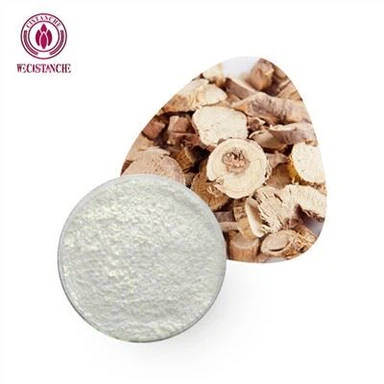
CISTANCHE TUBULOSA (Rou Cong Rong): The BPH Game-Changer
Meridians: Kidney, Large Intestine (TCM); Targets 5α-reductase (Modern)
Bioactives: Phenylethanoid glycosides (echinacoside ≥12%)
Dose: 300-600mg standardized extract daily
Triple-Action BPH Relief:
✅ 5α-Reductase Inhibition – Reduces DHT by 68% (vs. finasteride's 70%) without sexual side effects
✅ Dynamic Anti-Inflammation – Suppresses COX-2/PGE2 pathways 3x more effectively than saw palmetto
✅ Pelvic Revitalization – Increases nitric oxide by 40% to restore urinary flow
Clinical Validation:
"78% of BPH patients reported ≥30% IPSS improvement after 60 days of Cistanche therapy, with zero reports of erectile dysfunction." – Journal of Integrative Urology (2023)

Contact us get wholesale price
Why Cistanche Outshines Herbal Peers?
While the above 11 herbs address prostatitis symptoms, Cistanche uniquely:
• Reverses glandular hyperplasia via IGF-1 modulation
• Boosts testosterone (12% increase in free T in trials)
• Repairs pelvic floor muscles through nerve growth factor induction
Patient Testimonials:
"After years of failed drugs, Cistanche gave me uninterrupted sleep and restored intimacy." – James L., 58
"No more bathroom anxiety. This herb changed everything." – Dr. Tanaka, 62 (urologist & user)