Beneficial Effects Of Exogenous Ketogenic Supplements On Aging Processes And Age-Related Neurodegenerative Diseases Part 4
Mar 18, 2024
It has been demonstrated that the elimination of senescent cells by senolytics (such as senolytic cocktails containing quercetin and dasatinib) can evoke alleviating effects on age-related diseases, such as Alzheimer's disease and Parkinson's disease, and improve healthspan in aged humans [192,203,219].
With the extension of the human life span, anti-aging drugs have attracted more and more attention. In addition to slowing muscle atrophy and reducing chronic disease, anti-aging drugs may also positively impact memory.
First of all, anti-aging drugs often have antioxidant functions. Free radical damage is one of the causes of aging, and antioxidants can help reduce the damage caused by free radicals. Some studies have pointed out that antioxidant substances such as vitamin C, vitamin E, etc. can effectively prevent brain cell damage and thus have a positive impact on memory.
Secondly, some anti-aging drugs can also promote the growth of brain neurons and improve learning and memory abilities. For example, some long-term intake of dietary supplements, cerebrovasoactive drugs, amidases, and other drugs have shown potential effects on improving memory.
Finally, the modulating effects of anti-aging drugs can also help improve memory. For example, some steroid drugs can play a positive role in improving memory by regulating the balance of neurotransmitters in the brain.
It's important to note that anti-aging drugs can only help alleviate the tendency of memory loss, not change the gift of memory. In addition, it is best to choose safe and reliable anti-aging drugs and use them according to the recommendations in the drug instructions to avoid side effects.
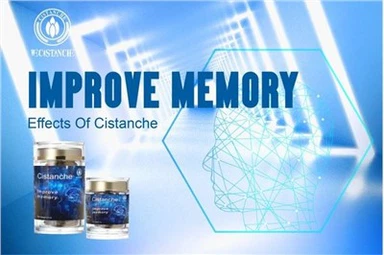
Overall, there is a positive relationship between anti-aging medications and memory. By using anti-aging medications appropriately, maintaining adequate sleep, and eating healthy, we can slow down the aging process while maintaining good memory and cognitive function. We need to improve memory, and Cistanche deserticola can significantly improve memory because Cistanche deserticola is a traditional Chinese medicinal material with many unique effects, one of which is to improve memory. The efficacy of Cistanche deserticola comes from the multiple active ingredients it contains, including tannic acid, polysaccharides, flavonoid glycosides, etc. These ingredients can promote brain health through a variety of pathways.

Click know 10 ways to improve memory
Anotherchemotherapeuticc strategy is the administration ofxenomorphics (e.g., metformin and rapamycin) to alleviate (abolish) features of senescence (e.g., decrease in production and release of SASP factors) (Figure 1) without elimination of senescent cells, which may delay both aging and development of age-related diseases [194]. It was suggested that mTOR has a role in, among others, lifespan control [220].
Indeed, rapamycin (sirolimus; as an mTOR inhibitor) (Figure 1cacanse the risk of development of age-related diseases, such as neurodegenerative diseases, to improve age-related decrease in memory and learning functions and to extend longevity [74,220].
Rapamycin reduces sed accumulation of Aβ and Tau leading to decreased loss of neurons, attenuated neuroinflammation,tion, and alleviated cognitive dysfunction in mouse models of Alzheimer's disease [221]. Resveratrol also promotes clearance of Aβ peptides [95], likely via inhibition of mTOR and activation of AMPK [,5], and prevents cognitive impairment [222] in different cell lines and models of Alzheimer's disease.
Thus, these results suggest that resveratrol and rapamycin exert neuroprotective, alleviating effects on healthspan, lifespan, and age-associated diseases likely by modulation of autophagy and proteostasis (via mTOR inhibition), as well as inflammation, among others [211,212,220] (Figure 1).
Rapamycin and metformin (an antidiabetic drug, that reduces IGF levels, insulin resistance, once, and insulin levels) reduced the accumulation of α-synuclein and improved behavioral impairments in models of Parkinson's disease [74,220,223].
Moreover, metformin inhibits the mitochondrial electron transport chain (ETC complex I: NADH/ubiquinone oxidoreductase; thereby oxidative phosphorylation), consequently, cytoplasmic AMP/ATP and ADP/ATP ratios were increased resulting g direct activation (phosphorylation) of AMPK [224,225] and decrease in ROS level [226]. Activation of AMPK (e.g., by metformin) (Figure 1) enhances mitochondrial biogenesis (via SIRT1/PGC-1α) and lipid beta-oxidation (via ACCs), inhibits hepatic glucose production and alleviates proteostasis (via mTOR inhibition), enhances autophagy (via mTOR inhibition and activation of ULK1), evokes hypoglycemia (decreasing plasma glucose levels, e.g., via improved hepatic insulin sensitivity leading to decrease in hepatic glucose production), improves nutrient sensing (via IIS/mTOR/SIRT1 pathways), inhibits NF-κB, improves DNA repair and decreases the level of proinflammatory cytokines (e.g., via activation of SIRT1) [6,12,225–228] leading to alleviating effects on aging-processes and related neurodegenerative diseases.

As AMPK-independent influences, metformin can inhibit ROS production (via, e.g., inhibition of mitochondrial ETC and activation of antioxidant transcription factor nuclear factor erythroid 2-related factor 2/Nrf2) (Figure 1), enhance autophagy (through direct inhibition of mTOR), enhance SIRT1 activity (especially when NAD+ level highly reduced), activate DNA-damage-like response (and facilitates DNA repair likely via p53), attenuate NF-κB signaling and synthesis (release) of proinflammatory cytokines, inhibit SASP factors via Nrf2 and decrease level of insulin and IGF-1 levels thereby insulin/IGF-1 signaling (by which decreases mTOR activity) [66,86,225,229–232].
All of these processes can increase lifespan and evoke alleviating effects on both aging and age-related diseases, such as Alzheimer's disease and Parkinson's disease [224,225,233]. Moreover, metformicanto inhibit premature stem cell aging (via Nrf2), enhance stem cell rejuvenation (through AMPK) [234], affect histone modifications (e.g., via activation of SIRT1, inhibition of Class II HDACs and HAT phosphorylation) through AMPK-dependent and independent pathways [235], increase the levels of several miRNAs, which are implicated in the regulation of aging and cellular senescence, likely via AMPK [236] and reduce telomere shortening (e.g., via AMKP/PGC-1α/telomeric repeat-containing RNA/TERRA pathway; TERRA is transcribed from telomeres and has an important role in protection of telomere integrity) [225,237,238] (Figure 1).
Indeed, it was demonstrated that activation of AMPK can both enhance gene expression (e.g., by phosphorylation/inactivation of HDACs and activation of HAT1-evoked acetylation of histones) and inhibit gene transcription (e.g., via enhanced cellular NAD+ levels, and, as a consequence, increased SIRT1 deacetylation activity) [235]. Moreover, resveratrol can also extend lifespan and prevent neurodegenerative diseases [239].
For example, resveratrol can generate anti-inflammatory and anti-oxidative effects (e.g., decreases the level of ROS, p53, NF-κB and proinflammatory cytokines, such as TNF-α and IL-1β) [5] and increase mean life expectancy and maximal life span in models of Alzheimer's disease [240]. Moreover, resveratrol improved motor neuron function and extended the lifespan in a mouse model of amyotrophic lateral sclerosis [241].
It was suggested that resveratrol may exert its effects via activation of AMPK/SIRT1-modulated pathways [242] (Figure 1) by which this drug can deacetylate several substrates, such as p53, PGC-1α, FOXOs (e.g., FOXO3) and SREBP1 leading to induction of cell cycle arrest, mitochondrial biogenesis, DNA repair, oxidative stress response, autophagy and regulation of lipid metabolism [6,101,243]. For example, SIRT1 can decrease ROS and NF-κB-evoked effects (e.g., neuroinflammation) via Nrf2 [5] (Figure 1).
However, it was also suggested that not only SIRT but also PGC1-α can increase the expression of Nrf2 [244,245] and AMPK enhances the nuclear translocation of the Nrf2 [246]. Based on these results, more effective sirtuin-activating compounds were developed, such as SRT2104, which drug may be a promising anti-aging drug (e.g., it increased lifespan and decreased inflammatory processes) [247].
Other natural products, such as curcumin, beriberi,ne, and quercetin [6] can also generate positive effects on lifespan (by slowing aging), age and age-related diseases, for example, through AMPK activation and mTOR inhibition (e.g., to induce autophagy), activation of SIRT1 (to promote mitochondrial biogenesis) and anti-inflammatory effects [74,248–250].
Thuthe s, administration of chemotherapeutic drugs suggests that therapeutic tools and
drugs, modify aging processes through activation or inhibition of certain
signaling pathways and can also delete the development (or improve symptoms) of neurodegenerative diseases (such as Alzheimer's disease, and Parkinson's side and amyotrophic lateral
sclerosis), improve memory and learning functions, as well as extend longevity.

3. Alleviating Effects of Ketosis on Lifespan, Aging and Age-Related
Neurodegenerative Diseases
3.1. Ketosis-Evoked Neuroprotective Effects and Downstream Signaling Pathways
It has been demonstrated that ketosis and administration of βHB (as an alternative energy fuel to glucose) can increase mitochondrial ATP production and ATP release leading to increased extracellulalevelsel of purine nucleoside adenosine (via metabolism of ATP) [251–253].
Adenosine can activate its receptors leading to reduced oxidative stress (ROS level) [254] and reduced inflammatory processes [255]. Indeed, an enhanced level of ROS may activate (open) mPTporese thereby uncoupling the electron transport system from ATP production, a βHB-evoked decrease in ROS production [94] can improve mitochondrial respiration and ATP production [49].
It was also suggested that therapeutic ketosis can increase the inhibitory GABAergic effects [22,256], decrease glutamate release and glutamate-induced neuronal excitability [256,25,7], and modulate (increase) the level of dopamine, adrenaline, noradrenaline,ne, and serotonin [258,259].
As an epigenetic gene regulator, βHB can inhibit the activity of the classical HDAC family (Class I and Class IIa HDACs) leading to enhanced acetylation of histone residue s, thereby DNA can be accessed for transcription factors, such as FOXO3A [53,132,260].
FOXO3A generates enhanced expression of various antioxidant genes, enhances mitochondrial homeostasis (e.g., by regulation of mitochondrial biogenesis and ATP synthesis), and decreases oxidative stress [260,261]. Moreover r, a decrease in oxidative stress can also be generated by βHB-evoked inhibition of HDACs via attenuation of ER stress [262].
It has also been demonstrated, that the expression of brain-derived neurotrophic factor (BDNF) may be increased through βHB-evoked inhibition of HDACs [263] by which βHB evokes anti-inflammatory effects (via inhibition of both NLRP3, NF-,κB and proinflammatory cytokine levels) [264,265], increases mitochondrial respiration and ATP levels [266], enhances the activity of antioxidant enzymes (such as SOD), and protects tissues against glutamate-induced excitotoxicity [267,268].
It has been also demonstrated that βHB can modulate gene expression through the ugh promotion of histone and non-histone acetylation by HATs [266,269]. Moreover, can directly bind to an RNA-binding protein hnRNP A1 (heterogeneous nuclear ribonucleoprotein A1), which protein regulates, for example, RNA processing and function, as well as stabilization of mRNA [59,270,271].
Previous studies showed that βHB, through HCAR2, activates AMPK leading to NAD+ - generation, which increases the activity of SIRTs (e.g., SIRT1 and SIRT3; βHB/HCAR2/NAD+/ SIRTs pathways) [272] (Figure 1) and thereby evoke neuroprotective effects [53,83,273,274]. Through both βHB/HCAR2/AMPK/SIRT1/NF-κB pathway and βHB/HCAR2/AMPK/mTOR pathway, βHB may generate anti-inflammatory effects by, for example, inhibition of proinflammatory transcription factor NF-κB and enhancement of autophagy, respectively [55,272,275], leading to decreased level of proinflammatory agents (e.g., TNF-α, IL-1β) [50,55,57,276]. βHB/HCAR2/AMPK/SIRT1/FOXO3A pathway can evoke antioxidant influences, decreasing oxidative stress by increased expression of genes of the antioxidants (e.g., manganese superoxide dismutase/MnSOD: βHB/HCAR2/AMPK/SIRT1/FOXO3A/MnSOD pathway) [164,277]. Ketone bodies increase the expression of not only HCAR2 [278,279] but also SIRTs (e.g., SIRT1 and SIRT3) and PGC1-α [164,278,280].
These results suggest that both βHB/HCAR2/AMPK/SIRT1/PGC1-α and βHB/HCAR2/AMPK/SIRT3/PGC1-α pathways can function in the CNS. Indeed, neuroprotective influences of PGC1-α (e.g., anti-inflammatory effects and promotion of mitochondrial functions) can be modulated through not only SRT1 but also SIRT3 [278,281–283]. It was also suggested that βHBevoked effects on mitochondrial functions (e.g., mitochondrial biogenesis) may be generated through βHB/HDAC/BDNF/PGC1-α pathway [284].
Moreover, ketosis can enhance the expression of PPARs and the activity of the Nrf2 in the brain likely through βHB/ HCAR2/AMPK/Nrf2 or βHB/HCAR2/AMPK/SIRTs/PGC1-α/Nrf2 pathway [285–287].
It has been suggested that ketosis may enhance expression of UCPs, therefore decreasing the production of ROS [23,288,289] and defending mitochondria and mitochondrial functions (e.g., by reduction of oxidative stress) through activation of βHB/HCAR2/AMPK/ SIRT3/PGC1-α/UCP1 pathway [283] and/or βHB/HCAR2/AMPK/SIRT3/PGC1-α/UCP2 pathway [278].
Moreover, not only ketosis (βHB, but also a decrease in glucose level can mitigate inflammatory processes through decreased NLRP3 inflammasome activity. Namely, βHB is an endogenous inhibitor of NLRP3 inflammasome, likely via βHB/NLRP3/IL-1R (IL-1 receptor)/NF-κB pathway, whereas increased glucose level may enhance the activity of NLRP3 and inflammatory processes.
In addition, enhanced glucose level generally increases insulevelsevel leading to a decrease in ketone body synthesis [290–292]. EKSs were proven to decrease glucose levels [21,26,28,36,293], thereby they may increase activity of AMPK/SIRTs signaling pathways and inhibit mTOR-evoked effects (Figure 1).
Thus, based on previous studies, βHB/HCAR2/AMPK/SIRT1/NF-κB, βHB/HCAR2/ AMPK/mTOR, and βHB/NLRP3/IL-1R/NF-κB pathways (anti-inflammatory effects), βHB/HCAR2/AMPK/SIRT1/FOXO3A pathway (improving mitochondrial functions, anti-oxidant influences), βHB/HCAR2/AMPK/SIRT1/PGC1-α/Nrf2, HCAR2/AMPK/ SIRT3/PGC1-α/Nrf2 and HCAR2/AMPK/Nrf2 pathways (improving mitochondrial functions, anti-oxidant and anti-inflammatory effects), βHB/HDAC/BDNF/PGC1-α pathway (improving mitochondrial functions; anti-oxidant and anti-inflammatory influences),βHB/HCAR2/AMPK/SIRT3/PGC1-α/UCP1 and/or βHB/HCAR2/AMPK/SIRT3/PGC1- α/UCP2 pathways (anti-oxidant and anti-inflammatory effects, improving mitochondrial functions) and modulatory effects of βHB on neurotransmission (e.g., purinergic, GABAergic, dopaminergic, noradrenergic and glutamatergic systems), gene expression (e.g., enhanced acetylation of histone residues via βHB/HDACs, promotion of histone and non-histone acetylation through βHB/HATs and hydroxybutyrylation of histones) and RNA functions (e.g., via RNA-biding proteins) may be activated during ketosis (Figure 2).
Consequently, EKSs-evoked ketosis (increase in blood βHB levels) may influence all of above mentioned (e.g., mTOR-, AMPK- and SIRTs-evoked) downstream signaling pathways and modulatory effects, which can lead to the generation of alleviating effects (e.g., anti-inflammatory effects) on age-related processes (aging hallmarks) (Figures 1 and 2).

Moreover, theoretically, EKSs-generated modulation of these signaling pathways and effects may be able to improve symptoms and/or delay the development of not on aging-related hallmarks (such as changes in activity nutrient-sensing pathways, shortening of telomere, genomic instability, epigenetic alterations, mitochondrial dysfunction, altered intercellular communication, cellular senescence, loss of proteostasis and stem cell exhaustion), but also age-associated neurodegenerative diseases and to extend lifespan (through both increased βHB level- and decreased glucose level-evoked changes in the activity of several signaling pathways) (Figures 1 and 2).
For more information:1950477648nn@gmail.com