The Quiet Struggles Of Middle-Aged Couples: A TCM Perspective, And Why Cistanche Keeps Showing Up in The Old Formulas
Sep 24, 2026
1. What Feels "Unspeakable" Is Actually a Signal
Fifteen years in, the kid is in middle school, and conversation has narrowed down to "what's for dinner" and "let's turn in early."
Most middle-aged couples carry the same unspoken list:
Him: Not old, yet constantly tired - collapsing on the sofa the moment he gets home; even less interested after a night of drinking with clients; one disappointing experience, and then he starts avoiding the subject altogether, terrified of it happening again.
Her: Cycles becoming irregular, sleep broken, waves of heat and sudden sweating; emotions stretched like a tight string - ready to cry or snap over nothing; and for intimacy, less and less "in the mood."

Effects of cistanche-improve kidney function
Both of them: No more hand-holding, no more real talking, scrolling on their phones back to back until midnight. Same bed, a wall in between.
Very few people ever mention this list to a friend, let alone a doctor. It feels shameful - like it's a problem "down there."
Traditional Chinese Medicine (TCM) would say: it is never just about "down there." Sexual desire, energy, sleep, mood, the menstrual cycle, digestion, lower back and knees - symptoms that look unrelated are often, at this stage of life, pointing at the same root.
So instead of treating it as a shameful secret, try reading it as a note your body handed you. It says: you've been overdrawing for a long time. Time to restore - and to slow down.
2. The Huangdi Neijing Drew This Curve 2,000 Years Ago
TCM has an unusually precise timetable for aging. In the Suwen · Shanggu Tianzhen Lun, women move in cycles of seven years, men in cycles of eight:
For women… at five times seven (35), the Yangming vessel declines, the face begins to wither, and the hair begins to fall; at six times seven (42), the three Yang vessels decline in the upper body, the face is entirely wan, the hair turns grey; at seven times seven (49), the Ren and Chong vessels empty, tiangui is exhausted…
For men… at five times eight (40), kidney qi declines, hair falls, and teeth wither; at six times eight (48), Yang qi declines above, the face is wan and the temples grey; at seven times eight (56), liver qi declines, the sinews no longer move freely, tiangui is exhausted, and essence diminishes…
In plain modern language:
Women begin the descent around 35, and it starts with the "Yangming vessel" - essentially the Spleen/Stomach line that generates qi and blood. This is why the first signs are a duller complexion, hair loss, irregular cycles, and poor sleep.

Effects of cistanche-Treatment of climacteric syndrome
Men begin around 40, and it starts with kidney qi. Which is why the first signs are flagging energy, sore lower back and knees, thinning hair, loosening teeth, and a receding tide of desire and function.

Effects of cistanche-improve kidney function
Click here to view Cistanche for Kidney disease products
【Ask for more】 Email:cindy.xue@wecistanche.com / WhatsApp: 0086 18599088692 / WeChat: 18599088692
Note: this is not a disease - it is a natural rhythm. Classical Chinese medicine never denied it; it simply said: since the rhythm is real, work with it. Support it. Don't power through it, and above all don't dump random tonics on it.
And because the two starting points differ - women lose blood first, men lose qi first - a middle-aged couple shouldn't be sharing one formula. Each partner should repair their own weak link, then nourish the shared root together.
3. It Isn't All "Kidney Deficiency": A Pattern Map
Too many products on the market cram every middle-aged complaint into a single box labelled "kidney deficiency." In actual TCM practice, at least these patterns need to be separated first:
|
Pattern |
Typical signs |
General direction |
|
Kidney Yang deficiency |
Cold sore lower back and knees, aversion to cold, cold hands and feet, frequent night urination, low libido, early-morning diarrhea |
Warm and tonify Kidney Yang (in the lineage of You Gui Wan, Jin Gui Shen Qi Wan) |
|
Kidney Yin deficiency |
Five-palm heat, night sweats, dry mouth and throat, restless sleep with vivid dreams, red tongue with scant coating |
Nourish Kidney Yin (in the lineage of Liu Wei Di Huang Wan, Zuo Gui Wan) |
|
Liver qi stagnation |
Low mood or irritability, chest and flank distension, frequent sighing, worse under stress |
Soothe the Liver and relieve stagnation (Xiao Yao San, Chai Hu Shu Gan San lineage) |
|
Heart–Spleen deficiency |
Palpitations, forgetfulness, broken sleep, poor appetite, sallow complexion, easy fatigue |
Tonify Heart and Spleen (Gui Pi Tang lineage) |
|
Dampness / Damp-heat |
Heavier build, heavy limbs, sticky mouth, sticky stools; or damp scrotum, bitter taste, dark urine |
Clear and transform dampness first - do not tonify |
Three points matter enormously here:
First: not every "problem" should be tonified. In damp-heat, phlegm-damp, or stagnation patterns, tonics make things more blocked and more heated. If supplements leave you dry-mouthed, breaking out, irritable, or more constipated - the pattern was wrong.
Second: stagnation is chronically overlooked. Midlife pressure is doubled - ageing parents above, children below, a career stuck halfway up the slope. A fair share of distance between couples isn't a kidney problem at all; it's qi that has stopped flowing smoothly. When qi doesn't flow, blood doesn't reach where it needs to go.
Third: this is a two-person matter. A woman's menstrual and perimenopausal shifts and a man's receding energy and function unfold in the same years, under the same roof. Adjusting together beats one partner secretly swallowing capsules - if only because the loneliness of "not being able to talk about it" improves first.
4. Cistanche: A Herb That Has Been "Gentle" for Two Thousand Years
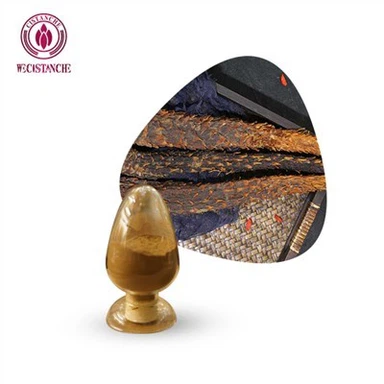
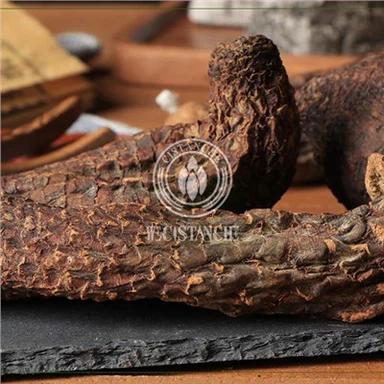
Among the kidney-supporting formulas of the centuries, one herb appears with startling frequency: Rou Cong Rong - Cistanches Herba, the "desert ginseng."

cistanche benefits for men
It is a parasitic plant, living on the roots of the Haloxylon (suo suo) or tamarisk bushes of the desert, surviving on a trickle of the host's moisture in lands with under 200 mm of annual rainfall. That stubborn grip on life earned it the nickname "Desert Ginseng."
Identity and nature
Cistanche is the dried fleshy stem (with scale leaves) of Cistanche deserticola or Cistanche tubulosa. It tastes sweet and salty, is warm in nature, and enters the Kidney and Large Intestine channels. Its core actions: tonify Kidney Yang, augment essence and blood, and moisten the intestines to relieve constipation - used for Kidney Yang insufficiency and essence-blood depletion showing as sore, weak lower back and knees, lack of strength in the sinews and bones, and dry-intestine constipation.
Its greatest virtue is summed up in one word: "cong rong" - unhurried
The Ming-dynasty Bencao Huiyan gave it an extraordinary verdict:
Rou Cong Rong nourishes the gate of life, enriches kidney qi, and supplements essence and blood… It is a balanced tonic: warm but not hot, supplementing but not harsh, warming but not drying, lubricating but not laxative - and so it bears the name "Cong Rong" (unhurried).
Those sixteen words could have been written for middle age.
A middle-aged body fears two things above all: too harsh and too drying. Fierce Yang-warming medicinals such as Lu Rong (deer velvet) or Fu Zi (aconite) may suit a young constitution, but in midlife they commonly bring dry mouth, blood-pressure swings, sleepless nights - the classic "too weak to receive the tonic." Cistanche is different: it supplements without rushing; it warms without drying; it moistens without purging. A slow simmer rather than a blast of flame. And because it also enters the Large Intestine channel, it gently relieves the dry constipation that plagues so many older adults.
The Shennong Bencao Jing ranked it among the superior-grade herbs, indicated for "the five exhaustions and seven injuries" - chronic depletion from overwork, prolonged sitting, excessive worry, and intemperance. That description reads almost like a portrait of modern middle life.
Put plainly: Cistanche is not a "sexual stimulant." It is a deficiency tonic. That distinction is exactly why it suits long-term, gentle nourishment - and why it will never deliver a one-night miracle.
5. What Modern Research Looks At: Echinacoside and Acteoside

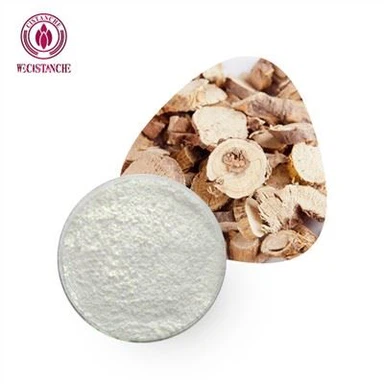
Phenylethanol glycoside is the main active component of Cistanche tubulosa
Tradition deserves a modern translation. The most studied active constituents in Cistanche are the phenylethanoid glycosides (PhGs), particularly echinacoside and acteoside (verbascoside).
These two matter officially: both are listed in the Chinese Pharmacopoeia as the marker compounds for quality control of Cistanche. In other words, when a lab judges whether a batch is any good, this is what it measures.
Reported biological activities for PhGs include antioxidant, anti-fatigue, immunomodulatory, and neuroprotective effects. The antioxidant evidence is the most developed: these compounds both scavenge free radicals directly and strengthen the body's own antioxidant enzyme systems, with echinacoside and acteoside identified as the main contributors to Cistanche's antioxidant activity.
In fairness: most of this work sits at the level of constituents and pharmacological mechanisms, a long way from proven clinical outcomes. As a traditional food ingredient, its honest place is everyday, gentle nourishment - not a replacement for any treatment.
6. How to Use It: From a Bowl of Soup to a Cup of Tea
One of Cistanche's practical advantages is that it tastes good. The Bencao Tujing recorded that people in the west ate it as food - scraping off the scales, washing it in wine, and cooking it with yam and mutton into a broth "exceedingly fine and nourishing, better than taking tonics."
Everyday dosage: roughly 5–10 g per day of dried material for nourishment; 10–15 g when used in a decoction. Start low, and after a continuous stretch, take a few days off, so as not to burden the digestion with cloying richness.

Stewed Cistanche tubulosa soup
Four everyday preparations
Cistanche mutton soup - 15 g Cistanche with 250 g mutton, simmered with goji, ginger and red dates. For those who feel the cold, urinate at night, or have a cold sore lower back; a northwestern winter classic.
Cistanche and goji tea - 5 g Cistanche with 10 g goji berries, steeped in boiling water and re-infused until the flavour fades. For daily upkeep, heavy screen use, low spirits.
Cistanche walnut congee - simmer 10 g Cistanche to extract the liquid, then cook with rice and walnut kernels. Moistens the intestines while supporting Lung and Kidney; good for those who are both constipated and digestion-weak.
Traditional wine infusion - slices steeped in spirits above 50% ABV for 15–30 days, taken in small amounts. Contraindicated in hypertension, liver disease, and alcohol allergy.

Cistanche wine