Energy Plummets After 30? Don’t Rush To Buy Supplements—Try Cistanche For Kidney Nourishment
Sep 24, 2026
Is 30 the Watershed for Your Energy?
At some point, the age of "thirty" stopped being just a number on your ID card; it became a watershed for your physical condition.
In your early twenties, you could pull an all-nighter singing and still be full of energy at work the next day. But once you pass thirty, staying up just one hour later leaves you feeling like a phone drained of battery-no matter how much you "charge" it, it just won't power up.

What's even more frustrating is that this decline isn't gradual; it's a "cliff-edge drop." One day you suddenly realize:
You're out of breath after climbing just three flights of stairs.
By 2 p.m. in a meeting, your eyelids start fighting to stay open.
Even though you haven't done any heavy labor, all you want to do after work is collapse on the sofa and not say a word.
Your sex life has also become lackluster, with both desire and performance "shrinking."
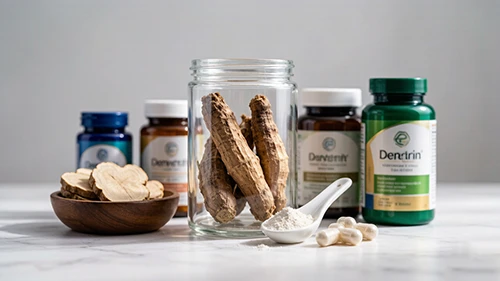
Faced with these changes, many people's first reaction is: "Am I deficient?" Then they open a shopping app, search for "kidney tonic," "anti-fatigue," or "energy booster," and order a bunch of bottles and jars-maca, oyster peptides, ginseng slices, various health supplements…
But after two weeks, apart from a lighter wallet, your energy doesn't seem to have improved.
What's the problem?
Today, let's not rush to place an order or blindly follow trends. Starting from the underlying logic of Traditional Chinese Medicine (TCM), we'll discuss the real reasons behind the cliff-edge energy drop after 30 and explore an ancient herb called the "Desert Ginseng" in the Compendium of Materia Medica-Cistanche. Why is it in the "first tier" of TCM kidney tonics, and how can you consume it effectively?
Where Exactly Is the "Deficiency" After 30?
In TCM, energy doesn't come from nowhere; it has a core "energy system"-Kidney Essence

Effects of cistanche-Improve Kidney Function
The opening of the Huangdi Neijing (Inner Canon of the Yellow Emperor) states: "At eight, a boy's kidney qi is full, hair grows and teeth change… at forty, kidney qi declines, hair falls, and teeth become dry."
In plain language: Around the age of 40, a man's kidney qi starts to go downhill. Modern people, due to staying up late, prolonged sitting, high stress, and irregular diets, often experience this decline as early as 30, or even earlier.
Kidney Essence ≠ the Kidneys; It's Your "Life Battery"
When many people hear "kidney deficiency," their first thought is that there's something wrong with the organ itself, and they even associate it with sexual function. Actually, the "kidney" in TCM is a functional system that covers growth, development, reproduction, fluid metabolism, bone health, mental activity, and more.
Kidney Essence is the "battery level" of this system.
When Kidney Essence is abundant: energy is high, thinking is sharp, hair is thick, the lower back and knees are strong, and desire and performance are on point.
When Kidney Essence is deficient: fatigue and weakness, declining memory, sore/weak lower back and knees, hair loss and premature graying, reduced sexual function, and either cold intolerance or heat sensations.
The cliff-edge drop after 30 is essentially the rate of Kidney Essence depletion exceeding the rate of replenishment.
Why Don't Supplements Work? You Might Be Nourishing the Wrong Way
Many "kidney tonics" on the market focus on "yang enhancement"-making you feel strong and desirous in the short term. But this "strength" is often obtained by overdrawing Kidney Essence, like spending with an overdrawn credit card: it feels good at the moment, but you'll have to pay it back later.
TCM kidney nourishment emphasizes "nourishing essence" rather than "enhancing yang."
Enhancing yang = turning on "power-saving mode" to force the screen on when the phone is almost dead; it treats the symptom, not the root cause.
Nourishing essence = charging the phone so the battery actually goes up; it treats the root cause.
Cistanche is one of the few herbs in TCM that can "calmly nourish Kidney Essence without being harsh or damaging."
Cistanche - The Underrated "Desert Ginseng"
What Is It?
Cistanche, scientifically known as Cistanche deserticola, is a perennial parasitic herb that grows on the roots of the saxaul tree in deserts. It is mainly produced in desert areas of Inner Mongolia and Xinjiang.

Cistanche tubulosa
It has a fitting nickname: "Desert Ginseng." Everyone knows ginseng is good, but it tends to be warming and drying; many people get "heatiness" (internal heat) after taking it. The brilliance of Cistanche lies in its mild nourishment without harshness, warmth without dryness, and moisture without greasiness.
The Compendium of Materia Medica records: "Cistanche nourishes without being harsh, hence the name 'Congrong' (meaning calm and unhurried)."
This means that when it nourishes the body, it doesn't act as violently as some strong medicines; instead, it slowly builds up your Kidney Essence like a calm and composed gentleman.
Why Can It Nourish the Kidneys?
From a TCM perspective, Cistanche enters the Kidney and Large Intestine meridians. Its core effects are threefold:
1. Tonifies Kidney Yang and Benefits Essence and Blood

Chinese herb cistanche-improve kidney function
Click here to view Cistanche for Kidney disease products
【Ask for more】 Email:cindy.xue@wecistanche.com / WhatsApp: 0086 18599088692 / WeChat: 18599088692
This is its most fundamental action. For fatigue, sore/weak lower back and knees, and reduced sexual function caused by Kidney Yang deficiency and Essence-Blood depletion, Cistanche can replenish the "energy raw materials" from the root.
2. Moistens the Intestines and Promotes Bowel Movements
Many people don't know that Cistanche is also an excellent herb for constipation. Its texture is soft and moist, nourishing intestinal fluids. It's especially effective for constipation in the elderly or those with weak constitutions. Modern people sit for long periods and eat refined diets, so constipation and kidney deficiency often coexist; Cistanche can "kill two birds with one stone."
3. Delays Aging and Enhances Endurance
Modern pharmacological studies have found that Cistanche contains various active components such as phenylethanoid glycosides, polysaccharides, and amino acids. It has antioxidant, anti-fatigue, immune-boosting, and neuroprotective effects. This scientifically explains why it improves energy.
Cistanche vs. Other Kidney-Nourishing Herbs

Chinese medicinal materials such as cistanche
|
Herb |
Characteristics |
Suitable For |
Precautions |
|
Cistanche |
Nourishes without harshness; mild and balanced |
Most kidney deficiency types, especially for long-term regulation |
Use with caution in Yin deficiency with fire. |
|
Ginseng |
Greatly tonifies original qi, but tends to be drying |
Severe qi deficiency, needing quick boost |
Prone to causing heatiness; not for long-term high doses. |
|
Deer Antler |
Strongly tonifies yang; very potent |
Severe Kidney Yang decline |
Too heating; ordinary people may get nosebleeds. |
|
Goji Berry |
Mildly tonifies liver and kidney, but weak |
Daily health maintenance, mild deficiency |
Limited effect when used alone. |
|
Maca |
Modern supplement, short-term energy boost |
Those wanting quick physical improvement |
Effects vary; long-term safety uncertain. |
As you can see, Cistanche's advantage is gentleness, sustainability, and suitability for long-term regulation-exactly what's needed for energy management after 30.
How to Take Cistanche to Truly "Nourish In"
Many people buy Cistanche, drink it infused in water for two days, feel nothing, and give up. The problem isn't the herb; it's the method.
There's a TCM saying: "Good herbs and correct methods lead to results." Below are several proven, effective ways to take it, from simple to advanced. Choose based on your situation.
Method 1: Cistanche Infused in Water (Simplest, for Beginners)
How to do it:

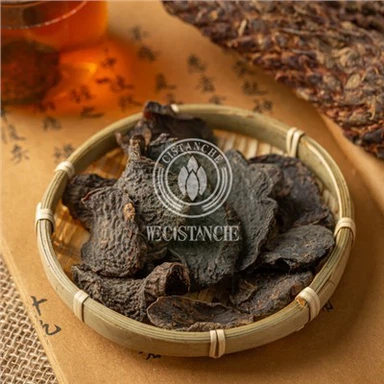
Cistanche tubulosa slice
Take 3–5 g of sliced Cistanche (about 2–3 slices).
Brew with freshly boiled water, cover, and steep for 10–15 minutes.
You can refill with hot water until the flavor is gone, then chew and swallow the slices.
Key points:
Be sure to steep long enough for the active components to dissolve.
Drink in the morning if possible, to harness the body's natural yang energy rising.
Persist for 2–4 weeks to feel changes; don't expect results in three days.
Method 2: Cistanche Soaked in Liquor (Most Classic, for Those Who Drink)
How to do it:

Cistanche wine
Take 100 g of Cistanche, wash and air-dry.
Place in 1000–1500 ml of white liquor (above 50% ABV, pure grain).
Seal and soak for 15–30 days, shaking occasionally.
Drink 15–20 ml each time, 1–2 times a day.
Herbs that can be added:
Cistanche + Goji Berry + Suoyang: Enhances kidney-nourishing effect.
Cistanche + Epimedium + Morinda: Suitable for obvious Kidney Yang deficiency (fear of cold, sore/cold lower back and knees).
Note: Not recommended for those allergic to alcohol, liver disease patients, or those planning pregnancy.
Cistanche in Soup (Mildest, for the Whole Family)
Recommended Soup: Cistanche and Eucommia Pork Kidney Soup
Ingredients: Cistanche 15 g, Eucommia 10 g, 1 pair of pork kidneys, 3 slices of ginger, 3 red dates.
Method: Slice the pork kidneys, remove the white tendons, and blanch to remove the odor. Put all ingredients in a clay pot with 1.5 L of water. Bring to a boil, then simmer on low for 1.5 hours. Add salt to taste.
Effect: Nourishes kidneys and strengthens waist; improves sore/weak lower back and fatigue.
Recommended Congee: Cistanche Mutton Congee (Winter Special)
Ingredients: Cistanche 10 g, lean mutton 100 g, japonica rice 100 g, ginger and salt to taste.
Method: Boil Cistanche in water for 20 minutes to get the decoction. Dice mutton, cook with rice and the decoction into congee. Add ginger and salt.
Effect: Warms and nourishes Kidney Yang; suitable for those who fear cold and have cold hands/feet.
Cistanche Powder (Most Convenient, for Office Workers)

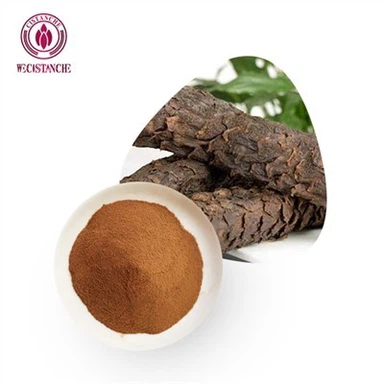
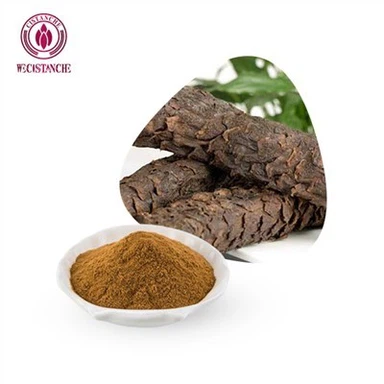
cistanche powder
How to do it:
Dry sliced Cistanche and grind into fine powder.
Take 3–5 g each time, rinse with warm water, or add to milk, soy milk, or congee.
1–2 times a day.