5L Large-capacity Peritoneal Dialysis Solution Partnered With APD, Opening A New Life Channel For AKI Patients!
May 09, 2023
Acute kidney injury (AKI) is a clinical syndrome resulting from the rapid reduction of renal function caused by various etiologies, and it is a relatively common complication in critically ill patients[1,2]. Professor Yu Yusheng from the National Clinical Research Center for Kidney Diseases said: "Peritoneal dialysis (PD) has always been the first choice for the treatment of AKI [3,4], but it was once downplayed due to some special reasons.

Click to cistanche tubulosa capsules for kidney disease
In recent years, the sudden outbreak of the new coronavirus has once again Peritoneal dialysis has shown significant advantages in the treatment of AKI in terms of safety and effectiveness. The biggest feature of PD is home treatment and the protection of residual renal function. Dialysis has wider clinical indications for the treatment of acute and chronic kidney diseases, and the formulation of treatment prescriptions is more diversified and individualized. It is believed that this treatment will bring good news to the treatment of AKI patients with a high incidence in my country."
Acute kidney injury (AKI) is one of the clinical critical illnesses. According to different diagnostic criteria for AKI, the incidence of AKI in general hospitalized patients is 3% to 5%, and in ICU it reaches 30% to 50% [3]. AKI is often manifested as a decrease in glomerular filtration, accompanied by retention of nitrogen metabolites such as creatinine and urea nitrogen, water and electrolyte disorders, and acid-base balance disorders. In severe cases, uremia may also occur, which has a great impact on the patient's health and life safety. Therefore, it is necessary to achieve early diagnosis and early treatment [1].
In recent years, with the continuous advancement and development of medical technology, the treatment methods for AKI have become more abundant, among which automated peritoneal dialysis (APD) technology has brought a new treatment experience for AKI patients. Professor Xu Chen from Beijing Chaoyang Hospital Affiliated with Capital Medical University gave us a detailed introduction to the advantages and clinical application points of APD technology.
With both clinical and economic value, APD lights up new hope for patients
At the beginning of the new year in 2023, the United States Renal Disease Data System (USRDS) released its 2022 annual report. As an internationally influential data system, USRDS is of great significance for experts and scholars to understand the characteristics of kidney diseases, evaluate the effectiveness of treatment options, and promote the improvement of medical quality. The 2022 annual report released this time shows that from 2017 to 2020, the number of adult patients with AKI receiving dialysis treatment in outpatient clinics has increased year by year [5].

Figure 1: Quarterly outpatient numbers of adults with AKI receiving dialysis, 2017-2020
PD uses its peritoneum as a dialysis membrane. The treatment process is uninterrupted and the systemic hemodynamic changes are small. It can not only remove nitrogen metabolites, and correct internal environment disorders but also maintain the body's capacity state, and acid-base, and electrolyte balance, which is beneficial to the damaged body. Organ tissue structure and function can be restored, but the cost is less than one-tenth of continuous renal replacement therapy (CRRT)[2], which provides a cost-benefit treatment option for AKI patients.
PD is simple, safe, and effective, but it still has technical bottlenecks such as frequent fluid changes during dialysis, which increases the risk of infection, which also promotes the update and development of PD technology. In recent years, APD technology has developed rapidly. With the entry of APD machines into clinics, the advantages of PD on AKI have been reflected, narrowing the gap with CRRT in the treatment of AKI, and also solving the technical bottleneck faced by ordinary PD, and the economic burden is smaller[2],6].

The advantages of APD are automatic operation instead of manual operation, reducing labor costs; intelligent devices make the dialysis process more accurate, remote control can feed back treatment information to medical workers in real-time, automatic alarm system makes dialysis safer; Individualized; low frequency of fluid changes reduces the risk of infection; the dialysis dose can be flexibly adjusted to ensure good clearance of small molecules and high dialysis efficiency.
It is the preferred solution for patients with high peritoneal transport, overweight, heart failure, and anuria; at the same time, APD volume control It has strong solute scavenging ability, does not require anticoagulation, and has stable hemodynamics, and is especially suitable for critically ill patients with AKI complicated with hemodynamic instability and malnutrition[2,7].
APD has a variety of treatment modes to choose from, including intermittent peritoneal dialysis (IPD), tidal peritoneal dialysis (TPD), continuous circular peritoneal dialysis (CCPD), and so on. A prospective, randomized study published in The Apher Dial included 125 patients with AKI in the intensive care unit (ICU) in Saudi Arabia, comparing the efficacy and safety of TPD and CRRT. The results showed that: compared with patients receiving CRRT In comparison, patients receiving TPD had better performance in terms of 28-day survival rate, renal function recovery, ICU length of stay, and incidence of infectious complications. It shows that compared with CRRT, APD represented by TPD is a better treatment for severe AKI [8].

Table 1: Comparison of treatment outcomes between CRRT (group A) and TPD (group B)
In December 2020, the PD treatment guidelines for adult AKI patients released by ISPD recommended APD for treatment, and the dialysate infusion volume, treatment time, and the cycle can be set daily [4]. At the same time, in October 2022, the National Health and Health Commission issued the "Notice of the General Office of the National Health and Health Commission on Printing and Distributing the Standards for the National Critical Care Medicine Center and the National Critical Care Regional Medical Center", which pointed out that to establish a scientific and complete system for AKI, etc. In the intensive care process, the core technical configuration requirements of ICU peritoneal dialysis cover APD[9].
Choose the right dialysis dose to maximize the benefits for AKI patients
PD dose is the key to the successful treatment of AKI. AKI is different from end-stage renal failure (ESRD). In addition to progressive renal damage, the body's metabolic and nutritional status is different from the latter. Individualized dialysis plans should be formulated according to the patient's body size, metabolism, and residual renal function status, and dynamic Observe blood biochemical and dialysis indicators, and adjust dialysis mode and dose in real-time. Insufficient dosage is difficult to alleviate the patient's condition, and excessive dialysis not only fails to achieve a therapeutic effect but also increases the loss of nutrients in the body, induces other complications, and worsens the condition [2].

Although the traditional view is that peritoneal dialysis has a weaker solute removal ability than hemodialysis, studies have shown that the weekly urea clearance index Kt/V of peritoneal dialysis should reach more than 2.1 in AKI. Basically, all can meet this standard [7]. Prospective studies have shown that high-dose continuous peritoneal dialysis can effectively remove toxins, control volume, and correct water, electrolyte, and acid-base balance disorders, and is an effective way to treat AKI [9].
Baxter’s 5L peritoneal dialysis solution has a large capacity. For the AKI population who needs a large dose of peritoneal dialysis treatment, the 5L peritoneal dialysis solution has obvious advantages, and the partner APD treatment can help achieve individualized prescriptions. Because of its advantages such as easy operation, the "Standard Operating Procedures for Automated Peritoneal Dialysis (1st Edition, 2018)" edited by Mei Changlin and Fang Wei pointed out that using large-capacity bags of dialysate can reduce the volume of peritoneal dialysis. The number of bags facilitates the simplification of APD treatment prescription operations [10].
As for the specific curative effect in the treatment of AKI, a retrospective study included 100 patients with AKI who have treated with Baxter APD partner 5L peritoneal dialysis solution for 3 consecutive days. The results of the study showed that after the end of dialysis, the blood urea nitrogen level, serum creatinine, and blood potassium ions of the patients were all effectively reduced, and the carbon dioxide binding capacity was increased.

All data were statistically significant compared with those before treatment (P<0.05). This study shows that 5L peritoneal dialysis solution partner APD can effectively improve the patient's blood indicators, reduce blood urea nitrogen, and gradually restore the patient's renal function [11].
Summary
Peritoneal dialysis fluid is the "life fluid" of patients. The 5L large-capacity peritoneal dialysis fluid has brought new treatment options for Chinese peritoneal dialysis patients, and can effectively improve the renal function and blood indicators of AKI patients. It is believed that with the widespread use of 5L large-volume peritoneal dialysis solution, the survival rate and long-term prognosis of AKI patients will be further improved, and more patients will be helped to return to normal life.
The mechanism of Cistanche extract treating kidney disease
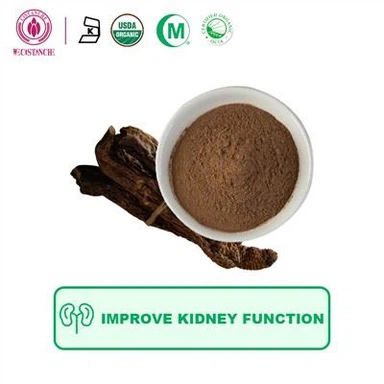
Cistanche extract is a traditional Chinese medicine used for the treatment of various diseases, including kidney disease. The mechanism of action of Cistanche extract in treating kidney disease involves several factors.
1. Anti-inflammatory properties: Cistanche extract contains natural compounds that have anti-inflammatory properties. These compounds help to reduce inflammation in the kidneys, which can reduce the damage caused by kidney disease.
2. Antioxidant properties: Cistanche extract also contains antioxidants that help to protect the kidneys from oxidative stress. Oxidative stress occurs when there is an imbalance between free radicals and antioxidants in the body. This can damage the kidneys and contribute to the development of kidney disease.
3. Renal function improvement: Cistanche extract has been found to improve renal function in animal studies. It can help to reduce proteinuria, which is a common symptom of kidney disease, and also reduce the levels of serum creatinine and blood urea nitrogen (BUN), which are markers of kidney function.
4. Immune system modulation: Cistanche extract can help to modulate the immune system, which can reduce the progression of kidney disease. In particular, it can help to regulate T cell activity, which can reduce inflammation in the kidneys and improve renal function.
Overall, the use of Cistanche extract in the treatment of kidney disease is promising.
References:
[1] Liu Panpan. Clinical research on peritoneal dialysis in the treatment of acute kidney injury [J]. China Medical Device Information, 2021, 27(17): 137-139.
[2] Yu Yusheng, Cheng Huidong. Rational application of automated peritoneal dialysis in patients with acute kidney injury [J]. Chinese Blood Purification, 2017, 16(2): 80-82.
[3]Cullis B, Al-Hwiesh A, Kilonzo K, et al. ISPD guidelines for peritoneal dialysis in acute kidney injury: 2020 update (adults)[J]. Perit Dial Int. 2021 Jan;41(1):15- 31.
[4] He Yani, Zhang Weiwei. Application of peritoneal dialysis in acute kidney injury [J]. Chinese Journal of Nephrology Research Electronics, 2016, 5(3): 105-107.
[5] https://usrds-adr.niddk.nih.gov/2022/chronic-kidney-disease/4-acute-kidney-injury.
[6] Cheng Shuiqin. Interpretation of the 2020 International Peritoneal Dialysis Association Guidelines on Peritoneal Dialysis Treatment of Acute Kidney Injury in Adults [J]. Journal of Nephrology and Dialysis and Kidney Transplantation, 2021, 30(1): 87-91.
[7] Ni Zhaohui, Jin Haijiao. A new application of automated peritoneal dialysis [J]. Chinese Electronic Journal of Nephrology Research, 2015(1): 10-13.
[8]Al-Hwiesh A, Abdul-Rahman I, Finkelstein F, et al. Acute Kidney Injury in Critically Ill Patients: A Prospective Randomized Study of Tidal Peritoneal Dialysis Versus Continuous Renal Replacement Therapy[J]. Ther Apher Dial. 2018 Aug ;22(4):371-379.
[9]Gabriel DP, do Nascimento, Caramori JT, et al. High volume peritoneal dialysis for acute renal failure[J]. Perit Dial Int. 2007 May-Jun;27(3):277-82.
[10] Mei Changlin. Standard Operating Procedures for Automated Peritoneal Dialysis. People's Health Publishing House. 2018.
[11] Wang Lingxi, Wang Wei, Teng Lanbo. A retrospective study on the clinical effect of Baxter peritoneal dialysis machine in the United States in the treatment of acute kidney injury [J]. China Medical Device Information, 2018, 24(20): 124-125.