Research Progress Of Total Glycosides Of Cistanches Herba In The Treatment Of Osteoporosis
Sep 29, 2026
Abstract
Glycosides of Cistanche (GCs), the primary bioactive fraction extracted from the traditional medicinal herb Cistanches Herba, have attracted increasing attention for preventing and treating osteoporosis (OP). Osteoporosis is a prevalent degenerative skeletal disorder marked by progressive bone loss, deterioration of bone micro‑architecture, elevated bone fragility and higher fracture risk, representing a heavy public‑health burden in aging populations worldwide. Current mainstream anti‑osteoporotic drugs including calcium supplements, vitamin D and hormone‑related therapies can improve bone mineral density, yet long‑term administration frequently triggers adverse side‑effects. Natural botanical bio‑components are therefore promising alternative candidates for OP intervention. This review systematically summarizes current experimental evidence regarding anti‑osteoporotic mechanisms of total glycosides of Cistanches Herba. GCs exert multi‑modal skeletal protection: eliminating excessive free radicals and mitigating oxidative bone injury; suppressing pro‑inflammatory mediators to alleviate local and systemic inflammatory damage to bone tissue; promoting osteoblast proliferation‑differentiation while restraining osteoclast activation so as to raise bone mineral density and lower fracture probability. Moreover, GCs modulate hypothalamic‑pituitary‑gonadal axis activity, balance sex‑hormone secretion and adjust calcium‑phosphorus homeostasis, thereby indirectly tuning bone‑cell behaviors. At the molecular‑signaling level, GCs regulate the OPG/RANKL/RANK axis as well as the canonical Wnt/β‑catenin pathway to tilt bone‑remodeling equilibrium toward bone formation and inhibit pathological bone resorption. Available toxicological tests demonstrate satisfactory safety profile and tolerability for GCs. Nevertheless, existing investigations are predominantly pre‑clinical animal and cellular studies; large‑sample, multi‑center human clinical trials remain insufficient. Further research should clarify the complete molecular regulatory network, optimize purification techniques and develop novel pharmaceutical formulations, which will lay groundwork for developing GCs as innovative, safe anti‑osteoporotic agents.
Keywords: Osteoporosis; Total glycosides of Cistanches Herba; Bone metabolism; Oxidative stress; Inflammation; OPG/RANKL/RANK; Wnt/β‑catenin
1. Introduction
Osteoporosis (OP) is a widespread metabolic bone disease characterized by continuous bone mass reduction, destruction of trabecular microstructure and enhanced bone fragilityGoogle for.... Osteoporotic fractures constitute its most devastating complication, impairing patients' daily quality‑of‑life and potentially increasing mortality in elderly groups. Clinically, OP is classified as primary osteoporosis and secondary osteoporosis. Primary OP closely correlates with aging, gender difference and genetic predisposition. Secondary OP arises from underlying diseases or long‑term medication such as diabetes mellitus, hyperthyroidism and chronic glucocorticoid usage. Global population aging continuously pushes up OP incidence. Demographic statistics show that citizens aged 60 years and above already account for a substantial share of total population, making OP prevention and intervention an urgent public‑health challenge.
Multiple risk factors jointly contribute to OP onset, including sedentary lifestyles, tobacco consumption, excessive alcohol intake, insufficient calcium or vitamin D nutrition, endocrine disorders and drug exposureGoogle for.... Present‑day OP management consists mainly of pharmacotherapy, lifestyle modification and surgical intervention for high‑fracture‑risk patients. Conventional medications rely on calcium, vitamin D and hormone‑related agents aiming to lift bone‑mineral density and decrease fracture likelihood. Non‑pharmacological interventions cover dietary adjustment, regular physical exercise and smoking‑alcohol restriction. Vertebroplasty and analogous surgical options apply for severe fracture cases. However, prolonged application of synthetic anti‑osteoporosis pharmaceuticals often brings undesirable adverse reactions. Hence identifying safe natural plant‑derived active compounds for OP prevention and therapy has become a hot‑spot research direction in recent years.
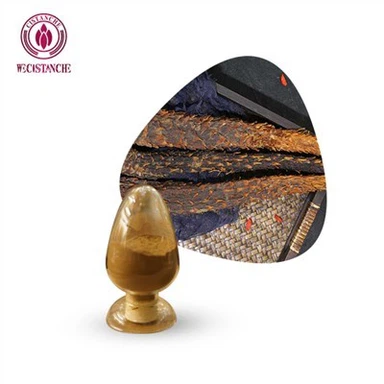
Cistanches Herba, commonly known as "desert ginseng", is a precious tonic herbal medicine belonging to Orobanchaceae family and mainly distributed in desert regions of Northwest China. In traditional Chinese medicine theory, Cistanches Herba tonifies kidney‑yang, replenishes essence‑blood, strengthens sinews and bones, and historically has been applied for bone‑weakness‑related manifestations. Modern phytochemical analyses indicate its stem tissue accumulates abundant bio‑chemical substances. Total glycosides of cistanche (GCs) represent the major effective constituents, covering phenylethanoid glycosides, lignan glycosides, saccharides and volatile componentsPMC. Cumulative pharmacological experiments prove that GCs can modulate bone‑remodeling balance, ameliorate bone micro‑structure defects and mitigate bone loss. This paper reviews recent research progress of GCs against osteoporosis, dissecting multi‑level mechanisms from antioxidant, anti‑inflammatory, bone‑cell regulation to key signal‑pathway modulation, and discusses clinical‑translational status, safety limitations and future‑study perspectives, supplying reference evidence for developing novel anti‑osteoporotic botanical drugs.

2. Core Biological Mechanisms of GCs against Osteoporosis
Bone homeostasis depends on dynamic balance between bone‑forming osteoblasts (OB) and bone‑resorbing osteoclasts (OC). When osteogenic capacity declines while osteoclastic bone‑resorption accelerates, osteoporosis pathology develops. GCs exert anti‑osteoporotic potency via multiple interconnected biological pathways: antioxidation, anti‑inflammation, direct bone‑cell modulation and endocrine‑metabolism adjustment.
2.1 Antioxidant Effects
Oxidative stress participates crucially in osteoporosis progression. Excess reactive oxygen species (ROS) generate free radicals that damage osteoblast survival, restrain osteoblast differentiation and meanwhile facilitate osteoclast genesis and activation, accelerating trabecular degradation and bone‑mass loss. Experimental data reveal cistanche‑derived glycoside and polysaccharide components exert prominent antioxidant capacity in aging animal models. After intervention with cistanche bio‑fractions, activity levels of antioxidant enzymes superoxide dismutase (SOD) and glutathione peroxidase (GSH‑Px) rise distinctly, while malondialdehyde (MDA), a marker reflecting lipid peroxidation injury, decreases significantly. By scavenging superfluous intracellular free radicals, GCs alleviate oxidative‑stress‑provoked skeletal damage, preserve osteoblast viability and indirectly suppress excessive osteoclast differentiation, furnishing protective conditions for maintaining normal bone‑remodeling environment.
2.2 Anti‑Inflammatory Activity
Chronic low‑grade inflammation is tightly linked to osteoporosis pathogenesis. Over‑secretion of inflammatory mediators aggravates bone deterioration: prostaglandins, leukotrienes, interleukin‑6 (IL‑6), interleukin‑1β (IL‑1β), nitric oxide (NO) and tumor‑necrosis‑factor‑α (TNF‑α) can stimulate osteoclast precursor fusion and maturation, amplify bone‑resorption activity, inhibit osteogenic function and worsen trabecular destruction. GCs could restrain the release of these pro‑inflammatory mediators. In osteoporosis‑model animal experiments, serum concentrations of NO, IL‑6, IL‑1β and TNF‑α drop following GCs administration. GCs relieve systemic inflammatory status and reduce inflammatory insults inside bone micro‑environment, consequently retarding osteoporosis aggravation. Such anti‑inflammatory property partly explains why GCs improve bone quality in pathological states accompanied by inflammation.
2.3 Direct Regulation of Osteoblast and Osteoclast Functions
Promoting osteoblast proliferation‑differentiation and constraining osteoclast over‑activation constitutes the central anti‑osteoporotic mechanism for GCs. Multiple in‑vivo animal‑model studies validate this dual‑direction regulatory characteristic. In senescence‑accelerated osteoporosis mouse models, cistanche‑derived interventions up‑regulate bone morphogenetic protein‑2 (BMP‑2) expression, improve femur bone‑mineral density (BMD), and positively facilitate osteoblast proliferation. Ovariectomized osteoporosis‑rat experiments further demonstrate that cistanche extracts elevate femoral BMD, produce well‑organized thick trabecular bone in callus tissue, and accelerate healing progress of osteoporotic fracture.
Osteoblast‑specific biomarkers such as bone‑Gla‑protein (BGP / osteocalcin), osteopontin (OPN), alkaline phosphatase (ALP) reflect osteoblast maturity and matrix‑mineralization ability. GCs treatment increases ALP activity, elevates BGP and OPN expression, enhances bone‑matrix synthesis and mineralization. On the osteoclast side, GCs suppress osteoclast differentiation and functional activation, lower excessive bone‑resorption rate, reverse unbalanced bone turnover. Through coordinating OB‑OC activities, GCs slow down bone loss, improve bone micro‑architecture parameters and cut osteoporotic‑fracture risk.

2.4 Endocrine‑Metabolic Modulation: Sex‑Hormone Axis and Calcium‑Phosphorus Balance
Many kidney‑tonifying botanical agents can excite the hypothalamic‑pituitary‑gonadal (HPG) axis. HPG axis governs sex‑steroid hormone secretion and acts as a vital therapeutic target for osteoporosis. Estrogen and androgen profoundly shape bone metabolism. Androgen accelerates bone‑matrix formation, promotes calcium‑phosphorus deposition and protein synthesis, and can function directly on osteoblasts or convert into estrogen for indirect skeletal regulation. Estrogen supports osteoblast maturation and differentiation; estrogen deficiency disturbs OPG secretion from osteoblasts, unleashing unrestrained osteoclast development and triggering massive bone loss. Estrogen insufficiency also disturbs intestinal calcium absorption and perturbs calcium‑phosphorus homeostasis.
GCs activate HPG‑axis function, adjust estrogen‑androgen levels, and further modulate calcium‑phosphorus metabolic equilibrium. By rectifying sex‑hormone disorder, GCs indirectly change biological behaviors of osteoblasts and osteoclasts, increase mineral deposition inside bone tissue, enhance bone mechanical strength and realize preventive‑therapeutic outcomes for osteoporosis. In addition, vitamin‑D shortage may induce secondary hyperparathyroidism and accelerate bone resorption; GCs‑associated metabolic adjustment also interacts with calcium‑vitamin‑D‑related bone‑regulating networks.
3. Key Signaling‑Pathway Mechanisms Mediating GCs Anti‑Osteoporosis Effects
Bone remodeling is precisely controlled by multiple intracellular signal cascades. Two classic axes, OPG/RANKL/RANK and Wnt/β‑catenin, occupy core regulatory status. GCs manipulate these pathways to inhibit pathological bone‑resorption and reinforce bone‑formation processes.
3.1 OPG/RANKL/RANK Signaling Pathway
The OPG/RANKL/RANK system represents a master switch governing osteoclast generation and bone‑resorption activity. RANKL is secreted by osteoblasts and activated T‑lymphocytes; its receptor RANK expresses on osteoclast precursors and mature osteoclasts. After RANKL binds RANK, downstream signaling‑cascade including NF‑κB and JNK is triggered, driving osteoclast precursor differentiation, maturation and bone‑resorptive activation. Osteoprotegerin (OPG), secreted by osteoblasts, works as soluble decoy receptor competing for RANKL binding. When OPG combines with RANKL, RANK‑RANKL interaction gets blocked, osteoclast maturation is restrained and bone‑resorption is suppressed. The ratio of RANKL / OPG largely determines osteoclast activity magnitude.
GCs down‑regulate RANKL expression, raise OPG level and decrease RANKL‑to‑OPG ratio. This intervention blocks RANK‑RANKL‑mediated osteoclast‑differentiation signals, curbs osteoclast‑driven bone‑resorption and shifts bone‑remodeling balance toward bone‑formation direction. Simultaneously, GCs reduce cathepsin‑K (CK) activity. Cathepsin‑K is a critical protease secreted by mature osteoclasts to degrade bone matrix components; inhibition of cathepsin‑K further weakens osteoclastic bone‑resorption capacity.

3.2 Wnt/β‑Catenin Canonical Signaling Pathway
The canonical Wnt/β‑catenin pathway is indispensable for osteogenic differentiation of bone‑marrow mesenchymal stem‑cells (BMSCs). When Wnt‑ligand triggers this pathway, β‑catenin accumulates inside cytoplasm and translocates into cell nucleus, then up‑regulates transcription factor Runx‑2 expression. Runx‑2 is a master transcription factor steering mesenchymal‑stem‑cell commitment toward osteoblast lineage, promoting osteoblast‑differentiation, matrix mineralization and fracture repair. Activation of Wnt/β‑catenin signaling augments bone volume via stimulating osteogenesis and restraining excessive bone‑resorption.
Animal‑model studies applying GCs to senescence‑accelerated OP mice indicate GCs modulate Wnt/β‑catenin signal transduction: GCs increase β‑catenin‑related active‑protein expression, reduce phosphorylated‑β‑catenin (p‑β‑catenin) abundance, activate canonical Wnt/β‑catenin cascade, improve impaired bone micro‑structure, mitigate progressive bone loss and facilitate bone‑formation. BMP‑2, downstream of this signaling network, gets up‑regulated accordingly, further amplifying osteogenic effects.
4. Clinical‑Application Prospect and Toxicological Safety Evaluation
4.1 Potential Clinical Application Value
Existing pre‑clinical evidence suggests GCs possess multi‑functional pharmacological properties beyond anti‑osteoporosis. By dual‑modulating bone‑formation and bone‑resorption, correcting serum ALP activity and calcium‑phosphorus metabolism parameters, GCs elevate bone‑mineral density and mitigate osteoporotic fracture risk. Its anti‑inflammatory bio‑activity supplies auxiliary therapeutic potential for inflammatory‑joint disorders. GCs also show anti‑aging and immunomodulatory effects, which may improve comprehensive physical condition of elderly OP patients. Nevertheless, it should be emphasized that high‑quality human clinical evidence remains limited. Most supportive results are derived from cell‑culture and laboratory‑animal experiments, and cannot completely substitute clinical‑trial outcomes.
4.2 Toxicity and Safety Assessment
Multiple toxicology studies have assessed safety profiles of total cistanche glycosides. Acute‑toxicity tests and genetic‑toxicity assays indicate GCs exhibit non‑toxic characteristics with negative genotoxic‑risk results. Ninety‑day repeated‑dose oral‑toxicity experiments on rats demonstrate that GCs treatment does not interfere animal normal growth‑and‑development. Routine blood‑test, serum‑biochemical‑indexes, organ‑weight coefficients and histopathological inspection reveal no detectable drug‑related pathological lesions compared with control groups. Up‑to‑now, available preliminary clinical observations report no obvious drug‑associated adverse events, reflecting acceptable safety and tolerability of GCs. These toxicological data lay experimental groundwork for further product development and clinical‑translation exploration.
5. Existing Limitations and Future Research Outlook
Total glycosides of Cistanches Herba display bright prospects for osteoporosis prevention and therapy, owing to multi‑target, multi‑pathway regulatory features. However current research system still has obvious bottlenecks to overcome.
First, the complete molecular regulatory network of GCs against osteoporosis has not been fully elucidated. Although key pathways including OPG/RANKL/RANK and Wnt/β‑catenin have been partially verified, cross‑talk between different signaling axes, precise target‑molecules of each monomer glycoside component, and detailed upstream‑downstream regulatory cascades remain ambiguous. Future research can deploy cutting‑edge technologies such as single‑cell transcriptome sequencing and gene‑editing tools to systematically uncover molecular‑action networks, supporting precision pharmacological exploitation.
Second, high‑level clinical‑research evidence is scarce. Presently most data come from pre‑clinical laboratory investigations; large‑scale, multi‑center, randomized‑controlled human trials are lacking. It is necessary to carry out standardized clinical‑study designs, to confirm real‑world curative efficacy, figure out optimal therapeutic‑dosage ranges, administration cycles and population‑applicable conditions for GCs in human‑body OP intervention.
Third, pharmaceutical‑development challenges exist. Purification‑purity stabilization and bioavailability enhancement are critical technical barriers. It is urgent to optimize extraction‑purification workflows and develop novel delivery‑form preparations, to improve in‑vivo absorption efficiency and therapeutic performance.
If those challenges get properly addressed, total glycosides of Cistanches Herba are expected to evolve into safe and innovative candidate anti‑osteoporotic agents, offering new intervention alternatives for osteoporosis patients. Related research will also promote modernization and international‑spreading of traditional‑Chinese‑medicine resources.

6. Conclusion
Total glycosides extracted from Cistanches Herba exert notable anti‑osteoporotic pharmacological effects verified by accumulative pre‑clinical researches. On osteogenesis aspects, GCs facilitate osteoblast proliferation‑differentiation, boost expression of osteogenic‑related markers including BMP‑2, ALP, BGP and OPN, so as to promote bone‑matrix synthesis and mineralization. For bone‑resorption suppression, GCs decrease pro‑inflammatory‑cytokine release, mitigate oxidative‑stress bone injury, constrain osteoclast maturation and activation, inhibit cathepsin‑K activity and adjust OPG/RANKL/RANK ratio. GCs activate Wnt/β‑catenin signaling cascade to strengthen bone‑formation. Meanwhile, GCs regulate HPG endocrine axis and calcium‑phosphorus metabolic balance to indirectly maintain bone‑tissue health. Toxicological experiments support good safety‑tolerability of GCs.
Notwithstanding predominant achievements in cell‑level and animal‑model studies, sufficient high‑quality human clinical‑trial evidence is still absent. Further in‑depth mechanistic exploration, standardized clinical‑trial implementation and pharmaceutical‑formulation optimization are essential. GCs represent promising natural‑product lead‑compounds for osteoporosis treatment. Continuous research advancement will advance transformation of Cistanches Herba bio‑active components toward new anti‑osteoporosis medicines and bring clinical benefits for osteoporosis sufferers.
References
[1] Ma M, Zeng H L, Yang P, et al. Drug delivery and therapy strategies for osteoporosis intervention[J]. Molecules, 2023, 28(18):6652.
[2] Zou Z, Liu W, Cao L H, et al. Advances in the occurrence and biotherapy of osteoporosis[J]. Biochemical Society Transactions, 2020,48(4):1623‑1636.
[3] Wang F J, Tu P F, Zeng K W, et al. Total glycosides and polysaccharides of Cistanche deserticola prevent osteoporosis by activating Wnt/β‑catenin signaling pathway in SAMP6 mice[J]. Journal of Ethnopharmacology, 2021,271:113899.
[4] Yasuda H. Discovery of the RANKL/RANK/OPG system[J]. Journal of Bone and Mineral Metabolism, 2021,39(1):2‑11.
[5] Bo F, et al. Anti‑osteoporotic activity of an edible traditional Chinese medicine Cistanche deserticola on bone metabolism of ovariectomized rats through RANKL/RANK/TRAF6‑mediated signaling pathways[J]. Frontiers in Pharmacology, 2019,10.
[6] Hu Y M, Hu Y X, Liu X Y, et al. Acute, sub‑acute and genetic toxicity experimental study of cistanche total glycosides[J]. Practical Preventive Medicine, 2006,13(5):1176‑1180.
[7] Zhang Y Q, Zheng D H, Xu J F, et al. Effects of Cistanche deserticola on BMP‑2 protein expression in senescence‑accelerated osteoporotic mice[J]. Ningxia Medical Journal,2014,36(12):1114‑1116.
[8] Yu L X, Chen X Q, Wu Q F. Effect of aqueous extract of Cistanche deserticola on osteoporotic fracture healing in rats[J]. Zhejiang Journal of Traditional Chinese Medicine, 2019,54(6):451‑453.
[9] Luo D M, Long M, Du W J, et al. Anti‑osteoporosis mechanism of Cistanche deserticola extract in M‑KOOPG mice[J]. Chinese Journal of Experimental Traditional Medical Formulae,2016,22(10):138‑142.
[10] Zheng Y L, Li N N, Feng J. Research progress on anti‑osteoporosis mechanism of phenylethanoid glycosides from Cistanche deserticola[J]. Journal of Tianjin University of Traditional Chinese Medicine,2022,41(2):265‑272.