A Traditional Chinese Herbal Formula Proposed For Anti‑Tumor Applications: Ingredients, Formulation, Preclinical Findings, And The Immune Mechanism Behind It
Oct 12, 2026
Cancer remains one of the most serious threats to human health. While surgery, radiotherapy, chemotherapy, targeted therapy, and immunotherapy have improved outcomes for many patients, treatment resistance and relapse are still common challenges.
Researchers have found that in some tumors, oncogenes (such as KRAS) can become highly expressed. High oncogene expression is often associated with reduced sensitivity to chemotherapy, development of drug resistance, poorer prognosis, and higher recurrence risk. Even when oncogene changes are not obvious, resistance to chemotherapy can still appear, limiting therapeutic benefit.
Because Traditional Chinese Medicine (TCM) has a long history and is often perceived as having relatively fewer side effects when used appropriately, many patients and researchers continue to explore how herbal formulas could be used-especially as adjuncts to standard care.
This article introduces a TCM composition that is disclosed for a new use: preparation of anti‑tumor medicines, including the proposed mechanisms and the supporting preclinical (cell and mouse) experiments described.
Important note: This content summarizes a disclosed technical approach and preclinical research. It is not medical advice and should not be used to diagnose, treat, cure, or prevent any disease. Cancer prevention and treatment decisions should always be made with qualified clinicians.
1) What is being proposed?
The disclosed invention concerns:
"Use of a Traditional Chinese Medicine composition in the preparation of anti‑tumor drugs."
The composition is reported to:
inhibit tumor growth,
show significant inhibitory effects when combined with chemotherapy drugs,
and show a notable inhibitory effect on tumors with high oncogene expression, including KRAS-high tumor models.
TCM HERB FOR DIFFERENT SYMPTOMS
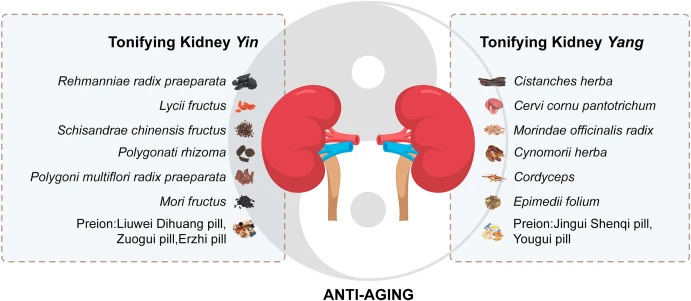
2) The complete formula (ingredients + full weight ranges)
The TCM composition is prepared from the following medicinal materials in parts by weight:
Cuscuta seed (Tu Si Zi): 150–350
Goji berry (Gou Qi Zi): 100–200
Schisandra (Wu Wei Zi): 30–60
Cnidium fruit (She Chuang Zi): 20–50
Rosa laevigata fruit (Jin Ying Zi): 20–50
Chive seed (Jiu Cai Zi): 20–50
Morinda officinalis (Ba Ji Tian): 20–50
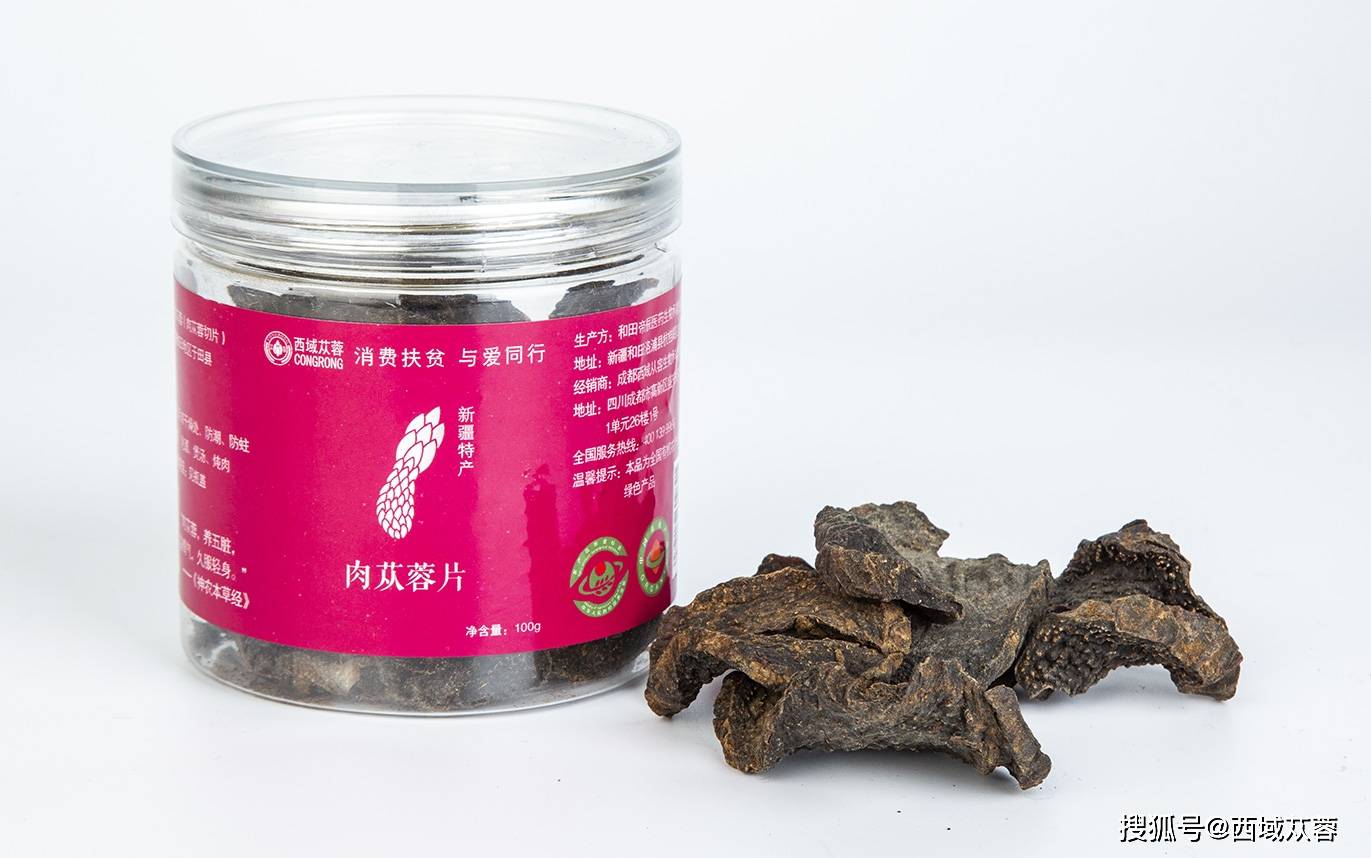
Cistanche (Rou Cong Rong): 20–50
Rehmannia root, fresh/dried "Sheng Di Huang": 30–60
Achyranthes bidentata (Chuan Niu Xi): 20–50
Epimedium (Yin Yang Huo): 40–100
Raspberry (Fu Pen Zi): 20–50
Ginseng (Ren Shen): 15–35
Deer antler (Lu Rong): 10–25
Seahorse (Hai Ma): 15–35
Toosendan fruit / Melia toosendan (Chuan Lian Zi): 15–35
This same set of ingredients is also referenced in earlier work (e.g., CN1403145A) as a formula for erectile dysfunction; the current disclosure focuses on a new research direction and new therapeutic use: anti‑tumor applications.
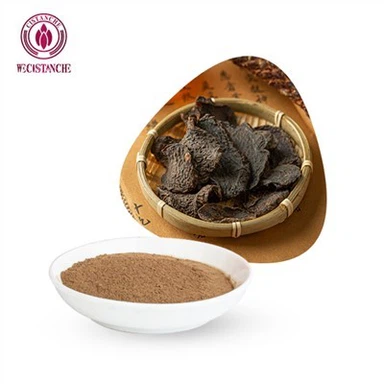
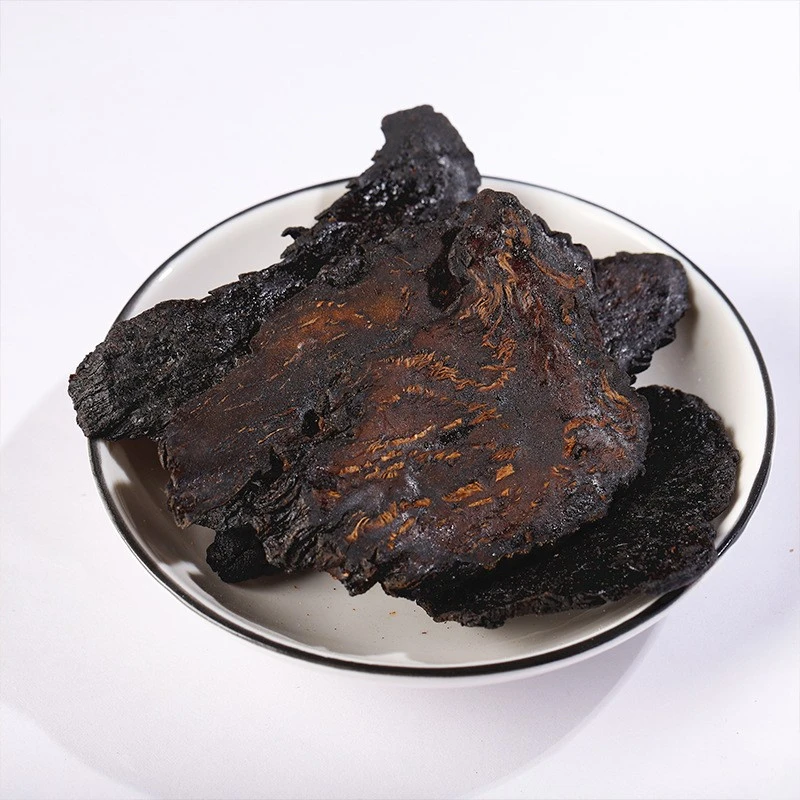
Cistanche Raw Materials
3) What tumors are included?
The disclosure states the tumors are solid tumors, preferably malignant solid tumors, including (non‑exhaustive list):
liver cancer
gastric cancer
lung cancer
colon cancer
rectal cancer
prostate cancer
pancreatic cancer
breast cancer
ovarian cancer
It also includes tumors with high oncogene expression, where the oncogene may include KRAS (Kras) among others.
4) How the formula may be used (alone or in combination)
The proposed applications include:
Used alone in preparation of anti‑tumor medicines (preferred in some descriptions).
Combined with chemotherapy drugs in preparation of anti‑tumor medicines.
Combined with macrophages in preparation of anti‑tumor medicines.
Chemotherapy drugs listed
When combined with chemotherapy, the chemotherapy agent may be:
Oxaliplatin
Carboplatin
Cisplatin
Asparaginase
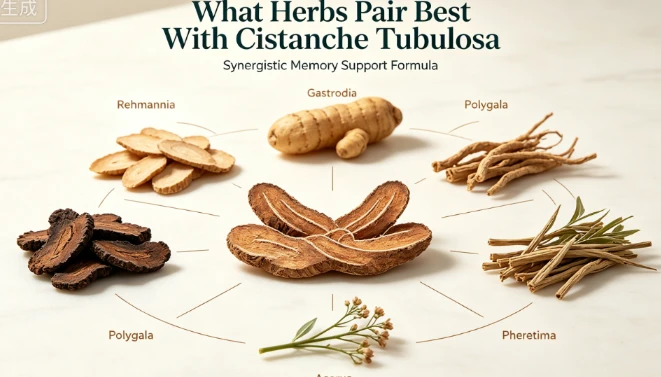
5) Example compositions (four specific "preferred" formulas)
The disclosure provides several specific formulas within the stated ranges.
Example Formula A
Tu Si Zi 150
Gou Qi Zi 200
Wu Wei Zi 30
She Chuang Zi 50
Jin Ying Zi 20
Jiu Cai Zi 20
Ba Ji Tian 50
Rou Cong Rong 20
Sheng Di Huang 30
Chuan Niu Xi 50
Yin Yang Huo 40
Fu Pen Zi 50
Ren Shen 15
Lu Rong 25
Hai Ma 15
Chuan Lian Zi 35
Example Formula B
Tu Si Zi 350
Gou Qi Zi 100
Wu Wei Zi 60
She Chuang Zi 20
Jin Ying Zi 50
Jiu Cai Zi 50
Ba Ji Tian 20
Rou Cong Rong 50
Sheng Di Huang 60
Chuan Niu Xi 20
Yin Yang Huo 100
Fu Pen Zi 20
Ren Shen 35
Lu Rong 10
Hai Ma 35
Chuan Lian Zi 15
Example Formula C
Tu Si Zi 250
Gou Qi Zi 138
Wu Wei Zi 46
She Chuang Zi 35
Jin Ying Zi 35
Jiu Cai Zi 35
Ba Ji Tian 35
Rou Cong Rong 35
Sheng Di Huang 46
Chuan Niu Xi 35
Yin Yang Huo 70
Fu Pen Zi 35
Ren Shen 25
Lu Rong 16
Hai Ma 21
Chuan Lian Zi 23
Example Formula D
Tu Si Zi 250
Gou Qi Zi 150
Wu Wei Zi 45
She Chuang Zi 30
Jin Ying Zi 30
Jiu Cai Zi 30
Ba Ji Tian 30
Rou Cong Rong 30
Sheng Di Huang 45
Chuan Niu Xi 30
Yin Yang Huo 70
Fu Pen Zi 30
Ren Shen 20
Lu Rong 19
Hai Ma 20
Chuan Lian Zi 20
6) Dosage forms (what it can be made into)
The composition may be prepared into multiple dosage forms, including:
decoction
capsules
tablets
granules
powders
pills
When combined with chemotherapy drugs or macrophages, it may be used as:
separate preparations administered together, or
a single combined preparation (prepared into one dosage form), depending on needs.
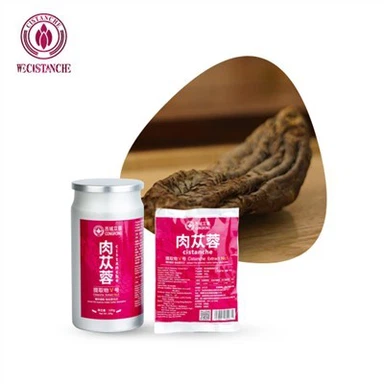
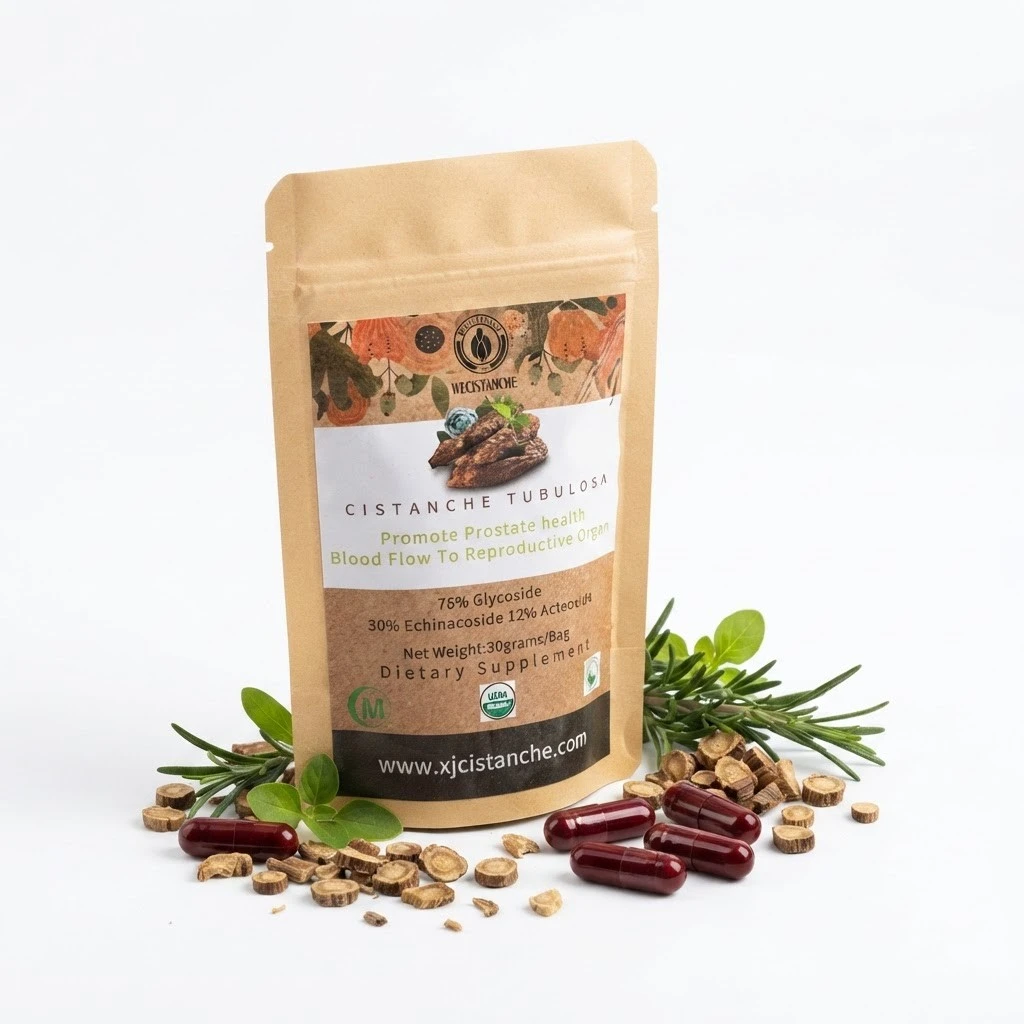
A famous herb cistanche supplements sell in china
7) A disclosed capsule manufacturing process (key steps)
A capsule preparation method is described:
Step (a): Ethanol reflux extraction
Weigh (by ratio) the following herbs:
She Chuang Zi (Cnidium)
Tu Si Zi (Cuscuta)
Wu Wei Zi (Schisandra)
Yin Yang Huo (Epimedium)
Add 6–10× volume of 70% ethanol, reflux extract 1–3 times, each time 1–3 hours. Filter, combine filtrates, and recover ethanol under reduced pressure until no alcohol odor remains to obtain an ethanol extract paste.
Step (b): Water decoction of the residue + combination
Combine the extraction residue from step (a) with (by ratio):
Gou Qi Zi
Sheng Di Huang
Fu Pen Zi
Jin Ying Zi
Jiu Cai Zi
Ba Ji Tian
Chuan Lian Zi
Add 7–12× volume of water, decoct 1–3 times, each time 1–3 hours. Filter and combine filtrates. Mix with the ethanol extract paste from step (a), and concentrate under reduced pressure to a relative density (at 60 °C) of 1.25–1.30 to obtain a concentrated extract.
Step (c): Add fine powders, dry, mill, and fill
Weigh (by ratio):
Ren Shen (Ginseng)
Lu Rong (Deer antler)
Hai Ma (Seahorse)
Rou Cong Rong (Cistanche)
Chuan Niu Xi
Pulverize into fine powder, mix evenly with the extract from step (b), dry at 60–70 °C, pulverize, sieve, and fill into capsules.
8) Preclinical study overview (cells, animals, dosing)
(1) Cell culture
Cells were cultured at 37 °C, 5% CO₂.
Mouse hepatoma cell line: Hepa1‑6
Mouse macrophage cell line: RAW264.7
Human monocytic cell line: THP‑1
Medium conditions are specified (DMEM for Hepa1‑6 and RAW264.7; RPMI‑1640 for THP‑1 with β‑mercaptoethanol). STR authentication and mycoplasma‑free confirmation were described.
(2) Tested sample and reagents
The tested product BZBS was provided by Shijiazhuang Yiling Pharmaceutical Co., Ltd. and prepared according to the capsule method described (corresponding to Example 1).
Key reagents include:
Oxaliplatin (OXA)
CMC‑Na (carboxymethyl cellulose sodium)
PMA (for THP‑1 differentiation/activation contexts)
(3) Animals and ethical oversight
C57BL/6 wild‑type (WT) mice
STING knockout mice (Sting‑/‑) on C57BL/6 background (Jackson Laboratory stock no. 025805)
Immunodeficient mice: nude mice (T‑cell deficient)
Male mice 5–6 weeks old were housed under controlled temperature and humidity with a 12h light/dark cycle. Animal protocols were approved by the relevant institutional animal care and use committee.
(4) Tumor model
Subcutaneous tumor model: implant 1×1061 \times 10^61×106 Hepa1‑6 cells in the inguinal region. Tumor volume was measured weekly using:
Tumor volume=0.5×length×width2\text{Tumor volume} = 0.5 \times \text{length} \times \text{width}^2Tumor volume=0.5×length×width2
A maximum tumor diameter < 1.5 cm was stated as a limit; animals were euthanized if exceeded.
(5) In vivo dosing (as disclosed)
Mice were randomized to ensure similar baseline tumor volumes.
Oxaliplatin: 5 mg/kg, once weekly, intraperitoneal injection
BZBS: 1.5 g/kg, once daily, oral gavage, dissolved in 0.5% CMC
Treatment duration: 2 weeks
Treatment started around day 10 after tumor modeling in described in vivo studies
(6) Statistics
GraphPad Prism 9 was used. Data presented as mean ± SD; Student's t‑test for two groups; one‑way or two‑way ANOVA for multiple groups; p<0.05p < 0.05p<0.05 considered significant.
9) Key experimental findings (what worked, what did not)
9.1 Nude mice (immunodeficient) subcutaneous hepatoma model
In nude mice implanted with Hepa1‑6 tumors:
BZBS alone did not show a significant anti‑tumor effect.
BZBS + oxaliplatin also did not show obvious tumor inhibition.
The interpretation offered is that immune deficiency (notably the lack of key immune cells such as T cells) may limit the ability of the treatment to work-suggesting an immune‑dependent component.
9.2 Immunocompetent C57BL/6 hepatoma model
In immunocompetent C57BL/6 mice implanted with Hepa1‑6 tumors:
BZBS alone reduced tumor weight and volume growth (tumor progression inhibition).
BZBS + oxaliplatin suppressed tumor growth more strongly than either agent alone, suggesting BZBS may enhance chemotherapy anti‑tumor efficacy in this model.
9.3 KRAS overexpression hepatoma model (immunocompetent)
In C57BL/6 mice implanted with Hepa1‑6 cells engineered for Kras overexpression:
BZBS treatment significantly reduced tumor volume and tumor weight compared with control groups.
Additional observations noted:
After BZBS treatment, Kras overexpression did not reduce infiltration and cytolytic activity of CD107a⁺ CD8⁺ T cells, nor increase exhausted PD‑1⁺ CD8⁺ T cells or PD‑L1⁺ CD45⁻ cancer cells in the described analyses.
9.4 Combining BZBS with macrophages (cell‑assisted approach)
A model was built by co‑inoculating macrophages and tumor cells (ratio 4:1), where macrophages were pre‑treated with BZBS in culture medium.
Findings:
BZBS‑treated macrophages inhibited tumor growth.
This effect was particularly strong against Kras overexpression tumors.
10) Proposed mechanism: macrophage cGAS–STING activation driven by mitochondrial stress
A major part of the disclosure is mechanistic.
10.1 Transcriptome data points toward cytosolic DNA sensing
RNA‑seq in BZBS‑treated THP‑1 cells with KEGG enrichment suggested pathways positively related to cytosolic DNA sensing.
10.2 BZBS activates cGAS–STING signaling in macrophages
In mouse and human macrophages (RAW264.7 and THP‑1):
cGAS expression was upregulated
Downstream STING pathway activation was observed through increased phosphorylation of:
STING
TBK1
IRF3
IFN‑β transcription increased
In tumor tissue from BZBS‑treated mice, the proportion of tumor‑infiltrating macrophages expressing p‑TBK1 was higher than controls.
Notably, BZBS did not significantly affect cGAS/STING/IFN‑β expression in treated hepatoma cells (Hepa1‑6), suggesting the main signaling activation occurred in macrophages, not tumor cells.
10.3 Mitochondrial damage → mtDNA release → cGAS–STING activation
After BZBS treatment, macrophages showed:
accumulation of cytosolic mitochondrial DNA (mtDNA)
increased mtDNA‑specific gene signals (DLOOP, ND1, 16S, COX1)
metabolic pathway changes indicating reduced TCA cycle and ETC‑related metabolites
downregulation of TCA‑related enzyme transcription
decreased expression of M2 (immunosuppressive) macrophage markers
increased mitochondrial ROS and ultrastructural damage (fragmentation, cristae deformation)
A mitochondrial targeted antioxidant (mitoTEMPO) blocked the phosphorylation increases in STING/TBK1/IRF3, supporting the idea that:
mitochondrial ROS and stress are upstream drivers of the cGAS–STING activation observed.
11) What this means for readers interested in "natural prevention" and herbal wellness
Many people searching for "natural tumor prevention" are really looking for one of two things:
Better everyday resilience (sleep, energy, inflammation balance, metabolic health), and
Evidence‑based strategies that can complement medical care responsibly.
This disclosure is notable because it does not merely claim a "general tonic" effect-it provides a testable immunology pathway in macrophages (mtDNA → cGAS–STING → IFN‑β axis) and shows that anti‑tumor effects were strongest in immunocompetent settings. That is a meaningful scientific framing.
At the same time, it is essential to keep expectations realistic:
These are preclinical findings (cell lines and mouse models).
Translating dosing, efficacy, and safety to humans requires carefully designed clinical studies.
If someone is undergoing cancer treatment, any herbal product must be discussed with their oncology team due to potential interactions.
12) Closing: a practical, responsible takeaway
This TCM composition-containing Cistanche along with a structured set of traditional ingredients-has been disclosed for use in preparing anti‑tumor medicines, including use alone, with chemotherapy, or with macrophage‑based approaches. Preclinical studies described inhibition of tumor growth in immunocompetent mouse hepatoma models and in Kras overexpression settings, with a proposed mechanism centered on macrophage mitochondrial stress and cGAS–STING activation.
If you want, I can also produce:
a US‑compliance‑friendly version for an independent supplement site (carefully avoiding disease claims and focusing on "immune support" and "research overview"), or
a shorter SEO blog outline + meta title/description targeting keywords like Cistanche, macrophages, cGAS–STING, KRAS, oxaliplatin adjuvant.