After Long-term Constipation, My Intestines Turned Black! Gastroenterology Experts Remind: Be Wary Of Colonic Melanosis
Oct 17, 2023
With the increasing attention to health and the popularization of electronic gastrointestinal endoscopy technology, more people are undergoing gastrointestinal endoscopy than before. Many people have found that their intestines have "turned black" after undergoing gastrointestinal endoscopy.

Recently, a 41-year-old female patient with long-term difficulty in defecation came to our hospital for a painless gastrointestinal endoscopy and was diagnosed with "total melanosis of the colon with rectal polyps." The patient's first reaction is: the intestines have turned black, how terrible it is! Melanosis of the colon is not a very serious disease. Patients are worried mainly due to a lack of understanding of the disease. Next, let’s learn more about it with the Gastroenterology Department of Shanghai Jiahua Hospital!
1. What is melanosis of the colon?
Melanosis coli (MC), also known as colonic melanosis, is a mucosal pigmentation disease that causes the colon to darken. The mucosal pigmentation occurs due to the lipofuscin substance contained in the lamina propria of the mucosa; MC It is also a benign, reversible, non-inflammatory disease, and its detection rate is increasing year by year.
In layman's terms, your intestines can "eat" pigments better than ordinary people. If you "eat" too much, you will become "black intestines." MC mostly occurs in elderly people over 60 years old. In my country, the detection rate of melanosis colon is about 1% to 2%. However, in elderly patients who take laxatives for a long time due to constipation, the detection rate of melanosis colon is even lower. As high as 44.4%. The frequency of MC involving intestinal segments from high to low is the left colon, right colon, rectum, and whole colon.
2. How did you get "melanosis of the colon"?
At present, the cause of colonic melanosis is still unclear. It is mainly believed to be related to constipation, drugs, food, age, disease, and other factors.
1. Chronic constipation with a long history of constipation. If feces stays in the colon for too long, the pigment particles are absorbed by the intestines, causing the intestinal mucosa to turn black.
2. Long-term and large-dose abuse of anthraquinone drugs
Anthraquinone laxatives mainly include traditional Chinese medicines such as rhubarb, aloe vera, and senna, or bezoar detoxification tablets, Maren Runchang Pills, Guodao tablets, and aloe vera capsules. The main component of anthraquinone laxatives is anthraquinone derivatives, which act on the large intestine and stimulate intestinal nerves to strengthen intestinal peristalsis, thus having a laxative and diarrheal effect. Studies have shown that colonic melanosis will occur after taking large doses of anthraquinone laxatives for 1 to 6 months.
3. Long-term excessive intake of trace metal elements or minerals such as iron, magnesium, silicate, calcium, palladium, zinc ore, lead, cadmium, nickel, and manganese can lead to colonic melanosis.
4. Age: As age increases, the incidence of colonic melanosis also increases.
5. Disease: Some other chronic inflammatory bowel diseases as well as ulcerative colitis and chronic diarrhea may also be factors leading to MC.
3. What are the symptoms of colonic melanosis?
Most patients with colonic melanosis have no obvious symptoms. They are diagnosed with colonic melanosis when they accidentally discover that the colon has become darkened during a colonoscopy. Pathological examination finds that the colon's tunica propria contains a large amount of melanin.
Some patients with colonic melanosis may experience gastrointestinal symptoms such as constipation, difficulty defecation, and abdominal distension. A small number of patients are accompanied by symptoms such as loss of appetite, dull pain in the lower abdomen, and electrolyte disorders such as low potassium, low sodium, and low calcium. If patients are combined with diseases such as enteritis, intestinal polyps, and colon cancer, they may also experience symptoms such as blood in the stool and diarrhea.
4. Diagnostic basis of colonic melanosis
The diagnosis of MC is mainly based on endoscopic and pathological examination.
1. Endoscopic manifestations: The surface of the colon mucosa is smooth, brown, or black granular pigmentation is seen in the mucosa, the mucosa is light brown, tan, or dark brown, with milky white linear, cord-like or reticular mucosa visible in between, and the entire mucosa is The surface is tiger-skin-like, turtle-back-like, reticulated cord-like or similar to the appearance of betel nut cut surface. The scope of the disease can involve one or several intestinal segments, or even the entire colon or large intestine.
2. Pathological manifestations: A large number of pigment-containing mononuclear macrophages and melanin deposition can be seen in the lamina propria of the intestinal mucosa, while other layers of the intestinal wall are normal. Pathology is the gold standard for diagnosing MC.

MC endoscopic grading: Grade I, the intestinal mucosa is light brown, patchy, similar to leopard skin, and the lesions are mostly localized; Grade II, the intestinal mucosa is dark brown, more common in the left colon or a certain section of colon mucosa; In grade III, the intestinal mucosa is dark brown, and the lesions can accumulate in the entire colon and rectum.
5. Does melanosis of the colon require treatment?
Melanosis of the colon is a benign, non-inflammatory bowel disease. Most patients have no symptoms and can even recover on their own after improving their lifestyle. They only require regular review and do not require special treatment.
However, if the patient has obvious constipation, difficulty defecation, abdominal distension, and other symptoms, drug treatment is required. Commonly used drugs mainly include polyethylene glycol, mosapride, probiotics, and other microecological preparations, which are mainly used to improve constipation symptoms.
6. Regular review and prognosis
Regular review
1. For patients who have no family history of colon cancer and no risk factors such as colon polyps, reexamination can be performed once every 1 to 2 years.
2. For patients with intestinal polyps, it is recommended to re-examine once a year; if the polyp pathology indicates low-grade intraepithelial neoplasia, re-examination is required every 3 to 6 months; if the polyp pathology indicates high-grade intraepithelial neoplasia, conservative treatment is selected. , you need to review it every 3 months.
prognosis
Melanosis of the colon is a benign disease that can be reversed by eliminating the causative factors, but it cannot be cured in the short term. There is currently no specific medicine for the treatment of colonic melanosis, and solving constipation is the key.
1. Stop using laxatives indiscriminately, especially anthraquinone laxatives. Literature reports show that MC often occurs within 5 months of taking anthraquinone laxatives and reverses 6 to 12 months after discontinuing laxatives.
2. Treat constipation: focus on adjusting intestinal function and replenish probiotics promptly.
3. Adjust the dietary structure, eat more fiber-rich foods, reduce the intake of protein, fat, etc., and avoid eating spicy foods. Avoid foods rich in metals such as iron and magnesium, as well as mineral-rich foods such as silicates.
4. For stubborn constipation, you can choose to use laxatives, such as polyethylene glycol or Kaiselu, to relieve bowel obstruction and avoid intestinal obstruction caused by stubborn and severe constipation. For those who have difficulty defecating, use lubricating laxatives for a short period.
5. If combined with polyp adenoma, timely endoscopic resection and close follow-up are required.
6. Develop the habit of regular bowel movements. For example, defecate regularly every morning, defecate immediately when you feel the urge to defecate, do not read or play with mobile phones during defecation, and avoid taking too long to defecate.
7. Learn abdominal breathing to exercise the abdominal muscles and diaphragm and help defecation. That is, when exhaling, contract the abdomen, anus, and perineum forcefully, when inhaling, bulge the abdomen, and relax the anus and perineum. Repeat this 6 to 8 times.
8. Perform regular colonoscopy.

Regular examinations can help us detect cancer in its early stages for early treatment. Most early-stage cancers have good treatment effects, while late-stage cancers have very poor treatment effects.
In short, long-term use of laxatives for chronic constipation has certain harm to the human body. For patients with constipation, try not to use anthracene laxatives, and those who have used them should stop using them; those with colon polyps should be removed in time; those diagnosed with colon cancer should undergo surgery immediately; in the long-term treatment of patients with chronic constipation, attention should be paid to colonic melanosis, and Long-term administration of dietary fiber to adjust intestinal flora is advocated.
With the increase in patients with constipation and the popularization of gastrointestinal endoscopy, the detection rate of melanosis has increased. However, the pigmentation of melanosis is benign and reversible, and the prognosis is relatively good. Patients should not be too worried and panicked, but melanosis of the colon is often accompanied by colon polyps, colorectal tumors, and other symptoms. Therefore, for your health, please remember to review regularly and treat complications early.
Natural Herbal Medicine For Relieving Constipation-Cistanche
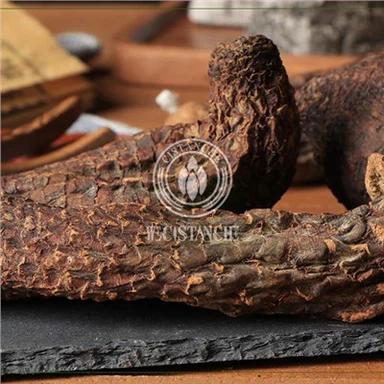
Cistanche is a genus of parasitic plants that belongs to the family Orobanchaceae. These plants are known for their medicinal properties and have been used in Traditional Chinese Medicine (TCM) for centuries. Cistanche species are predominantly found in arid and desert regions of China, Mongolia, and other parts of Central Asia. Cistanche plants are characterized by their fleshy, yellowish stems and are highly valued for their potential health benefits. In TCM, Cistanche is believed to have tonic properties and is commonly used to nourish the kidney, enhance vitality, and support sexual function. It is also used to address issues related to aging, fatigue, and overall well-being. While Cistanche has a long history of use in traditional medicine, scientific research on its efficacy and safety is ongoing and limited. However, it is known to contain various bioactive compounds such as phenylethanoid glycosides, iridoids, lignans, and polysaccharides, which may contribute to its medicinal effects.

Wecistanche's cistanche powder, cistanche tablets, cistanche capsules, and other products are developed using desert cistanche as raw materials, all of which have a good effect on relieving constipation. The specific mechanism is as follows: Cistanche is believed to have potential benefits for relieving constipation based on its traditional use and certain compounds it contains. While scientific research on Cistanche's effect on constipation is limited, it is thought to have multiple mechanisms that may contribute to its potential to relieve constipation. Laxative Effect: Cistanche has long been used in Traditional Chinese Medicine as a remedy for constipation. It is believed to have a mild laxative effect, which can help promote bowel movements and induce constipation. This effect may be attributed to various compounds found in Cistanche, such as phenylethanoid glycosides and polysaccharides. Moistening the Intestines: Based on traditional use, Cistanche is considered to have moisturizing properties, specifically targeting the Intestines. Promoting hydration and lubrication of the Intestines may help soften tools and facilitate easier passage, thereby relieving constipation. Anti-inflammatory Effect: Constipation can sometimes be associated with inflammation in the digestive tract. Cistanche contains certain compounds, including phenylethanoid glycosides and lignans, that are believed to have anti-inflammatory properties. By reducing inflammation in the intestines, it may help improve bowel movement regularity and relieve constipation.