Behind The Feeling Of Running On Empty
Sep 30, 2026
"It is not that I do not want to. It is that I cannot get going." This is one of the most common sentences heard in a traditional Chinese medicine clinic. It rarely points to a single malfunctioning organ. Far more often it describes a whole-body low-power mode: you cannot get up in the morning, and you do not sleep deeply at night; your lower back and knees feel as if they are filled with lead; you are cold when everyone else is comfortable, and your hands and feet stay cool all year round; your attention scatters and decisions take longer; intimacy loses its pull. Most people put it down to age, stress, or simply being overtired, yet after a few days of real rest, the hollow fatigue is still there.
When the signals persist, it is worth changing the frame. Perhaps you are not failing to try hard enough. Perhaps the fire inside has simply burned down.

Effects of Cistanche: Improve Kidney Function
Click here to view Cistanche for Kidney disease products
【Ask for more】 Email:cindy.xue@wecistanche.com / WhatsApp: 0086 18599088692 / WeChat: 18599088692
1. How Chinese medicine reads this pattern
Chinese medicine files this kind of state under deficiency, and deficiency is further divided into qi, blood, yin, and yang. The one closest to running on empty is kidney yang deficiency, also called the decline of the gate of life fire.
Kidney yang is regarded as the root of all the body's warming energy. It does three jobs: it warms every organ and tissue, it drives the transformation and movement of fluids, and it animates both the spirit and reproductive function. Kidney yang is the pilot light. When the pilot light drops, the flame dies first at the furthest and hungriest edges of the body, which is exactly where the familiar complaints show up.

Effects of Cistanche: Improve Kidney Function
The typical picture
|
Pattern |
Common signals |
|
Failed warming |
Cold intolerance; cool hands and feet, especially the lower limbs |
|
Unnourished lower back |
Sore, weak, cold lower back and knees; worse after standing or walking |
|
Low spirits |
Fatigue, sleepiness, poor concentration, slowed thinking |
|
Impaired transformation |
Frequent night urination, pale copious urine; pitting edema of the legs |
|
Declining sexual function |
Low libido; erectile difficulty, premature ejaculation or seminal emission; cold uterus, infertility, thin watery discharge |
|
Spleen left uncooked |
Dawn diarrhea; loose stools with undigested food |
|
Tongue and pulse |
Pale, swollen tongue with teeth marks and white coating; deep, weak pulse, forceless at the chi (root) position |
Table 1. Common signs of kidney yang deficiency

Effects of Cistanche-Improve kidney function
How people get there
Constitution: a weak start inherited from parents, or poor nourishment during fetal development.
Ageing: from midlife onwards kidney qi naturally declines, and the warming capacity falls with it.
Chronic illness and long-term medication: a long illness slowly consumes upright qi, and a heavy medication load adds to the burden.
Overwork and excess: sustained physical, mental, and emotional strain, together with sexual excess, are classically held to damage kidney yang.
2. Cistanche: the desert ginseng that warms without drying
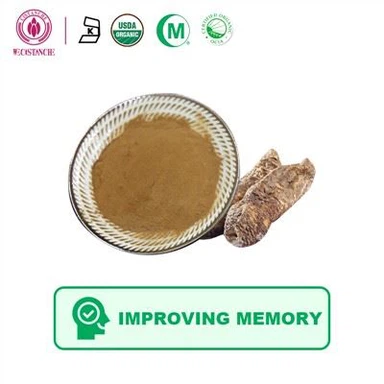
Cistanche is the dried fleshy stem, with its scale leaves, of Cistanche deserticola Y. C. Ma or Cistanche tubulosa (Schrenk) Wight, a parasitic plant of the broomrape family that lives on the roots of saxaul and tamarisk in the deserts of Inner Mongolia, Xinjiang and Gansu. Its reputation earned it the nickname ginseng of the desert, and it appears among the nine great immortal herbs listed in classical Daoist texts.
The Divine Farmer's Materia Medica, compiled around two thousand years ago, ranked it as a superior herb, recording that it addresses the five strains and seven injuries, supplements the centre, nourishes the five organs, strengthens yin, benefits essence and qi, and supports fertility, and that long-term use lightens the body.

superman herbs cistanche
Nature, meridian and actions
Taste and nature: sweet and salty, warm; enters the kidney and large intestine meridians.
Actions: tonifies kidney yang, nourishes essence and blood, and moistens the intestines to relieve constipation.
Indications: impotence and infertility, sore and weak lower back and knees, lack of strength in the sinews and bones, and dry constipation, all arising from kidney yang deficiency and depleted essence and blood.
Dosage: 10 to 15 g as a decoction, or taken as a pill, powder, or medicated wine.
Its real virtue lies in what classical sources called warming without heating, supplementing without harshness, comforting without drying, and moistening without purging. Compared with fierce, hot stimulants such as prepared aconite or cinnamon bark, cistanche is moist and succulent, far less likely to fan fire and injure yin. That makes it suitable for people who need to be built up slowly over months rather than jolted awake. Steamed or stewed with wine, its yang-supporting action becomes noticeably stronger.
Who should avoid it
It is not appropriate for people with yin deficiency and effulgent fire, marked by a hot sensation in the chest, palms and soles, night sweats and a dry mouth and throat, nor for those with loose stools or constipation caused by heat. If you are pregnant, breastfeeding, or taking prescribed medication, speak to a doctor first.
3. What modern research adds
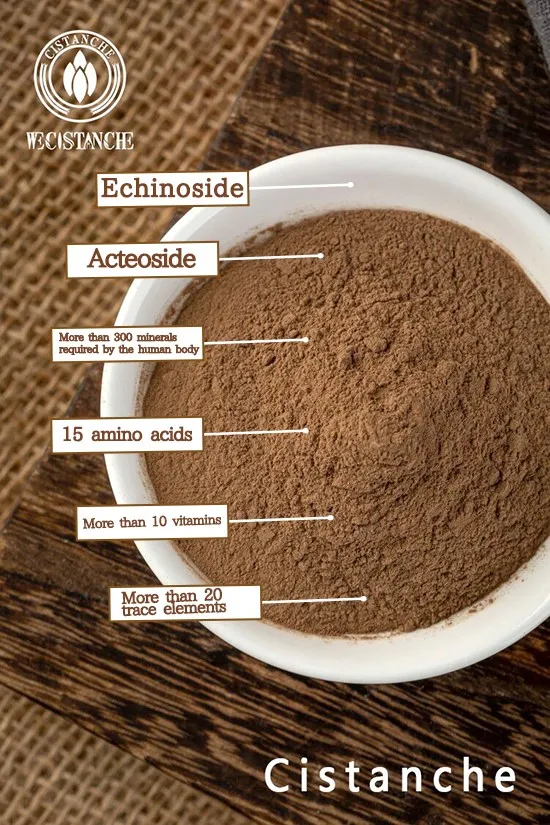
Pharmacology has begun to take the traditional claims apart one by one. The main bioactive constituents are phenylethanoid glycosides, above all echinacoside and acteoside (verbascoside), together with polysaccharides, iridoids and lignans.
Reproduction and hormones: animal studies indicate that phenylethanoid glycosides act on the hypothalamic-pituitary-gonadal axis, supporting testosterone synthesis and secretion, improving the epididymal environment, promoting spermatogenesis, and reducing reproductive damage induced by glucocorticoids.
Main Chemical Constituents of Cistanche tubulosa
Fatigue and immunity: polysaccharides and phenylethanoid glycosides raise antioxidant enzyme activity and lower post-exercise fatigue markers, while echinacoside enhances macrophage phagocytosis and T-lymphocyte proliferation. In a randomised controlled trial involving 48 men, 5 g of cistanche extract daily for eight weeks improved strength, endurance and recovery markers including testosterone, cortisol, C-reactive protein and creatine kinase.
Neuroprotection: echinacoside and acteoside have been shown to limit neuronal apoptosis and improve learning and memory through pathways including Nrf2/HO-1 and NF-kappaB, and related extracts have been studied in mild to moderate vascular dementia.
Bone and gut: polysaccharides and phenylethanoid glycosides show phytoestrogen-like activity, encouraging bone formation and restraining bone resorption, while oligosaccharides and galactitol raise intestinal osmotic pressure and promote peristalsis, which suits the constipation of frail or elderly people.
Regulatory status: in November 2023, cistanche was formally added to China's catalogue of substances traditionally used as both food and medicinal material, and selected prepared forms are covered by public medical insurance.
One caveat deserves to be stated plainly. The available evidence rests largely on animal experiments and small clinical studies, most of which test extracts or multi-herb formulas rather than the single herb. Large, high-quality randomised trials are still missing, and long-term safety and herb-drug interactions remain poorly mapped. It is more accurate to see cistanche as a tonic supported by tradition and early science than as a fast-acting remedy.

Cistanche tubulosa experiment
4. How to use it in daily life
Congee: simmer 15 g of cistanche first and discard the residue, then cook 100 g of mutton with 150 g of rice into a porridge to warm the interior and supplement kidney essence.
Tea: steep 5 g of cistanche with 5 g of dried longan and 7 g of goji berries in boiling water, refilling until the flavour fades.
Moxibustion: gentle moxa over points including Shenshu, Guanyuan, Qihai and Mingmen, 20 to 30 minutes per session, two or three times a week.

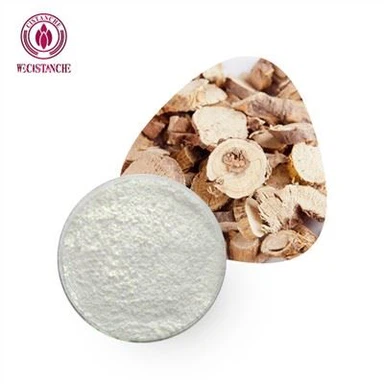
Cistanche tubulosa slice
Daily habits: keep warm, cut back on chilled drinks and raw cold foods, protect your sleep, and stop running at full throttle.
Running on empty is not self-indulgence; it is information. The value of Chinese medicine here is that it gathers a scattered set of complaints- coldness, a sore back, night trips to the bathroom, a flatness of mood- into a single legible thread, and then works along that thread. The value of cistanche is that it offers a gentle, sustainable way to do so: no overnight transformation, just the pilot light coaxed back up, degree by degree.