Cistanche Is Not A Male Enhancement Herb
Sep 30, 2026
1. The Short Answer First
Cistanche (Rou Cong Rong) is a tonic for deficiency, not a sexual stimulant. Its official statement of action in the Chinese Pharmacopoeia is: "tonify Kidney Yang, augment essence and blood, and moisten the intestines to relieve constipation." Its indications cover soreness and weakness of the lower back and knees, lack of strength in the sinews and bones due to Kidney Yang deficiency and essence-blood depletion, as well as dry-intestine constipation. Reducing it to a "male enhancement" herb both undersells what it does and pushes it toward people it was never meant for.

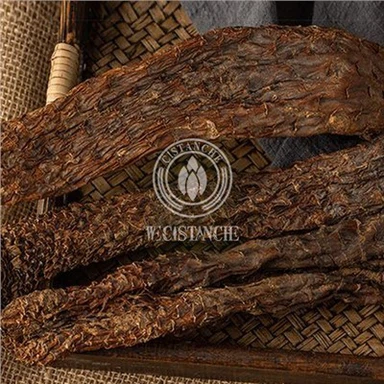
Chinese herb cistanche
In modern Chinese materia medica, Cistanche is classified under "Yang-tonifying herbs" - yet classical physicians consistently described it as a balanced, even-tempered tonic: "warm but not hot, supplementing but not harsh, warming but not drying, lubricating but not draining." That single word - balanced - is what separates it from the harsh, heating substances people usually picture when they hear "aphrodisiac."
2. How the Misunderstanding Started
2.1 Classical texts quoted out of context
The Shennong Bencao Jing (Divine Farmer's Materia Medica) listed Cistanche among the superior-grade herbs, noting it "governs the five exhaustions and seven injuries, supplements the center, nourishes the five zang organs, strengthens yin, augments essence and qi, and promotes fertility." The Rihuazi Bencao mentions it "treats failure of the male to rise and failure of the female to conceive." Later readers latched onto the second half and dropped the premise: these are remedies for a state of depleted essence-blood and declining vital fire - not stimulants for a healthy person. Crucially, the Bencao Huiyan immediately supplies the qualifier: Cistanche is "a medicinal that nourishes the gate of life, enriches Kidney qi, and supplements essence and blood." The emphasis is on nourishing and supplementing - not on provoking.
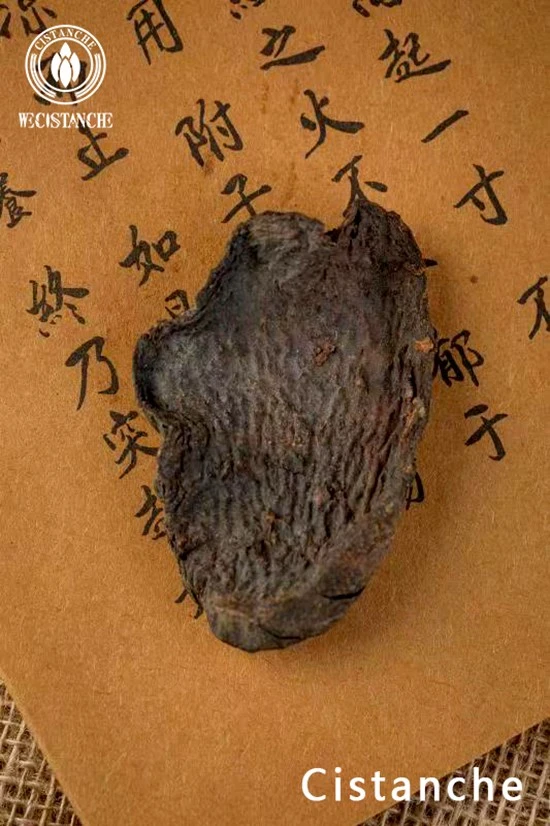
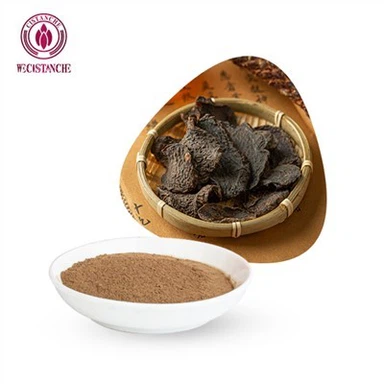
Cistanche tubulosa slice
2.2 The folk equation "Kidney deficiency = poor sexual function" is simply wrong
In Chinese medicine, the "Kidney" is a functional system. It stores essence; it governs growth, development and reproduction; it governs the bones and produces marrow; it regulates water metabolism and the two lower orifices. So the signs of Kidney deficiency extend far beyond one domain: sore lower back and weak knees, cold intolerance and cold limbs, frequent nighttime urination, low spirits and fatigue, prematurely greying hair, loss of strength in the sinews and bones, and the dry, deficient constipation common in older adults. Sexual function is only a small corner of the territory this system oversees. Reducing the whole forest to a single flagpole is the biggest misreading of all.
2.3 Marketing turned the volume up
Labels like "Desert Ginseng" and "fuel for men" are memorable and they sell. But the louder the label, the more likely the people who actually need this herb will walk past it - older adults who have struggled with chronic deficient constipation for years, or people recovering from illness or childbirth, who are precisely the group Cistanche suits best, yet never try it because they assume "that's for men."
3. What "Tonifying the Kidney" Actually Means

Effects of cistanche-Improve Kidney Function
Chinese medicine holds that the Kidney is the "congenital foundation." It stores essence (jing), the material basis for growth, development, reproduction, and the rhythm of aging. Kidney Yang is the root of the body's entire warming, activating force; it warms the organs and drives the movement of qi and blood. To "tonify the Kidney" is to slowly refill this system when it has become depleted - gently, over time.
Kidney tonification branches in several directions: nourishing Kidney Yin, supporting Kidney Yang, supplementing Kidney essence, consolidating Kidney qi. "Male enhancement" represents only the most extreme branch - the hot, harsh substances such as deer velvet, aconite, and cinnamon bark. They act fast, but they readily consume fluids and stir up heat. Cistanche takes another road entirely: sweet and salty, warm, entering the Kidney and Large Intestine channels, warm in nature yet moist in texture. It supports Yang while simultaneously nourishing essence and blood, so it does not leave a person parched, thirsty, or bleeding from the nose.
This is even encoded in its name. The Bencao Huiyan explains that Cistanche is "warm but not hot, supplementing but not harsh, warming but not drying, lubricating but not draining - hence the name Cong Rong," which carries the meaning of calm, unhurried, composed. Very few herbs have their temperament written into their name.
4. What Cistanche Actually Does Well
4.1 Tonifying Kidney Yang
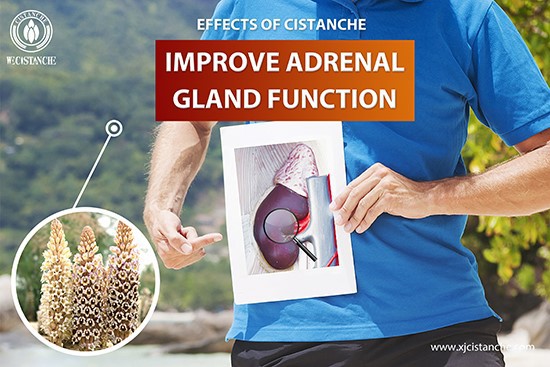
Cistanche tubulosa efficacy: Tonifying the kidney
Click here to view Cistanche for Kidney disease products
【Ask for more】 Email:cindy.xue@wecistanche.com / WhatsApp: 0086 18599088692 / WeChat: 18599088692
This addresses the pattern of Kidney Yang insufficiency. Typical signs: soreness and weakness of the lower back and knees, cold intolerance, cold hands and feet, low spirits, frequent nighttime urination, a pale tongue with a white coating. Cistanche warms and supports the primordial Yang, helping the body grow warm and regain strength. A common clinical dose is 6–10 g in decoction, frequently combined with dodder seed, eucommia bark, morinda root, or prepared rehmannia.
4.2 Augmenting essence and blood
Yang needs a material foundation to rest upon; that foundation is essence and blood. Cistanche is moist and rich in substance, so it nourishes essence and blood while supporting Yang. This is what makes it appropriate for a sallow complexion, dizziness, tinnitus, weak sinews and bones, and prematurely greying hair arising from essence-blood depletion. It is also exactly what distinguishes it from purely drying Yang tonics: stoking Yang without replenishing the "oil" only produces heat without fuel.

Effects of Cistanche: Improve Kidney Function
4.3 Moistening the intestines - the most underestimated of the three
Many people have no idea Cistanche also relieves constipation. Being salty and moist, it enters the Large Intestine channel, nourishes essence and blood, and lubricates dryness. It is especially suited to deficient constipation in older adults - stools dry and pellet-like, difficult to pass, accompanied by copious clear urine, a cold lower back, and aching. The classical formula Ji Chuan Jian builds on Cistanche with Chinese angelica, achyranthes, alisma, cimicifuga and bitter orange precisely for this pattern. Unlike stimulant laxatives such as rhubarb or senna, Cistanche relieves without damaging healthy qi and does not create escalating dependence.
And the flip side, stated plainly: precisely because it lubricates, it is unsuitable for anyone with loose stools or with heat-type constipation.
5. What Modern Research Has Found - and What It Has Not

Phenylethanol glycoside is the main active component of Cistanche tubulosa
The characteristic active constituents of Cistanche are phenylethanoid glycosides, chiefly echinacoside and acteoside (verbascoside), both of which serve as the marker compounds used for quality control in the Chinese Pharmacopoeia. The herb also contains iridoids, polysaccharides, lignans, amino acids, and trace elements.
Published pharmacological work concentrates on neuroprotection and learning/memory support, antioxidant and anti-aging activity, anti-fatigue effects, regulation of bone metabolism, hepatoprotection, and anti-inflammatory and immunomodulatory activity. In fairness, it must be said: most of these findings come from cell and animal studies, and a considerable distance still separates them from confirmed effects in humans. Any claim that Cistanche "treats" a named disease therefore exceeds both the available evidence and what regulation permits.
6. Is It Right for You? A Rough Self-Check
A note first: the following is a rough guide for everyday orientation, not a diagnosis. For actual use, consult a qualified TCM practitioner for pattern differentiation.
|
May be a reasonable fit if you have |
Avoid, or consult a practitioner first, if you have |
|
Persistent cold intolerance, cold hands and feet, sore and weak lower back and knees |
Yin deficiency with effulgent fire: hot palms and soles, dry mouth and throat, night sweats, irritability and insomnia |
|
Low spirits, easy fatigue, tiredness on slight exertion |
Excess-heat or damp-heat constitution: bitter taste, bad breath, flushed face, red eyes, genital dampness |
|
Frequent nighttime urination, copious clear urine |
Loose or watery stools, diarrhea, or active chronic enteritis |
|
Sallow complexion, dizziness, tinnitus, prematurely greying hair |
Heat-type constipation (dry pellet stools with bad breath and dark urine) |
|
Deficient constipation in older adults, postpartum or after illness |
Pregnancy, breastfeeding, or infancy (not recommended) |
|
Recovery from illness or surgery |
Taking anticoagulants, antihypertensives, or immunosuppressants |
On dosage: 6–10 g in decoction is the usual range; some sources record 10–15 g, but do not increase the dose on your own. Very large doses (reports cite above 50 g) may cause vomiting and diarrhea. If you take it continuously for a period, pause and reassess, or follow a practitioner's schedule.