Why Do We Age? Is Aging A Natural Process Or A Treatable Disease? The Scientific Consensus & Natural Anti-Aging Solution With Cistanche Tubulosa
May 29, 2026
Why do human bodies gradually decline with time? Is aging an inevitable natural part of life, or a chronic disease that can be intervened and reversed? These core questions have puzzled biologists, medical experts and longevity researchers for decades. A landmark study led by Dr. Vadim N. Gladyshev's team from Harvard Medical School and the Broad Institute of MIT has gathered top academic institutions worldwide to survey 100 leading experts in aging research. The research deeply explores the consensus, divergence and unknown puzzles in the scientific community regarding biological aging, offering new perspectives for human longevity and healthy aging intervention.
Over the past 200 years, modern medicine has achieved extraordinary breakthroughs. Most fatal infectious diseases and acute illnesses can now be prevented, treated or even cured. However, aging, the most universal fatal factor for humans, still remains poorly understood. While laboratory research has successfully extended the lifespan of multiple organisms, the exact root causes and molecular mechanisms of human aging are still unclear. Moreover, there are no fully verified and mature intervention methods to slow down or reverse human aging so far. To unify research directions and promote industry progress, the academic team launched a systematic survey at the 2022 Gordon Research Conference on Aging, collecting 103 valid responses. Participants included university professors (29.8%), postdoctoral researchers (25%), graduate students (22.1%) and industry senior experts (13.5%), covering almost all research dimensions of the aging field.

When asked how to define aging, experts hold highly divided views. Approximately 30% of scholars define aging as the gradual decline of physiological functions over time, ranking first among all definitions. The second mainstream view regards aging as the continuous accumulation of molecular damage in the body, and the third attributes it to multi-factor physiological changes driven by time. Other definitions include systemic functional recession, overall health deterioration, and deviation from the optimal physical state. These diverse definitions stem from different research perspectives: some focus on external performance such as physical function decline, some emphasize internal molecular damage causes, and others pay attention to the overall physiological results and programmed characteristics of aging.
The systematic and multi-factorial nature of aging is widely recognized by experts. Research data shows that between the ages of 20 and 25, different aging indicators including mortality rate, molecular biomarkers and physical function changes present completely different trends. This also proves that the correlation between cellular senescence and whole-body aging is far more complex than imagined, requiring in-depth exploration. In this context, Cistanche oxidation resistance has become a valuable natural research direction, as natural plant extracts can target oxidative stress, one of the core drivers of aging.

In terms of the root causes of aging, about 30% of experts believe cumulative damage and adverse physiological changes are the primary triggers. Other mainstream viewpoints include physiological system imbalance, molecular metabolic disorders, evolutionary limitations of life, and decreased self-repair ability of human cells. Around 15% of experts use simple keywords such as time and entropy to summarize aging causes, another 15% of views are difficult to classify, and six experts directly stated that the exact cause of aging is still unknown. These cognitive differences directly affect the direction of aging research and anti-aging product development.
The definition of biological regeneration is also controversial in the academic circle. Core viewpoints include reducing accumulated physical damage, restoring youthful physiological state, and reversing the inherent aging process. Seven experts directly equate regeneration with the reduction of biological age, while others define it as physical condition improvement, lowering the incidence of age-related diseases, and resetting aging biomarkers. Scholars interpret regeneration from molecular, cellular and physiological levels, reflecting the huge divergence in this emerging field.

Supportive Service Of Wecistanche-For more details about cooperation
Email:Lijianlin@wecistanche.com
When talking about the most critical unsolved questions in aging research, one-third of experts believe clarifying the essential nature of aging and regeneration is the top priority. Other key concerns include longevity intervention technology, aging reversal methods, accurate aging measurement standards, embryonic regeneration mechanisms and aging molecular pathways. A small number of scholars focus on lifespan extension and bodily damage removal. The diversity of viewpoints fully reflects the complexity and cross-disciplinary nature of aging research.
Experts also hold divided opinions on when human aging officially begins. 22% of scholars take the age of 20 as the starting point of aging, ranking first; followed by the embryonic stage (18%), conception (16.5%), germ cell formation (13%) and the age of 25 (11%). These time points correspond to key human developmental stages from gamete generation and genome formation to physical maturation. Evolutionary biologists focus on the decline of natural selection intensity, while demographers pay more attention to changes in mortality trends, leading to their different judgments on the starting time of aging.

The most controversial topic is whether aging should be classified as a disease. Most experts remain neutral, while the rest are evenly split between strong agreement and strong opposition, each accounting for 10%-20%. The core of the debate lies in the definition of disease itself. If aging is a chronic progressive disease, it can be targeted with medical intervention and natural nutritional regulation; if it is only a natural life process, intervention can only focus on maintaining physical vitality. This is where Cistanche Tubulosa stands out - as a traditional Chinese medicinal herb with thousands of years of application history, it provides a natural way for daily anti-aging and physical conditioning, perfectly matching the demand for intervening sub-health and slow aging.
The only slightly unified view among experts is that the aging research field needs a unified basic consensus. Opponents argue that sufficient experimental data is needed to improve the definition framework, and diverse academic perspectives can better promote innovative research. On the prediction that the average lifespan of developed countries will increase by more than 10 years in the next 20 years, experts' opinions are split: a slight majority hold an optimistic attitude, while 28 scholars disagree and 2 strongly oppose it. As for whether quitting smoking reduces biological age and restores physical vitality, views show a bimodal distribution with only 13 neutral experts. The divergence focuses on whether changes in aging biomarkers represent real biological age reversal and how to define physical vitality recovery.

The research also found obvious group differences: scholars who support classifying aging as a disease are more optimistic about future lifespan growth; university professors hold a more cautious attitude than postgraduates and postdoctoral researchers, while gender has no significant impact on academic views.
Despite widespread divergence, experts have reached important basic consensus. They universally recognize that aging is an objective biological process with specific causes and physiological impacts, which can be verified and studied through scientific experiments. Most scholars confirm that aging is essentially harmful to the human body, accompanied by progressive functional decline and continuous accumulation of molecular damage. Aging is a definable biological process with fixed characteristics and inevitable fatal outcomes, and the aging process can be regulated, has a clear starting point, and is theoretically reversible. The distinction between chronological age and biological age is also widely accepted, laying a solid theoretical foundation for anti-aging research and natural plant application.
At the same time, aging remains an unresolved core puzzle in biology. Experts differ greatly on the essence, universality and pathological attributes of aging. The definition of aging varies from functional loss and damage accumulation to rising mortality rates, requiring targeted research strategies respectively. The divergence essentially comes from the multi-dimensional connotation of aging itself - some focus on root causes, others on external results. It is suggested that researchers clearly define the concept of aging in follow-up studies to avoid academic confusion.
These conceptual differences also affect the judgment of aging onset time, and key questions such as whether aging has an asymptomatic period and whether it must be accompanied by functional decline still need further experimental verification. Compared with unified formal definition, it is easier for academia to reach a consensus on describing the essential characteristics of aging. Most scholars tend to summarize aging through multiple combined features rather than a single definition. Aging research covers macroscopic physical performance, organ function and microscopic cellular molecular levels, and it is still unclear whether aging is an overall systemic attribute or the simple sum of individual organ aging.

In addition, there is an obvious gap between the mechanical model and evolutionary model of aging. With the emergence of new research discoveries, many traditional aging theories have been questioned. Although these basic theoretical issues are crucial, targeted in-depth research is still insufficient, mainly due to the difficulty of experimental verification and ambiguous professional terminology. Different understandings of the aging process also affect the formulation of anti-aging research strategies, which may hinder the development of effective anti-aging drugs and natural nutritional supplements.
Cistanche Tubulosa: Natural Anti-Aging & Oxidation Resistance Solution
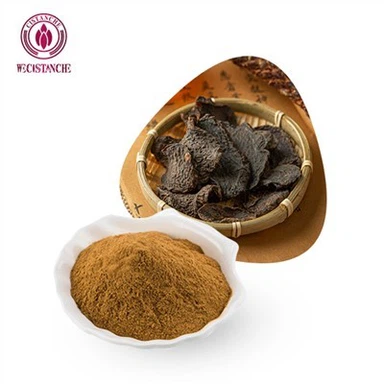
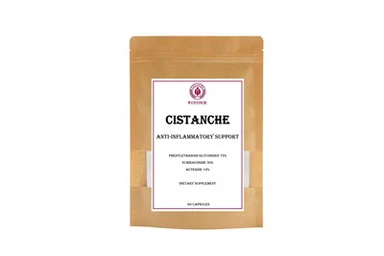
As the academic community continues to explore the mysteries of aging, natural plant ingredients represented by Cistanche Tubulosa have become a reliable daily anti-aging choice supported by modern research. Rich in high-content phenylethanoid glycosides, echinacoside, acteoside and polysaccharides, Cistanche Tubulosa delivers outstanding Cistanche oxidation resistance benefits for anti-aging. It can effectively clear free radicals in the human body, reduce oxidative stress damage to cells, activate longevity-related protein pathways, protect mitochondrial function, and slow down cellular senescence and tissue functional decline.
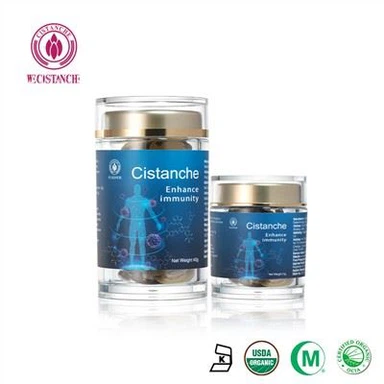
Different from ordinary Cistanche varieties, Cistanche Tubulosa boasts higher content of active bioactive ingredients, with stronger antioxidant and anti-aging efficacy. As the world's leading Cistanche processing enterprise, Chengdu Wecistanche Bio-Tech Co., Ltd owns a 200,000-acre standardized Cistanche base in Hotan, Xinjiang - the authentic origin of high-quality Cistanche. We have built a complete industrial chain including seed breeding, standardized cultivation, fresh product storage and GMP-grade deep processing factory. Equipped with 100,000-class GMP production workshops and 10,000-class microbial laboratories, our Cistanche Tubulosa extract strictly complies with US and EU international standards, holding SC, HACCP, NOP, HALAL and Kosher certifications, with 14 patented technologies in extract membrane separation and purification.

Our high-purity Cistanche Tubulosa extract not only provides powerful antioxidant effects, but also regulates immune function, improves cognitive health, protects nerve cells, relieves age-related fatigue and promotes physical metabolic balance. It is widely applicable in functional foods, health supplements, skincare products and herbal raw materials, perfectly meeting the global market's demand for natural, safe and effective anti-aging raw materials and finished products. With stable high activity content and standardized production, our products have been exported globally for many years, winning recognition from health product developers and brand merchants in Europe, America and other regions.
The survey on aging research is not only a sorting out of academic divergence, but also a starting point for exploring healthy aging. Clarifying the nature of aging helps people abandon the misunderstanding of passive aging and embrace scientific intervention and natural conditioning. Relying on the natural antioxidant and anti-aging advantages of Cistanche Tubulosa, people can effectively resist oxidative damage, delay physical functional decline, maintain youthful biological state, and realize healthy aging and quality longevity.

This article is for popular science and industry reference only, intended to introduce academic research progress and the natural efficacy of Cistanche Tubulosa ingredients. All statements about the efficacy of Cistanche Tubulosa are based on modern phytological research and traditional herbal application records, not medical diagnosis and treatment advice. This product is not a medicine and cannot replace professional medical treatment for age-related diseases. Purchasers and developers should conduct independent safety and efficacy verification according to local market regulatory requirements.